Is DDT Still Being Used?
On summer evenings in the 1950s, trucks rolled slowly through neighborhoods across the US, releasing thick clouds of insecticide that drifted over lawns, playgrounds, and open windows. Children ran behind the fog, laughing as it settled onto their skin. The chemical was DDT, hailed at the time as a scientific triumph. It had helped protect soldiers from typhus during World War II and drove down malaria cases in parts of the world where the disease had long been deadly. But within a generation, DDT would become a symbol of environmental collapse, linked to thinning eagle eggshells and toxic persistence in soil and water. Banned in many countries decades ago, it seems like a relic of another era. Yet the story is not over. In parts of the world today, DDT is still being sprayed indoors to fight malaria, raising a question that has never fully disappeared: when a chemical can both save lives and damage ecosystems, what does responsible use look like?
What Is DDT?

DDT, short for dichloro-diphenyl-trichloroethane, is a synthetic chemical compound first created in 1874. For decades, it attracted little attention. That changed in 1939, when Swiss chemist Paul Hermann Müller discovered its powerful insecticidal properties, a breakthrough that later earned him the 1948 Nobel Prize in Physiology or Medicine. DDT works by attacking the nervous systems of insects, causing spasms and death in small doses. It was cheap to manufacture, long-lasting, and remarkably effective against mosquitoes, lice, and agricultural pests.

Pure recrystallised DDT By 102% Yield CC BY-SA 4.0
What made DDT revolutionary was also what made it dangerous: it does not easily break down. After being sprayed, it lingers in soil and water for years. It dissolves in fat rather than water, allowing it to accumulate in the tissues of animals and move up the food chain, increasing in concentration at each step. In the mid-20th century, those properties seemed like advantages. A single application could remain effective for months. Only later did scientists begin to understand that the same persistence that made DDT a miracle chemical also made it a global contaminant.
The Golden Era of DDT

DDT’s rise was swift and global. During World War II, Allied forces used it to control outbreaks of typhus and malaria among troops and civilians. In Naples in 1943, emergency dusting campaigns helped halt a deadly typhus epidemic. Soldiers returning home carried stories of a powder that could stop disease in its tracks.
After the war, governments embraced DDT as a cornerstone of public health. Large-scale spraying campaigns targeted malaria-carrying mosquitoes across parts of Asia, Africa, and Latin America. In some regions, malaria cases dropped dramatically within just a few years. The chemical was equally transformative in agriculture, where it was applied to fields, orchards, and livestock to control crop-destroying insects. For farmers, yields rose. For health officials, disease rates fell.

By the 1950s and 1960s, DDT had become one of the most widely used pesticides in the world. It was sprayed from airplanes over farmland, fogged through suburban neighborhoods, and stocked in households as a routine defense against pests. At the time, few questioned its safety. It was seen not merely as a pesticide, but as a symbol of modern science’s ability to outsmart nature.
The Environmental Reckoning

The first signs of trouble did not come from hospital wards or farm fields, but from the skies. By the late 1950s and early 1960s, populations of bald eagles, peregrine falcons, and other birds of prey were collapsing across North America. Scientists discovered that DDT, carried through insects and fish, was accumulating in birds’ fatty tissues. A breakdown product of the chemical, DDE, interfered with calcium metabolism, causing eggshells to thin and crack under the weight of incubating parents.
The growing alarm reached a wider audience in 1962 with the publication of Silent Spring by Rachel Carson. Carson argued that widespread pesticide use was contaminating ecosystems in ways regulators had failed to anticipate. She described a future “silent spring” in which birds no longer sang. The book sparked fierce debate between chemical manufacturers, scientists, and policymakers, but it also helped galvanize public concern about environmental protection.
As evidence mounted, DDT was found not only in birds but in fish, livestock, and human tissues. Its ability to persist for years and travel long distances through air and water meant that even remote regions were not immune. The controversy surrounding DDT became a turning point in environmental history, helping to shape the modern regulatory era and laying the groundwork for stronger oversight of chemicals worldwide.
Banning DDT

In 1972, after months of scientific review and public hearings, the Environmental Protection Agency canceled nearly all agricultural uses of DDT in the United States. The decision followed growing evidence that the chemical was persisting in ecosystems, accumulating in wildlife, and contributing to dramatic declines in bird populations. While public awareness had been galvanized a decade earlier by Silent Spring by Rachel Carson, the EPA’s ruling was based on a broad scientific record, including ecological studies and toxicological data.
Concerns extended beyond wildlife. Laboratory studies had shown that high doses of DDT caused liver tumors in rodents, and researchers were investigating possible links to cancer and reproductive effects in humans. In 2015, the International Agency for Research on Cancer classified DDT as “probably carcinogenic to humans,” reflecting limited evidence in people but sufficient evidence in experimental animals. Although the 1972 US action did not amount to a total prohibition, public health uses were allowed under strict conditions, it effectively ended widespread agricultural spraying.
Other countries moved in similar directions throughout the 1970s and 1980s. Several European nations, including Sweden and West Germany, restricted or banned agricultural use during that period, and by the early 1990s more than two dozen countries had enacted full prohibitions. The global response culminated in the 2001 Stockholm Convention, which entered into force in 2004. The treaty restricted DDT as a persistent organic pollutant but allowed a specific exemption for malaria vector control. Today, more than 180 parties have ratified the convention, committing to reduce reliance on DDT while working toward safer alternatives.
In the decades since the US ban, environmental concentrations have declined significantly, and species such as the bald eagle have rebounded. Yet DDT residues remain detectable in soils, sediments, wildlife, and even human tissues, a reminder of how long the chemical lingers after its use ends.
So, Is DDT Still Being Used?

Yes, but in far narrower circumstances than during its mid-20th-century peak.
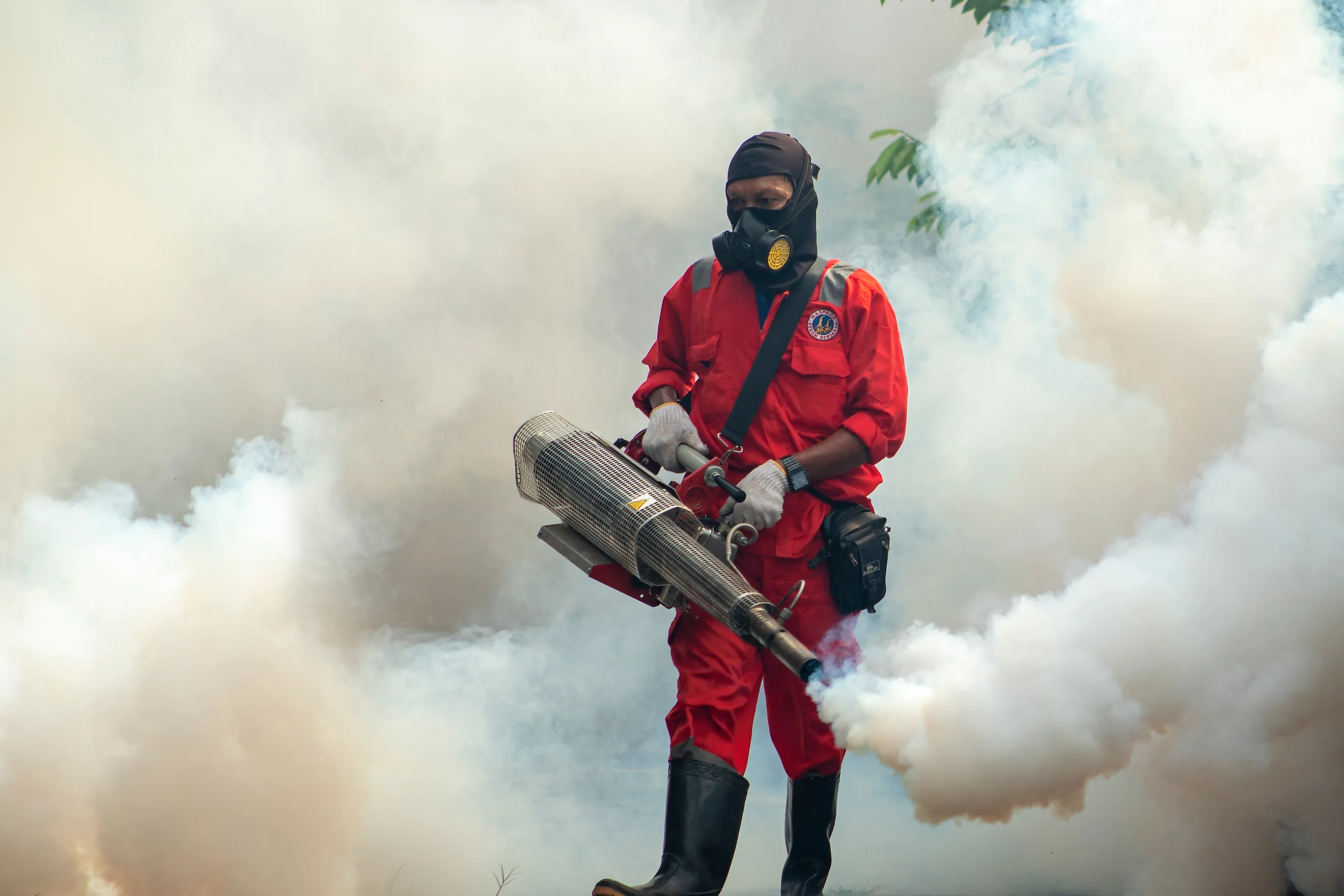
Under the rules of the Stockholm Convention, DDT is restricted but not fully banned worldwide. Countries facing high burdens of malaria are permitted to use it for indoor residual spraying, a targeted method in which small amounts are applied to the interior walls of homes to kill mosquitoes that land there. The exemption exists because, in certain regions, DDT remains effective, affordable, and longer lasting than many alternatives.
The World Health Organization supports its limited use for vector control when other insecticides are ineffective or unaffordable. In recent years, a small number of countries, primarily in parts of sub-Saharan Africa and South Asia, have reported using DDT for malaria control. India has historically been one of the largest producers and users for public health programs, though usage levels have fluctuated. Global totals are a fraction of what they were in the 1960s, and many countries that once relied on DDT have transitioned to other insecticides.
Still, the continued allowance reflects an ongoing dilemma. Malaria remains a major public health threat, causing hundreds of thousands of deaths each year, most of them children in Africa. For governments confronting outbreaks, the decision is not abstract. It becomes a calculation between environmental persistence and immediate disease prevention.
DDT today is no longer sprayed across farmland or suburban streets. Its remaining use is tightly regulated, reported to international bodies, and framed as a temporary measure. Yet its survival in the global health toolbox shows that the debate surrounding it has never fully ended.