12 Prettiest Main Streetscapes In The Northern United States
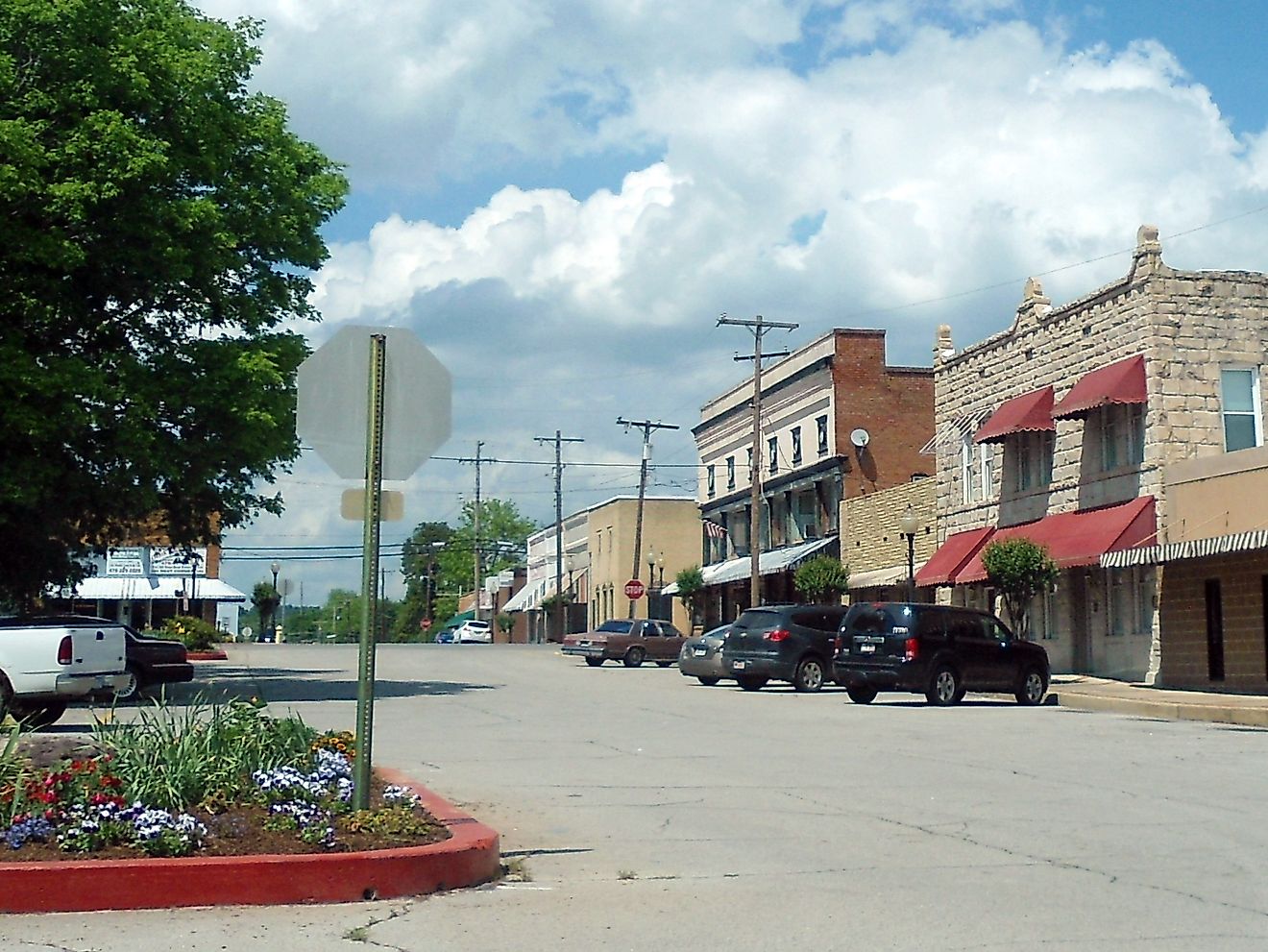
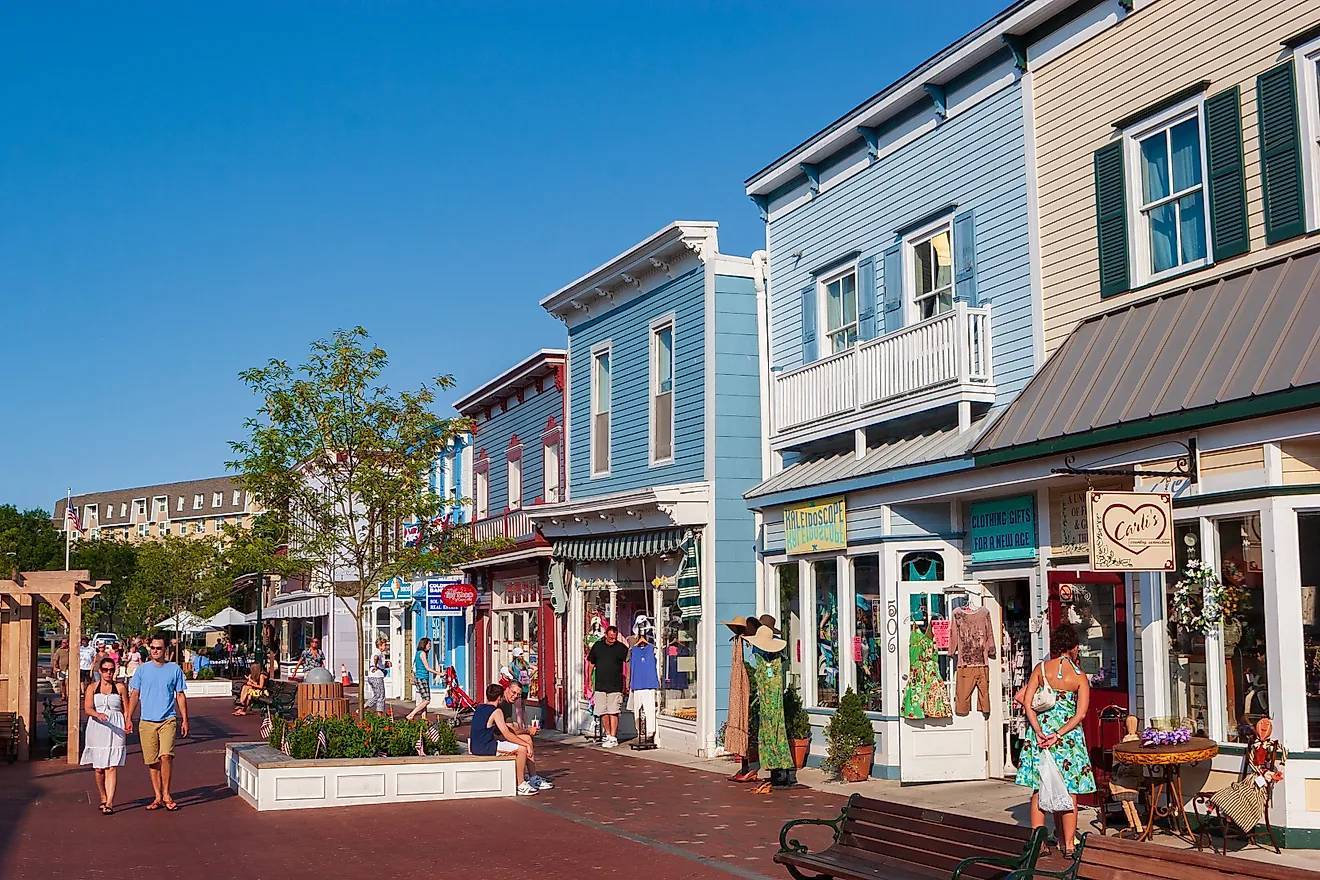
America loves a good knockoff, and some of its prettiest main streets are proof. Up in the northern states, whole downtowns have been dressed up as places thousands of miles away. The residents of Leavenworth, Washington rebuilt their town as a Bavarian village in the 1960s, right down to the approved paint colors and the alphorns at the gazebo on Front Street. Pella, Iowa went full Dutch, with a windmill hauled over from the Netherlands and reassembled brick by brick in the center of town. Others earned their good looks the slow way, on the mining, logging, and shipbuilding money that built their storefronts a century ago. These are eleven of the prettiest.
Leavenworth, Washington

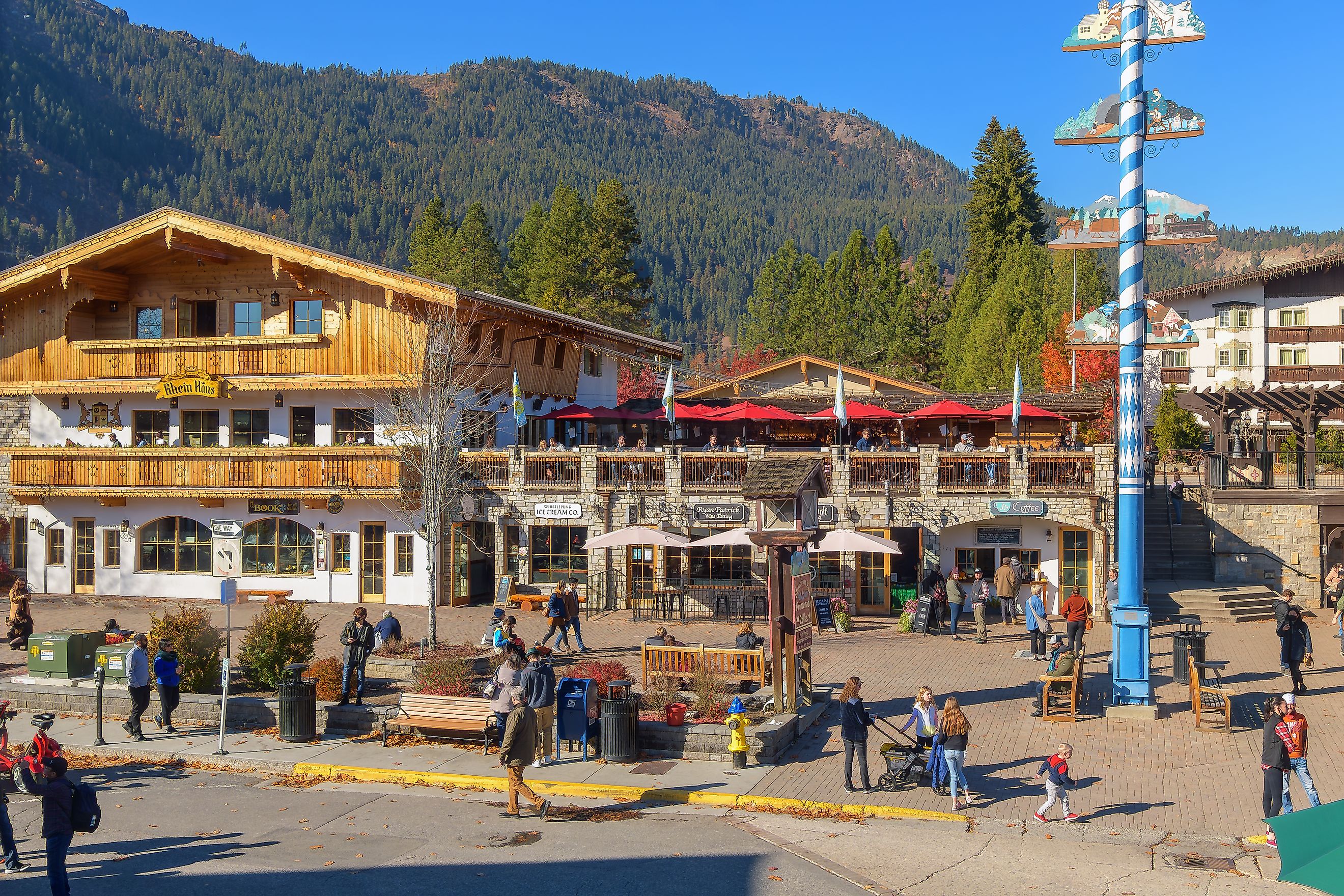
A former logging town, Leavenworth, Washington, did not inherit its Alpine appearance. It deliberately built it. Faced with economic decline in the 1960s, local business owners recast the downtown as a Bavarian village, adding balconies, parapets, painted trim, and other architectural details to existing buildings. The experiment became so central to Leavenworth's identity that the town still regulates exterior colors and design. Front Street now carries the transformation furthest, with chalet-like facades facing a public gazebo where alphorns and accordions are not out of place.
The theme extends well beyond architecture. Oktoberfest fills several stages with traditional Bavarian music alongside dance bands and other acts, while the Leavenworth Nutcracker Museum displays thousands of nutcrackers made from materials ranging from wood and porcelain to bone and acrylic. The collection grew from the private holdings of George and Arlene Wagner before opening to the public in 1995. Another layer emerges on the one-hour tours run by Bavarian Walking Tours, which trace the railroad and logging history that existed long before lederhosen, flower boxes, and Alpine facades became Leavenworth's calling card.
Astoria, Oregon

Once known as the most wicked place on earth, rough-and-tumble Astoria, Oregon, had more than 50 saloons and almost three dozen prostitution houses concentrated around its waterfront. Commercial Street now tells a much different story, but one unusually entertaining piece of the old city survives inside the former Clatsop County Jail. Used from 1914 to 1976, the jail later appeared in The Goonies and Short Circuit and now houses the Oregon Film Museum. Its exhibits cover those productions alongside a much wider history of movies filmed around Oregon, including Animal House and Stand By Me.
Astoria's modern creative life spills into the rest of downtown during the monthly Second Saturday Artwalk. RiverSea Gallery exhibits Pacific Northwest artists, while Astoria Visual Arts supports programs including the Astoria Open Studios Tour. The city changes character again at the Columbia River, where the 12.8-mile Astoria Riverwalk follows part of the historic route associated with the Lewis and Clark Expedition. An old streetcar occasionally rattles along a section of the waterfront track. Built in 1913 for service in San Antonio, Texas, the Astoria Riverfront Trolley is a wonderfully improbable survivor in a town already full of them.
Pella, Iowa

Red brick paving, stepped-gable rooflines, canals, tulips, and a working Dutch windmill make Pella, Iowa, one of the more convincing European-inspired downtowns in the Midwest. Its dominant landmark is the 124.6-foot Vermeer Mill at 1st and Franklin streets. Built first in Hoogmade, Netherlands, the 1850s-style mill was shipped to Iowa and reconstructed in the center of town. Tours also reach the Miniature Dutch Village, an intricate model begun in 1938 to depict life in the Netherlands during the 1840s.
Pella goes furthest with its Dutch identity each spring during Tulip Time, when costumes, music, food, and flowers take over downtown. Some of the flavors remain long after the festival ends. Jaarsma Bakery has been baking Dutch letters filled with almond paste along with butter cakes and other pastries for generations, while Butcher's Brewhuis & The Asylum Bar works Dutch touches into dishes such as its gouda-topped Double Dutch sandwich.
The landscaping is just as committed to the idea. The Molengracht channels more than 100,000 gallons of water through a brick-lined central plaza, and Sunken Gardens Park surrounds another windmill with a pond shaped like a wooden shoe. Come spring, roughly 13,000 tulips fill the park. Few streets on this list commit so thoroughly to one visual identity.
Galena, Illinois

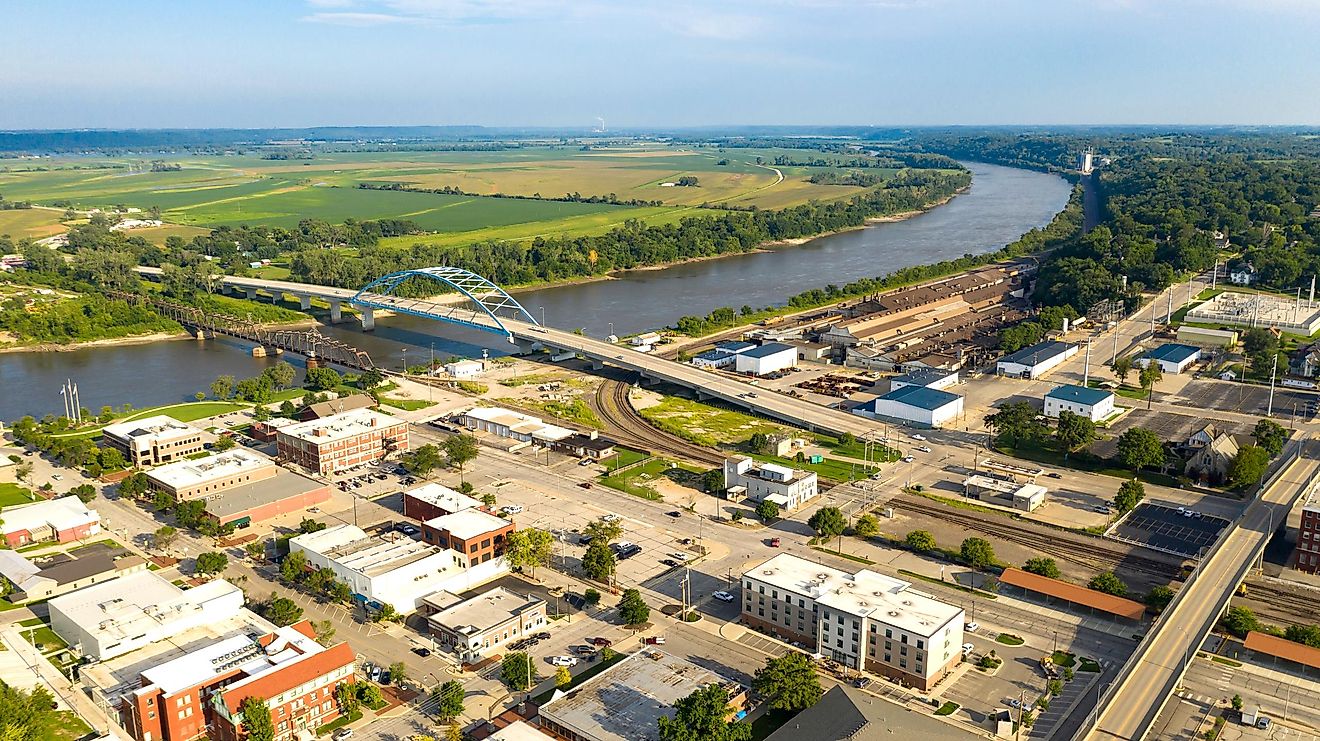
Named for the lead deposits that drove its early growth, Galena, Illinois, boomed as both a mining center and Mississippi River shipping town during the first half of the 19th century. Its fortunes turned when the California Gold Rush drew people west and local lead mining declined. What looked like economic disaster had an unexpected architectural consequence: much of the ambitious brick city simply remained standing. About 62 percent of Galena now falls within a National Register Historic District, and Main Street descends through a dense run of 19th-century commercial buildings that escaped the redevelopment seen in many larger cities.
Those storefronts are still doing real work. Galena Book & Paper deals in new books and paper goods, while shops such as At Home in Galena and The Hideaway occupy the old commercial blocks with homewares and decorative pieces. The stranger pleasures fit the setting particularly well. P.T. Murphy Magic Theatre squeezes sleight of hand into a room seating only 24 people, and the Antique Mall of Galena joins several smaller dealers selling glassware, jewelry, furniture, and oddities. Across the Galena River, Grant Park provides a broader view back toward downtown and hosts the annual Galena Country Fair, where more than 100 artisans set up for the two-day event.
Lake Geneva, Wisconsin

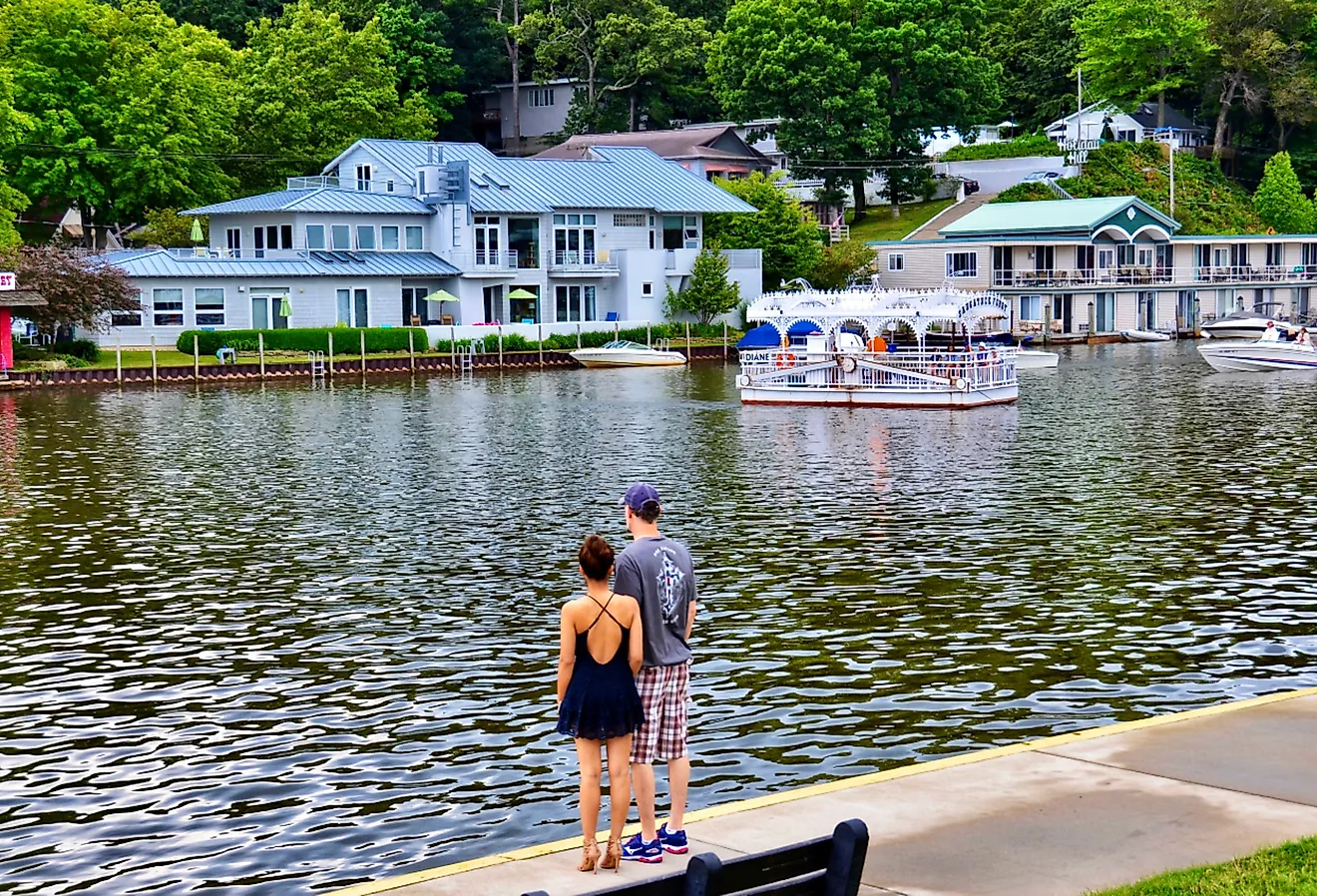
The Great Chicago Fire of 1871 helped turn Lake Geneva, Wisconsin, into a summer refuge for some of Chicago's wealthiest families. Their estates eventually earned the lakeshore the nickname "Newport of the West," and many of those houses remain. The Lake Geneva Cruise Line passes the old properties from the water, departing near the Riviera Boathouse at the foot of downtown. Wrigley Drive curves past the same waterfront, with Riviera Beach occupying a sandy stretch beside the center of town.
The mansions can also be examined from unusually close range because the Lake Shore Path threads for roughly 26 miles around the lake. The shoreline route has much deeper roots than the resort era: Native people used paths around the water long before European settlement, and public access to the shore later became protected under Wisconsin law.
That relationship between downtown and lake is what gives Lake Geneva its looks. Streets filled with shops and restaurants run almost directly into beaches, docks, boats, and the shoreline path. Speedo's Harborside Pub & Grill sits opposite the Riviera and makes use of the setting with curbside tables facing the waterfront. The scenery here is less about a single landmark than the unusual closeness of a busy small-town center to one of Wisconsin's best-known resort lakes.
Mackinac Island, Michigan

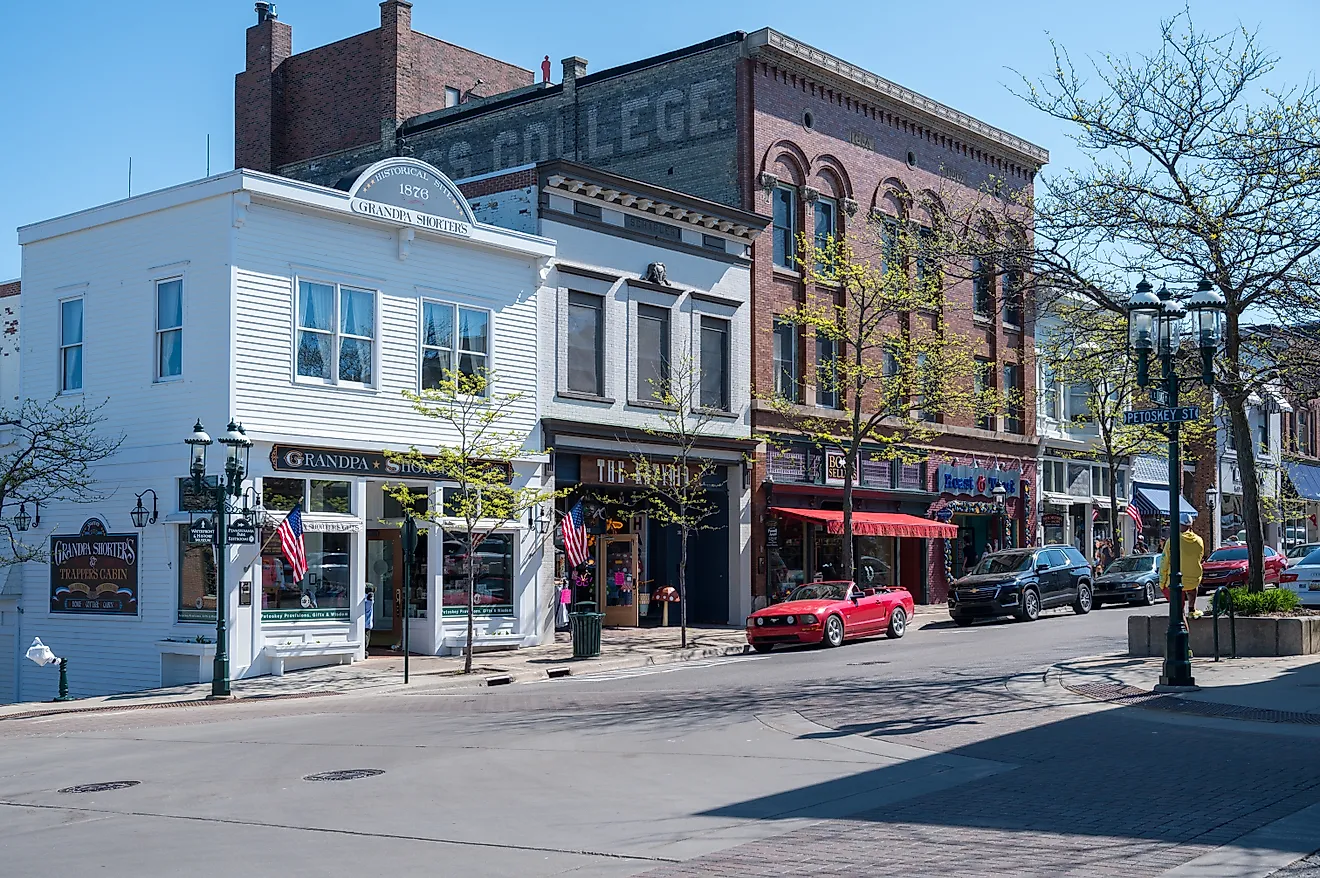
Known as the fudge capital of the world, Mackinac Island, Michigan, has more than a dozen fudge shops packed into its waterfront village. The tradition dates to 1887, when the Murdick family opened an early candy shop on the island. Competitors eventually turned production itself into entertainment, working warm fudge across marble tables where customers could watch. Original Murdick's, Joann's, and Ryba's continue that performance today, helping explain how an island of fewer than 1,000 permanent residents can reportedly go through tons of sugar during the tourist season.
Fudge is only half the spectacle. Automobiles have been barred from the village since 1898 and from the island since 1901, leaving bicycles and horse-drawn carriages to dominate the streets. State Highway M-185 circles Mackinac for 8.2 miles without ordinary motor traffic, an arrangement found almost nowhere else in the country. Bike rental businesses operate within steps of the ferry docks, while Great Turtle Kayak Tours launches from the waterfront for paddles around the island's rock formations and lighthouses. The absence of cars changes how downtown looks, sounds, and moves, which is a much bigger part of Mackinac's appeal than decorative architecture alone.
Marietta, Ohio

Even though it sits more than 600 miles from an ocean, Marietta, Ohio, once built vessels capable of reaching one. Local timber supplied the shipyards, while the Ohio River gave completed vessels a route toward the Mississippi and New Orleans. The old river connection remains impossible to miss. Each year the Ohio River Sternwheel Festival brings roughly 30 to 35 sternwheel boats to the bank, with Front Street feeding directly into the celebration.
The same street has evolved into Marietta's commercial spine without losing its 19th-century scale. Austyn's Restaurant ranges unusually widely across cuisines, with dishes such as Mongolian steak and Thai-style pasta appearing beside crab cakes and fettuccine Alfredo. The Levee House Bistro has its own river-town story: chef Thomas Hickey draws partly on the New England cooking he learned in his family's Boston restaurant.
Marietta gets quirkier inside its antique shops. Green Acres of Marietta and Dead People's Stuff turn up old jewelry, glassware, household pieces, and uranium glass that glows under ultraviolet light, while the Antique Mall of Marietta expands into larger furnishings. Between the riverboats, old commercial buildings, and gloriously eccentric shop inventories, Front Street feels connected to the trading city Marietta once was without becoming a museum piece.
New Hope, Pennsylvania

After dueling Alexander Hamilton in Weehawken, New Jersey, Aaron Burr fled to New Hope, Pennsylvania, a Delaware River settlement he already knew from the Revolutionary War. Whether he stayed around in spectral form is another question. Ghost Tours of New Hope has made Burr one of the figures in its Saturday-night walks through town, folding local legends into a route of roughly one mile. Main Street suits the stories: old stone buildings sit close to the road, and one of its most important houses, the 1784 Parry Mansion, survives almost exactly where the commercial center meets New Hope's colonial past.
The town's artistic reputation is much more tangible. The New Hope Historical Society uses Parry Mansion for tours and cultural programs, including exhibitions tied to artists with regional connections. Galleries continue along Main Street, including Arete Gallery, while the annual New Hope Arts and Crafts Festival brings about 160 artists and craftspeople together. New Hope's streetscape works because history and contemporary culture occupy the same compact blocks; an 18th-century house, a ghost story, a gallery opening, and the Delaware River can all fall within the same short walk.
Beacon, New York

Beacon, New York, once made hats on an extraordinary scale. As many as 50 hat factories operated locally, many drawing industrial power from Fishkill Creek. The trade dwindled during the 20th century, but the creek still interrupts downtown dramatically at Fishkill Overlook Falls. Jewelry studios Lewis & Pine and Urban Links Design now occupy the sort of commercial and industrial spaces once tied to manufacturing, replacing hat production with modern craft on the same stretch of Main Street.
A different piece of Beacon's past survives at the Yankee Clipper Diner, whose gleaming metal exterior preserves the classic mid-century roadside look. A few blocks away, Town Crier Cafe has long anchored the local music scene with ticketed shows and open mics.
Then there is the art that changed Beacon's national reputation. Dia Beacon occupies a former Nabisco box-printing factory near the Hudson River and uses its enormous galleries for large-scale contemporary installations. KuBe Art Center repurposes another old institution, the former Beacon High School, as studios, exhibition rooms, a theater, and experimental art space. Beacon did not erase its industrial architecture when manufacturing weakened. Much of what makes Main Street interesting now comes from seeing those old working buildings acquire entirely new lives.
Rockport, Massachusetts

The small red fishing shack called Motif No. 1 has become so closely associated with Rockport, Massachusetts, that it is often described as one of the most painted buildings in America. Built in the 1840s to store fishing equipment, it became a favorite subject among the art students who began arriving in Rockport. Instructor Lester Hornby reportedly tired of seeing it repeatedly chosen by his students and referred to it dismissively as "Motif No. 1." The insult became the name. The building now punctuates harbor views from Bearskin Neck and the streets leading down toward the water.
Its fame makes more sense once the rest of Rockport comes into view. Galleries occupy much of the compact center, including Mercury Gallery and independent spaces such as Scott Tubby Fine Art and Elynn Kroger Gallery. Kayaks launched near the Rockport Boat and Kayak Ramp can circle the harbor for water-level views of the shack and working waterfront, while music enters the picture through Old Sloop Presents, an all-volunteer concert series held inside the First Congregational Church of Rockport. Art here did not arrive as a downtown branding exercise. Painters had already been responding to the harbor, granite buildings, fishing structures, and Atlantic light for generations.
Camden, Maine

Camden, Maine, hardly needs decorative tricks. Main Street drops toward a working harbor crowded with sailboats, while 19th-century commercial buildings hold onto the slope above the water. The shops are small enough to feel specific to Camden rather than interchangeable with any resort town. Wooden Alchemy specializes in objects made from wood, and Topo turns maps and artwork into cards, prints, and other paper goods, including two-tone depictions of local topography.
The grandest building on the street is not a shop at all. Camden Opera House opened in 1894 and still stages music, theater, dance, and film. It also participates in the Camden International Film Festival, which brings nonfiction films, premieres, and industry events to venues around the Midcoast.
Food brings another part of Maine into downtown. Long Grain builds dishes around local and seasonal ingredients while drawing heavily on Thai and Vietnamese cooking, an unexpected fit inside a classic New England streetscape. Near the harbor, Sea Dog Brewing Company pairs its waterfront setting with trivia, comedy, karaoke, and beers including blueberry wheat ale. Camden's appeal comes partly from those contrasts within a very small area: sailboats and an opera house, old brick storefronts and Asian cooking, polished galleries and an unmistakably working Maine harbor.
Eleven Streets, Eleven Different Stories
The strongest downtowns here were shaped by very different forces. Galena preserved the brick architecture of a mining boom that collapsed. Beacon turned old industrial buildings toward art. Mackinac Island kept cars off its streets for more than a century, while Leavenworth deliberately remade an ordinary logging town into a Bavarian village. Pella imported a windmill from the Netherlands; Rockport made an old fishing shack famous simply by painting it again and again. Their good looks may be the reason people notice these streets first, but the histories behind them are what keep them from looking like variations on the same small-town theme.