The National Forests Where Jaguars Have Been Seen
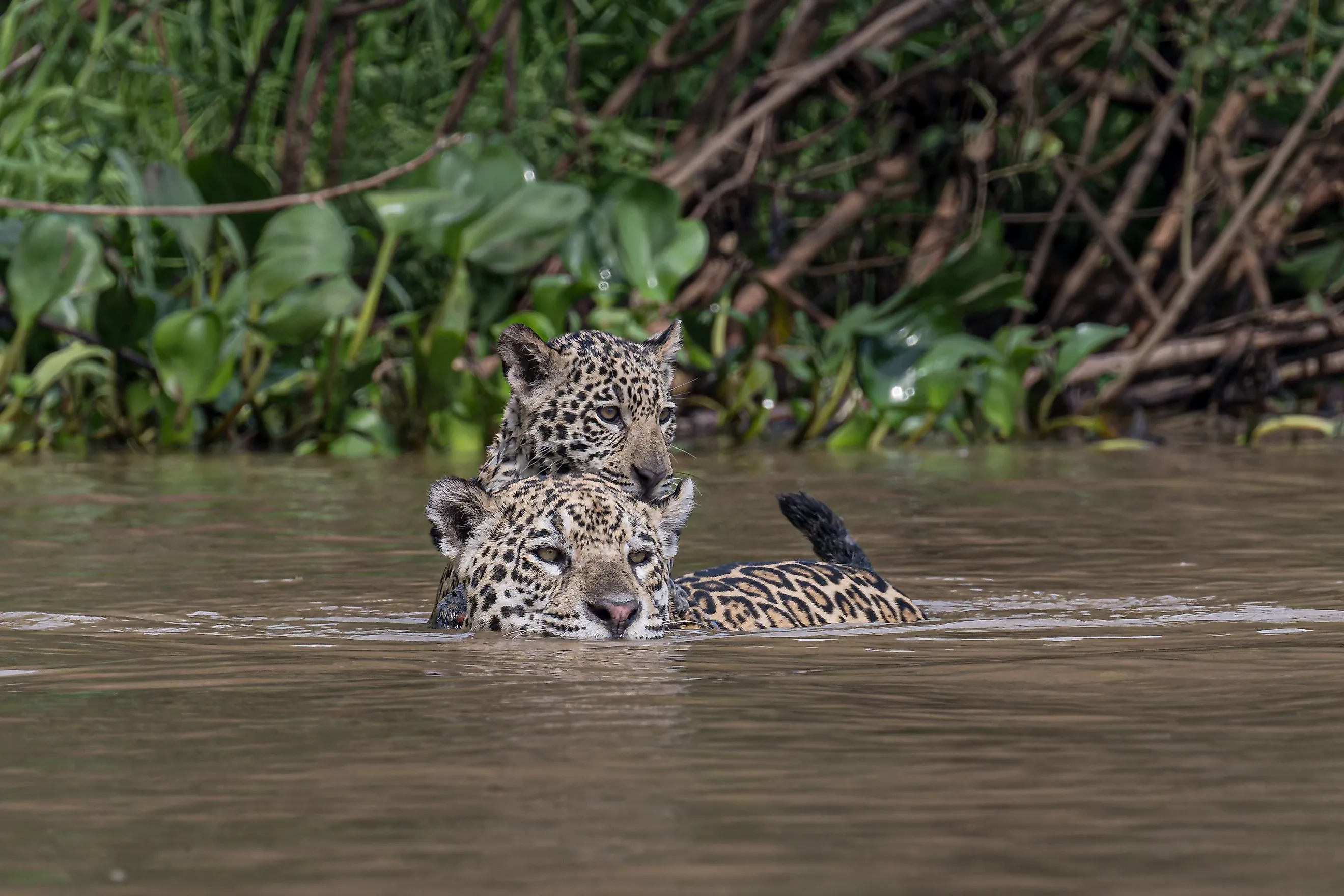
In August 2026, a wildlife camera recorded a jaguar roaming the mountains of southern Arizona, providing another rare glimpse of America's largest native wild cat. Jaguars once inhabited much of the southwestern United States, reaching as far north as the Grand Canyon, but today they are among the country's rarest predators. Most confirmed sightings in recent decades have occurred in Arizona's Coronado National Forest, where isolated mountain ranges provide habitat for animals traveling north from Mexico. Other national forests in Arizona and New Mexico have historical records of jaguars, although recent sightings remain extremely rare.
The Coronado National Forest - Arizona

The Coronado National Forest in southeastern Arizona encompasses approximately 1.78 million acres across several isolated mountain ranges known as the Sky Islands. These mountains rise thousands of feet above the surrounding desert, creating cooler forests and woodlands where jaguars can find shelter and prey. The region connects habitats associated with Mexico's Sierra Madre mountains and the Rocky Mountains farther north.
The Coronado has produced more confirmed jaguar records than any other national forest in the United States in recent decades. A male jaguar known as Macho B was repeatedly documented in the Atascosa Mountains between 2004 and 2009. More recently, University of Arizona researchers identified another male, nicknamed Cinco, in 2025. The animal was photographed repeatedly through 2026, confirming that jaguars continue to use this mountainous border region.
Santa Rita and Whetstone Mountains - Coronado National Forest

The Santa Rita and Whetstone Mountains, both part of the Coronado National Forest south and southeast of Tucson, became famous for a male jaguar nicknamed El Jefe. First photographed in the Whetstone Mountains in 2011, the animal was subsequently documented in the Santa Ritas beginning in 2012.
University of Arizona researchers recorded more than 125 detections of El Jefe between 2012 and 2015, establishing that the animal had remained in the region for several years. The jaguar later disappeared from Arizona's cameras but was identified in Mexico in 2022, demonstrating how far these animals can travel. The mountains also support black bears, mountain lions, deer, and javelinas, providing suitable habitat and potential prey for large predators.
Huachuca and Chiricahua Mountains - Coronado National Forest

The Huachuca Mountains, near Sierra Vista, contain another section of the Coronado National Forest where jaguars have been photographed. In November 2016, a remote camera recorded a male jaguar moving through the range. Researchers documented the animal several more times during 2017, although its remains were subsequently found in Mexico in 2018.
Additional jaguar detections occurred in the Huachuca Mountains during March and May 2023. Farther east, the Chiricahua Mountains have also produced repeated sightings of a male jaguar known as Sombra. First documented in late 2016, the animal has appeared in approximately 50 photographs and videos collected by University of Arizona researchers and their collaborators. The broader Chiricahua mountain complex extends across more than 700 square miles, illustrating the extensive territory that individual jaguars may occupy.
Gila National Forest - New Mexico

New Mexico's Gila National Forest contains approximately 3.3 million acres of mountainous wilderness, including portions of the Black Range and Mogollon Mountains. Although the forest has not produced the same photographic evidence of recent jaguar activity as the Coronado, historical records establish that jaguars once occupied this part of the Southwest.
In 1900, a hunter named Nat Straw trapped a jaguar in the Mogollon Mountains near Taylor Creek. A naturalist subsequently examined the animal's skin, providing physical evidence of its presence. Additional jaguars were reported from the surrounding mountains in the early 1900s. More recently, two biologists reported seeing a jaguar near the Aldo Leopold Wilderness in August 1990, although the encounter was never conclusively verified. There is no confirmed resident jaguar population in the Gila National Forest today.
Apache-Sitgreaves National Forests - Arizona

The Apache-Sitgreaves National Forests cover approximately 2.1 million acres in east-central Arizona, including portions of the White Mountains and Mogollon Rim. Unlike the Coronado, where jaguars have been photographed in recent years, records from these forests primarily concern historical encounters.
One of the most significant occurred on September 28, 1963, when a hunter killed a female jaguar near Big Lake in the White Mountains. The animal is generally considered the last confirmed female jaguar recorded in the United States. Although some wildlife officials later questioned whether it had arrived naturally or escaped from captivity, the encounter remains part of the documented history of jaguars in Arizona. No recent confirmed sightings have established that jaguars continue to inhabit the Apache-Sitgreaves National Forests.
Jaguar Reports at Buenos Aires National Wildlife Refuge - Arizona

Outside the national forests, the Buenos Aires National Wildlife Refuge offers another example of protected habitat within the jaguar's historical range. Established in 1985, the 117,464-acre refuge contains extensive grasslands, cottonwood-lined waterways, and portions of the Baboquivari Mountains' foothills.
The U.S. Fish and Wildlife Service recorded an unconfirmed jaguar report at the refuge in 1993. Although the sighting was never verified, the agency continues to identify the surrounding landscape as potential habitat for wandering jaguars from Mexico. Brown Canyon, on the refuge's western side, contains oak woodlands and rocky waterways that also support mountain lions, javelinas, and other wildlife.
Other Jaguar Sightings Beyond National Forests

Jaguars have also been photographed on land outside federally managed forests and wildlife refuges. In August 1996, a male jaguar was photographed in southern Arizona's Baboquivari Mountains, one of the earliest confirmed records following a long absence of documented live jaguars in the United States.
In February 2006, a jaguar was photographed on private ranchland near the Mexican border in southwestern New Mexico. The encounter occurred during a mountain lion hunt, when dogs located the animal in rugged mountain terrain. The jaguar was photographed and allowed to leave unharmed.
These encounters demonstrate that jaguars do not restrict their movements to designated conservation areas. Their territories can extend across national forests, private property, tribal lands, and the international border, making connected habitat important for their continued presence in the United States.
The Future of Jaguars in America's National Forests
Jaguars remain exceptionally rare in the United States, despite repeated sightings in the mountains of southern Arizona. All individuals confirmed in recent decades have been males, and no breeding population has been documented in the country for more than a century.
The Coronado National Forest remains the best-documented location for modern jaguar activity, while the Gila and Apache-Sitgreaves forests provide evidence of the species' wider historical range. Whether jaguars can establish a breeding population north of Mexico again will depend partly on the survival of populations farther south and the availability of connected habitat. For now, photographs of individual jaguars moving through Arizona's mountains offer some of the clearest evidence that these animals continue to cross into the American Southwest.