The 8 Deadliest Animals In The Southern United States
The Southern region of the United States comprises 16 states and is home to thousands of species of fauna. The terrain’s mostly low elevation consists of forests, coastal plains, marshes and swamps. This topography is paired with an almost year-round warm climate, experiencing an average of 200 to 300 frost-free days out of the year.
However, not all the creatures in the South are harmless. The warm and comfortable climate is home to venomous snakes, alligators, and insects that pack a punch. These are the deadliest animals in the Southern United States.
Cottonmouth

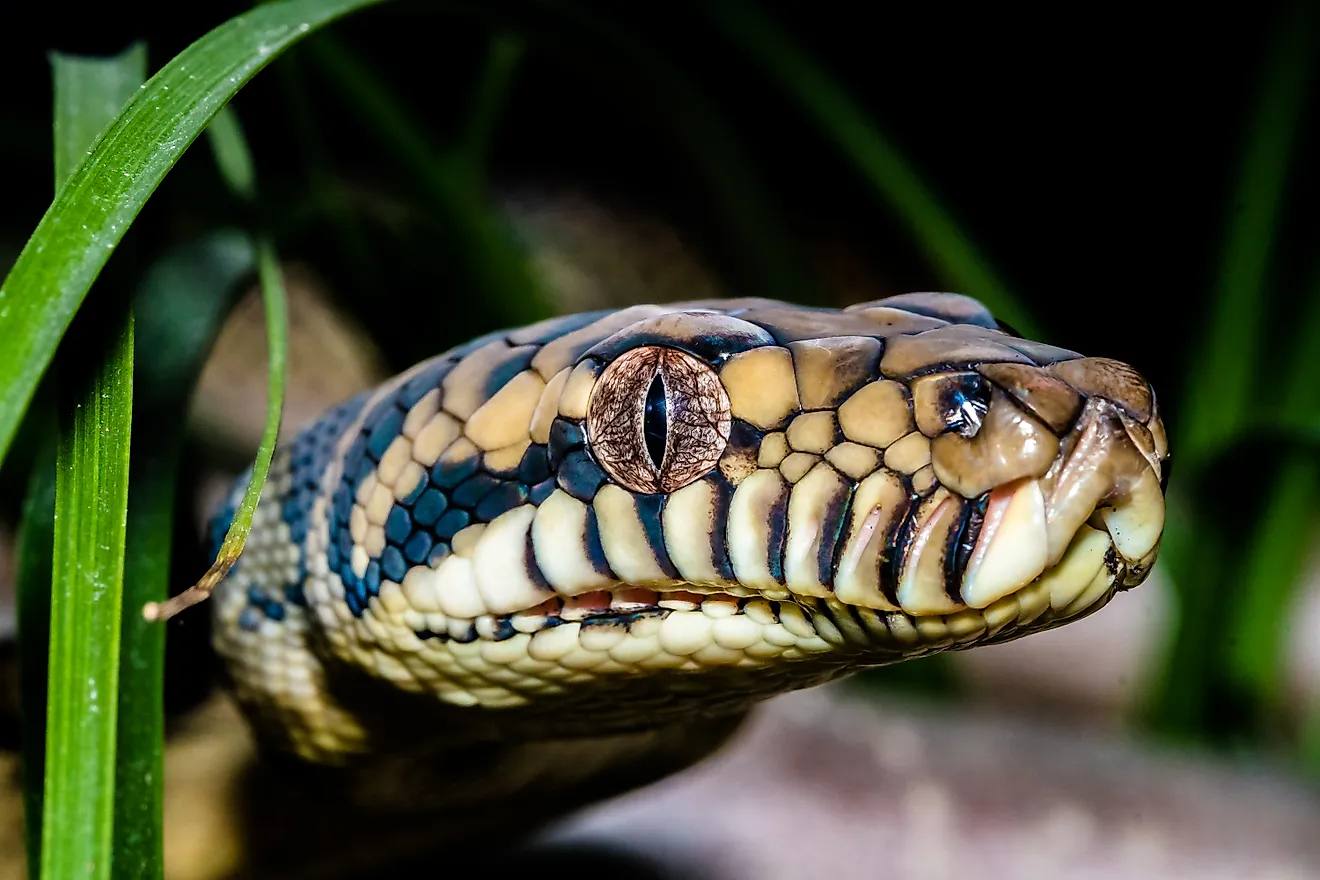
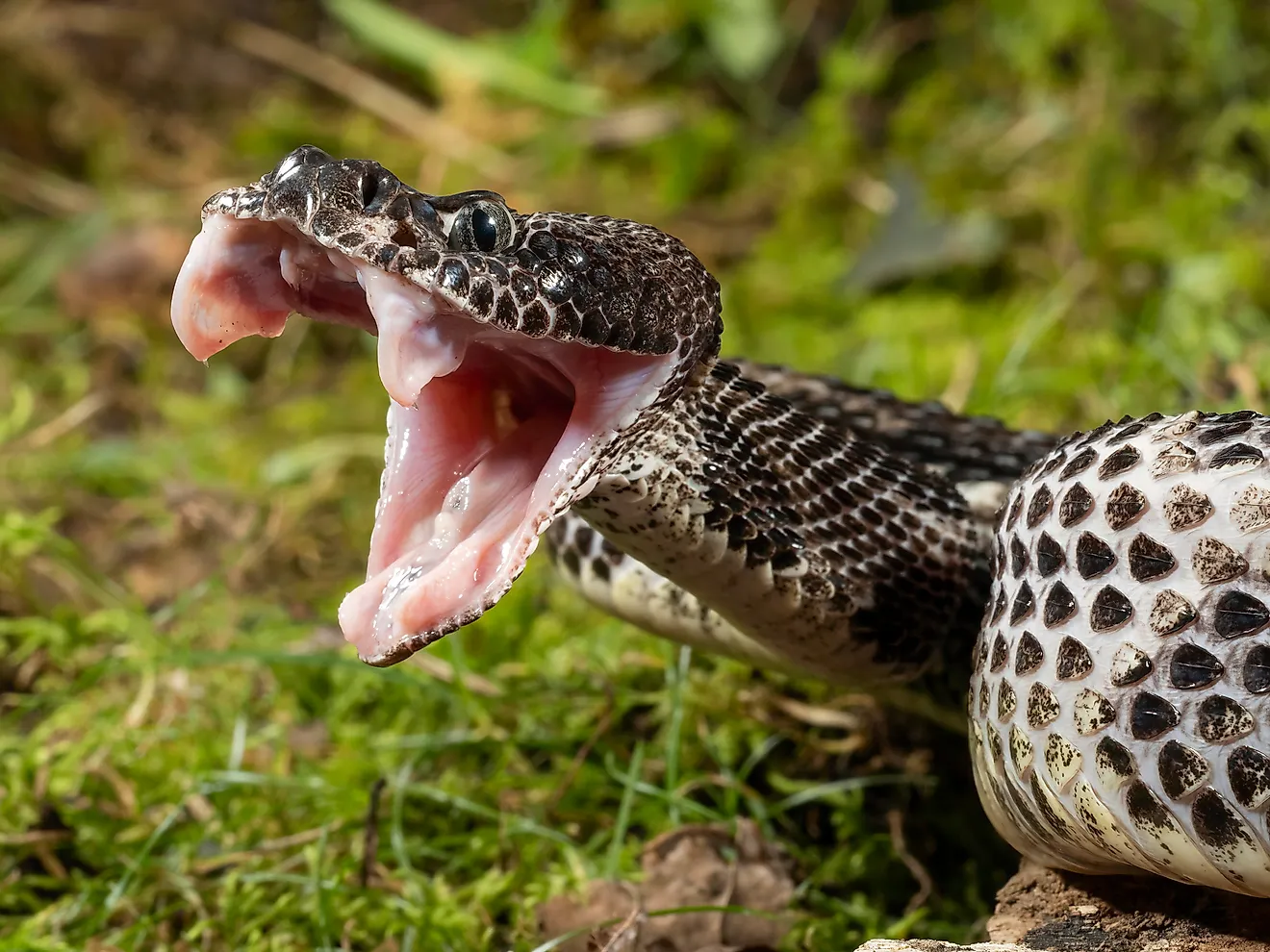
The water moccasin, or cottonmouth due to the white flesh lining its mouth, is a venomous snake present from southeast Virginia to Florida, and from west Texas to (more rarely) southern Illinois and Indiana. They are the only venomous snake in the United States that is semi-aquatic, inhabiting swamps, marshes, ditches, ponds, lakes, rivers, and streams. In these areas they will hunt mostly at night, preying on birds, small mammals, fish, amphibians, and even other snakes.
Water moccasin venom contains hemotoxins which prevents blood from clotting. Bites from water moccasin’s can include extreme pain around the area of the bite, temporary to permanent muscle and tissue damage, (very rarely) loss of an extremity, and internal bleeding. They are often confused with nonvenomous species of water snake, which can be defensive and bite, which results in them being killed. Many water moccasins live in national parks, or in states where they are protected, such as Missouri where many snakes are protected from being killed.
Copperhead

The copperhead has a wide distribution and is found in 28 states, ranging from eastern Kansas, Nebraska, Texas, and Florida. There are five subspecies of copperhead. In the South, they are found living in lowlands, and wet woodlands at the edges of swamps and marshes. Their venom is hemolytic, meaning it causes hemorrhaging and tissues damage, but it is also considered mild in comparison to other venomous snakes of North America. Their bites are seldom fatal to healthy adult humans which is fortunate considering they are responsible for the most venomous snake bites per year in the United States. In fact, studies have shown that their venom contains anti-cancer properties.
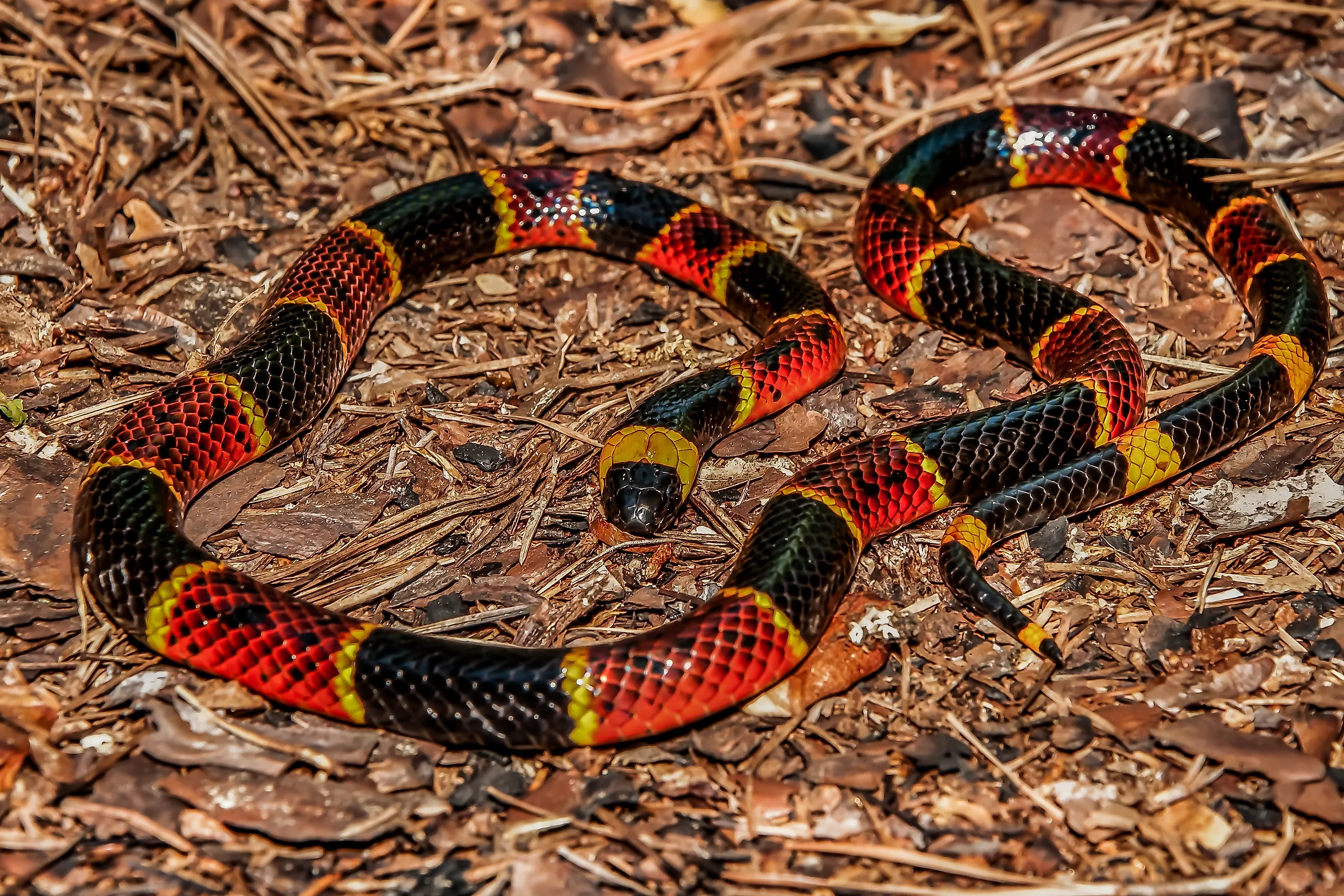
Coral Snake

The coral snake is the only venomous snake in the United States which is not in the viper family. It is part of a family of snakes known as Elapidae which are similar to cobras. Typical of most elapids, coral snakes have short, fixed fangs, making it capable of delivering a fast and envenomating bite. It inhabits sandy, forested, and scrubby areas, often staying hidden under leaf litter, logs, or underground where temperatures are cooler and humidity is retained. Heavy rainfall is known to push it up from underground to search for food, mates, or new habitat.
They possess a neurotoxic venom which attacks the nervous system, inhibits nerve transmission, and, if untreated, culminates in paralysis, respiratory failure, cardiac arrest, asphyxia, and even death. A bite from a coral snake is considered a medical emergency and treatment should be sought.
Rattlesnake

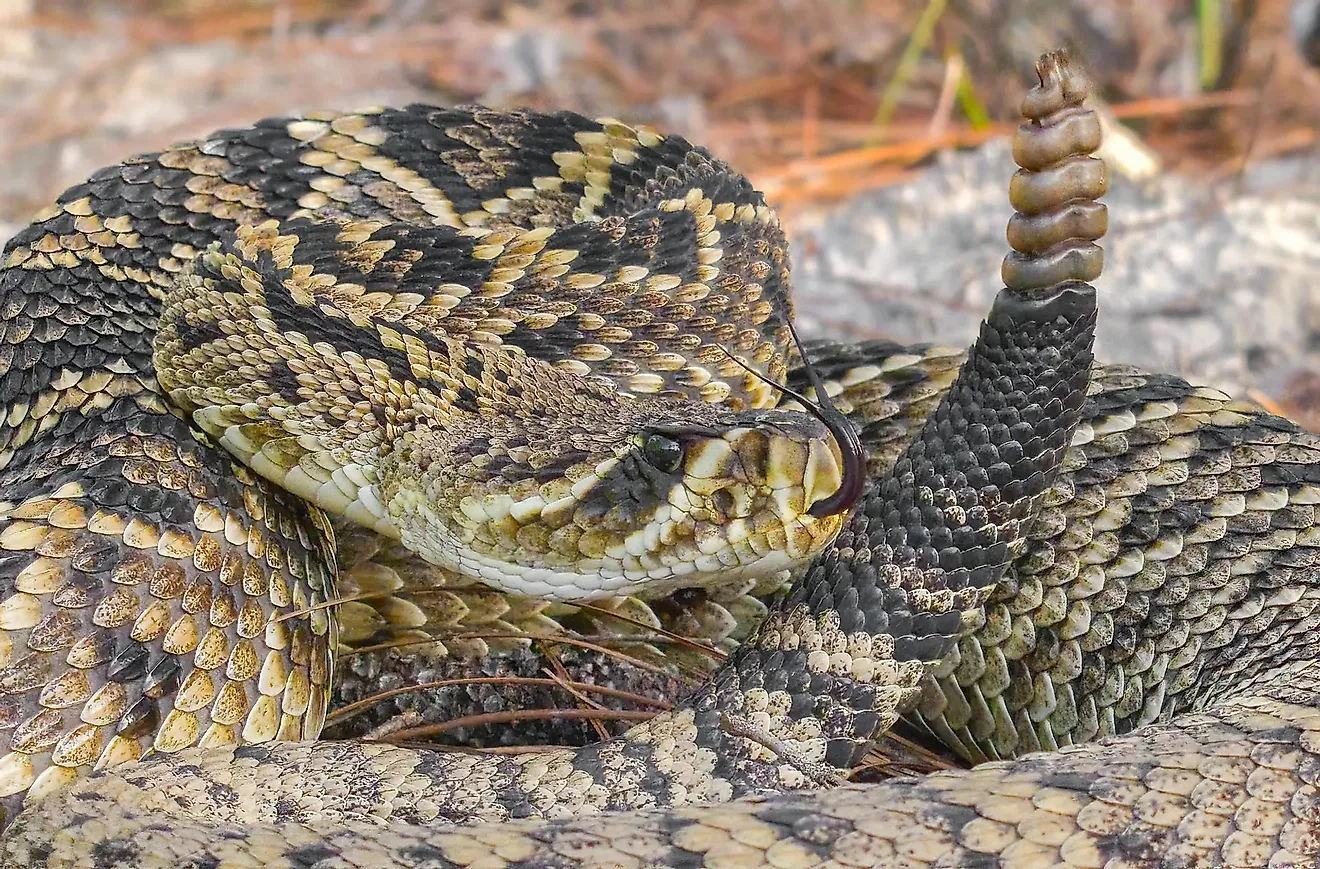
Rattlesnakes are present throughout most states, however the southern United States is home to the largest species of rattlesnake, and largest species of venomous snake in North America. The Eastern diamondback rattlesnake’s range spans from North Carolina to Louisiana, including Florida. They can be found in many habitats including scrublands, flatwoods, savannahs, and wet prairies around the edges of wetlands.
If startled or threatened, rattlesnakes will shake their tail causing the segments of the skin to buzz or rattle. If this is not successful in deterring predators, rattlesnakes can strike up to two-thirds of their body length. They have a very painful bite which delivers venom that contains hemotoxic properties which attacks red blood cells and causes tissue damage. However, although rattlesnake bites can be serious, they are usually not fatal as rattlesnake antivenom is readily available throughout their range.
American Alligator

The American alligator is native to the southern United States where they inhabit coastal wetlands, slow-moving rivers, swamps, marshes, and lakes where they can be spotted basking on the shore. They have the potential to reach lengths of up to 12 feet and weigh as much as 1,000 pounds, with adult males being heavier and slightly longer, with the potential to reach anywhere between 13 feet and 15 feet.
Alligators are apex predators, capable of taking down large prey items by submerging them underwater and drowning them. Despite their power, alligators are typically weary around humans. Most human-alligator conflicts stem from people illegally feeding alligators which teaches them to associate humans with food, causing them to become bolder, more confident around people, and more likely to attack than to flee into the water.
Fire Ant

Fire ants found in the United States are separated into two separate groups: native and imported, with imported fire ants being more hostile. Fire ants have been recorded as far west as California and as far north as Virginia, however, they have thrived the most in the South where the climate is warm and the terrain is flat enough for them to start colonies.
Fire ants live communally and are confrontational if provoked or their colony is threatened. They attack prey by latching on with their mandibles and use the stinger in their abdomen to inject venom into victims. It is capable of delivering multiple stings until it is either removed, killed, or its prey succumbs to the stings. Fire ant stings are painful and irritating to humans, causing red, itchy bumps that can develop into small pustules or blisters.
Mosquito

Mosquitoes are one of the most common pest insects found in the United States. There are over 200 species of mosquitoes in the contiguous United States, 12 to 20 of which can spread germs and make people sick. Due to their small size, it is hard to differentiate between which ones spread germs and which ones do not which is why you should protect yourself from their bites.
In the southern states, the yellow fever mosquito can be found in coastal cities and areas where it will lay its eggs in birdbaths, flowerpots, and other containers. Mosquitoes bite people by using a special mouthpiece called a proboscis to suck up blood. As it is feeding, it injects saliva into the skin, which may result in a small, itchy bump, or it may result in a large area of swelling, soreness, and redness.
Yellowjacket

Yellowjackets are social insects that live in large colonies which are widespread throughout the southern United States. The queen collects plant fibers and chews them into a paper-like material to construct the colony’s nest, which is often located underground. Yellowjackets are extremely defensive towards their nests, attacking anything that approaches within a few feet of their nest.
Yellowjackets have a smooth stinger which enables them to sting multiple times. They deliver a painful sting which injects venom under the skin of their victims. While most people only experience localized pain when stung, other people have allergies to wasps, in which case a sting is a medically significant event when the allergic reaction to it results in difficulty breathing.
The South's Deadliest Animals
When exploring the outdoors, whether that be recreating on the water or hiking, it is important to be aware that you are venturing into the place where wildlife calls home. Whether that be snakes slithering across the trail, alligators breaking the surface of the water, or irritating insects, familiarize yourself with what animals share the same space you are in and learn to look for the signs they may be close by.