The Wealthiest Roman Emperors Ranked
Roman emperors held the power to create structures which survived millennia, and the influence to alter history on a whim. Beyond a hoard of coins, their power included the allocation of imperial funds, reception of inheritances, confiscation of estates, and possession of immense quantities of war booty. The figures below instead compare the largest reasonably documented pools of wealth each emperor could command during his reign.
The sestertius, abbreviated HS in modern scholarship, was one of Rome's standard units of account. Four sesterces equaled one denarius. During the early empire, the physical sestertius was generally a large brass coin, but figures running into the billions were accounting sums rather than warehouses filled exclusively with sestertius coins. Among the emperors of the first three centuries CE, the most striking surviving figures repeatedly approach 2.7 billion sesterces. But quantifying true wealth is trickier than tallying a balance in a bank account. So, this is a polaroid snapshot at some of the key financial drivers providing the Roman scepter with its considerable thrust.
Tiberius

Tiberius Claudius Nero was the 2nd Roman emperor from 14-37 CE. He was able to build extraordinary wealth from the preexisting momentum of Augustus. Where his predecessor was creative and constructive, Tiberius was miserly and conservative. The coffers grew fat but he was hated. His reclusive tendency caused many public rumors and it was believed, according to ancient Roman historian Suetonius, that Tiberius preferred retiring to perverse pleasures on his personal island retreat, Capri, rather than being active in affairs of state. He was rumored to have poisoned rising stars like the popular general, Germanicus, and several other potential usurpers, even relatives, out of competitive, overblown paranoia.
Though the empire was stable territorially and financially, it was rife with palace intrigue. The Praetorian Guard generated considerable fear through stints of daily executions of the emperor's suspected rivals. Yet Tiberius was simultaneously such a spendthrift that he would often serve leftovers from days before, during official meals, or present half a boar instead of a whole boar on significant dinner feast occasions. He received a patrimony through Augustus as his adoptive father of approximately 100 million Sesterces (HS), based on the report of Augustus himself in his 76th year, in regards to allocation of sums to heirs, apart from normal revenues flowing into the royal treasury. The surest indicator of the degree of Tiberius' total amassed imperial wealth is the amount reported that was in the royal treasury, available to the next emperor, Caligula, after Tiberius died. Suetonius asserts that it was 2.7 billion HS (~$97 billion today).
Caligula

Caligula inherited the largest fortune of any emperor. He ascended the throne at age 24, following the reign of his fiscally conservative Great Uncle Tiberius, who had left a royal treasury containing an ample 2.7 billion sesterces. Though his father Germanicus was one of the greatest Roman generals, the overriding theme of Caligula's rulership was extravagance and absolute madness, as he completely squandered the immense inheritance he received within two years. Tiberius is quoted as saying, in reference to the young Caligula, "I am nursing a viper for the Roman people."
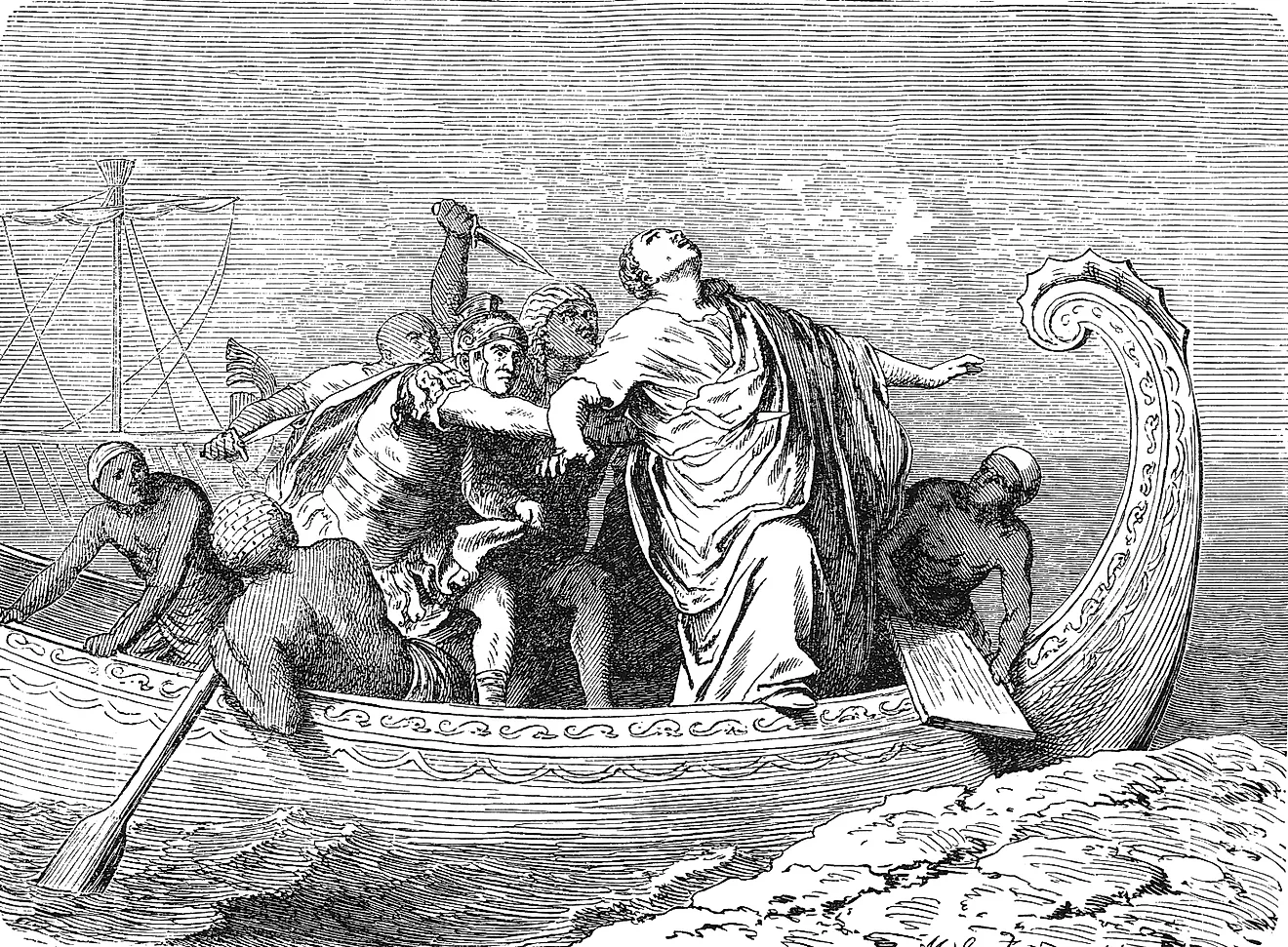
Initially, Caligula followed through on several of Tiberius' civic projects and acted generously in payments to soldiers and offerings to the people. There is an anecdote related by Suetonius where gold "rained" on Rome because Caligula tossed coins from balconies to the people below on several occasions in an extravagant bid to be popular. When the spree was over and the money was gone, however, his sadistic side began to emerge. Wills were invalidated and entire estates confiscated if Caligula was not named as a beneficiary. In cases where he was named, sometimes an elderly condition was accelerated through a premature death. Arbitrary taxes would be imposed with public notices containing tiny print so as to fool people into incurring more penalties.
Caligula's personal life was full of hedonistic horror. The emperor enjoyed direct humiliation of others, and would even take newlywed wives as his own right after their wedding. Meanwhile, he demonstrated schizophrenic traits, and a deep fear of thunder. What could go wrong?
Antoninus Pius

Antoninus Pius, who reigned as 15th emperor from 138-161 CE, had substantial family property wealth before becoming emperor, inheriting large tracts in Etruria and Campania provinces of Italy. He was handpicked as an adoptive heir by his predecessor Hadrian because of his steady temperament and calm demeanor, and is recognized as the fourth of the "Five Good Emperors." His reign represented the high-water mark of stability for the Roman Empire, during a period of 84 years of largely constructive tranquility from 96-180 AD.
In an interesting coincidence, his total wealth at the end of his reign came to 2.7 billion sesterces, an identical amount as that reported in Tiberius' treasury, as well as the calculated value of the treasure Trajan seized from Dacia. However, inflation had begun to devalue the money supply. For example, a common soldier under the reign of Tiberius would make roughly 900 sesterces annually, whereas the same level soldier under Antoninus Pius would have made 1200 sesterces, a reduced purchasing power of 25%. The 2.7 billion HS in 161 CE would have been closer to 73 billion dollars today.
Some of Antoninus' thrifty policies included cutting salaries of prolonged state sinecures, selling useless palace luxury items and inactive lands, and providing a sensible and more transparent taxation system. He would even donate his personal income to the state. His successor, Marcus Aurelius, described Antoninus as a careful manager of expenditure who was able to accept criticism constructively.
Augustus

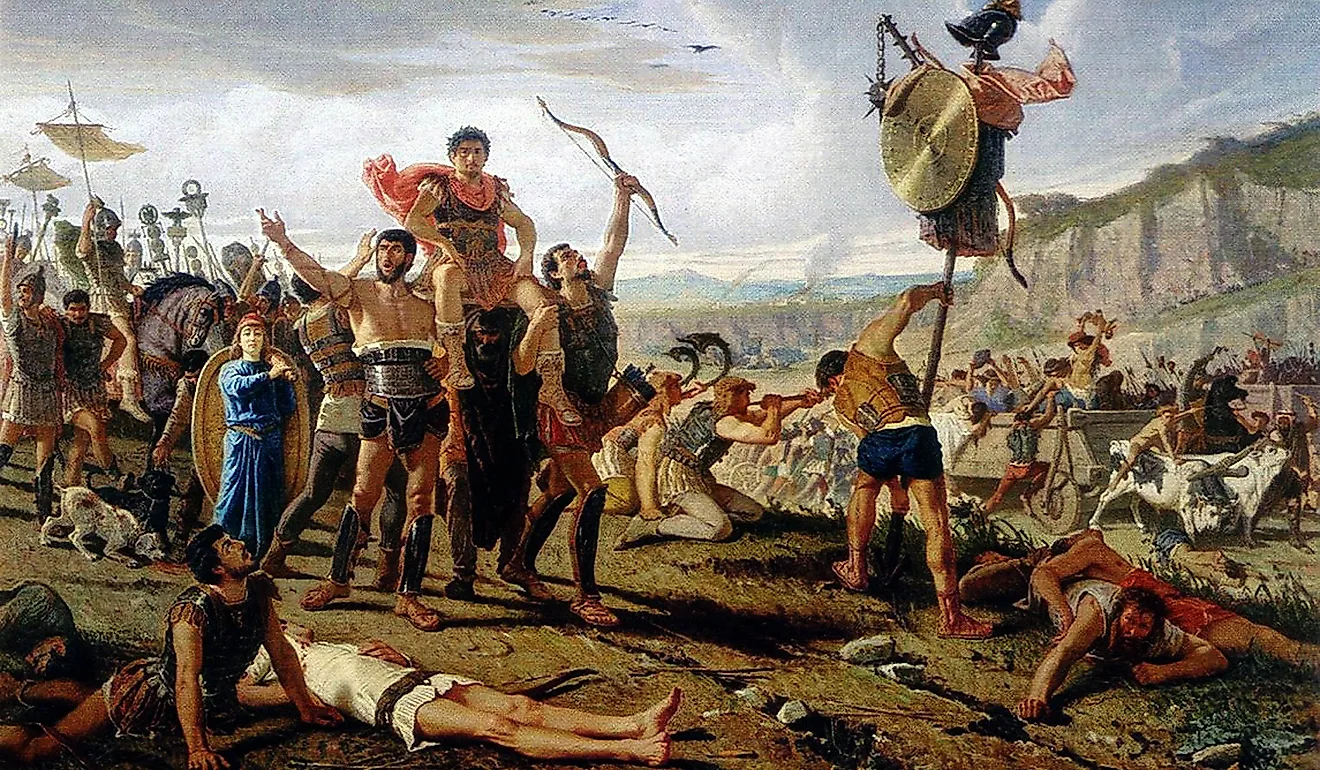
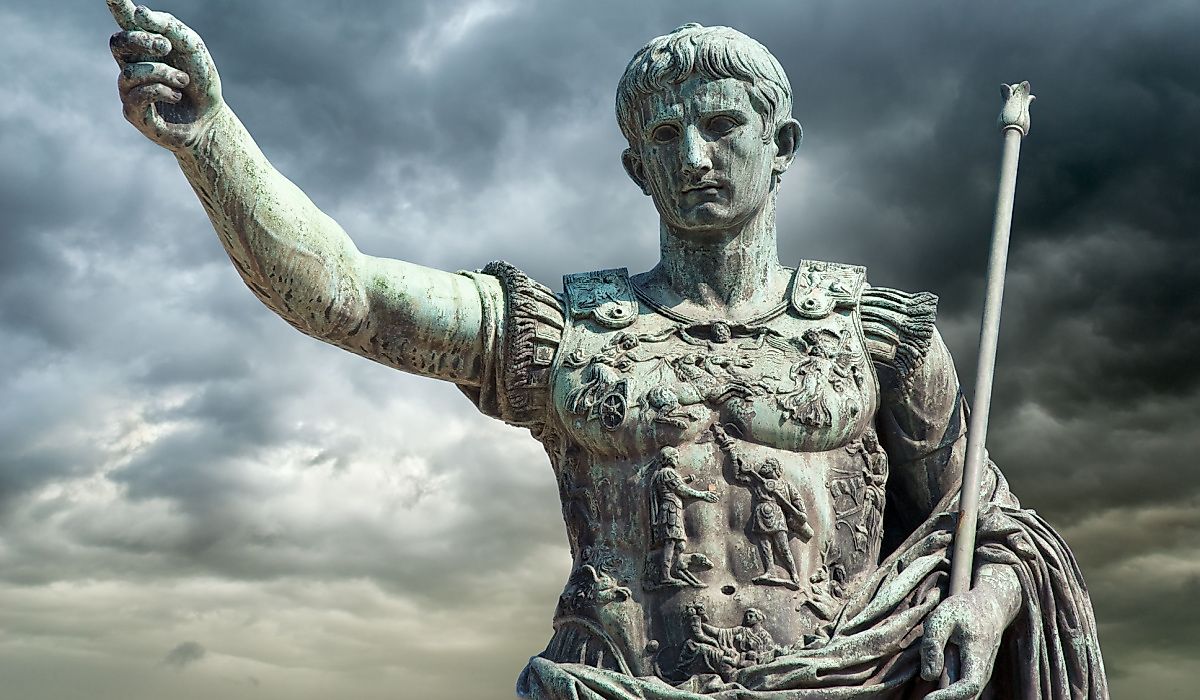
Augustus, or Octavian prior to his ascension, was emperor from 27 BCE until 14 CE. He began with considerable advantages. Julius Caesar was his great-uncle and made the young Octavian his principal heir and posthumously adopted son. After Caesar's assassination, Octavian joined Mark Antony and Lepidus in the Second Triumvirate. Octavian and Antony defeated Brutus and Cassius at Philippi in 42 BCE. Years later, Octavian defeated Antony and Cleopatra's forces at Actium in 31 BCE, then took Alexandria in 30 BCE and annexed Egypt, bringing both immediate booty and a major new stream of imperial revenue.
Augustus himself left unusually detailed financial claims in the Res Gestae. He recorded paying about 600 million sesterces for land in Italy assigned to veterans and another 260 million for provincial land. He later spent 400 million on cash rewards for discharged soldiers. He also states that he transferred 150 million of his own money to the public treasury and 170 million from his patrimony into the military treasury. Augustus used wealth to settle veterans, stabilize the new political order, and establish institutions that survived him. Through these measures Augustus built the financial machinery that allowed Tiberius to accumulate the enormous reserve he later passed on.
Marcus Aurelius

Marcus Aurelius inherited vast resources from Antoninus Pius, but he also inherited them jointly. Lucius Verus became co-emperor in 161 CE and remained so until his death in 169. Cassius Dio's later account says the pair had received 2.7 billion sesterces at their accession, an immense reserve.
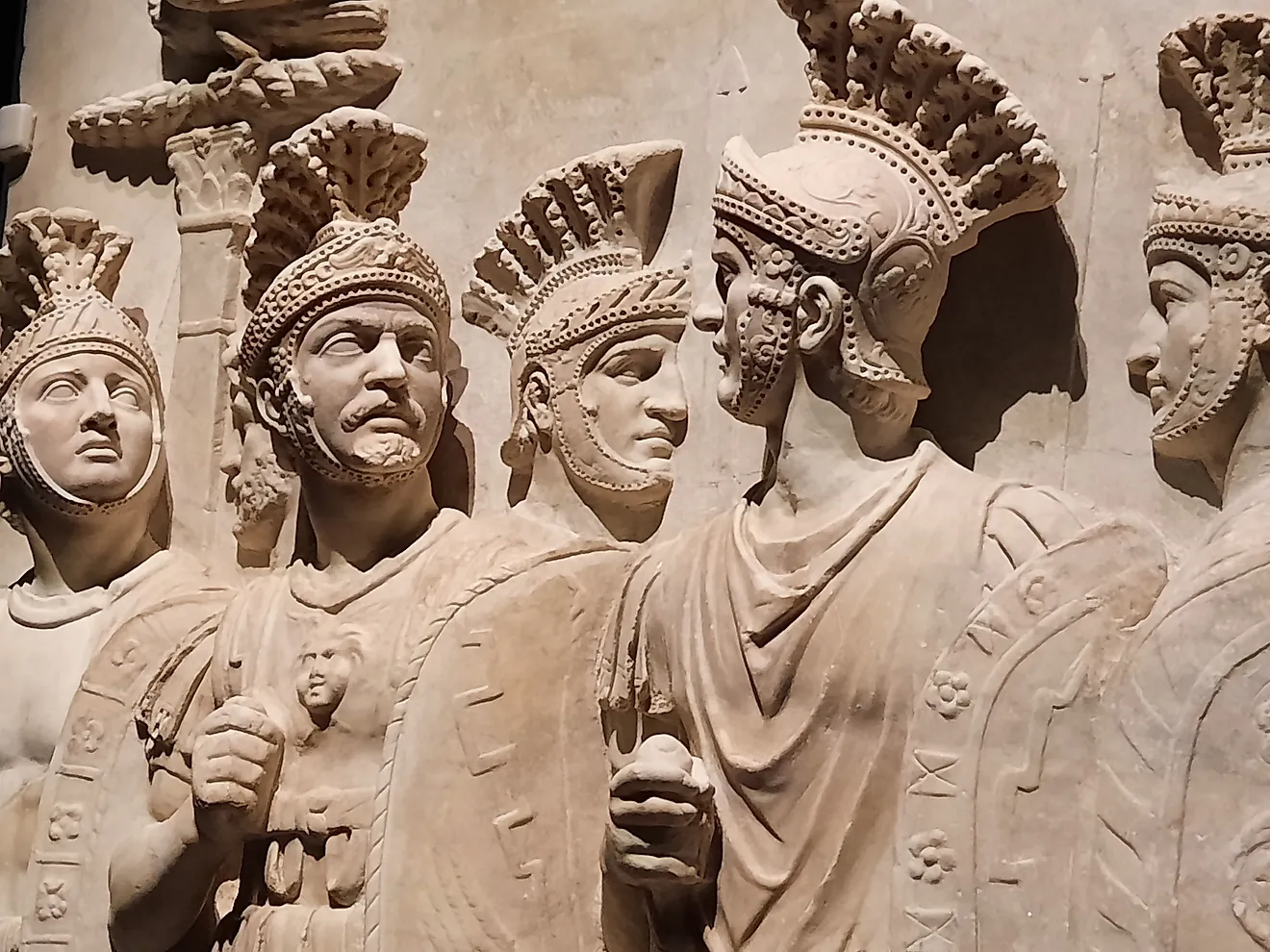
The new emperors immediately demonstrated their financial power through the traditional accession payment to the Praetorian Guard. Dio says Marcus and Lucius had given about 20,000 sesterces to each guardsman, substantially more than Pertinax could afford when he compared himself with them three decades later.
Marcus's challenge was preserving his initial wealth through a succession of emergencies. The Parthian War was followed by prolonged fighting along the Danube. At the same time, the epidemic generally known as the Antonine Plague damaged communities across the empire and added to the pressures on government resources. Rather than impose extraordinary contributions to finance the northern wars, Marcus reportedly auctioned valuable possessions from the imperial palace in the Forum of Trajan. Later accounts say the sale continued for weeks and included expensive imperial furnishings and clothing.
Trajan

Trajan was possibly the wealthiest Roman emperor of all, and was officially dubbed "Optimus Princeps" (Greatest Emperor) by the Roman Senate. He is responsible for the military expansion of the Roman empire to its largest size before it began to decline, a surface area encompassing the entire Mediterranean region totaling approximately 2 million sq. miles (~5 million sq km). Estimates assign Trajan a fortune of roughly 2.6 or 2.7 billion sesterces, largely from his military victories.
Trajan's conquest of Dacia in 106 CE brought Rome control of a rich kingdom north of the Danube. Cassius Dio tells a memorable story about the treasure of the Dacian king Decebalus. According to Dio, Decebalus diverted the River Sargetia, buried gold and silver in its bed, restored the river, and concealed other valuables in caves. A man named Bicilis later revealed the hiding places to the Romans. Trajan's reign also saw enormous public construction and continued military expansion. By the end of his reign in 117 CE, Roman territorial control had reached its greatest extent, although some of the eastern conquests were quickly abandoned under Hadrian.
Septimius Severus

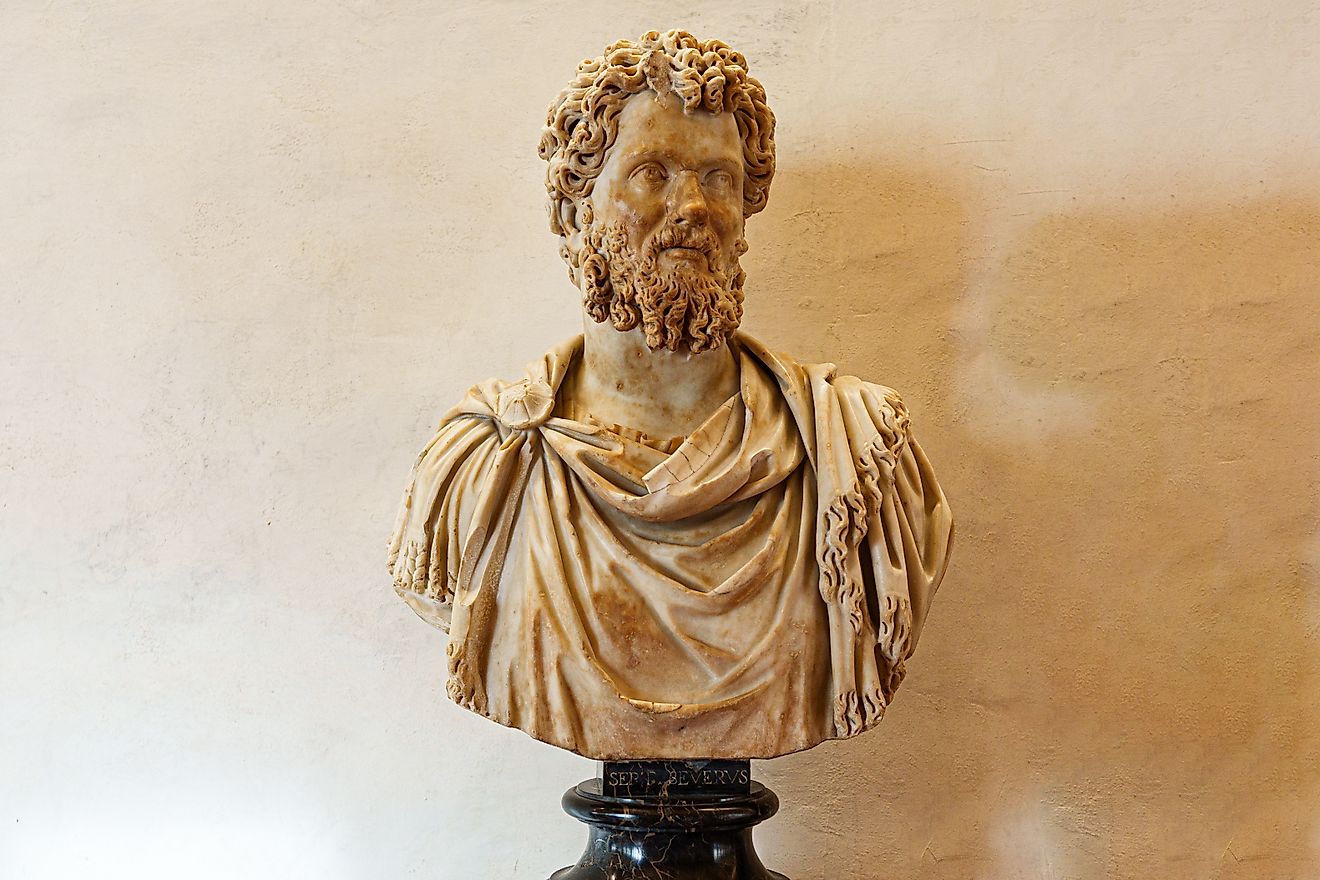
Septimius Severus rose during a period when imperial wealth and military power became unusually difficult to separate. Thus, his wealth would rise and fall with military action. After Commodus was murdered in 192 CE and Pertinax was killed the following year, several contenders fought for the throne. Severus eventually defeated his major western rival, Clodius Albinus, near Lugdunum in 197 CE. The clearest figure for his wealth comes from the tenth anniversary of his accession. Cassius Dio states that Severus distributed gold to the citizens receiving the grain dole and to the Praetorian Guard. The total cost was 200 million sesterces, which Dio described as an unprecedented public largesse.
One of the strangest financial episodes of the civil war involved a schoolteacher named Numerianus. Cassius Dio says Numerianus pretended to be a senator authorized by Severus, gathered a force, killed a few of Albinus's cavalry, and performed other military exploits. He eventually captured 70 million sesterces and sent the money to Severus. He did not, as sometimes claimed, personally defeat Albinus. Severus himself won the decisive battle.
Victory also brought confiscations. Dio reports that Severus later condemned 29 men accused of supporting Albinus. Property seizures from defeated political opponents became another means of strengthening the new regime. Severus then turned east. His forces captured the Parthian capital of Ctesiphon during the campaign of 197-198 CE, bringing additional booty and captives under Roman control. Yet much of the wealth Severus accumulated flowed quickly back toward the army and the population of Rome.
The Best & Worst With The Most
In Roman times, wealth involved contested control over the fates of millions of people in various countries, radical changes in fortune, and the temptations, thrills, and pitfalls of an adventurous age. While it is used in very different ways based on individual character, a type of continuity emerged representing joint efforts across early Roman dynasties. Some emperors operated quite selflessly, while others became the picture of megalomania. As is visible here, the best and the worst with the most money can be inspirational, as well as terrifying.