How Roman Engineers Built Bridges That Still Stand
Why do bridges built thousands of years ago in Ancient Rome still stand today, when many modern bridges start to corrode within half a century? The Alcántara Bridge in Alcántara, Spain, is one such example. Built over the Tagus River in the early second century CE, it remains one of the best-known Roman stone arch bridges. Architects and archaeologists still study how Roman engineers built bridges that stand to this day. Their research has led to surprising discoveries about the structure of such bridges and materials used to build them.
The Spans of Roman History:

Roman civilization began in the 7th century BCE and lasted through a republic phase and an imperial phase which ended in the late 5th century CE. During that time, the Romans made many advances in the construction of roads, bridges, and aqueducts. Bridges held a special place, as they supported Roman military campaigns and day-to-day life. This led to the development of skilled builders who traded ideas, leading to Roman bridges built on a scale rarely matched in the ancient world. By 100 BCE, Romans began to build permanent stone bridges using a durable natural material called pozzolana (originally used in river piers). Roman bridge-building reached its peak under Emperor Trajan. Bridges built during his reign, like the Alcántara Bridge, surpassed previous structures. Trajan’s rule saw the construction of the largest Roman bridge, which was 1,135 meters long and spanned the Danube River, although only its piers are visible today. Construction declined as the Roman Empire began to falter during the third century CE, and barbarian invasions in the fourth and fifth centuries CE saw many bridges destroyed.
Keystone Bridges

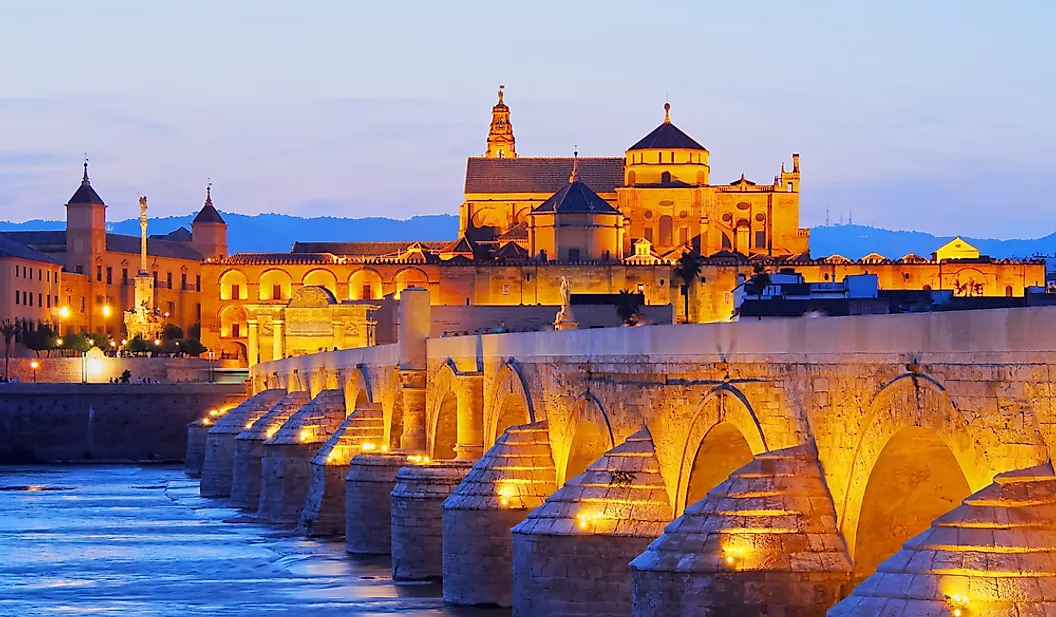
A key example of Roman bridges is the Pons Aemilius, an early piece of river infrastructure which bridged Trastevere with the Forum Boarium. Built and modified between 179 BCE and 142 BCE, the Pons Aemilius had the thick pillars and wide arches which became typical of bridges built during the late Republic. Only a single arch of the Aemilius still stands today, but other Roman bridges, such as the Alcántara, have survived for millennia. The oldest functioning bridge in Rome, the Pons Fabricius, has survived centuries of flooding and is still used by pedestrians. Built in 62 BCE to connect Tiber Island to the Campus Martius, the Pons Fabricius has survived two millennia of use. It features two wide arches connected to a central pier, which help to showcase exactly why Roman bridges have lasted so long. These functioning examples, and the remains of those which no longer function, provide vital clues for why these structures remain upright.
Structure

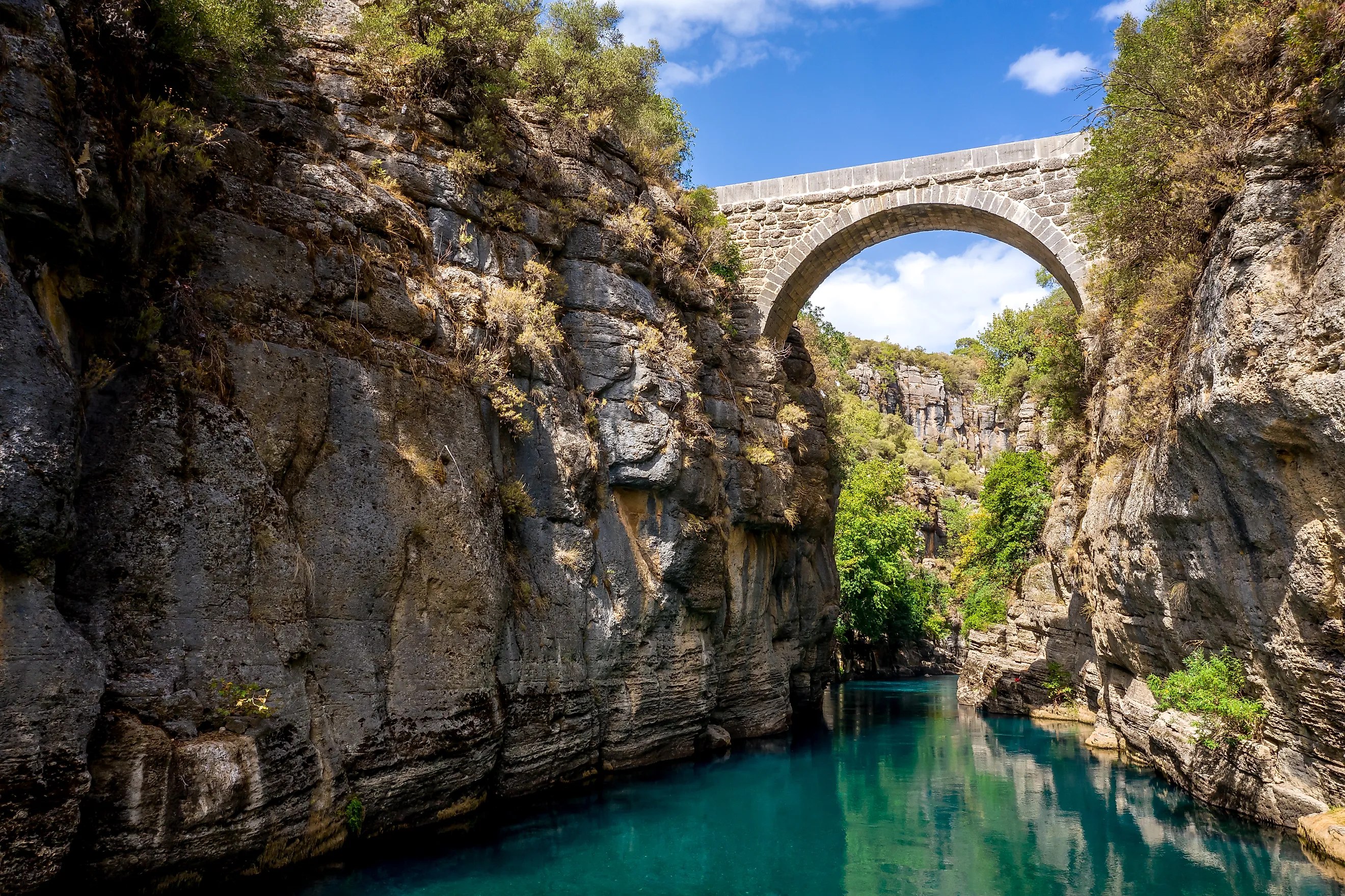
A Roman bridge’s structure dictates its longevity. The Roman bridges that most fascinate engineers today are built as circular arch bridges. The technique originated with the early Mediterranean and Near-Eastern builders, but the Romans adapted the practice and expanded it, making it a feature of their architecture. The circular arches are made of multiple wedge-shaped stones called “voussoirs” arranged in an arch, with the central voussoir called the “keystone.” Each voussoir’s top is wider than its bottom, so the top is placed on the outside. This method distributed the weight more uniformly, and when a downward force is applied to the arrangement, the voussoirs are pressed together instead of being forced apart. This allowed arch bridges to support a greater load and also allowed them to span wider areas. Roman builders often did not need mortar to hold the stones together, relying instead on precise cutting and compression.
In addition to the arches, Roman bridges had another structural feature which made them versatile and long-lasting. Roman bridges also depended on strong piers: vertical supports that carried the arches and transferred their weight into the riverbed or bedrock. The semi-circular arches were built atop these load-bearing piers. Because the Romans were often bridging large rivers, however, their piers had to be built in fast-moving rivers. So, Roman engineers developed cofferdams, temporary structures built from wooden piles sunken into the riverbed and sealed with clay. This created a temporary waterproof area which protected the pozzolana concrete as it dried. While most still-functional bridges were built on rock, many of the piers built using the cofferdam technique still survive to this day, giving researchers and engineers vital evidence of how Roman engineers built their bridges, and the materials they used.
Materials

While Roman bridge-builders often let the stonework support itself without the use of mortar, Roman concrete was a vital structural element. Roman bridges typically used long-lasting materials such as stone and pozzolana. Pozzolana takes its name from the pozzolanic materials used to make it. When mixed with calcium hydroxide, pozzolanic substances such as volcanic ash made a natural cement, which Romans used. However, one possible explanation for Roman architectural longevity may lie in another ingredient and the methods used to mix the pozzolana. Scientists found that samples of Roman concrete frequently included lime clasts, brittle calcium carbonate formed during the mixing. While once believed to be a byproduct of poor mixing, further research revealed that the clasts, which resulted from extreme temperatures, were likely intentional. By using a high-temperature mixing method including highly reactive quicklime, beneficial chemical reactions occurred which reduced curing and setting times. The lime clasts also may have given Roman bridges a "self-healing" effect. When cracks formed in the mortar, moisture would dissolve the lime clasts, which would fill in the cracks, strengthening and restoring the composite.
A Comparison to Modern Bridges
With advanced architectural structures and construction composites, we can see major differences between the ancient Roman-built bridges and modern bridges. So why do modern bridges not last as long as millennia-old masonry bridges? Part of the explanation is that Roman bridges did not experience the heavy loads which modern bridges do. Most Roman bridges only experienced foot traffic and horse-drawn carts, while modern bridges must hold up under the weight of modern automobiles. Moreover, the materials used in modern bridge construction differ greatly. In the past century, many modern bridges were built using steel-reinforced concrete, costing less than traditional materials. Concrete is poured around an internal structure of steel rebar to form the arches and slabs. However, because steel-reinforcement in concrete can corrode when moisture, salt, or cracks reach the rebar, these bridges often begin deteriorating within forty or fifty years. As a result, less-steel-reliant bridge designs are being pursued, and many engineers are looking to Ancient Rome for answers.
A Lasting Legacy
Roman-built bridges became a vital extension of Rome's empire, relying on the use of ingenious structures and carefully selected materials. The circular arch and innovation of supporting structures helped their bridges bear loads. The use of quicklime in their pozzolana meant that their bridges were easier to build and could self-heal when worn down. While modern bridges often struggle to last half a century due to inexpensive construction materials, Roman engineers built bridges that truly stood the test of time.