How Rome Became A Superpower
Like many of the ancient Greek cities, the Roman Republic is often held up as an example of an “enlightened” state. While this claim is more complicated than is often portrayed, the rise of the Roman Republic did mark a significant shift in the ancient world. Contrasting the often tyrannical rule of the Roman kings that preceded it, the Roman Republic introduced checks and balances to ensure that no one gained too much power. The Roman Republic was also characterized by territorial expansion. All these factors, and more, made it one of the pre-eminent states of the ancient world.
Pre-Republic Rome

Roman tradition asserts that Rome was founded in 753 or 752 BCE when Romulus, the son of the war god, Mars, killed his twin brother Remus. Romulus then created institutions that defined the Roman state, including the Senate and the army. He also made himself king. The political system gave the king supreme military, judicial, and religious authority. Meanwhile, the Senate served an advisory role and was filled by aristocrats. The influence of the Senate thus depended on the willingness of the king to listen to it.

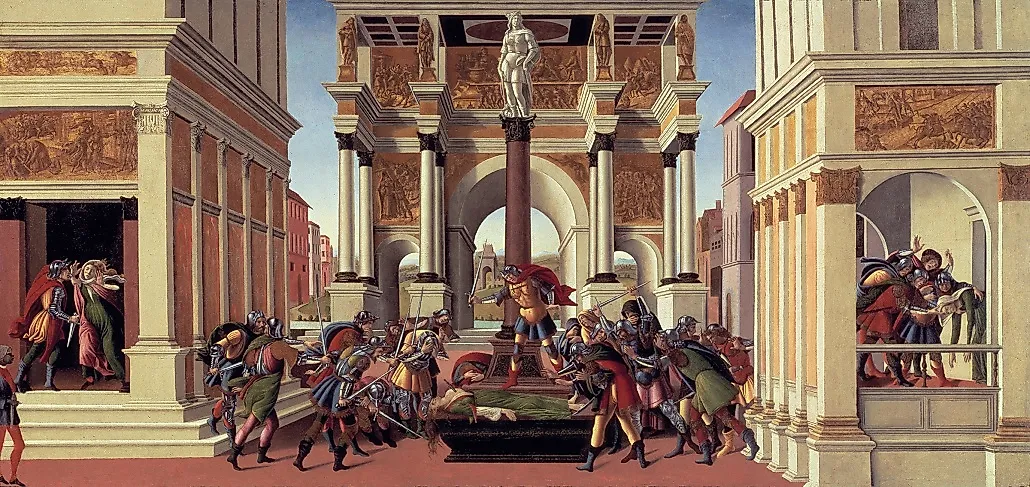
Seven kings ruled during the Roman Monarchy. Lucius Tarquinius Priscus, who reigned from 616 to 578 BCE, dramatically expanded the Senate and introduced massive construction projects that set Rome on the path to success centuries later. However, Lucius Tarquinius Superbus, the final Roman king, ignored the Senate and relied on force, as applied by his household guard, to enact his will. Admittedly, he also oversaw some major construction projects, including the completion of the great temple of Jupiter on the Capitoline Hill. Nonetheless, Tarquinius’ regime began to collapse when his son, Sextus Tarquinius, assaulted a noblewoman named Lucretia, who then committed suicide in protest. This resulted in an uprising that ended in Tarquinius ' expulsion in 509 BCE. That same year, the monarchy was abolished in favor of an elected consul, marking the beginning of the Roman Republic.
Checks and Balances
While not as representative as a state like Athens, the Roman Republic saw the establishment of some semi-democratic systems. Still, the focus was more on ensuring that power did not become too concentrated in the hands of one person or institution. Therefore, the king’s power was divided between two consuls, who were elected annually and could veto each other’s decisions. The consuls were elected by the Comitia Centuriata, a popular assembly in which Roman citizens could vote.

The Senate, while still technically advisory, became the most powerful governmental institution. This was the case for several reasons. First, while the consuls were elected every year, senators kept their positions for life. Thus, they held significant expertise and could theoretically focus on long-term, consistent policies, rather than making short-term decisions to appease the populace. The Senate also oversaw the treasury, meaning that it had authority over war budgets and public works projects. Finally, in times of crisis, the Senate could recommend the appointment of a dictator, who was then formally appointed by a consul to rule with near-absolute authority for up to six months.
An Imperfect System

This political system was imperfect. As noted in the previous section, the Senate had an outsized influence, meaning that the goal of the Republic, which was to limit the power of one person or institution, was not fully achieved. Furthermore, women could not vote or participate in government in any capacity, and the voting system for men was limited, unequal, and heavily biased toward elites, especially in the Republic's early days. Known as patricians, elites held the majority of seats in the Senate, were most frequently elected as consuls, and held more sway in popular assemblies. This left the commoners, or plebeians, without sufficient representation. Nonetheless, throughout the Republic’s existence, plebeians fought for greater political power, culminating in the Licinio-Sextian laws of 367 BCE, which opened the consulship to non-patricians and marked a significant step toward political equality.
Territorial Expansion

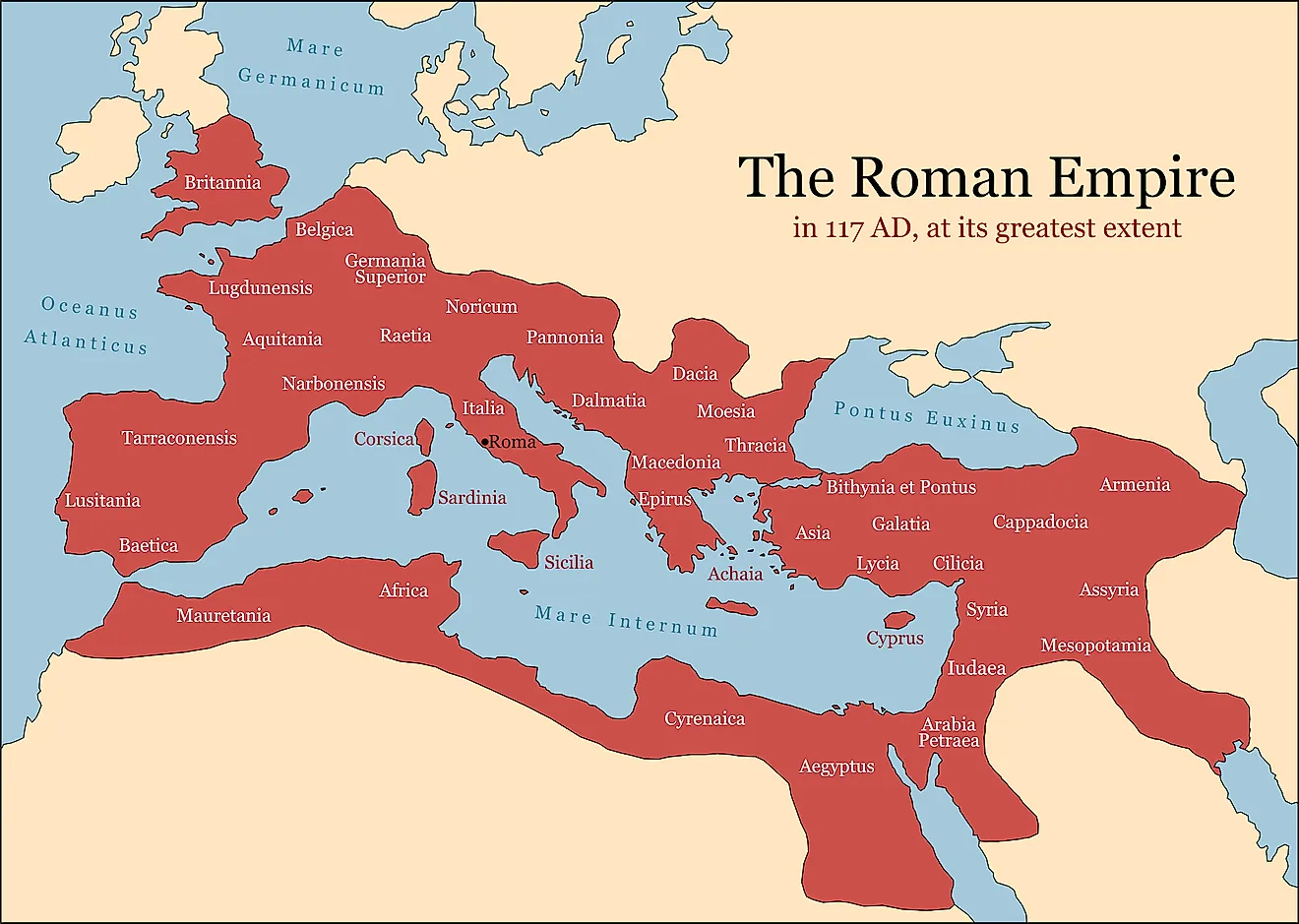
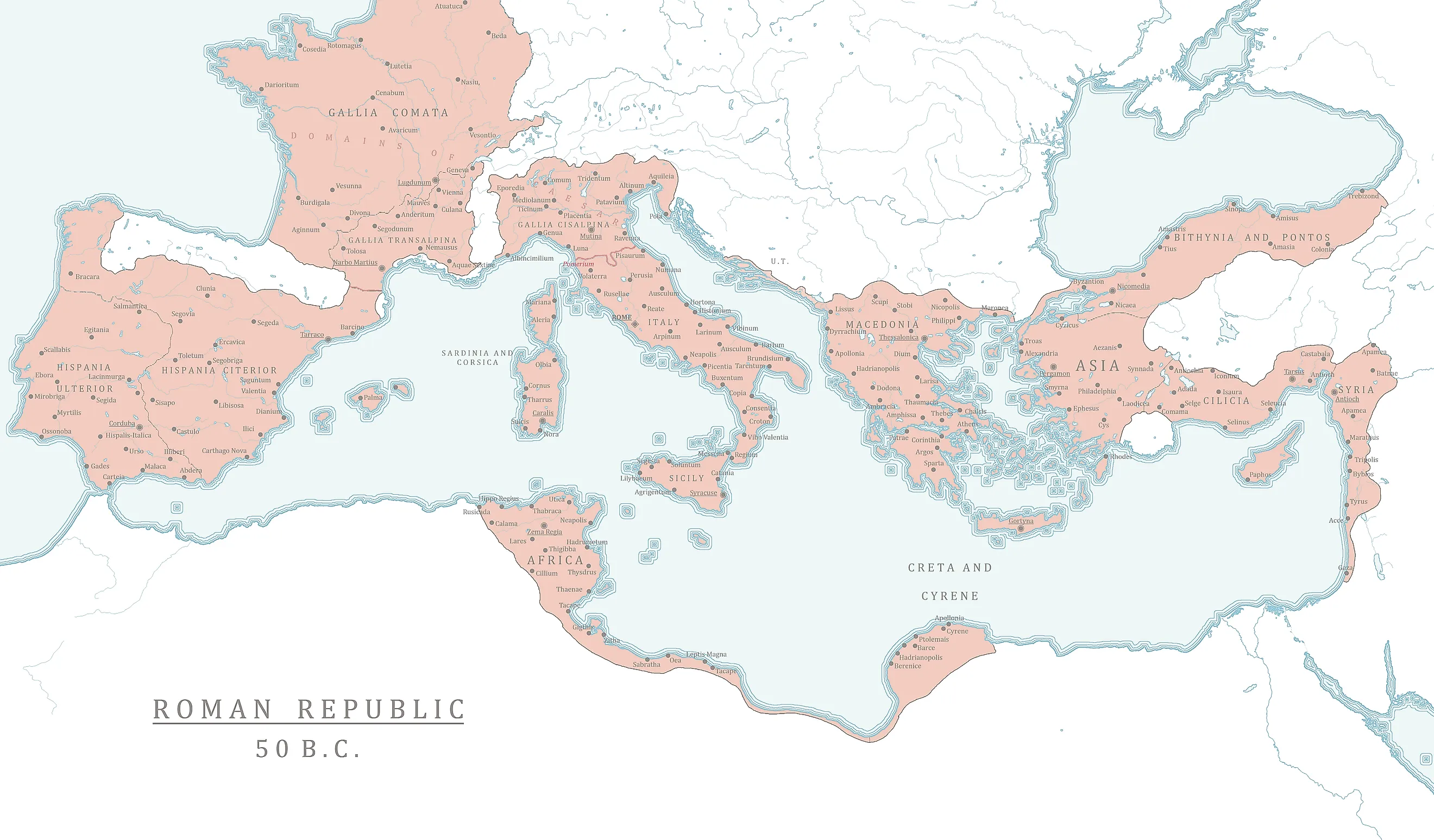
Finally, the rise of the Roman Republic was characterized by a significant enlargement of its territory. Its early expansion was motivated by securing the Italian Peninsula. For instance, a series of conflicts known as the Latin War resulted in Rome’s dominance over Latium and its Latin allies. The Samnite Wars, throughout the second half of the fourth century BCE, then saw Rome further expand its influence across central and southern Italy. Finally, after King Pyrrhus of Epirus was defeated in the Pyrrhic War (280 to 275 BCE), the Republic controlled most of Italy. With its immediate vicinity secure, Rome was able to expand its influence across the Mediterranean world and into regions such as Gaul in the centuries that followed.
Impact and Legacy
The rise of the Roman Republic was complicated and nuanced. It emerged from the end of the Roman monarchy, which, despite having some of the same institutions as the Republic, was often ruled by tyrannical kings. Therefore, power-sharing measures were established to help prevent the concentration of power in one person. Regardless, these measures were imperfect, since the Senate had disproportionate influence, women lacked the ability to vote, and elites dominated most institutions early on. Finally, the Roman Republic substantially increased its territorial reach in its early days, coming to control most of Italy by the 270s BCE. This set the stage for it becoming an international power in the decades and centuries to come.