Where Timber Rattlesnakes And Massasaugas Overlap
These two rattlesnakes share five or six states and almost never share ground. The timber rattlesnake wants rocky unglaciated uplands and deciduous forest. The massasauga wants shallow wetland, fen and sedge meadow. Where their ranges cross, in parts of Illinois, Missouri, Iowa, Wisconsin, Minnesota and across Ohio and Pennsylvania, they occupy opposite ends of the same landscape. There is exactly one documented case of them interbreeding.
The Overlap States Are Named

A Purdue Fort Wayne herpetology fact sheet sets out the geography directly.
Eastern massasaugas range across the northern halves of Ohio, Indiana and Illinois, north along the eastern edges of Iowa, into northeastern and east central Missouri, and southern Minnesota. Range overlap with timber rattlesnakes occurs in parts of Illinois, Missouri, Iowa, Wisconsin and Minnesota.
Ohio and Pennsylvania both hold populations of each species as well, which means a traveller crossing either state can pass through the range of both.
Glaciation Drew The Line

The reason these species separate so cleanly comes down to what the ice sheets did.
Timber rattlesnakes are restricted to the hillier, relatively unglaciated regions of Ohio, Indiana and Illinois, and to river bluffs further west. Glaciated ground was flattened and filled, leaving nothing suitable.
The fact sheet names the mechanism plainly: availability of suitable den sites is likely a chief determinant of the historical range of the timber rattlesnake.
One Needs Rock, The Other Needs Water
The habitat requirements are close to mutually exclusive, and both are about where the snake spends winter.
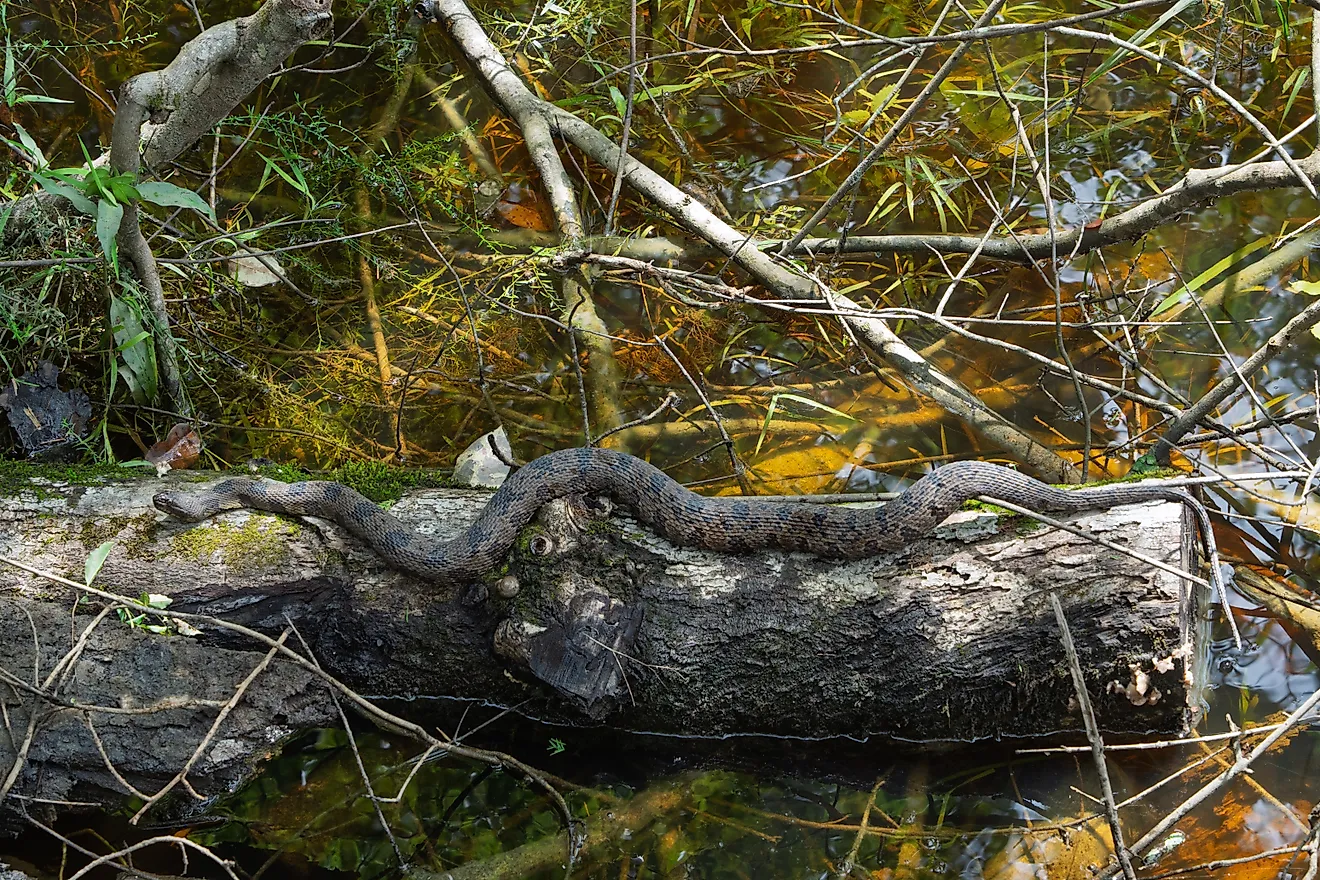
Timber rattlesnakes den in rock crevices and talus on south-facing slopes. Massasaugas hibernate in crayfish burrows and small mammal burrows in wetlands, where the water table sits near the surface.
Rock outcrops are not in marshes. Crayfish chimneys are not in talus. The winter requirement sorts the two species onto different ground within the same county.
The Massasauga Is A Wetland Specialist
One of the pair is far more narrowly tied to its habitat than the other.
Massasaugas live in wet prairies, marshes, fens, sedge meadows, peatlands and low areas along rivers and lakes, using adjacent uplands only during part of the year. Federal documentation describes them preferring emergent wetland and meadow, with woodland least preferred.
Woodland is exactly what the timber rattlesnake prefers. The species that likes trees least and the species that requires them have little reason to meet.
They Hybridized Once

Given how rarely these animals share ground, one record stands out.
In the northeastern United States there has been one documented case of an eastern massasauga reproducing with a timber rattlesnake, producing a hybrid intergrade.
Two different genera, one recorded offspring. It is a measure of how seldom the circumstances arise rather than of any barrier to it happening.
Pennsylvania Has Both And Keeps Them Apart

The state agency descriptions show the separation working inside one jurisdiction.
Pennsylvania's timber rattlesnake occupies the central two-thirds of the state, following the major mountain ranges that run diagonally across it, and its range does not extend into the counties bordering Ohio.
The eastern massasauga occupies the northwest: Allegheny, Beaver, Butler, Crawford, Lawrence, Mercer and Venango counties. Mountains in the middle, wetlands in the corner.
Michigan Has One And Not The Other

The clearest demonstration of the glacial boundary is a state with no overlap at all.
Michigan is the only state in the Midwest without timber rattlesnakes, and it is a massasauga stronghold alongside Ontario. The massasauga is Michigan's only venomous snake.
Michigan was comprehensively glaciated. There is no unglaciated upland for a timber rattlesnake to den in, and the wetlands left behind suit the other species perfectly.
Their Legal Status Differs Sharply

The two species sit in very different positions with regulators.
The eastern massasauga was listed as federally threatened in 2016 and is endangered in New York, Illinois, Iowa, Missouri, Wisconsin, Indiana, Ohio, Pennsylvania and Minnesota, with Michigan listing it as a species of concern.
Timber rattlesnakes carry no federal listing, though they are endangered or threatened in 16 states and have declined about 85 percent rangewide.
Telling Them Apart Is Easy

Unlike most overlap pairs, these two are not confusable at close range.
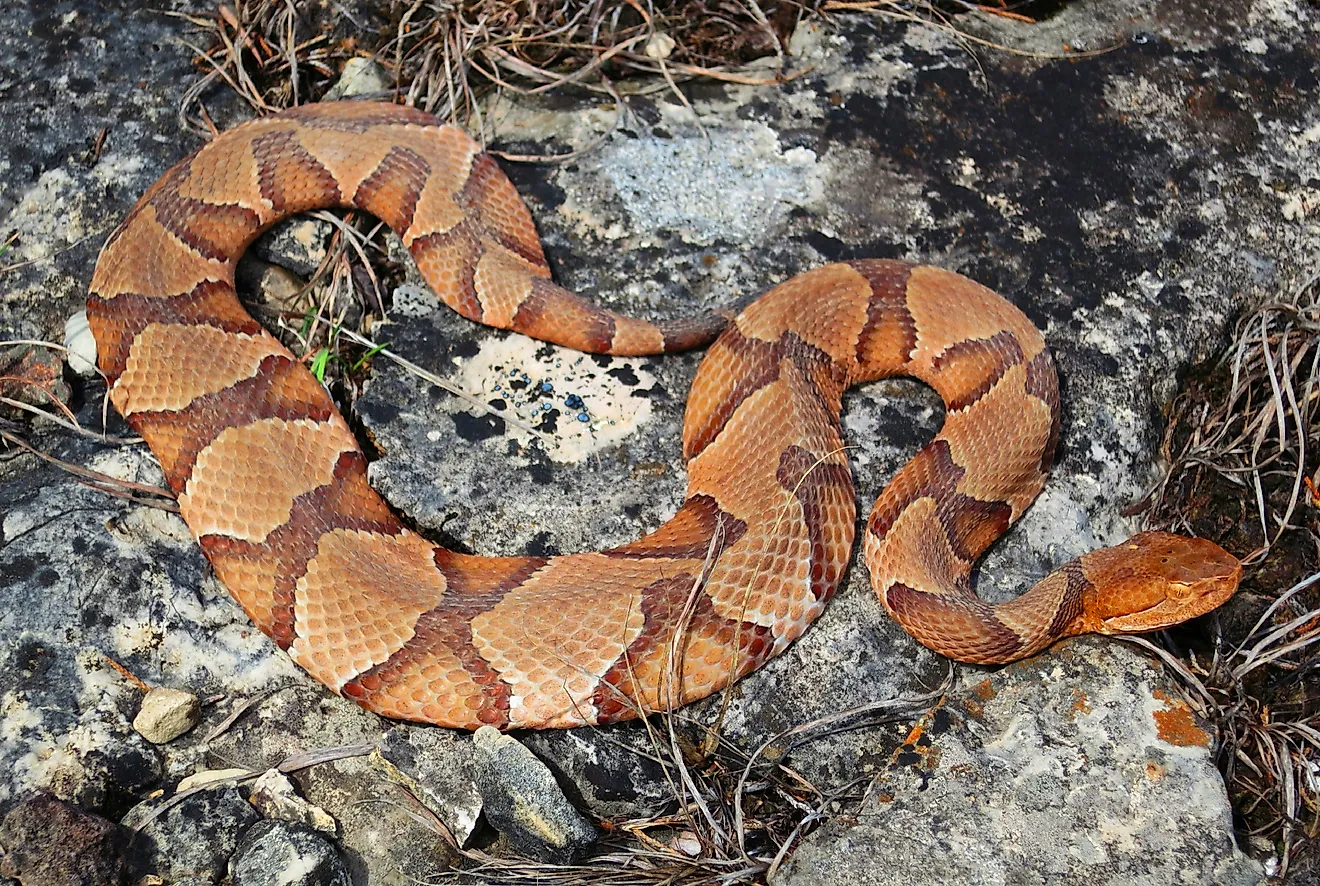
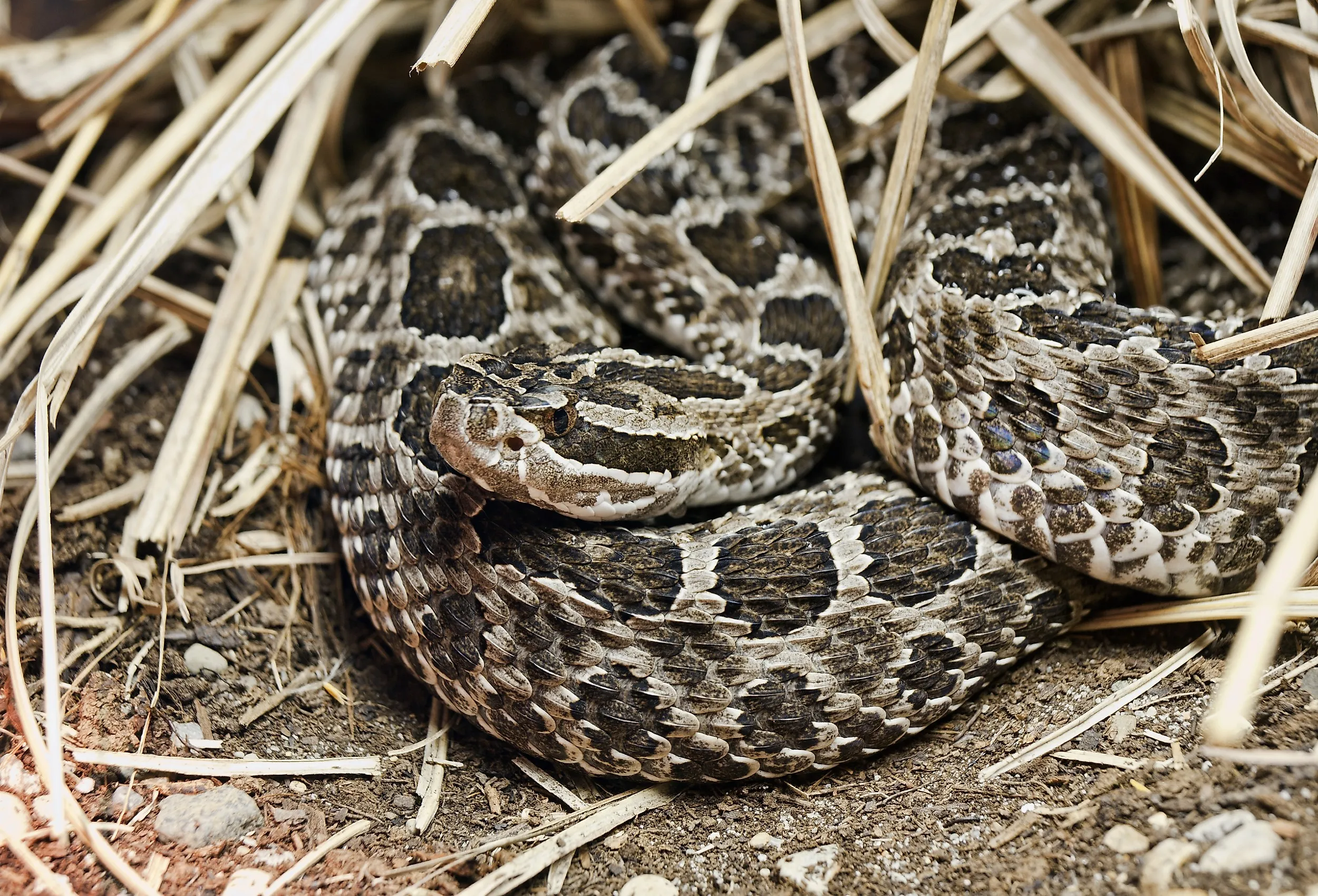
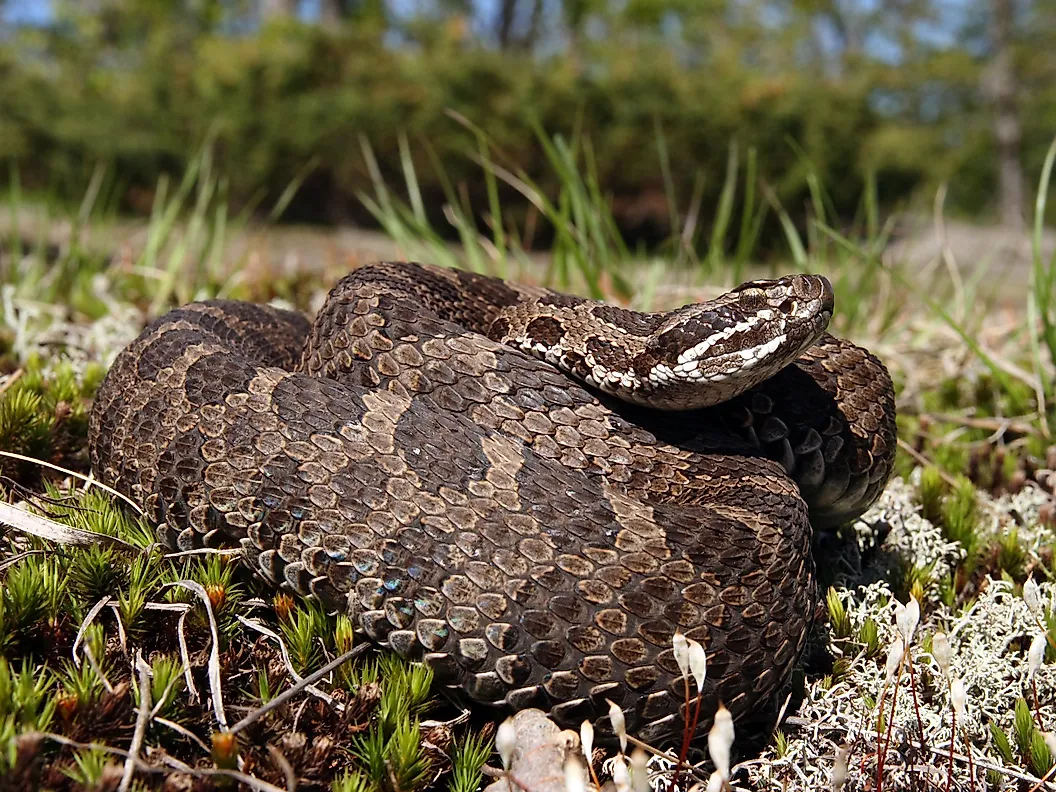
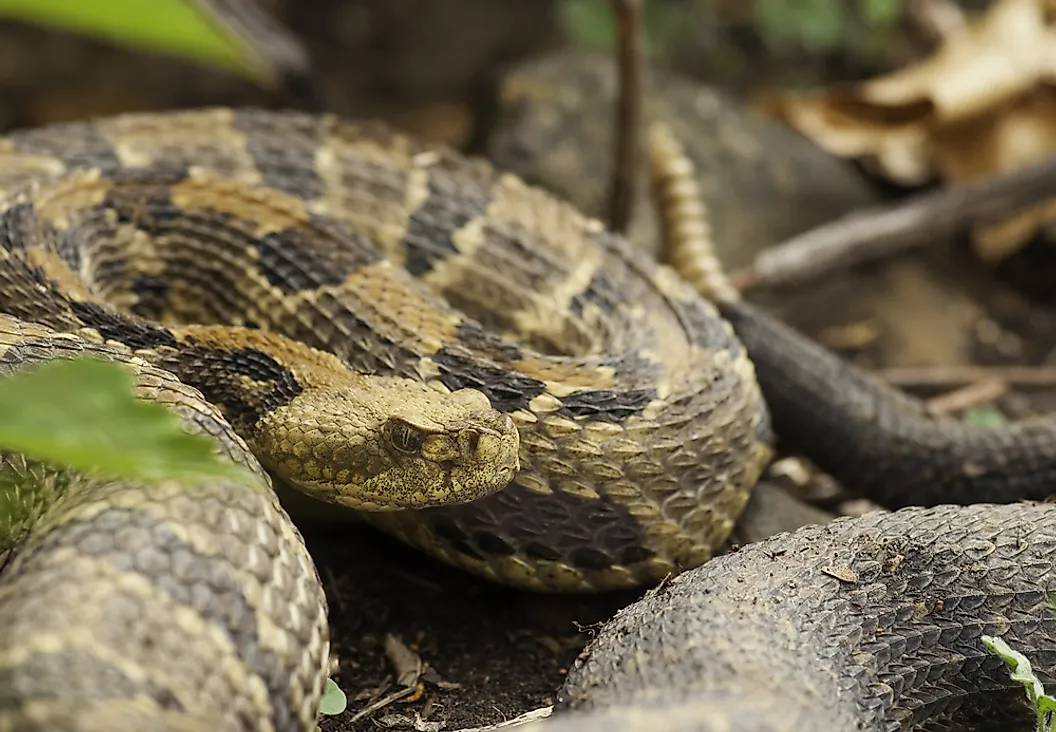
The massasauga is small and thick-bodied with a blotched dorsal pattern and nine large scales on top of the head. The timber rattlesnake is far larger, crossbanded, and has numerous small scales on the head.
Size alone usually settles it. An adult massasauga is a fraction of the length of an adult timber rattlesnake.
Drainage Removed The Overlap

Whatever contact zone once existed has shrunk from one side.
Pennsylvania's description of the massasauga is blunt about the cause: a resident of swampy areas, much of its habitat has been drained or dried up, with new and widened highways encroaching into its wet domain.
Most surviving massasauga populations are now isolated pockets. The chance of either species encountering the other has fallen with the habitat between them.
The Short Answer

Timber rattlesnakes and massasaugas overlap in parts of Illinois, Missouri, Iowa, Wisconsin and Minnesota, with both species also present in Ohio and Pennsylvania. What they do not do is share habitat. One dens in rock on unglaciated uplands, the other in crayfish burrows in wetland, and the glacial boundary across the Midwest largely sorts them.
Michigan proves the rule by holding one and not the other. And across the whole shared range, across two genera, there is a single documented hybrid.