9 Of The Quietest Towns In The Rockies
The Rockies are full of busy ski towns and crowded park gateways. The quiet ones are harder to reach, and that is exactly why they stay quiet. Some sit at the end of long gravel roads, and a few have fewer residents than a high school classroom. Others are tucked into high valleys where the nearest stoplight is an hour away. These nine Rockies towns are where the loudest sound is wind in the pines.
Polebridge, Montana

Polebridge sits at the end of a long, bumpy gravel road along the North Fork of the Flathead River, just outside the remote northwest corner of Glacier National Park. The tiny community runs largely off the power grid, and cell service is scarce.
The red Polebridge Mercantile, a historic general store and bakery, is famous for its huckleberry pastries, and the rustic Northern Lights Saloon serves meals next door. Nearby, the park's Bowman Lake and Kintla Lake offer some of Glacier's quietest shorelines, with only a fraction of the crowds found elsewhere in the park.
Philipsburg, Montana

Philipsburg is a small former silver mining town in Montana, with a colorful Victorian main street climbing up the hillside. Its quiet streets feel worlds away from Montana's busier tourist towns, and the surrounding mountains are dotted with old mines and ghost towns.
The Sweet Palace, a candy store on Broadway, is a local landmark, and at nearby Gem Mountain, visitors can sift gravel for Montana sapphires. Granite Ghost Town State Park preserves the ruins of a once-booming silver camp high in the hills, and Georgetown Lake offers fishing and quiet shoreline views.
Wisdom, Montana

Wisdom, with only about a hundred residents, sits in the wide Big Hole Valley, known for its ranches and the beaverslide haystacks that dot its meadows. It is also one of the coldest places in the lower 48 states, regularly recording some of the country's lowest temperatures in winter.
Big Hole National Battlefield, just west of town, preserves the site of an 1877 battle between the US Army and the Nez Perce people. The Big Hole River, flowing through the valley, is known for fly fishing and is one of the last strongholds of fluvial arctic grayling in the lower 48.
Dubois, Wyoming

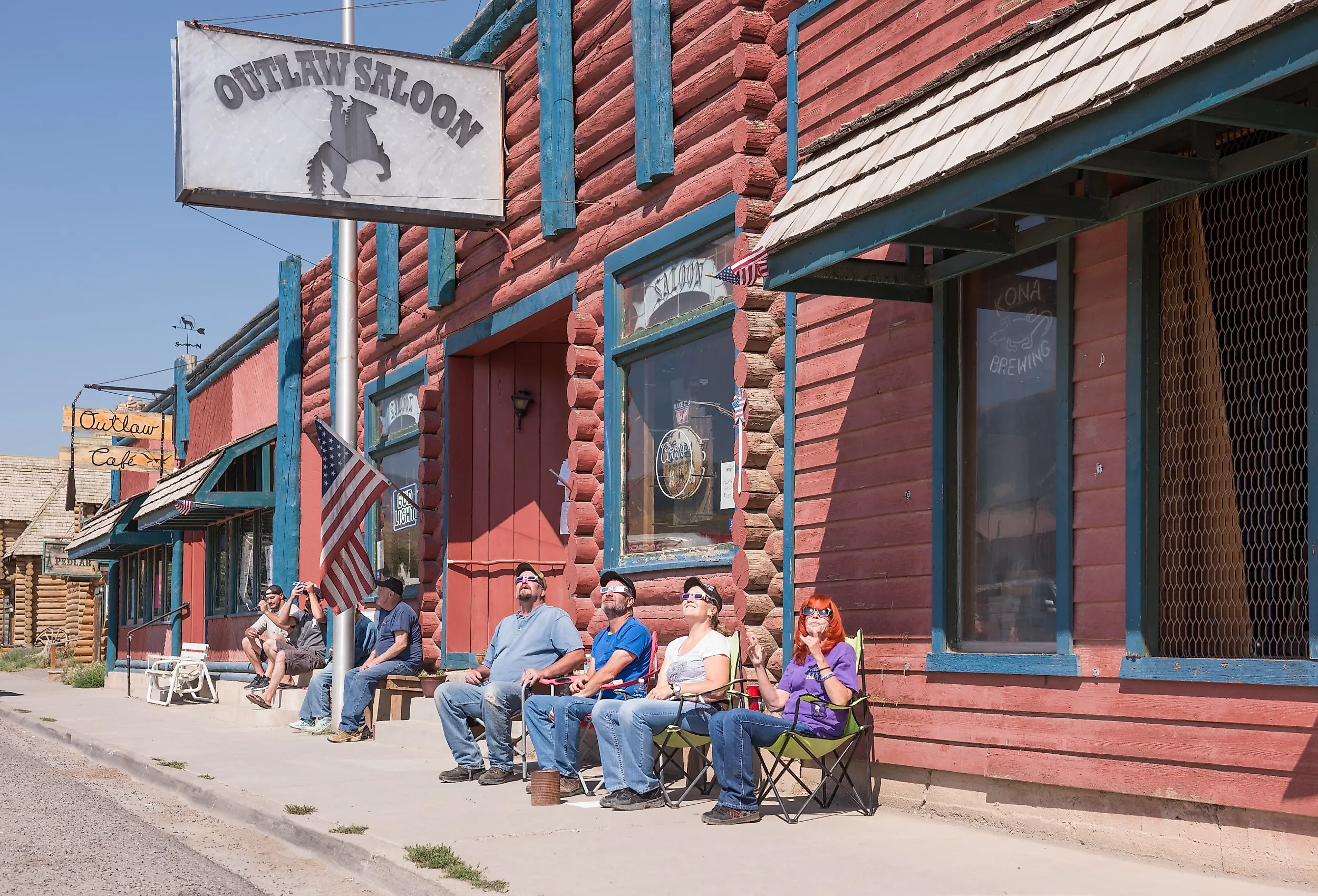
Dubois sits in Wyoming's Wind River Valley, surrounded by red badlands and towering peaks, on the quiet route between the Tetons and central Wyoming. Its small Western main street has a few cafes, galleries, and outfitters, and life moves at a ranching pace.
The National Bighorn Sheep Interpretive Center in town tells the story of the large herd that winters on nearby Whiskey Mountain, and guided tours lead visitors out to see the sheep. Togwotee Pass, west of town, climbs over the mountains toward Grand Teton National Park.
Encampment, Wyoming

Encampment, at the foot of the Sierra Madre range in southern Wyoming, was once a copper boomtown, but today it is a quiet village of a few hundred people. The surrounding meadows and forests are home to deer, elk, and moose.
The Grand Encampment Museum preserves a collection of historic buildings, including a two-story outhouse built to stay usable in deep snow, and tells the story of the area's copper boom and its long aerial tramway. The scenic Snowy Range Road, nearby, crosses the mountains past alpine lakes and towering peaks.
Marble, Colorado

Marble, a tiny village in Colorado's Crystal River Valley, is named for the brilliant white Yule marble quarried in the mountains above town. Stone from the quarry was used in famous monuments, including the Lincoln Memorial and the Tomb of the Unknown Soldier.
The Marble Mill Site park preserves the ruins of the old stone mill, with blocks of marble scattered among the trees. Nearby, the much-photographed Crystal Mill clings to a cliff above the river, reached by a rough four-wheel-drive road. With only a few dozen year-round residents, Marble is about as quiet as Colorado gets.
Lake City, Colorado

Lake City is the only town in Hinsdale County, one of the least populated counties in Colorado, and it sits deep in the San Juan Mountains. Its historic district is lined with Victorian homes and false-front buildings from its mining days.
Five peaks over 14,000 feet rise nearby, and Lake San Cristobal, just south of town, is one of the largest natural lakes in the state. The Alpine Loop Scenic Byway, a rough four-wheel-drive route, links Lake City with Ouray and Silverton through high passes and ghost towns.
Creede, Colorado

Creede, near the headwaters of the Rio Grande, was a wild silver boomtown in the 1890s. Today it is a quiet mountain town of a few hundred people, tucked into a narrow canyon beneath towering cliffs.
The Creede Repertory Theatre, a respected professional company, stages plays each summer, and the Underground Mining Museum is carved directly into the rock. The Bachelor Historic Tour, a scenic loop above town, passes old mines and ghost towns with sweeping views of the valley.
Crestone, Colorado

Crestone sits at the base of the Sangre de Cristo Mountains, overlooking the wide San Luis Valley. The tiny town has become a spiritual retreat center, with many monasteries, temples, and meditation centers from different traditions scattered in the hills around it.
Its remote location means dark, starry night skies and deep silence. Trails climb toward the jagged Crestone peaks, and Great Sand Dunes National Park is a short drive south, offering a dramatic contrast of desert dunes and mountain snow.
Finding Quiet In The Rockies
These towns show a side of the Rockies far from the ski resorts and crowded park entrances. Each offers mountain scenery, small-town history, and the kind of silence that is hard to find anywhere else. Fill the tank, download your maps, and plan for gravel roads. The quiet is worth the drive.