The American Forest That Never Came Back
In June 2002, the Hayman Fire swept through Colorado's Front Range, burning approximately 138,000 acres of forest and becoming the largest recorded wildfire in the state's history at the time. More than 24 years later, substantial portions of the burned area remain almost entirely without trees. What was once a thriving woodland of towering ponderosa pines and Douglas firs has been replaced by grasses, shrubs, and open terrain. Despite natural regeneration and extensive restoration efforts, several of the most severely affected sections have shown little sign of even inching toward their former state, raising questions about whether the forest will ever fully recover.
Which Forest Did the Hayman Fire Devastate?

The Hayman Fire burned through the mountains of central Colorado, a part of the Rockies roughly 35 miles (56 km) southwest of Denver. Most of the affected land was within Pike National Forest, particularly in the South Platte River watershed, although the flames also reached several private properties and residential communities across Douglas, Jefferson, Teller, and Park counties.
Elevations of the burned area ranged from approximately 6,800 to 12,000 feet (2,070 to 3,660 m), creating different growing conditions across the forest both before and after the event. As mentioned, before the fire, much of the area housed stands of ponderosa pines and Douglas firs, interspersed with foothills, grasslands, and mountain meadows. Decades of fire suppression in these spots allowed especially dense stands of trees to develop in some areas, increasing the amount of combustible vegetation.
What Exactly Happened?

This event is actually quite well documented, down to who exactly started the fire and where. It began on June 8, 2002, when a U.S. Forest Service employee illegally started a fire near Tappan Mountain in Park County. At this time, Colorado was experiencing severe drought conditions, and a mix of exceptionally dry vegetation, strong winds, and low humidity allowed the flames to spread rapidly. Within 24 hours, the fire had burned more than 60,000 acres, overwhelming initial containment efforts.
Thousands of residents were evacuated as the fire spread across four counties. By the time it was contained, 133 homes and hundreds of other structures had been destroyed, with firefighting operations costing approximately $39 million.
Unlike smaller, lower-intensity (and often naturally started) fires historically common in many dry pine forests across America, the Hayman Fire burned entire stands of mature trees. Huge swathes experienced such severe burning that almost no surviving trees remained to produce seeds for the next generation.
Why Pike National Forest Never Fully Grew Back

The biggest obstacle to recovery was, in fact, the disappearance of mature trees capable of producing seeds. Ponderosa pines also cannot regrow directly from their roots after a fire, and their heavy, seed-bearing cones generally travel only short distances. In other words, when the Hayman Fire destroyed whole tree communities, it left numerous burn areas simply too far from surviving trees for natural regeneration to occur.
A study of Colorado's Front Range found that 70% of the severely burned, now treeless portions of the region were more than 165 feet (50 m) from surviving forests, a distance beyond which seedling establishment declined substantially.
To add to that, current climate conditions have made recovery even more difficult. Warmer trending temperatures, prolonged drought, and unreliable precipitation further reduce the chances that newly established seedlings will survive their first few growing seasons. Exposed slopes tend to experience intense sunlight, too, as well as greater moisture loss without mature trees shielding the ground from overhead.
Consequently, notably big sections have remained largely treeless for more than two decades. Researchers warn that these areas could potentially take centuries to recover naturally, while others may never return to their former forested conditions.
What the Area Looks Like Today

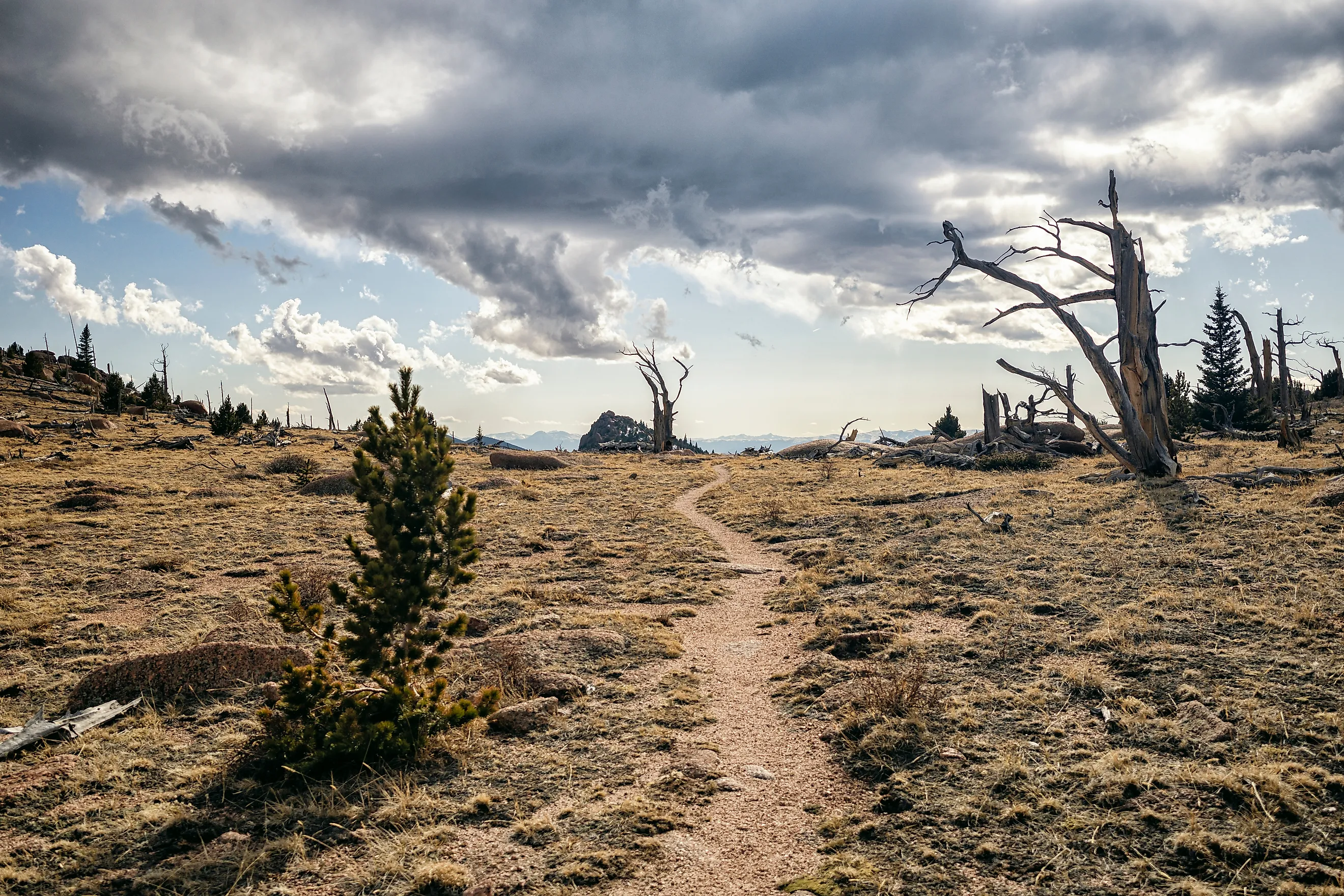
Over 24 years after the fire, many sections of the former forest remain open, with shrubbery, grasslands, and meadows growing where mature Douglas firs, ponderosa pines, and other hardy tree communities once stood.
Dead trunks still dot the slopes, although many have fallen or deteriorated since 2002. In areas that burned less severely, surviving trees and naturally established seedlings have allowed limited portions of the forest to recover. Although vegetation has returned, the lack of tree cover continues to negatively influence soil temperatures, moisture retention, and runoff, particularly during heavy rainfall.
The changes are especially noticeable along the Cheesman Reservoir watershed, where treeless hillsides remain very much visible after all this time. On the bright side, these openings are not complete dead zones, and now support a different variety of plant communities and wildlife habitats than the original forest, which now survives only along the water's edge. Here, you're more likely to pass by low-lying grasses and wildflower-filled meadows, distinctly scenic during summer blooms.
Restoration Efforts and the Forest's Future
Efforts to restore the burn area began shortly after the flames were extinguished. The U.S. Forest Service, Colorado State Forest Service, Denver Water, and conservation organizations have worked together to replant trees, stabilize damaged soils, and protect nearby waterways. Denver Water, Colorado's oldest and largest public water utility, alone spent more than a decade planting approximately 25,000 trees annually on its property surrounding Cheesman Reservoir.
Other projects have focused on reducing erosion and preventing sediment from entering the South Platte River and its tributaries. Restoration crews have also experimented with planting techniques designed to improve seedling survival in the most exposed, drought-prone areas, making the region a bit of a testing ground for similar operations in the future.
However, replanting alone cannot guarantee any forest's return. Climate change, recurring droughts, and the possibility of additional severe wildfires still threaten long-term recovery. With that, some previously forested areas in the Pike National Forest may eventually develop into permanent shrublands or grasslands, while others could support more scattered, savanna-like tree ecosystems rather than the dense forests that once existed. Hopefully, at least part of it can properly recoup and persist long enough to be considered old-growth again.