The 8 Most Alligator Infested Rivers In Florida
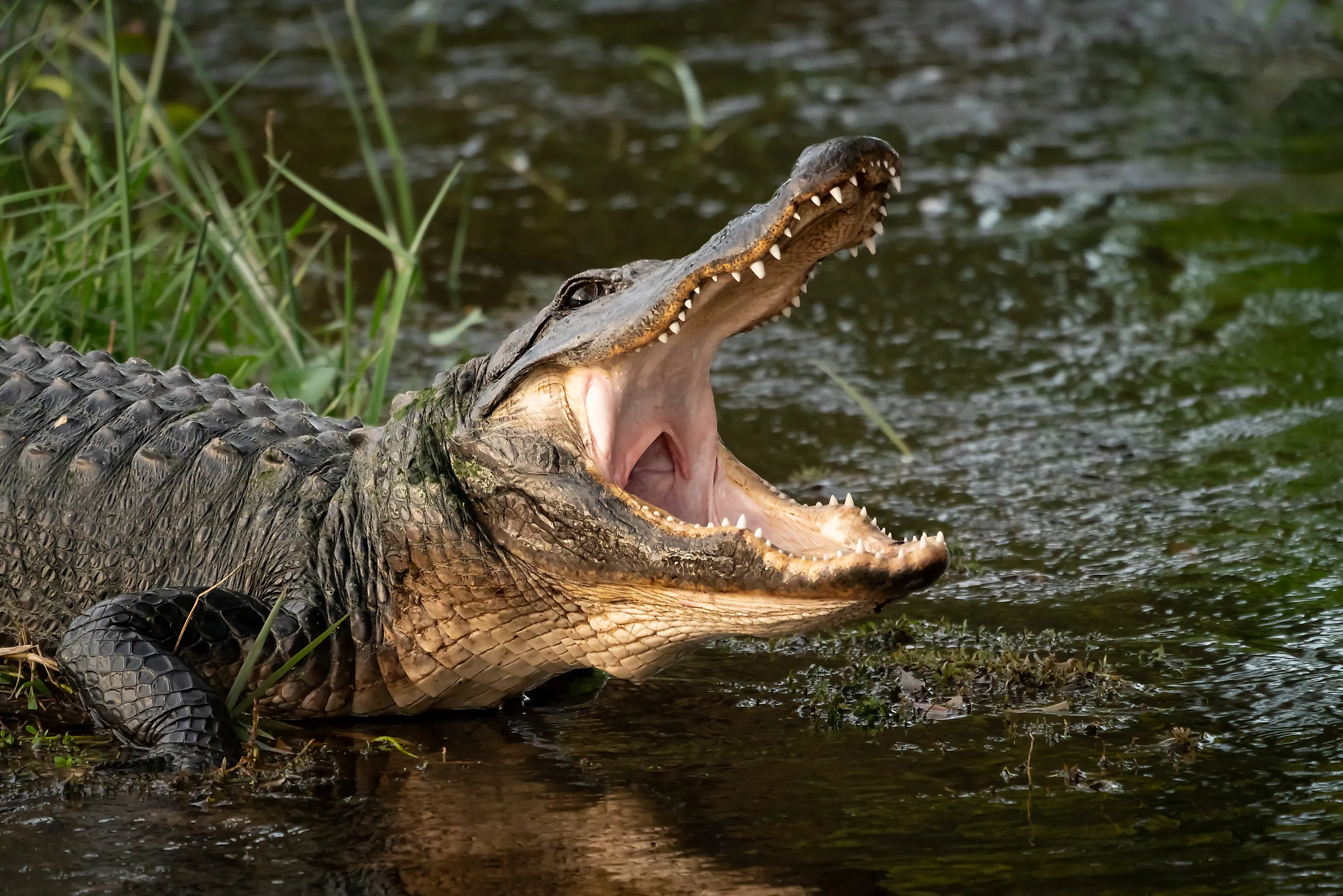
The St. Johns River has approximately 5,109 alligators, while the Kissimmee River comes in at more than 2,387, making them two of Florida's most alligator-filled rivers. The Florida Fish and Wildlife Conservation Commission (FWC) estimates roughly 1.3 million American alligators inhabit the state's waterways, with populations in all 67 counties. Because obtaining an accurate count of wild alligators is challenging, the FWC uses nighttime surveys to monitor population numbers. Researchers go into waterways after dark, when the boat's lights reflect off the alligators' eyes, making it easier to see and get a close estimate.
Alligators are present in nearly all peninsular and panhandle river systems, many of which are connected to wetlands. Although they primarily occupy freshwater environments, alligators can also tolerate brackish water and occasional saltwater exposure. The following eight rivers have some of the highest reported alligator population estimates in Florida, a symbol of the state's diverse network of wetlands, wilderness, and natural habitats.
St. Johns River

The St. Johns River has the largest estimated alligator population of any Florida river, with about 5,109 American alligators reported as of 2024. The river is 310 miles long and flows north, with swamps, marshes, and lakes that provide habitat for alligators. Alligators are found in the main channels and creeks, including Black Creek and Julington Creek, as well as backwater areas, retention ponds, and golf course lakes that connect to the river.
The St. Johns River Water Management District's public waterways offer opportunities to view alligators in their natural habitat. Private companies also offer eco tours and airboat rides to view wildlife, with warm months and mating season among the best times to spot a wild alligator.
Kissimmee River

Moving on to south-central Florida, the 134-mile-long Kissimmee River is estimated to have more than 2,387 alligators as of 2024. Alligators ranging from 12 to 13 feet have been seen on the river and in the channels. Located in the northern section of the Florida Everglades wetlands, it flows out of the south end of Lake Kissimmee and runs from East Lake Tohopekaliga via an artificial canal into Lake Tohopekaliga. From there, it goes into Lake Okeechobee, Florida's second-most alligator-filled lake, with an estimated 16,184 alligators. Airboat tours are popular on the riverfront, offering a safe way to view alligators in their natural habitats.
Withlacoochee River

In central Florida, the Withlacoochee River is estimated to have approximately 596 alligators as of 2024. The blackwater river is about 141 miles long and runs north through the Withlacoochee State Forest, past wetlands and cypress trees, from Green Swamp to Withlacoochee Bay on the Gulf of Mexico near Yankeetown. Alligators are often seen at Lake Panasoffkee, an outlet of the river. In addition to alligators, the area is home to Florida black bears, river otters, and gopher tortoises. Making this area a very unqiue, and potenially crowded area for wildlife.
Suwannee River

Originating in the Okefenokee Swamp in Georgia, the Suwannee River moves along for about 246 miles, eventually ending at Suwannee Sound in the Gulf of Mexico. While there is no official, published number for alligator populations in the Suwannee River, they are present. They can be seen near the river's marshy headwaters and occasionally in tidal areas near the Gulf of Mexico. Approximately 170 miles of the river are part of the Suwannee River Wilderness Trail, a connection of state parks and preserves that include the 53,000-acre Lower Suwannee National Wildlife Refuge. Alligators inhabit the refuge's swamps and marshes, where a boardwalk trail offers viewing opportunities.
Apalachicola River

Like the Suwannee, the Apalachicola River does not have an official, published alligator population count. Its ecosystem preserves the highest diversity of reptiles and amphibians in North America. Supporting alligator populations in cypress swamp, backwater, and oxbow lake habitats, the river is on the FWC's top 10 list of largest alligators taken from the wild as part of the state's alligator nuisance program. In 2020, a male alligator over 13 feet long and 1,008 pounds was legally harvested near Blountstown. About 100 miles long, the Apalachicola originates near the Florida-Georgia border near Chattahoochee and flows south through the Panhandle and into the Gulf of Mexico near Apalachicola.
Peace River

The Peace River is another waterway with known alligator inhabitants, but no official population number. Alligators are often seen lying in the sun on the banks or swimming near the shoreline of the 106-mile-long Peace River. More aggressive behavior is observed during mating season, which is typically from May through June. Airboat tours and private charters are the best way to observe alligators on the waterway while learning about river and wildlife conservation. The river is also popular for kayaking and canoeing. Flowing into the Gulf of Mexico at Punta Gorda, about 70 miles of the river is a designated paddling trail where visitors can observe alligators, birds, and other wildlife surrounded by Spanish moss-covered cypress, live oak, and pine trees.
Caloosahatchee River

Originating at Lake Hicpochee in South Florida, the Caloosahatchee River winds for 67 miles through locks and channels before ending at the Gulf of Mexico at San Carlos Bay. The 770-acre Caloosahatchee Regional Park sits along a section of the river, and alligators are often seen among the park's cypress swamps and pine flatwoods. They are also commonly found in the upper river sections, creeks, and the Cape Coral canal. While the Caloosahatchee does not have published alligator population numbers, it connects to Lake Okeechobee, which is a habitat for tens of thousands of alligators. In 2012, a 10.5-foot alligator attacked a swimmer in the river near Moore Haven. The swimmer lost his right arm in the attack.
Loxahatchee River

The undeveloped, semitropical Loxahatchee River in southeast Florida has diverse vegetation and swamp-like terrain that support a large population of alligators. A federally designated Wild and Scenic River, the Loxahatchee River is about 7.6 miles long and part of a 260-square-mile ecosystem that flows through freshwater creeks and into a brackish estuary. Cypress trees and numerous fern varieties surround narrow channels where canoeing and kayaking are popular. Loxahatchee is the Seminole word for "turtle," and the river's marsh and stream systems are ideal habitats for turtles as well as river otters, snakes, and manatees. The Loxahatchee runs through Jonathan Dickinson State Park, where the Loxahatchee Queen pontoon boat is available for sightseeing tours. Alligators have also been observed at Riverbend Park.
Florida's Alligator-Filled Rivers

The American alligator inhabits numerous Florida rivers and plays a vital role in maintaining ecological balance. These natural engineers help regulate wildlife populations, create habitats for other wildlife, and enrich soil and sediment through their movement and feeding behavior. Classified as a threatened species under Florida's Endangered and Threatened Species Rule, because it looks similar to the federally endangered American crocodile, the American alligator is also federally protected as a threatened species under the Endangered Species Act. Its preference for freshwater lakes and rivers makes it possible to observe them in waterways across the state, from the Apalachicola River in the Panhandle to the Caloosahatchee River in the southwest and the Loxahatchee River in the southeast.