What Gets Repaired On A Great Lakes Freighter During Winter Layup
A vice president at Fincantieri Bay Shipbuilding summarized the entire winter layup season in eleven words: steel rusts, these vessels flex, so it is important that they come in. That is the whole business case. A 1,000-foot hull spends nine months bending in waves and grinding against lock walls, and the ten weeks when the locks are shut is the only window to put it right. The US-flag fleet has spent more than 75 million dollars in a single winter doing exactly that.
The Five-Year Survey Drives Everything

Most of the heavy work happens because a regulator requires it rather than because something broke.
The Coast Guard requires an out-of-water hull survey every five years, and in one recent winter eight vessels were drydocked for it. Inspectors then examine the hull for unusual wear and order steel replaced where they find it.
The Paul R. Tregurtha, launched in 1981, went to Sturgeon Bay for a mandated Coast Guard and American Bureau of Shipping five-year inspection. A thousand-footer can be scheduled for three weeks in dry dock.
Steel Renewal Is The Biggest Item

Across both major yards, the same job dominates the list.
Fraser Shipyards describes the majority of its winter work as structural: renewing steel in cargo holds and unloading gates, replacing piping, welding cracks, shell-plate renewal, propeller and shaft repair, painting and carpentry.
The Tregurtha's layup has included large steel renewal projects inside the cargo holds alongside rudder and rudder bearing inspections. Cargo holds take the worst of it, because that is where the ore goes.
The Unloading Boom Gets Its Own Program

Self-unloading gear is what makes a laker independent of shore cranes, and it wears accordingly.
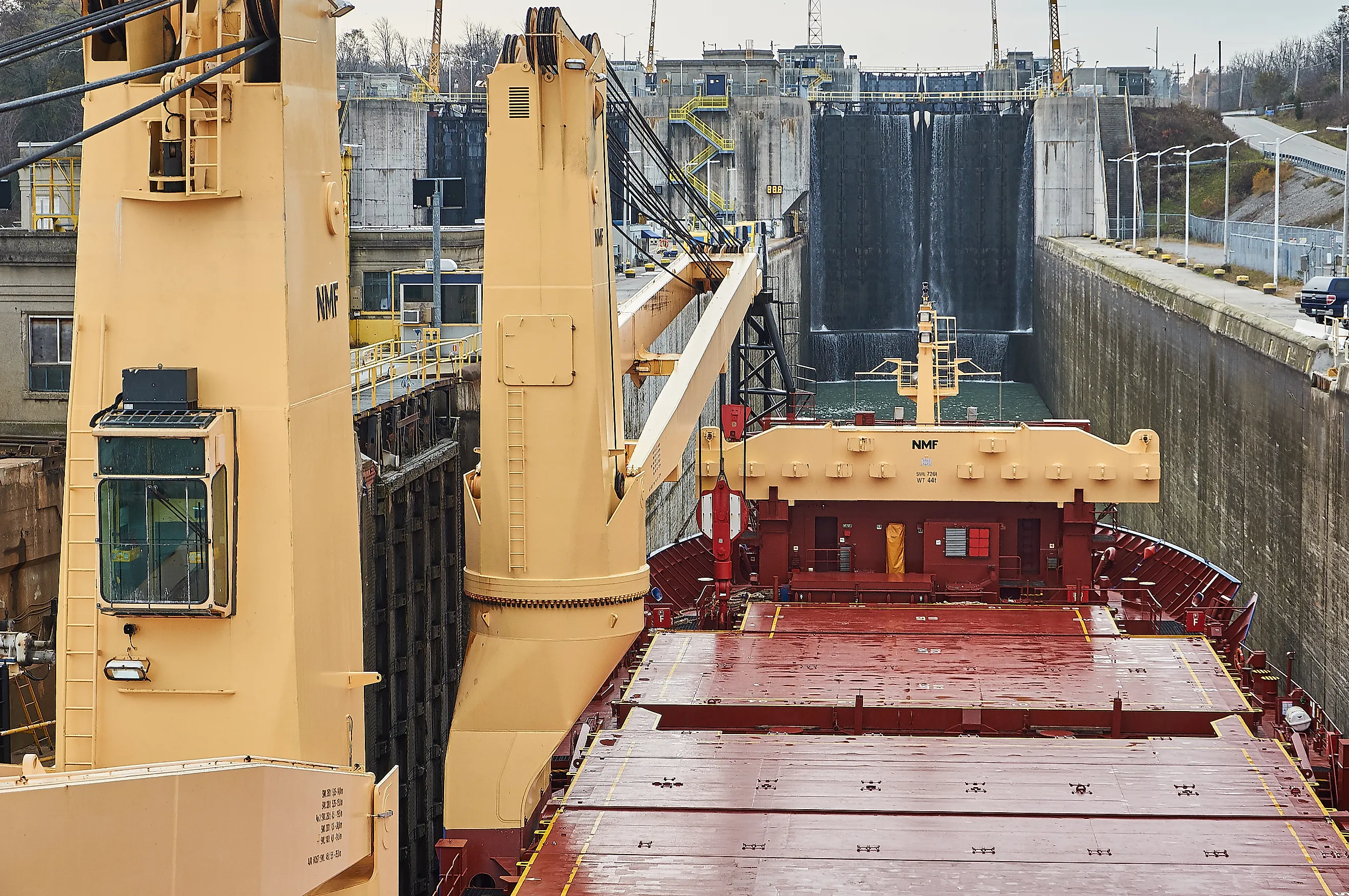
The equipment has to discharge up to 75,000 tons in under 12 hours, so winter work includes replacement of conveyor belts in the unloading systems. The Tregurtha's five cargo holds feed an onboard 260-foot boom.
A belt failure in July costs a voyage. A belt replaced in February costs a shift.
Engines Get Rebuilt Or Replaced Entirely

Layup is the only realistic window for machinery work on this scale.
Winter projects have included main and auxiliary engine upgrades, new generators on some vessels, a steam turbine rebuilt on a mid-sized ship, and overhauls of bow thrusters. The 1,000-foot Edwin H. Gott had new engines installed over one winter to improve fuel efficiency and cut emissions.
Repowering is the most extreme version. Fraser has historically repowered five vessels from steam to diesel and converted nine more from coal-fired to oil.
Some Of It Is Just Housekeeping

Not every winter job involves a welder, and the smaller items matter to the people living aboard.
Published project lists include upgrades to communication and navigation equipment and overhauls of galleys. A crew of 21 to 28 eats in that galley for nine months.
Painting and carpentry appear on the same work orders as shell-plate renewal. The vessel comes out looking new as well as being sound.
The Crew Leaves And The Yard Arrives

The population of a laid-up freighter inverts completely.
The Tregurtha sails with 21 to 28 and typically keeps two ship keepers aboard in layup, with additional engineers, shipyard workers and contractors joining depending on the projects, sometimes with a galley member preparing meals.
Shipyards move the other way. Fraser employs about 200 people and swells to around 600 in midwinter, while Bay Shipbuilding's winter workforce has topped 750.
It Is A Twelve-Week Window

The schedule is set by ice rather than by the work.
Fraser's shipyard superintendent puts a typical winter layup at 12 weeks. Vessels lay up between late December and mid-January and must be ready when shipping resumes in March.
Fincantieri's view is that winter is the ideal time for these repairs precisely because shipping slows while the locks are closed. There is no alternative window.
More Than A Thousand People Work On It

The labor figures explain why layup matters to the towns the ships tie up in.
More than 1,200 boilermakers, welders, electricians and other skilled trades have worked a single winter maintaining and modernizing the US-flag fleet, with major operators investing over 75 million dollars across 56 vessels.
Pennsylvania alone drew 25 million dollars of the fleet's winter work in one recent season. These are seasonal jobs that arrive with the ice.
Not Every Ship Goes To A Yard

Where a vessel winters depends on what it needs done.
Some lay up at commercial docks rather than shipyards, with work carried out alongside. The Tregurtha spent one winter at a coal terminal in Superior scheduled for a continuous hull survey at the dock, then went to Sturgeon Bay for its five-year inspection in a later season.
A continuous survey at a working dock is a different proposition from three weeks in a graving dock with the hull in the air.
The Yards Do More Than Repairs

The same facilities have reshaped the fleet over decades, not just maintained it.
Fraser has installed self-unloading systems on 10 vessels, added bow and stern thrusters to dozens, and lengthened 12 ships outright. Bay Shipbuilding operates the largest overhead crane on the Great Lakes.
The conversions that turned straight-deckers into self-unloaders and steamers into tug-barge units all happened in winter, in these yards, between seasons.
The Short Answer

Winter layup means hull plating and cargo hold steel renewal, rudder and propeller work, piping, crack welding, conveyor belt replacement in the self-unloading system, engine and generator overhauls, bow thruster work, navigation upgrades and a repainted hull, plus the Coast Guard's five-year out-of-water survey when it falls due.
It happens in roughly twelve weeks because that is how long the locks stay shut. More than 1,200 trades do it, the yards triple their headcount to manage it, and the ships leave in March with two ship keepers replaced by a full crew and a hull that has had its worst steel cut out and replaced.