Where The Loons Go In The Winter
What happens when the weather starts to chill, and loons' feathers start to frost? Much like humans, they go to the coasts with warmer waters and weather. In some places, loons might split off in two directions, with one headed to the Atlantic coast and another flying off to the shores of Europe.
During the fall, nearly all of the Lower 48 states become a vast loon migratory highway as they follow the falling leaves to warmer shores. However, one might not even recognize these birds as they fly to the coast, as they change with the seasons in color just like the trees around them.
What are loons anyway?

A loon is a large-bodied bird that spends most of its time in the water, except when it needs to migrate. They can fly at speeds of more than 70 miles per hour at max speed, and can dive down into the water to search for fish with their sharp bills.
Most of the time that one talks about loons, they envision a large bird with a dark head. Typically, they are thinking of the common loon, which, while the most numerous, isn't the only loon species.
There are five main species of loon, of which the common loon is the most common in North America. The other species are the red-throated loon, Arctic loon, Pacific loon, and yellow-billed loon.

All of these loons have differences in appearance and geography from each other.
The red-throated loon lives in northern Canada and Alaska in the summer, and is easily distinguishable by a red blotch that runs down the front of its neck. They are the smallest of the loons, growing to a weight of 3.2 pounds and a wingspan of 36 inches.
The Arctic loon has a small range on the northwestern tip of Alaska and is known for its white flanks. Pacific loons, meanwhile, have a gray head while breeding and migrate from Canada to the Pacific coast.

The largest loon is the yellow-billed loon with a wingspan of 49 inches and a weight of 11.8 pounds. The yellow-billed loon is mainly found in Arctic regions of North America, but it also lives in Eurasia. It has the same black head as a common loon, but has a distinctly yellow bill.
The common loon is a close second, with a wingspan of 46 inches and a weight of nine pounds. It also has a much wider range than all of its cousins, with its breeding range reaching down into the lower 48 states.
Where do they go in the winter?

Each loon goes to a slightly different region depending on its geographic position and species. For the common loon, it moves south to the coast. For example, one in Alaska will go down towards the southern Pacific shores of Alaska, although some go as far south as the Baja Peninsula in Mexico — while those in western Canada will move towards the Pacific coast.
Those further to the east in Canada, such as Quebec, migrate in the winter to the Atlantic coast. This also includes loons that live in New England states.
A study on migration patterns used satellite telemetry to track common loons in New England. It found that these loons moved without stopping from their summer lake homes down to the Atlantic coast.

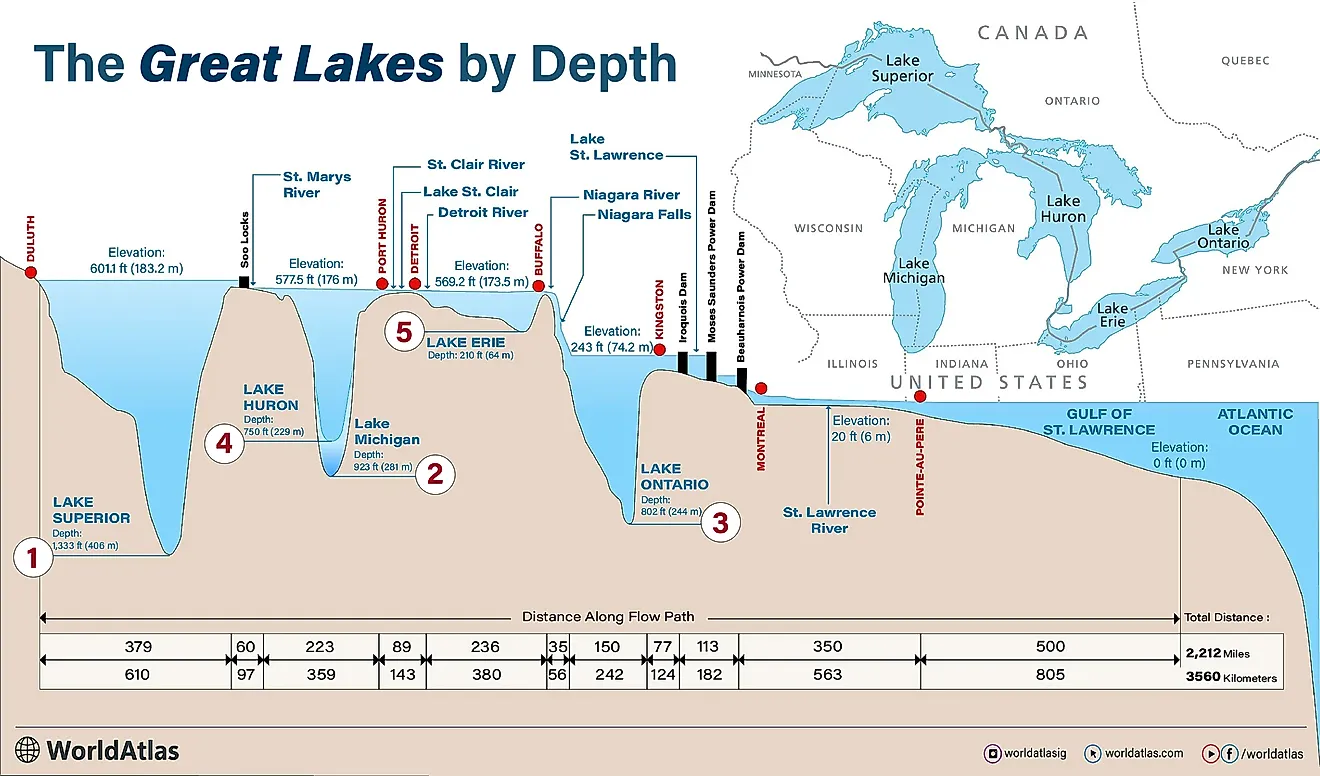
Common loons in the Great Lakes region, meanwhile, eschew both the Atlantic and Pacific coastlines and instead make for the warm waters of the Gulf of Mexico. There are also groups of common loons that breed on Greenland. These are known to fly to Western Europe during the winter, although some go to North America as well.
For other species of loons, they follow similar patterns, with Arctic loons and Pacific loons going from Alaska or Canada to the Pacific coast. Red-throated loons split depending on their geographic location, with western birds picking a spot along North America's entire Pacific coast, while eastern ones head to the Atlantic. The yellow-billed loon, meanwhile, doesn't go much further south than Washington in the winter.

One common characteristic of loons is that the juvenile birds who were born during breeding season are left on their own for a few weeks at the beginning of the fall and winter migration. They gather together and take off to join their parents in the winter homes.
Unlike the adults, they will stay on coastal waters until they are three, when they go north.
A color-changing lifecycle

Before loons head out for their warmer winter vacation homes, they spend the spring and summer season looking for a mate. During this season, loons really put their best "bill" forward with a striking look that they are best known for.
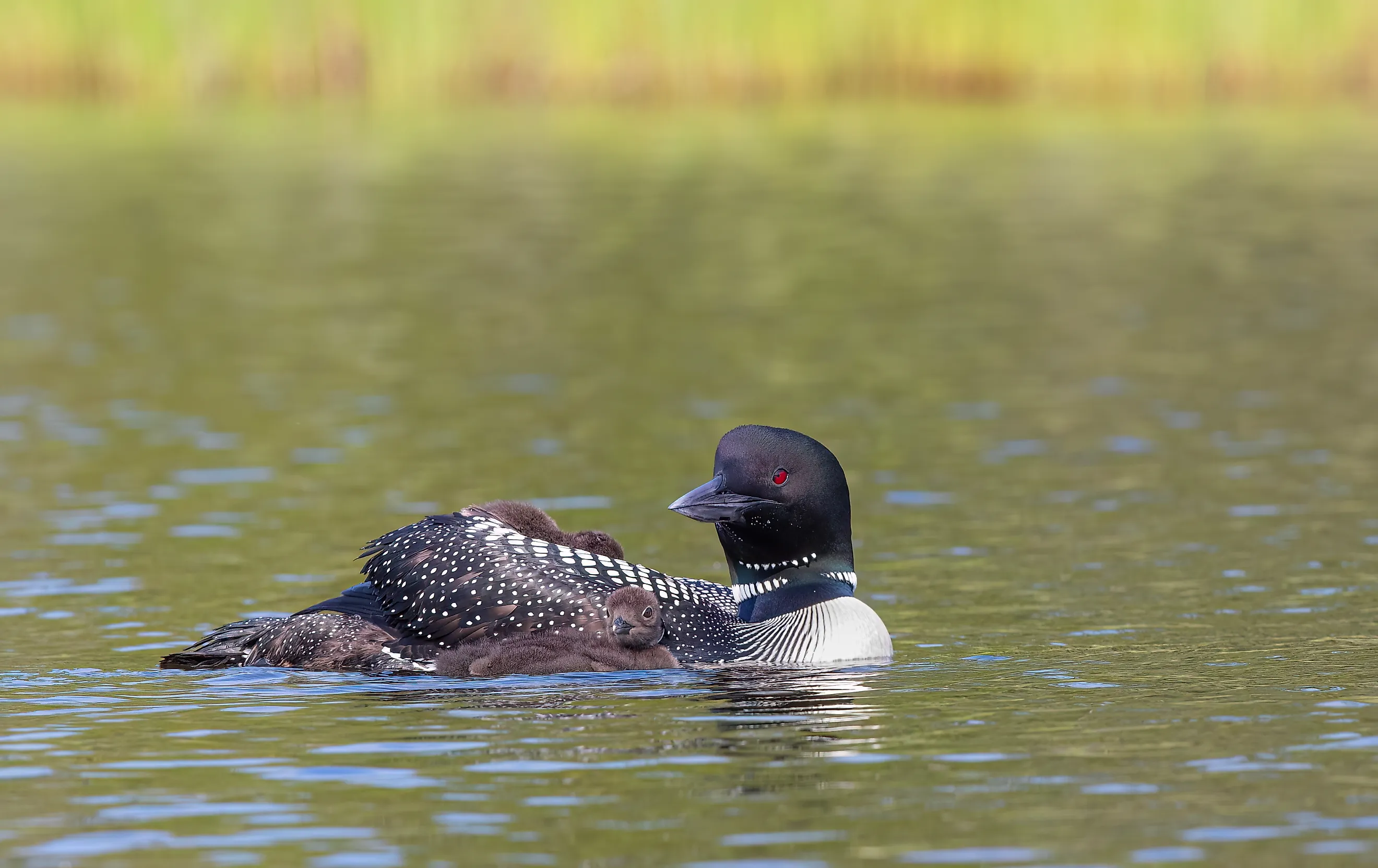
They grow black feathers on their heads and neck, with a gorgeous pattern of black and white checkers on their back. They even appear to gain a kind of bow tie or necklace with a white and black striped pattern on their neck.
The strangest change that takes place is with their eyes, as they turn a bright red color. Most scientists believe these red eyes are a way to attract the attention of a mate. Even though these birds could be said to be putting on "airs," they are dedicated partners and parents for the most part. During breeding season, they pair off monogamously and take turns tending to the eggs, with males and females sharing nearly equal duties.

Although some state that loons breed for life, in reality, they do typically have multiple partners over their 20-year lifespan, especially when they are kicked out of territories by other loons. Loon couples can pair up for multiple breeding seasons, with some estimates putting it around five years at max.
As mating season ends, the common loon begins to molt its beautiful plumage, leaving behind a much more humble gray color on the front with white on its chin and belly. Their eyes dull in color as well to a brown or reddish-brown. After winter, they make their way back to their springtime lakes up north to begin the process again.
A lunatic's song

The loons' call has aroused many emotions in those that hear it. Some, such as author John McPhee, have described it as "the laugh of the deeply insane." In reality, this lunatic's song is several different calls, each of which communicates something different.
During the evening, loons may let out a loud wail, used to communicate either with their mates or when encountering an aggressive loon or a threat to their nests, such as a predator. When speaking to a chick or partner close by, they will give off a soft hoot.

The most common loon sounds are the yodel and the tremolo. The yodel is done by the male during territorial disputes or to try to warn off a predator or human. The tremolo sounds the most like the aforementioned "laugh of the insane" and can be used to respond to threats or simply as a duet melody between a male and female.
Loons also make sounds to each other when they are very close by through the intimate cooing, used with mates or with chicks.
Loons shed their fashion for warm waters
For those looking at loons in the winter, they may not even recognize them without their distinctive black heads or red eyes. After all, they shed their fashionable feathers for more practical winter colors as they escape from the cold winters up north to wherever the warmest shoreline is, whether that be in Alaska, the Gulf of Mexico, the Pacific, or Atlantic coastline.
Even if one doesn't recognize the loons in Florida, they will still be able to hear their telltale yodels and tremolos.
While they might sound insane or haunting to human ears, to loons these calls are an intimate melody between partners or chicks, or a way to communicate imminent threats, such as a curious human getting a little too close for a loon's comfort.