6 Most Alligator Filled Rivers In Alabama
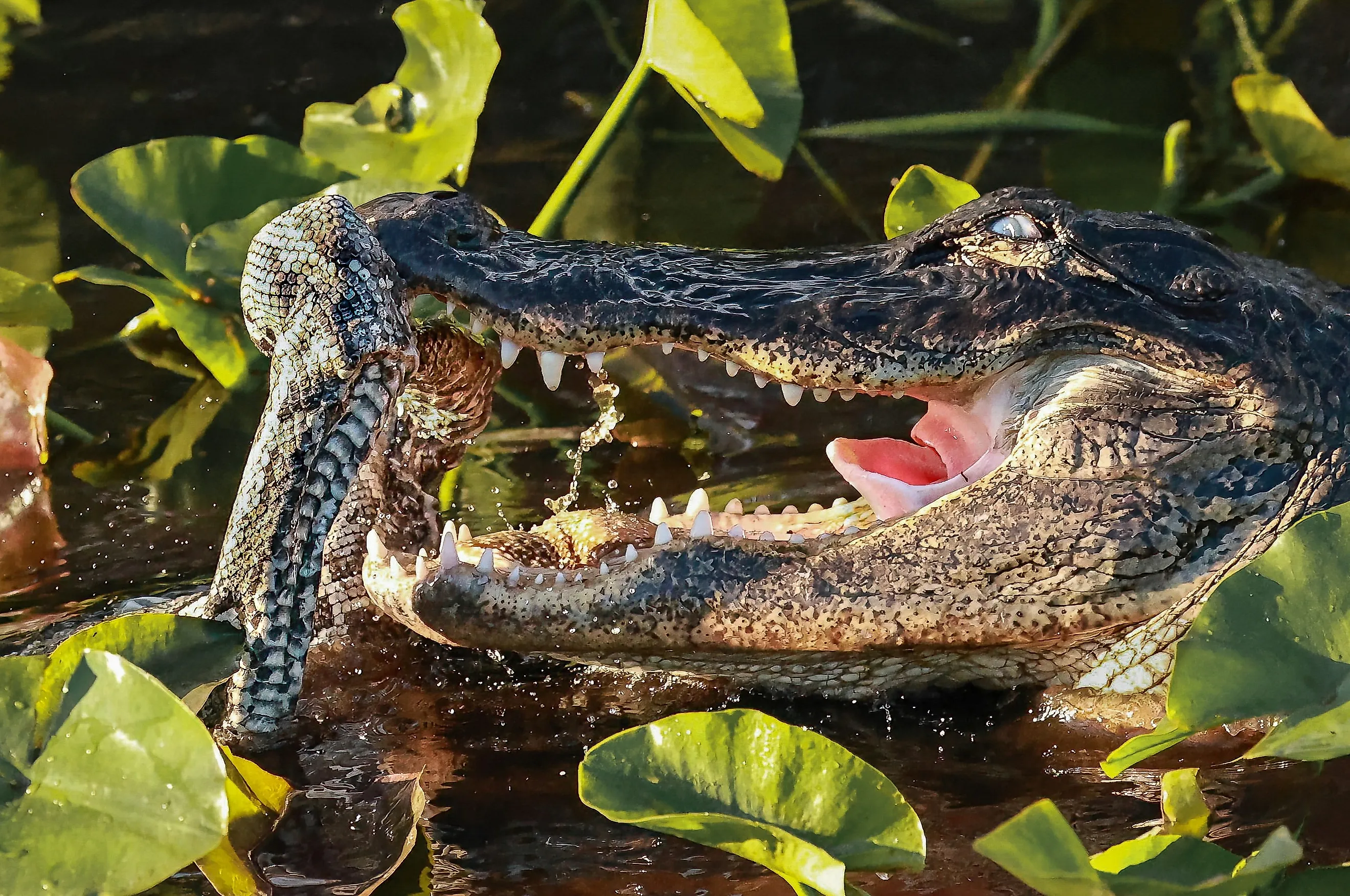
Alabama has been a trendsetter when it comes to the American alligator. Before the alligator was declared as endangered species in 1967, Alabama put protections in place to prevent hunting in 1938. Since then, alligator populations have grown in the state to an estimated 70,000 reptiles.
While that's a drop in the pond compared to the millions that live in Louisiana and Florida, the humid, slow-moving rivers in southern Alabama provide plenty of habitats for these apex predators to hunt down fish, small mammals, or anything else they can get their teeth on, including, from time to time, small pets that wander too close to the water. Here are the 6 most alligator-filled rivers in Alabama to be aware of.
Alabama River

The Alabama River is completely located within the state of Alabama, specifically the southern section, flowing for 318 miles from the Coosa and Tallapoosa Rivers until it reaches the Tombigbee River, forming the Mobile and Tensaw Rivers. Across the tributaries, streams, and dammed-off sections of the Alabama River, the largest alligators in the state are found.
One of the largest found recently in the Alabama River was a 13-foot-7-inch-long male weighing 620 pounds. By comparison, an average male alligator grows to 11.2 feet. Dammed-off sections of the river create much quieter waters that are ideal for alligators. They prefer slower waters and can more easily hunt down prey, eating and growing larger.
In fact, the the hunter-harvested world record for largest alligator was found in a tributary of the Alabama River close to Millers Ferry, a 15-foot-9-inch, 1,011.5-pound male that was caught and killed in 2014.
Perdido River

The Perdido River, by comparison, is much smaller, only around 60 to 65 miles long, situated on the eastern border between Alabama and the Florida Panhandle. The river is freely flowing and is known as a blackwater river since it has so many decaying tannins in the water that give it a black color. It also flows through prime alligator territory: marshes and wetlands.
Alligators play an important role in wetland environments like the Perdido River by moving around sediments and nutrients from the dead materials. This, in turn, gets those nutrients into the soil, enriching it and fueling the growth of additional plants.
Long-lived alligators have been found in the Perdido River, such as a 12-foot-long alligator that was caught there by two residents of Pensacola, Florida. To reach this length, the alligator would likely have been between 36 to 50 years old.
Mobile River

The Mobile River flows south for 45 miles from the confluence of the Tombigbee and Alabama Rivers into Mobile Bay. Along the way, it passes by the city of Mobile, which is home to close to 201,000 people, according to the US Census Bureau. This far south, alligators are frequent everywhere around the city, including the Mobile River and the Mobile Bay.
In 2023, a family caught an alligator measuring 12 feet, 3.5 inches long, weighing 518 pounds in the Mobile River. Just south of the river in Mobile Bay, hunters caught a 12-foot, 9 inches long alligator weighing 524 pounds.
Alligators can survive in the salt waters of Mobile Bay, especially when in search of prey. They cannot stay for long periods of time in salt waters, as they lack the salt-excreting glands that crocodiles possess.
Tensaw River

The Tensaw River is a 41-mile distributary of the Mobile River, which also flows into the Mobile Bay, forming the Mobile-Tensaw River Delta, a 260,000-acre landscape, and the largest delta in the state. This delta contains lakes, cypress swamps, wetlands, and other smaller sources of water, making it one of the biggest places in Alabama to see alligators.
Due to its size and network of streams, the Mobile-Tensaw River Delta is often called America's Amazon, providing environments for more than 300 species of birds and alligators. Although there is no formal number for how many alligators live here, in the 2018 season, hunters caught and killed 96 alligators out of a total of 144 for that hunting season.
The reason for this hunting season in Alabama is to keep alligator populations under control, as the adults have few natural predators. In addition, those that grow too large and become comfortable around humans can become dangerous.
Conecuh River

The Conecuh River flows for 230 miles from southeastern Alabama down into the Florida panhandle. Once it crosses over into Florida, it often goes by the name Escambia River due to it emptying into Escambia Bay. Unlike heavily dammed rivers, much of the lower Conecuh River by the Coastal Plain is free-flowing, supporting 84 species of freshwater fish, which are ideal snacks or meals for alligators.
Residents in South Alabama have regularly reported seeing alligators near populated areas of the Conecuh River, and in wetlands, streams, and marshes of the river, especially in the Conecuh National Forest. The Conecuh River flows directly through this forest, supporting plenty of slow-moving streams and lakes. Due to the concentration of alligators here, the Forest Service has had to issue multiple warnings not to feed alligators, except for officials or those with a permit.
Tennessee River

While the Tennessee River isn't exclusively in Alabama, a large portion runs through the state. The river is a U-shaped waterway that flows for 652 miles from Knoxville, Tennessee, through Tennessee and into Alabama and Mississippi, before turning northwest and entering the Ohio River in Paducah, Kentucky. Typically, this far north one wouldn't expect to find alligators, but they have been steadily spreading in this river since the late 1970s.
In 1979, around 50 alligators were released into the Tennessee River as part of a conservationist effort, as alligators had been added to the list of endangered animals in the United States due to overhunting.
Now, alligators of large sizes have been found near Northern Alabama cities. This waterway has also allowed alligators to reenter Tennessee in spots such as just outside of Hardin County.
Are they a danger to Alabamians?

Alligators don't pose a large threat to residents of Alabama, in part due to their smaller numbers than in states like Florida. From 1980 to 2025, there have only been a handful of recorded alligator attacks in Alabama, and no fatalities.
In most cases, one can avoid alligator attacks by not approaching them or swimming in waters they are known to frequent. In addition, one should not feed alligators, as that can get them accustomed to humans and encourage them to come closer to populated areas. In addition, if a large alligator is in a heavily trafficked area, let the authorities know, as these large predators have few natural predators and require human intervention to keep the population under control.