The Difference Between A Reef And An Atoll
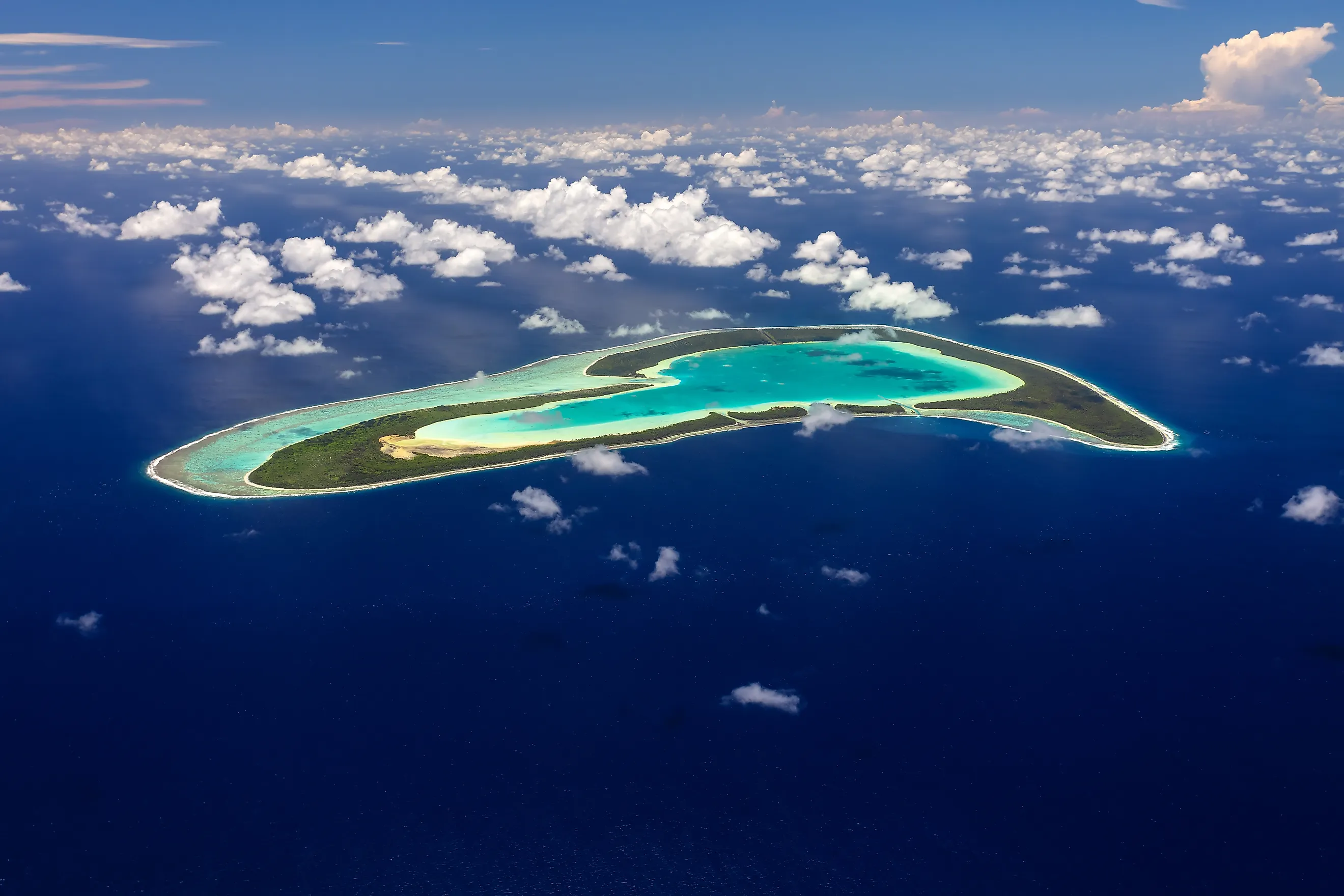
Florida's coral reef system stretches for more than 350 miles along the southeastern coast, but far out in the Pacific Ocean, another American reef takes on an entirely different shape. Midway Atoll, located northwest of Hawaii, forms a ring nearly five miles across, enclosing a turquoise lagoon with several small islands along its edges. Although both formations are coral reefs, only Midway is an atoll. The distinction comes down to their shape, geographical setting, and geological history. While reefs can follow coastlines, rise from rocky seafloors, or surround islands, atolls form distinctive rings around lagoons, often above the remains of volcanic islands that disappeared beneath the ocean millions of years ago.
Coral Reefs vs. Atolls at a Glance

Coral reefs are underwater structures built primarily by colonies of hard coral, which produce calcium carbonate skeletons that accumulate over time. These formations create complex marine habitats and can occur in several configurations. According to the National Oceanic and Atmospheric Administration (NOAA), the three main forms of coral reefs are fringing reefs, barrier reefs, and atolls. Smaller, isolated formations called patch reefs are another recognized type.
An atoll is distinguished by its generally circular or oval shape and the lagoon it surrounds. Although the two terms are closely related, a reef can take many forms, while an atoll describes a specific type of coral reef system.
There is also an important difference between the terms "reef" and "coral reef." Not every reef is built by coral. Natural rocky formations, oyster reefs, and even artificial structures such as intentionally sunken ships can function as reefs. An atoll, however, is a particular geological formation associated with the development of tropical coral reef systems.
How Coral Reefs Form

Coral reefs begin with tiny marine animals called coral polyps, which belong to the same animal group as jellyfish and sea anemones. These organisms often live in colonies attached to hard surfaces on the ocean floor, where they gradually build the foundations of a reef. As they grow, reef-building corals extract calcium and carbonate ions from the surrounding seawater to produce rigid calcium carbonate skeletons. These hard structures remain in place even after individual polyps die, providing a surface where new coral colonies can settle and develop.
Over many generations, layers of coral skeletons accumulate, allowing the reef to expand and develop a more complex structure. Other marine organisms, including algae and mollusks, also contribute materials that help reinforce the growing formation. Microscopic algae living inside many tropical corals produce sugars through photosynthesis, supplying the coral animals with much of the energy they need to grow.
The conditions surrounding a reef influence how quickly and extensively it develops. Most tropical reef-building corals thrive in relatively warm, clear, shallow waters where sunlight can reach the microscopic algae living within their tissues. The shape of a reef depends partly on the surrounding coastline and seafloor. Fringing reefs often grow directly from shorelines and extend outward into the sea, while barrier reefs develop farther offshore, separated from land by lagoons. Atolls, meanwhile, usually form around submerged volcanic foundations.
How Atolls Form

Atolls typically develop around volcanic islands in tropical oceans through a geological process that can take millions of years. Initially, reef-building corals establish colonies along the shallow edges of an island, gradually creating a fringing reef that follows its coastline.
As the volcanic island slowly sinks beneath the ocean's surface, a process known as subsidence, the coral continues growing upward toward sunlight. This gradual change creates more space between the reef and the island, allowing a lagoon to develop.
As the island sinks farther, the reef continues expanding and eventually forms a barrier reef surrounding the remaining landmass. Over time, the volcanic island may disappear completely beneath the water, leaving the coral structure behind. Without the central island, the reef forms a ring-like arrangement around an open lagoon, creating the distinctive shape associated with an atoll.
Parts of the reef may rise above sea level, forming small, low-lying islands called islets. These land areas often develop through the accumulation of broken coral fragments, sand, and other sediment carried by waves and currents. Although many atolls have relatively circular outlines, others have oval or irregular shapes depending on their geological history and surrounding conditions.
The Differences Between a Reef and an Atoll

While coral reefs and atolls share a connection to coral growth, several characteristics distinguish them. One of the biggest differences is their overall structure and relationship to nearby land. Coral reefs can develop directly alongside coastlines, extend offshore, or grow as isolated formations in open water. Atolls, however, generally form in oceanic settings away from continental coastlines, where they create a ring-like arrangement around a lagoon. Their geographical settings and surrounding environments contribute to their differences in appearance and development.
Size and shape also vary considerably between these formations. Coral reef systems range from relatively small patches to enormous networks stretching across hundreds or thousands of miles. The Great Barrier Reef in Australia is a prominent example, stretching approximately 1,429 miles along the Queensland coast. The surrounding reef system covers an area of about 133,000 square miles, making it the largest coral reef system in the world.
Atolls generally have circular or oval outlines, although some have incomplete rings. Individual atolls can also span considerable distances, with examples like Kwajalein Atoll in the Marshall Islands enclosing a lagoon of approximately 1,100 square miles. Despite its enormous lagoon, the islands along the reef have a combined land area of only about six square miles.
Another defining distinction is the presence of a central lagoon. While some reef types, particularly barrier reefs, have lagoons separating them from nearby land, a lagoon enclosed by a coral ring is characteristic of an atoll. Their formation processes also differ. Coral reefs develop through the accumulation of reef-building organisms, while atolls typically emerge through continued coral growth around a subsiding volcanic island, with changes in sea level and erosion further shaping the formation.
Where Reefs and Atolls Are Found

Coral reefs are distributed throughout the world's oceans, although the largest concentrations of shallow-water, reef-building corals occur in tropical and subtropical regions. Most of these formations are found 35 degrees north and 35 degrees south of the equator, where warm water and sufficient sunlight support coral growth. Many reef-building species thrive in relatively shallow environments, but coral communities also exist at greater depths. Mesophotic reefs in particular develop in areas with limited sunlight, while deep-sea corals can form reefs in much colder, darker parts of the ocean.
In the United States, coral reefs occur across several regions, including the Atlantic, Caribbean, Gulf of Mexico, and Pacific. The Florida Reef is one of the country's best-known reef systems, extending along the Florida Keys and southeastern Florida. Other examples can be found near Puerto Rico and the U.S. Virgin Islands, as well as around Hawaii, Guam, American Samoa, and the Northern Mariana Islands.
Atolls have a more concentrated distribution, occurring primarily in tropical areas of the Pacific and Indian Oceans. Many developed around ancient volcanic islands. The Maldives and the Marshall Islands contain numerous examples, while the Aldabra Atoll lies in the Indian Ocean near Seychelles. American waters also include several notable atolls, including the Rose Atoll, located in American Samoa. It is one of the world's smallest atolls, covering just under three square miles. Although coral reefs occur across a much wider range of ocean environments, atolls are particularly associated with the tropical Pacific and Indian Ocean regions.
The Relationship Between Reefs and Atolls
An atoll may look quite different from a fringing or barrier reef, but all three belong to the same broader family of coral formations. The difference lies in how their structures develop and the shapes they create within their surrounding environments.
While reefs can follow coastlines, extend across offshore areas, or form around islands, atolls are distinguished by their ring-like outlines and central lagoons. Not every atoll forms a perfect circle, and not every atoll has substantial land above the surface. Some consist almost entirely of submerged coral structures.
The distinction is especially clear when comparing Florida's extensive coastal reef system with the isolated atolls of the Pacific. One follows a continental coastline, while the other forms a ring around a lagoon, often marking the location of an ancient volcanic island now hidden beneath the sea. Ultimately, atolls demonstrate how the same reef-building organisms that shape shallow coastal environments can also preserve the outlines of islands that disappeared millions of years ago.