9 Undeveloped Barrier Islands On The East Coast
Atlantic coastline is dotted with barrier islands that have managed to escape the development found in many popular beach destinations. Some, like Cumberland Island, are protected as national seashores; others, such as St. Phillips, are state preserves; and several are privately owned or protected by nonprofit conservation organizations. While a few allow limited tourism, research or overnight accommodations, they retain much of their natural character.
These islands offer a look at what much of the East Coast might have looked like before resorts, condominiums, and commercial development transformed its beaches. They are also important habitats for migratory birds, sea turtles, shorebirds, and other wildlife.
These nine islands and island groups are some of the last remaining undeveloped barrier islands along the Atlantic coastline.
Cumberland Island, Georgia

Located just off the southern Georgia coast, near the Florida border, Cumberland Island is the state's largest and southernmost barrier island. Stretching about 17.5 miles, it is known for its wide, uncrowded beaches, maritime forests, salt marshes, and abundant wildlife.
Much of the island is protected as Cumberland Island National Seashore, including more than 9,800 acres of designated wilderness.
One of Cumberland's most recognizable sights is its population of wild horses, which roam freely through the island's forests, grasslands, and beaches. Armadillos, white-tailed deer, wild turkeys, and a variety of shorebirds are also residents of this undeveloped island. Loggerhead sea turtles also use its beaches as nesting grounds.

The island has a fascinating history with evidence of Native American settlements, Spanish missions, plantation life, and the wealthy Carnegie family, which once owned a substantial portion of the island. The ruins of the Carnegie family's Dungeness mansion remain among its most photographed landmarks.
Accessible by ferry from St. Marys, people can visit for hiking, camping, wildlife watching, and enjoying the miles of beach without the crowds and commercial development found elsewhere along the Georgia coast.
Core Banks, North Carolina

Part of Cape Lookout National Seashore, North and South Core Banks are among the most remote and undeveloped stretches of the Outer Banks. Together they form a lengthy chain of sandy barrier islands along North Carolina's Crystal Coast, with miles of beaches, rolling dunes, salt marshes, and maritime grasslands.
Unlike the more developed Outer Banks communities to the north, Core Banks has no bridges connecting it to the mainland. Visitors must arrive by passenger or vehicle ferry, or private boat.
The limited access has helped preserve the islands' natural character, making them popular with people seeking solitude, fishing, shell collecting, and primitive camping.

South Core Banks is home to the iconic Cape Lookout Lighthouse, recognizable by its distinctive black and white diamond pattern. North Core Banks includes the historic Portsmouth Village, an abandoned coastal community that provides a glimpse into the region's maritime past.
The larger national seashore includes Shackleford Banks, famous for its wild horses believed to be descendants of Spanish mustangs brought to the area centuries ago. The islands are important habitats for nesting sea turtles, shorebirds, and other coastal wildlife. Their constantly shifting beaches and dunes illustrate the natural processes that shape barrier islands.
Assateague Island, Maryland and Virginia

Stretching about 37 miles along the Atlantic coast, Assateague Island is one of the best-known undeveloped barrier islands on the East Coast. Shared by Maryland and Virginia, the island is protected through several public agencies, including Assateague Island National Seashore, Chincoteague National Wildlife Refuge, and Assateague State Park.
Like other undeveloped barrier islands, its most famous residents are the wild horses that roam the island's beaches, marshes, and grasslands. Although often called Chincoteague ponies, the horses on Assateague are divided into two herds.
The Maryland herd roams freely within the national seashore, while the Virginia herd is owned by the Chincoteague Volunteer Fire Company and kept in fenced-in areas within the wildlife refuge.

Assateague has remarkable landscapes of windswept dunes, sandy beaches, maritime forests, and saltwater marshes. Its constantly changing shoreline provides habitat for migratory birds, shorebirds, and nesting sea turtles.
Despite being a popular place for kayaking, fishing, hiking, swimming, and wildlife photography, the island remains free of commercial development. Its proximity to the resort town of Ocean City, Maryland, makes the contrast particularly striking. Just a short distance from the crowded boardwalks and hotels, Assateague offers a much wilder coastal experience.
Masonboro Island, North Carolina

Located just southeast of Wilmington, Masonboro Island is the largest undisturbed barrier island along the southern North Carolina coast. Despite being close to one of the state's most populated coastal areas, the 5,653-acre island remains undeveloped.
Masonboro is part of the North Carolina Coastal Reserve and National Estuarine Research Reserve system and is designated a Dedicated Nature Preserve. It has no bridges, roads, restaurants, or hotels. Visitors must arrive by private boat, kayak, or canoe, making it a popular destination for boaters, campers, and nature enthusiasts.
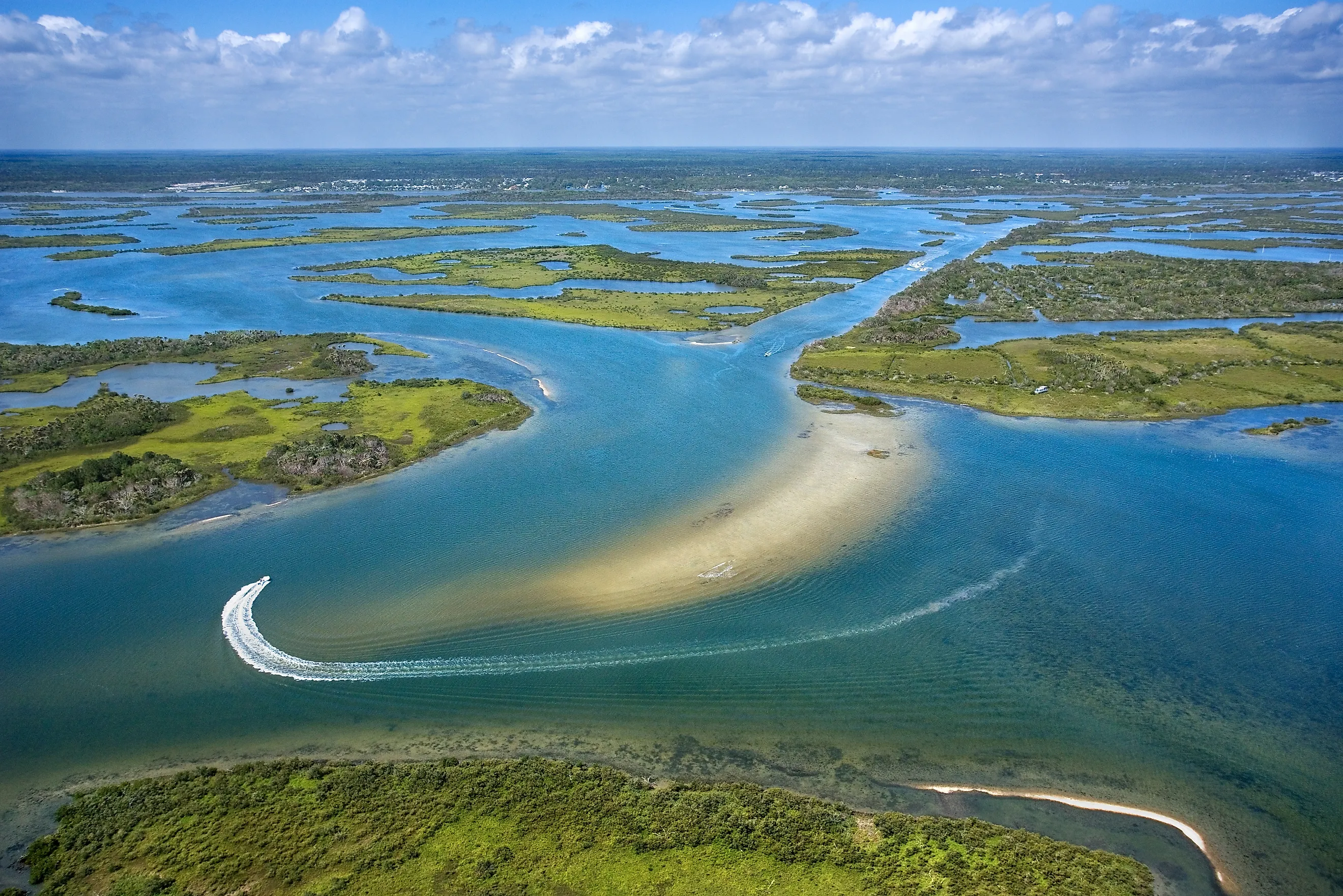
About 87 percent of the island's 8.4-mile length consists of marshes and tidal flats. Other habitats include sandy beaches, dunes, maritime shrub thickets, grasslands, and tidal creeks.

These diverse environments support a variety of wildlife, including loggerhead and green sea turtles, numerous fish species, and nesting shorebirds including the American oystercatcher, black skimmers, Wilson's plover, and least terns, all of which are species of concern.
The island's preservation is also a conservation success story. Local advocates and environmental organizations worked to protect it from development, helping ensure that an increasingly rare stretch of natural coastline would remain intact.
Masonboro is especially appealing to photographers looking for untouched coastal scenery, from expansive beaches and rolling dunes to peaceful waterways and marshland.
Capers Island, South Carolina
Just north of Charleston, Capers Island is an undeveloped barrier island known for its secluded beaches, maritime forests, and unusual shoreline. Part of the South Carolina State Heritage Preserve System, the island is owned and managed by the South Carolina Department of Natural Resources.
One of its distinctive features is Boneyard Beach, where weathered tree trunks and branches lie scattered across the sand. The trees were once part of the island's maritime forest before erosion and changing coastal conditions exposed their remains. The resulting landscape is particularly striking for photographers, especially at sunrise and sunset.
Capers Island covers about 2,000 acres of beaches, dunes, salt marshes, tidal creeks, and forest. Its habitats provide refuge for coastal birds, fish, and other wildlife. Common sightings include bottlenose dolphins and bald eagles. The surrounding waters are also important nursery grounds for marine species.
There are no bridges, hotels, or commercial facilities on the island. Access is limited to private boats and organized excursions.
Visitors who want to go kayaking, fishing, camping, or hiking on this quiet South Carolina island should be prepared to bring everything they will need for their stay.
Virginia's Eastern Shore Islands, Virginia
Along Virginia's Eastern Shore, a chain of 14 undeveloped barrier and marsh islands forms the Volgenau Virginia Coast Reserve. Protected primarily through the work of the Nature Conservancy, this landscape represents the longest expanse of coastal wilderness remaining on the East Coast.
The islands extend along the Atlantic side of Virginia's Eastern Shore, forming a natural barrier between the ocean and the mainland's coastal communities. Among them are Smith, Myrtle, Mink, Cobb, Rogue, Sandy, Parramore, and Metompkin islands. Together, they protect important habitats for wildlife while helping buffer the mainland from storms and coastal flooding.

The reserve is particularly significant for bird conservation. More than 250 species of raptors, songbirds, and shorebirds depend on the islands and surrounding marshes for food, nesting, and migration. The Nature Conservancy has maintained a migratory bird protection program in the region for decades.
Many of the islands are accessible to visitors for low-impact recreational activities, including birdwatching, hiking, surf fishing, and photography. However, seasonal closures protect nesting birds, with the area above the high-tide line closed from April through August.
The reserve demonstrates how nonprofit conservation efforts can preserve an extensive stretch of coastline while allowing carefully managed public access.
St. Catherines Island, Georgia
Situated midway along Georgia's coast, approximately 50 miles south of Savannah, St. Catherines Island is one of the state's most historically significant and least accessible barrier islands. Covering about 14,640 acres, it features nearly 11 miles of natural beaches, extensive salt marshes, maritime forests, and freshwater wetlands.
Unlike national seashores and state preserves, St. Catherines is privately owned by the nonprofit St. Catherines Island Foundation, established through the Edward John Noble Foundation. The island is primarily dedicated to wildlife conservation, scientific research, and the preservation of historic and archaeological resources.

Its history stretches back thousands of years. It was once home to the Guale people and later became the site of Santa Catalina de Guale, an important Spanish mission established in 1566. Archaeological discoveries have made the island an important location for understanding Native American life and early Spanish colonial history.
Today, researchers study the island's coastal ecosystems, wildlife, and archaeological sites. Conservation efforts have also included breeding programs for rare and endangered animals.
St. Catherines is not a tourist destination. Public visitation is restricted, and access is by invitation or special permission. Its protected status, however, makes it an important example of how privately funded nonprofit conservation can preserve an entire barrier island.
Little St. Simons Island, Georgia

Just off the coast of Georgia's Golden Isles, Little St. Simons Island is an 11,000-acre natural sanctuary that has managed to remain largely untouched by commercial development. Privately owned and accessible only by boat, the island is known for its seven miles of pristine beaches, maritime forests, tidal creeks, and extensive salt marshes.
Unlike undeveloped barrier islands that are completely uninhabited, Little St. Simons has limited overnight accommodations at The Lodge on Little St. Simons Island. The historic lodge holds a maximum of 32 guests and provides an opportunity to experience the island without introducing large-scale tourism or resort development.

The Georgia island is a haven for wildlife, particularly birds. More than 300 bird species have been recorded here, making it an appealing destination for birdwatchers and nature photographers. Loggerhead sea turtles also nest along its beaches, while its forests and marshes provide habitat for deer, alligators, and numerous other native species.
Although privately owned, the island's future is protected through a permanent conservation easement donated to the Nature Conservancy in 2015. This agreement ensures that its natural habitats remain protected.
Little St. Simons demonstrates that private ownership and carefully managed tourism can coexist with long-term environmental conservation.
St. Phillips Island, South Carolina
St. Phillips Island is a secluded 4,680-acre barrier island off the coast of Beaufort, South Carolina. It features undeveloped beaches, ancient dune ridges, freshwater ponds, salt marshes, and about 1,000 acres of old-growth maritime forest.
For nearly four decades, businessman and conservationist Ted Turner privately owned the island, purchasing it in 1979 to protect the natural landscape from development. In 2017, the state of South Carolina purchased the island, and it is now managed through the state's park system in conjunction with Hunting Island State Park.
St. Phillips has retained much of its wild character. Its beaches feature weathered trees and driftwood, while winding trails lead visitors through maritime forests with centuries-old vegetation. The island is also home to freshwater ponds, native wildlife, and important coastal habitats.
Although no longer privately owned, its history makes it an interesting example of conservation-minded private stewardship followed by public protection. Visitors can take guided boat excursions from nearby St. Helena Island to explore the property.
Day trips provide opportunities for hiking, wildlife observation, and photography. Overnight accommodations are also available at the historic Turner House, which overlooks the Atlantic Ocean. With limited access and little development, St. Phillips remains one of South Carolina's more secluded coastal barrier islands.
The Coast before the Condos
From the wild horses roaming Assateague Island to the pristine beaches of Little St. Simons Island and the untouched shoreline of North Carolina's Masonboro Island, these undeveloped barrier islands offer far more than beautiful coastal scenery.
They serve as natural buffers against storms, help reduce coastal erosion, and provide essential habitat for wildlife, including nesting sea turtles, shorebirds, and other coastal species.
As development continues to reshape America's coastlines, protecting these fragile environments becomes increasingly important. Whether preserved through public ownership, private conservation, or nonprofit organizations, these islands represent an investment in the future of our natural coastlines.
Keeping them wild helps protect the delicate ecosystems they support while ensuring that future generations can experience the beauty and ecological importance of barrier islands much as they exist today.