7 Most Alligator Filled Rivers In South Carolina
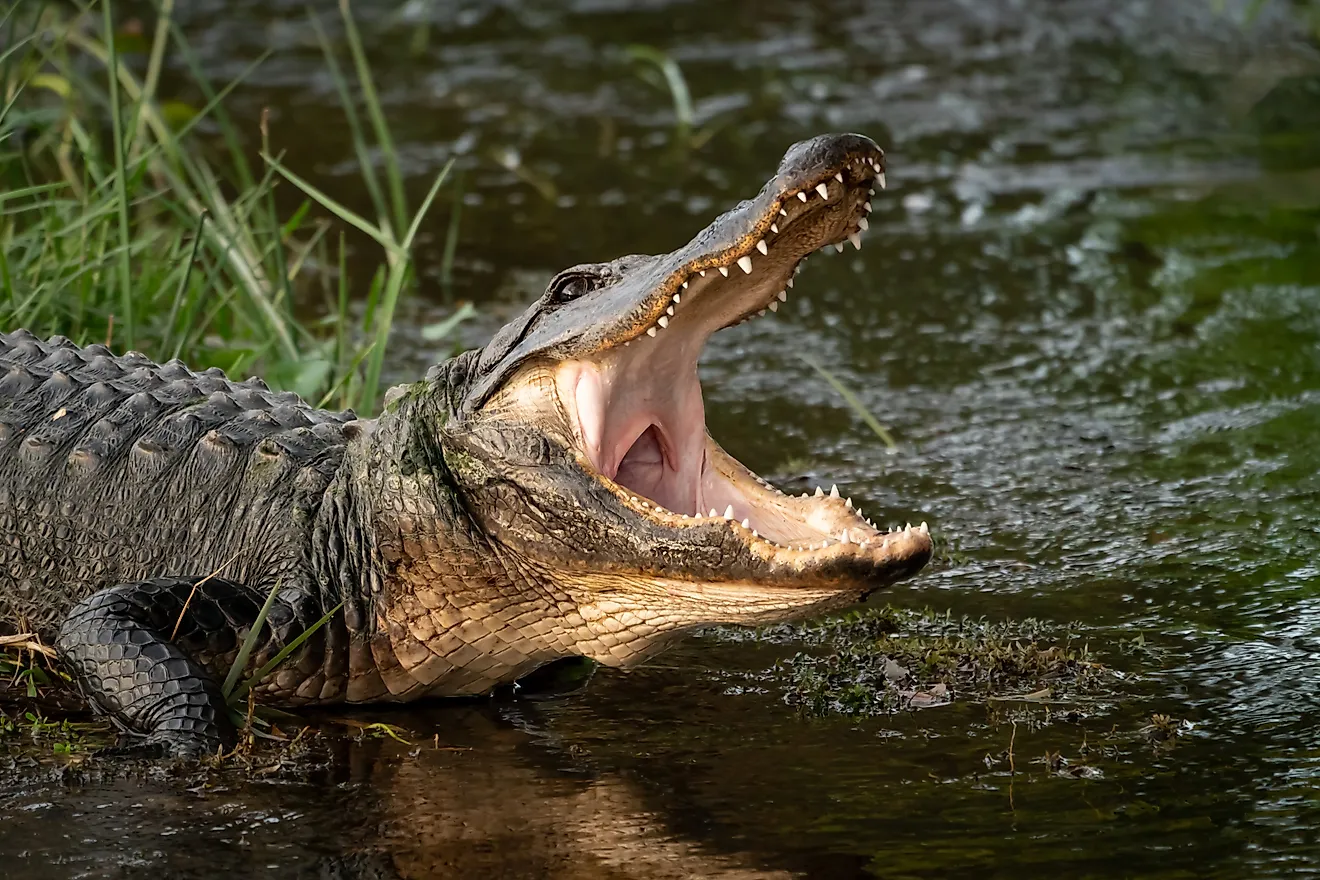
Along one 8-mile stretch of the South Santee River, researchers routinely count an average of about 200 alligators during nightlight surveys, representing around 25 gators for every mile of water. Density counts like that are among the highest recorded in the state. South Carolina is home to an estimated 100,000 or more alligators, most of them between the Midlands and the coast, but the state has no river-by-river census. For most rivers, the evidence comes from harvest records, wildlife officials, and the occasional 13-foot catch. Those clues point to where South Carolina's gators gather, without putting an exact number on any one river.
South Santee River

The South Santee produced the highest density in a 2022 study by researchers from Clemson University, the US Geological Survey, and the South Carolina Department of Natural Resources (SCDNR). Biologists counted alligators at night along an 8-mile (12.8-kilometer) stretch, spotting their eyes in a spotlight, and combined those counts with tagging and harvest records. Their model put the average at 1,711 alligators between 2011 and 2016, likely somewhere between about 1,330 and 2,210.
That figure covers the surveyed stretch, not the whole river. The South Santee is the southern branch of the Santee River system. The Santee begins where the Congaree and Wateree rivers meet, flows through Lake Marion, and splits into the North and South Santee near the coast.
Great Pee Dee River (Lower)

The lower Great Pee Dee flows into Winyah Bay near Georgetown and makes up part of the state's second survey route. That 24-mile (38.4-kilometer) route takes in sections of the Great Pee Dee and Waccamaw rivers, along with two connecting channels.
The overall alligator count along the route held steady during the study, but the number of larger alligators fell by 30 to 50 percent where hunting pressure was heaviest. The Pee Dee management unit, covering Georgetown, Horry, and other counties, recorded 119 alligators during the 2025 public hunt, the second-highest total among the state's four units.
Waccamaw River

Shared with the Great Pee Dee, the Waccamaw's survey route averaged an estimated 1,358 alligators between 2011 and 2016, likely somewhere between about 1,040 and 1,780. The study did not split that total between the two rivers. The Waccamaw National Wildlife Refuge protects stretches of the river's swamps, wetlands, and wooded banks.
The Waccamaw has produced some of the state's largest reported catches. Fishing guide Landon McDowell caught a 13-foot-5-inch, 800-pound alligator near Sand Hole Creek, close to Wacca Wache Marina, in 2016. Three hunters caught a 12-foot-8-inch alligator between Georgetown and Myrtle Beach in September 2026. South Carolina Public Radio reported its weight at about 600 pounds, and the group took around two and a half hours to subdue it.
Cooper River

The Cooper River is known for its alligators, especially around the old rice fields in Berkeley County. The Post and Courier has reported that alligators are common along the river's rice-field levees, and a nuisance-removal agent told the paper that many of South Carolina's largest alligators live in the Cooper River or the Santee Cooper lakes. A scuba diver survived an alligator attack in the river in April 2024.
An SCDNR biologist told reporters that a fair number of alligators lived along the river. The upper Cooper is freshwater, and the lower section near Charleston Harbor is tidal and brackish. Alligators prefer freshwater but can move into brackish and salt water. Berkeley, Colleton, and Georgetown counties together accounted for more than half of the 380 alligators taken during the 2023 public hunt, though Berkeley County's total includes Lake Moultrie as well.
Edisto River

The Edisto is one of the longest free-flowing blackwater rivers in North America. It runs for about 250 miles from the central Sandhills through cypress and tupelo swamps before reaching the coast. It passes through the ACE Basin along with the Ashepoo and Combahee rivers. Its marshes, wetlands, and old rice fields make strong alligator habitat.
Colleton County, with parts of the Edisto and Combahee watersheds, was among the three counties behind more than half of the 2023 public hunt. A 12-foot alligator weighing 445 pounds was killed on private property near the river in April 2021, and processors later found five dog identification tags in its stomach.
Combahee River
The Combahee flows through the Lowcountry as part of the ACE Basin. Its surrounding wetlands and former rice-field impoundments make good alligator habitat. A 13-foot alligator was caught near Beaufort in 2015, according to the Post and Courier.
Some of South Carolina's largest alligators live in the swamps and lakes that stretch between Columbia and the coast. The Combahee was one of 14 river drainages in an aerial nesting survey between 1978 and 1982, a survey that recorded 408 nests across the coastal marshes.
Black River

The Black River winds for more than 150 miles through Sumter, Clarendon, Williamsburg, and Georgetown counties before joining the Great Pee Dee near Georgetown. Apart from Kingstree and its final stretch in Georgetown County, its banks remain forested and largely undeveloped. Seventy-five miles of the river in Clarendon, Williamsburg, and Georgetown counties became a State Scenic River in 2001. Its dark, slow water and bottomland swamps make strong alligator habitat.
No population survey has covered the Black River on its own. Its lower reaches lie in Georgetown County, part of the Pee Dee management unit that recorded 119 alligators during the 2025 public hunt, though that total covers multiple counties.
Beyond South Carolina's Riverbanks
The largest alligators make headlines, but much of their habitat is out of sight. Beyond the main river channels, flooded forests, abandoned rice fields, and quiet backwaters give alligators places to feed, bask, and nest. These connected wetlands are especially extensive in South Carolina's Lowcountry. A single large catch draws attention to a river, but the surrounding habitat gives a better picture of how so many alligators live throughout these waterways.