The Oldest Zoos In America
Zoos have been one of the top "must-do" family outings in America since the 1860s, and their popularity shows little sign of fading. And when you do visit one of the many zoos scattered across the country, there's a chance, somewhere on its grounds, that you'll see a structure or two that have been around longer than your grandparents.
The eight American zoos we've featured here were already showing animals to the public before 1877, and every one of them is still open today. They’re ranked by their founding year, using the date from the zoo's own published history.
So, gather up the young'uns, pack a picnic, and join us on our tour of America's oldest zoos.
Central Park Zoo, New York City, New York (1864)

Although the sea lion pool at the heart of Central Park Zoo has been the center of its layout since 1934, animals had been kept on the site substantially longer. Soon after work on Central Park began in the late 1850s, New Yorkers started leaving unwanted animals at the Arsenal, the brick building near Fifth Avenue and 64th Street that served as park headquarters.
In 1864, the state legislature approved buildings for the collection, and the Central Park Menagerie was created. By 1873, 7,000 people a day were coming to see it. Parks commissioner Robert Moses replaced the menagerie in 1934 with a quadrangle of brick animal houses enclosing the sea lion pool, built with labor from the Works Progress Administration, the federal Depression-era jobs program. It opened on December 2 that year.

The zoo closed in 1983 for a five-year, $35 million rebuild and reopened in August 1988. Sea lion feedings are still the biggest crowd-puller, and the six-acre site also has snow leopards, a penguin house, and the Tisch Children's Zoo. Look out for the eight granite eagles that ring the sea lion pool, remnants of a Brooklyn overpass demolished in 1941.
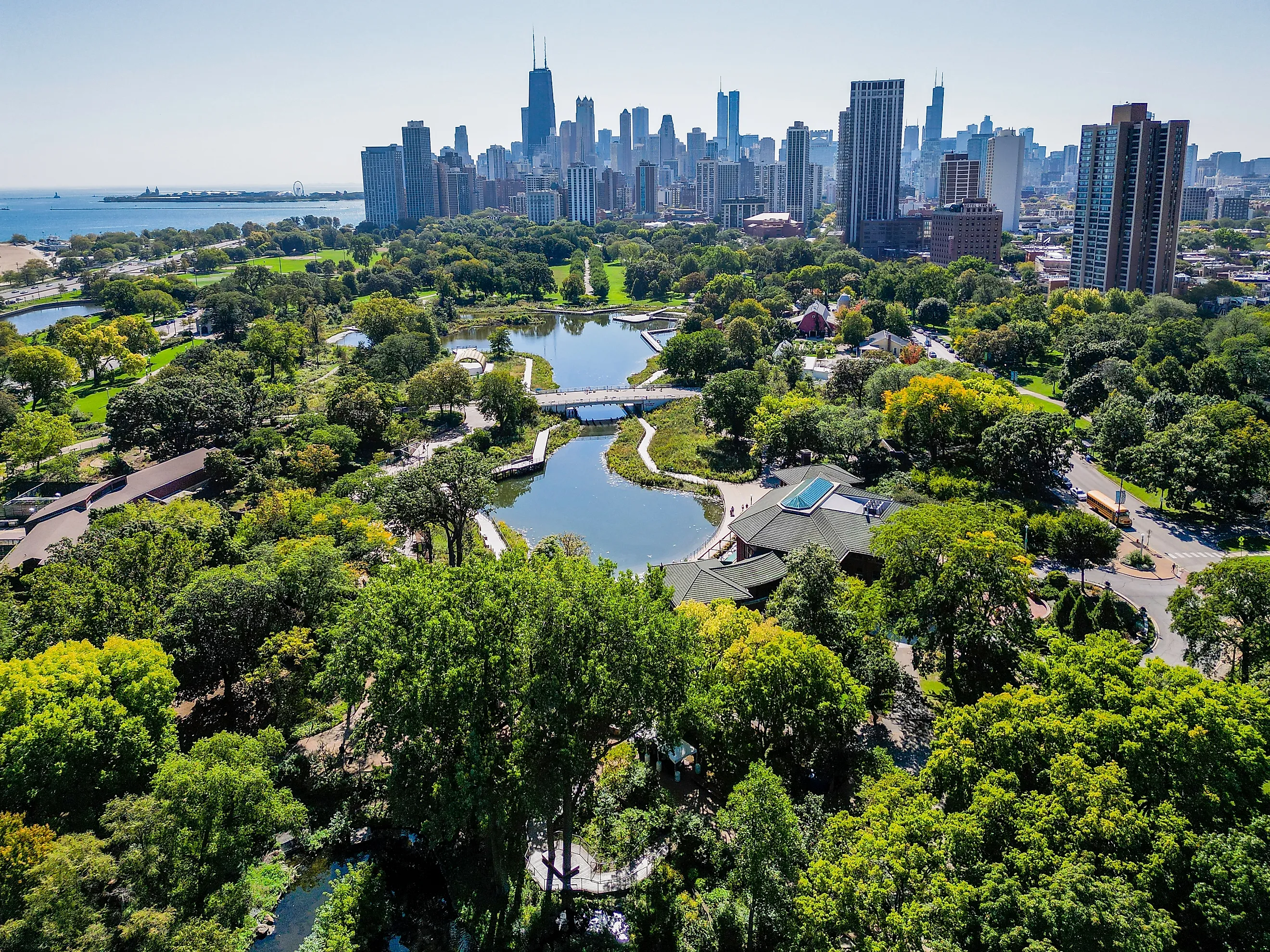
Lincoln Park Zoo, Chicago, Illinois (1868)

Two pairs of mute swans, a gift from the commissioners of New York's Central Park, arrived in Chicago in 1868 and were released in Lincoln Park, the lakefront park on the city's North Side. They were the first animals to call Lincoln Park Zoo home and were followed by its first paid-for exhibit, a bear cub bought in 1874.
In 1878, park commissioners decreed that the zoo must always be free to enter, which it is to this day, making it (according to the attraction itself) the longest-running free zoo in the country.
The Lion House, built in 1912, has since been declared a Chicago Landmark and was renamed the Pepper Family Wildlife Center in 2021 after a $41 million restoration. Its lions share the 49-acre grounds with the gorillas and chimpanzees of the Regenstein Center for African Apes, opened in 2004, along with nearly 200 species in all.
Roger Williams Park Zoo, Providence, Rhode Island (1872)

Roger Williams Park, named after the founder of Providence, started with a 102-acre farm that Betsey Williams, a descendant of his, left to the city in 1871. The following year, a small collection of animals went on display in the new park, and Roger Williams Park Zoo dates itself from that 1872 opening. The first elephant, appropriately named Roger, arrived in 1893 to join a menagerie that already had tigers, leopards, and lions.
The animals were originally scattered across the park, with bison and bears on one hill, and sea lions in a pool below the park's Casino building. They were all moved inside a single fenced compound in 1965.

The zoo closed from 1978 to 1980 for an overhaul, and in 1986, it became the first zoo in New England accredited by the Association of Zoos and Aquariums (AZA), the industry body that inspects zoos for animal-care standards.
Today's 40-acre zoo cares for more than 160 species, including the residents of the Faces of the Rainforest building. Its three African elephants, Alice, Ginny, and Kate, together here since 1990, are due to move to The Elephant Sanctuary in Tennessee, the country's largest natural-habitat refuge for elephants, in late 2027.
Philadelphia Zoo, Philadelphia, Pennsylvania (1874)

The slogan over the gate at Philadelphia Zoo reads "America's First Zoo," and by charter date, it's a fair claim. The Zoological Society of Philadelphia was incorporated by the Pennsylvania legislature in March 1859. The Civil War stalled fundraising, and the gates didn't open until July 1, 1874, when more than 3,000 people paid 25 cents to get in. The zoo counted 227,557 visitors in its first eight months.
Those gates and their twin gatehouses are the ones visitors still pass through, and the 42-acre site in Fairmount Park (the city's largest) on the west bank of the Schuylkill River.

The Solitude, a country home built in 1785 by John Penn, grandson of Pennsylvania founder William Penn, is located on the grounds and once served as the zoo's reptile house.
The zoo opened the country's first animal health laboratory, the Penrose Research Laboratory, in 1901, recorded the first orangutan and chimpanzee births in the United States in 1928, and opened North America's first children's zoo in the 1930s. Since 2011, its Zoo360 trails, mesh tunnels that let big cats and primates travel above the pathways, have become its signature. The zoo cares for more than 1,900 animals today.
Cincinnati Zoo & Botanical Garden, Cincinnati, Ohio (1875) (Tie)
The round brick Reptile House at Cincinnati Zoo & Botanical Garden was built in 1875 as the Monkey House, and is the oldest surviving zoo building in North America. It has stood there since opening day on September 18, 1875, when the Zoological Society of Cincinnati opened its gardens on 65 acres in the Avondale neighborhood with exhibits unfinished and some animals still crated.
The zoo recorded the first giraffe born in the Western Hemisphere in 1889, and Martha, the last of the passenger pigeons, a North American bird now extinct, died here in 1914. The Reptile House and the Elephant House, the latter built in 1906, are now National Historic Landmarks, and the Cincinnati Summer Opera began staging its seasons at the zoo in 1920.
Fiona, a hippo born six weeks premature in 2017 at Hippo Cove, is the resident most visitors ask for. The zoo opened Elephant Trek (the largest habitat in its history) in 2024, and marked its 150th anniversary in 2025 with Bear Ridge, Siamang Point, and Sea Otter Coast, where southern sea otters Chloe and Kevin are now on view.
Buffalo Zoo, Buffalo, New York (1875) (Tie)
Polar bears Luna and Sakari are the main attraction at Buffalo Zoo today, but the whole thing started with two deer given to the city in 1870 that were kept on a small plot in Delaware Park. The first permanent building went up on the plot in 1875, the year the zoo uses for the founding of the Buffalo Zoological Gardens.
The Main Animal Building and the Reptile House, which opened in 1942 with more than 400 specimens, were built between 1938 and 1942. The Zoological Society of Buffalo, incorporated in 1931, has run the zoo since 1973, and the grounds were added to the National Register of Historic Places, the federal list of historic sites, in 2013.
Its biggest recent addition is Arctic Edge, a 1.5-acre, $14 million polar bear habitat that opened in September 2015 on the site of the old bear pits. Other notable structures include the indoor M&T Bank Rainforest Falls and Sea Lion Cove by the entrance.
Ross Park Zoo, Binghamton, New York (1875) (Tie)

South Mountain, on the southern edge of Binghamton in New York's Southern Tier, the part of the state along the Pennsylvania state line, is where local businessman Erastus Ross gave the city 90 acres in 1875. There was one condition: that it be a park for the whole community. His wishes were fulfilled, and Ross Park Zoo opened that same year. Stone pillars put up in 1896 still mark the carriage entrance.
A bear exhibit and the park's carousel both arrived in 1919, the carousel a gift from shoe manufacturer George F. Johnson and the oldest of the six he gave to Broome County, the county that includes Binghamton. The zoo then declined through two world wars and the Depression until the US Department of Agriculture threatened to close it.
To save it, residents formed the Southern Tier Zoological Society in 1966, the city handed it the operating contract in 1977, and the zoo earned AZA accreditation in 1987. Although the zoo lost that accreditation in 2014, it's working on getting it back. Its 34 species live along wooded paths that replaced the old concrete and steel-barred cages, and it celebrated its 150th anniversary in 2025.
The Maryland Zoo in Baltimore, Baltimore, Maryland (1876)
Four swans donated by Baltimore residents in 1862 were the first animals kept in Druid Hill Park, the park the city had bought in 1860. The park superintendent looked after the growing collection of creatures until 1876. That was the year the Maryland General Assembly passed an act creating a zoological collection in the park "for the instruction and recreation of the people."
The zoo's offices are situated in the Mansion House, built in 1801 as the home of the Rogers family, whose estate became the park. Baltimore schoolchildren collected pennies in the 1920s to buy the zoo's first elephant, Mary Ann. The Maryland Zoological Society took full management from the city in 1984, and the name changed from the Baltimore Zoo to The Maryland Zoo in 2004.
The 135-acre grounds now house 130 species in four areas, among them Penguin Coast, with a colony that has grown to more than 90 African penguins, and African Journey with its lion, giraffe, and elephant habitats. The Main Valley, the oldest part of the zoo, reopened in 2021 as a walking path past its Victorian-era iron cages, and a new red panda habitat there is the centerpiece of the zoo's 150th anniversary year in 2026.
Older Than The Light Bulb
Every zoo on this list was showing off its animal inhabitants before Thomas Edison demonstrated his light bulb in 1879, a fact that certainly puts those childhood zoo trips into perspective. Yes, these places were already old before you turned up. Opened within a 12-year period in the second half of the 19th century, these eight zoos outlived the menagerie era they were born into, swapped those iron cages for habitats, and kept the gates open through depressions, wars, and rebuilds.