7 Snake Infested State Parks In Texas
Forty-five miles from downtown Houston, people have photographed more than 770 snakes in a single Texas state park, and the snake that shows up most in their pictures is venomous. Up in the Panhandle, a hiker came across a rattlesnake just off a park trail, swallowing a lizard whole, and the snake never rattled.
These are ordinary state parks with campsites and paddling trails, and one of them is home to at least 30 kinds of snakes. Which snakes turn up on a trail depends on the ground underneath it, and the wettest of that ground is a cypress swamp in the Pineywoods, where five kinds of venomous snakes live.
Martin Dies Jr. State Park

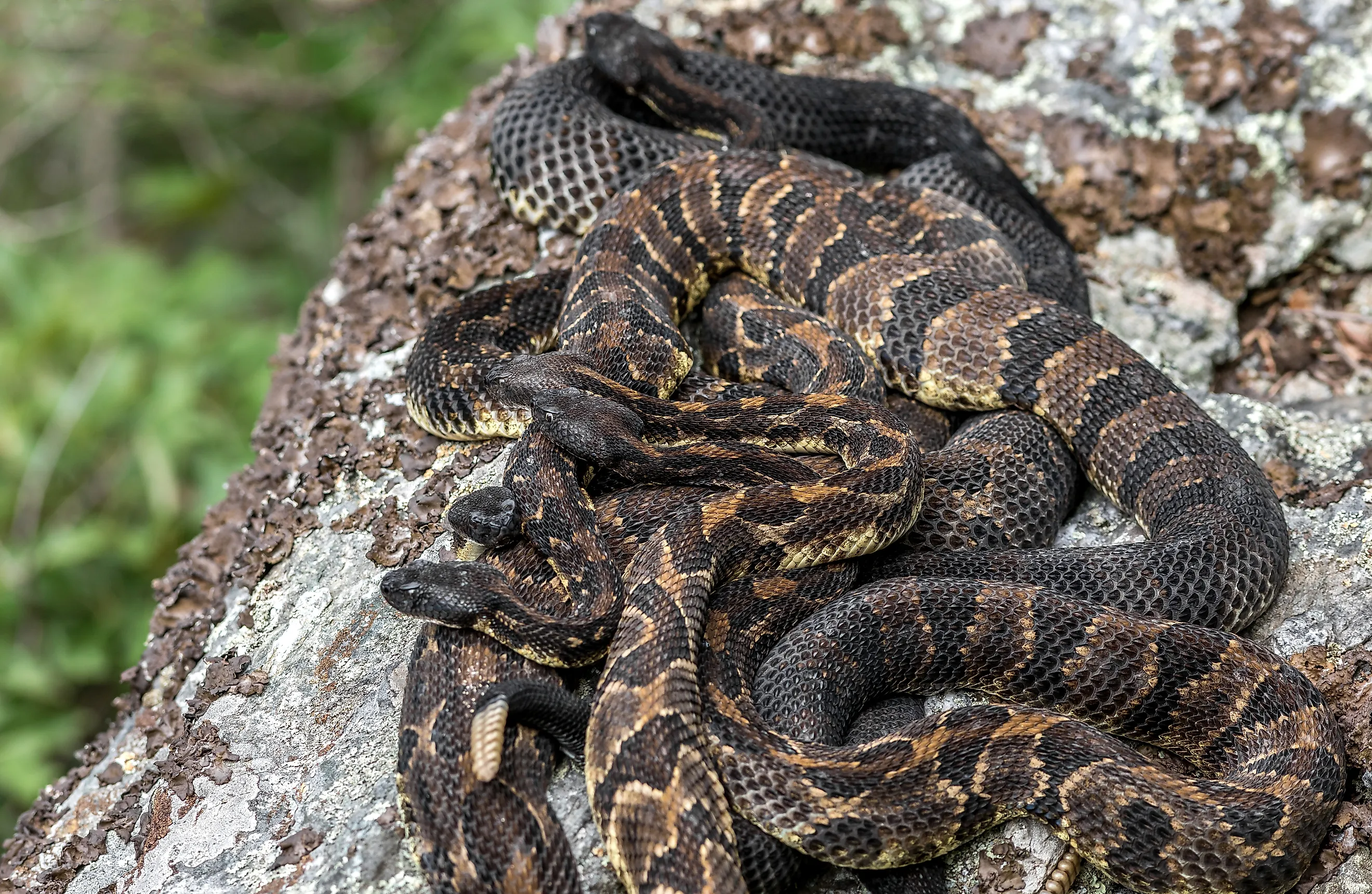
Texas Parks and Wildlife says the reptiles at Martin Dies Jr. State Park live in its sloughs, the slow creeks where bald cypress trees tower over B.A. Steinhagen Reservoir near Jasper. The 3-mile Cypress Swamp Paddling Trail loops through cypress groves in the park's Wolf Creek and Rush Creek units, putting kayaks on that same slow water. On the citizen-science platform iNaturalist, the cottonmouth is the second-most-logged snake in the park, just behind the harmless western ratsnake, and 16 of the park's 150 snake sightings are timber rattlesnakes, a threatened species in Texas that is also called the canebrake rattlesnake.
That rattlesnake is one of five venomous snakes the agency lists for the Pineywoods, along with the Texas coral snake, southern copperhead, western cottonmouth, and western pigmy rattlesnake. Visitors are asked to stay on the designated trails to avoid meeting them.
Brazos Bend State Park

Closer to the coast, the two snakes logged most often at Brazos Bend State Park are nearly tied, and only one of them is venomous. Cottonmouths account for 146 of the park's more than 770 snake sightings and the harmless banded watersnake for 143. The copperhead and the Texas coral snake are on the list as well, among 16 species in all.
Most of the park's trails stay close to water. The 1.2-mile Pilant Slough Trail follows the slough as it winds through bottomland forest, and the 40 Acre Lake Trail, also 1.2 miles, passes several kinds of aquatic habitat.
Texas Parks and Wildlife says mild days in spring and fall, or any mild winter day, are the best times to see reptiles in the park. Rangers there give talks on the park's snakes under the title Spectacular Snakes.
Colorado Bend State Park

Tent campsites at Colorado Bend State Park, two hours northwest of Austin, sit along the Colorado River, where the 3.4-mile River Trail stays under a dense canopy with access to the water. The cottonmouth leads this Hill Country park's snake list just as it does at Brazos Bend, accounting for about a quarter of the 109 snake sightings logged there on iNaturalist. The Texas Parks and Wildlife trail guide lists snakes among the animals hikers might see in the park, along with gray foxes, squirrels, raccoons, and deer.
Lemons Ridge Pass, the park's longest trail at 5 miles, climbs out of the river canyon onto the uplands. Western diamondbacks have been logged 13 times in the park and eastern black-tailed rattlesnakes five times, which puts the cottonmouth and two rattlesnake species in the same park.
Bentsen-Rio Grande Valley State Park

Dead snakes set off a public education effort at Bentsen-Rio Grande Valley State Park, on the Rio Grande in Mission, in November 2023, after rangers found snakes in the park that had been "killed or clubbed by human hand." According to KRGV's report, the Great Plains ratsnake, a harmless species found there, is often mistaken for a rattlesnake.
Texas Parks and Wildlife describes Bentsen as a mix of wetland, brush, riparian, and woodland habitats, with resacas, or oxbow lakes, in old channels the river abandoned, and mesquite and Texas ebony among the trees. Cars are not allowed, so visitors cover the old park roads on foot or by bike. Western diamondbacks top the park's iNaturalist list, making up nearly a third of its 209 snake sightings, and in second place is the Great Plains ratsnake, the harmless lookalike.
Palo Duro Canyon State Park

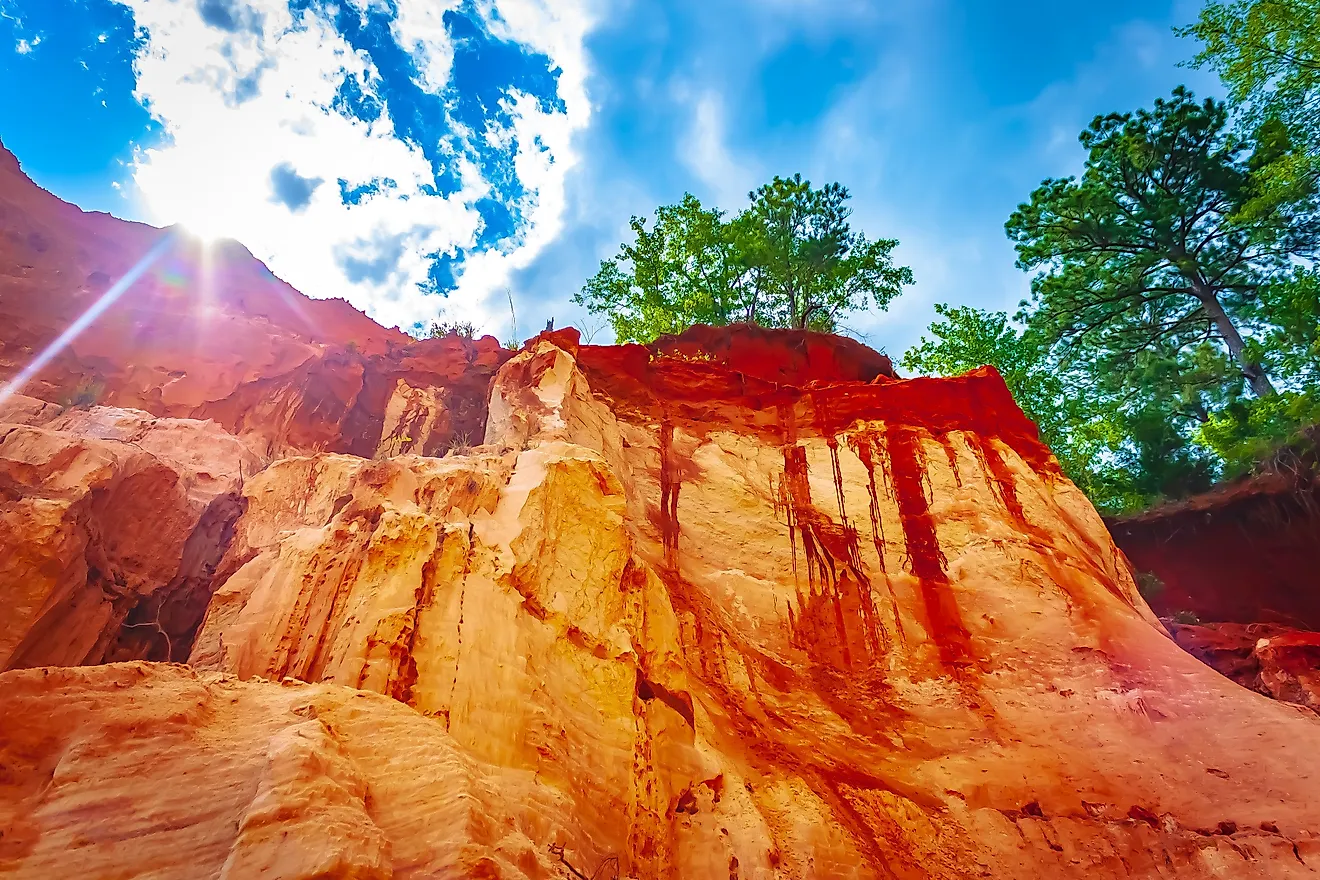
In the Texas Panhandle, the snake people find most often is a rattlesnake. In June 2026, a hiker at Palo Duro Canyon State Park reported finding a western diamondback just off the trail, swallowing an eastern collared lizard, and said the snake never rattled. Diamondbacks are logged in the park twice as often as the long-nosed snake in second place, and they are the only venomous species among the dozen snakes logged most often there. Texas Parks and Wildlife describes the Palo Duro mouse as safe from most predators behind the canyon walls, though not from rattlesnakes. The Lighthouse Trail runs 2.8 miles each way through what the agency calls the second-largest canyon in the country, a hike of about two hours rated moderate.
Big Bend Ranch State Park

Southwest of the Panhandle, along the Rio Grande, a 2014 Texas Parks and Wildlife brochure states plainly that rattlesnakes are especially common at Big Bend Ranch State Park, the biggest state park in Texas. The park's snake list reads like Brazos Bend's turned around. The cottonmouth leads in that coastal bottomland, and the western diamondback leads here, with 87 of 349 iNaturalist sightings, followed by the nonvenomous Trans-Pecos ratsnake. Black-tailed, rock, and Mojave rattlesnakes have been logged in the park too, and its nature page counts at least 30 types of snakes.
Closed Canyon, an easy 1.4-mile round trip through a slot canyon near the Rio Grande, is one of the shortest walks into that desert. According to the same brochure, most bites happen when someone harasses or tries to handle a rattlesnake. Rattlesnakes are protected in the park, and visitors are told to do them no harm.
Hueco Tanks State Park and Historic Site

At the far western end of the state, outside El Paso, rain collects in the cracks and hollows of the rock at Hueco Tanks State Park and Historic Site, and those huecos, which give the park its name, hold water for several days to several months. Texas Parks and Wildlife says these microhabitats let species survive there that are not normally found in the Chihuahuan Desert.
According to the agency, five rattlesnakes native to the Trans-Pecos have been spotted in the park, the black-tailed, Mojave, mottled rock, western diamondback, and prairie rattlesnake, along with 25 other kinds of snakes. Access is restricted to protect the park's fragile resources, and permits for the North Mountain area go to 70 people a day.
Count only the venomous snakes in these parks' iNaturalist records, and they come up short of half every time. At Martin Dies Jr., cottonmouths, timber rattlesnakes, and copperheads together account for 48 of 150 sightings. Even at Big Bend Ranch, where rattlesnakes are especially common, the four rattlesnake species and a single broad-banded copperhead add up to 135 of 349. On a Texas state park trail, the snake in view is more often a ratsnake or a watersnake than anything dangerous.
Where the dangerous ones turn up depends on the setting. Cottonmouths lead the counts at Brazos Bend and Colorado Bend, where the trails follow sloughs and the Colorado River, and the western diamondback leads at Bentsen, Palo Duro, Big Bend Ranch, and Hueco Tanks, where the ground turns to brush and desert. The Texas coral snake has 19 sightings at Brazos Bend, and Texas Parks and Wildlife notes that it is the only brightly colored venomous snake in Texas.