9 Best Natural Wonders To Visit on the Gulf Coast This Year
Up and down the Gulf Coast, sawgrass marshes, coral banks, limestone caves, and remote islands show a wilder side of the shoreline than most beach resorts would suggest. Everglades National Park is the only place in the world where American alligators and American crocodiles live side by side in the wild. Along Padre Island National Seashore, 66 miles of undeveloped beach front the Laguna Madre, one of the world's few hypersaline lagoons. At Grayton Beach State Park, coastal dune lakes sit just behind the dunes, a rare feature found in only a handful of places, such as Madagascar and New Zealand. About 70 miles west of Key West, the turquoise water and coral reefs of Dry Tortugas National Park surround a six-sided fort built from more than 16 million bricks. Read on to discover the nine best natural wonders to visit on the Gulf Coast this year.
Everglades National Park, Florida

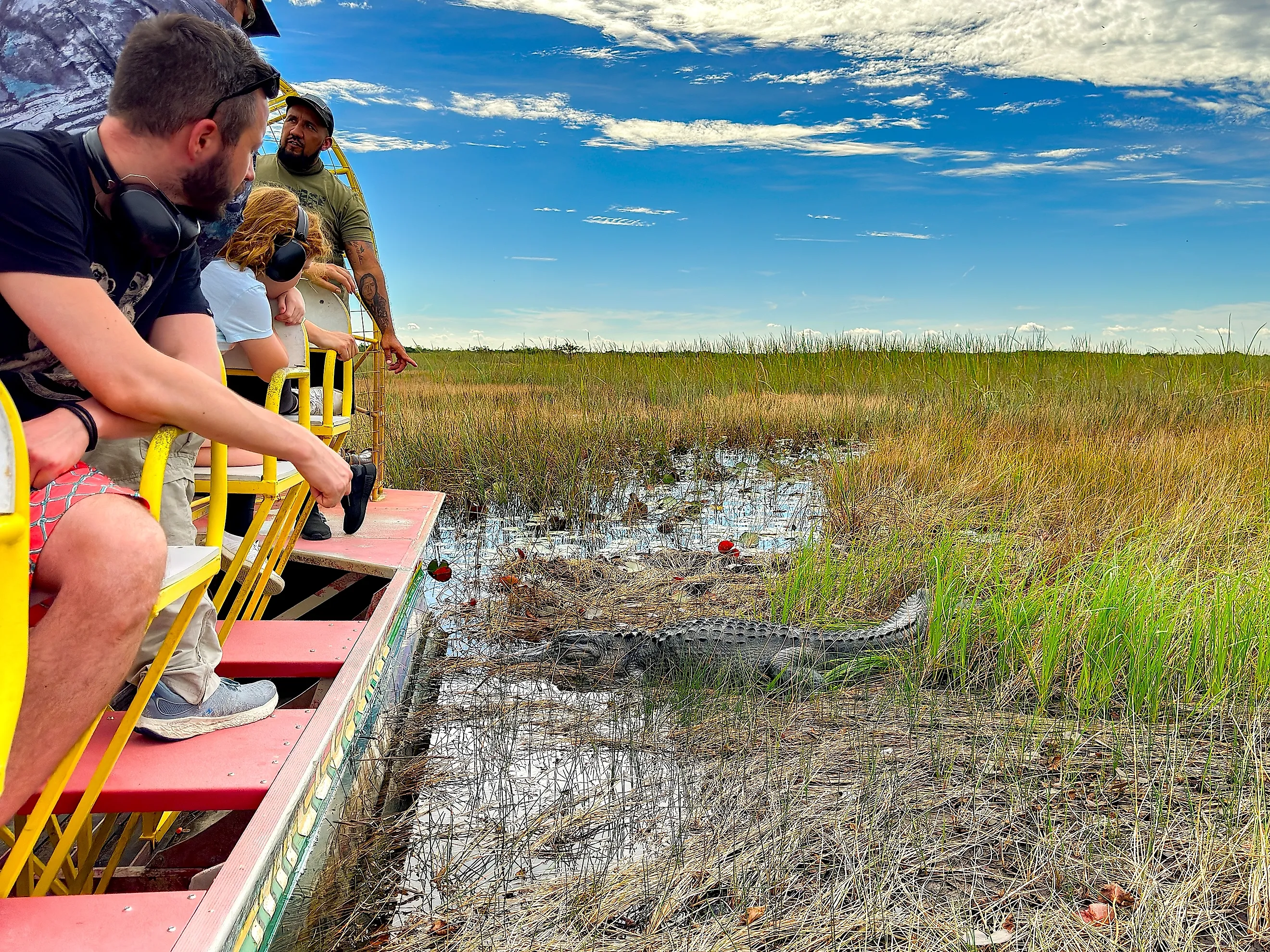
The Everglades is a vast subtropical wetland of sawgrass marshes, mangrove forests, cypress swamps, and slow-moving waterways across southern Florida. Everglades National Park is a protected area established in 1947 that covers about 1.5 million acres. The natural wonder is world-renowned for its large population of American alligators, with an estimated 200,000 living in the swamp-filled park. Less well known about this popular destination is that it is the only place in the world where American alligators and American crocodiles co-exist in the wild.
Listed as endangered in 1975, the American crocodile has made a comeback largely thanks to habitat restoration, monitoring, and nesting-site protection in the Everglades. In the park, American crocodiles live mainly in the saltwater and brackish waters around Florida Bay and the coastal mangroves, while alligators live in freshwater swamps and marshes. Increase your chances of spotting one of these prehistoric-looking reptiles by taking a Shark Valley Tour in Everglades National Park. December through April offer good wildlife viewing opportunities.
Gulf Islands National Seashore

Most visitors head to the Gulf Islands National Seashore for stunning white sugar-sand beaches and emerald waters in beachside towns like Pensacola and Perdido Key, Florida, but few realize the six barrier islands that make up the Gulf Islands National Seashore aren't fixed strips of land. Waves, ocean currents, wind, and the occasional offshore hurricane constantly shift, erode, and rebuild them. In fact, the islands are slowly moving towards the mainland and westward along the Gulf of Mexico.
Beyond creating an ever-changing coastline, the islands shelter salt marshes and seagrasses, and their beaches provide important habitats for marine life like loggerhead, green, and Kemp's Ridley turtles. Perhaps the most remarkable feature of the islands is how hurricanes can dramatically reshape them while also protecting the mainland from storms and powerful waves. In 1969, Hurricane Camille split Mississippi's Ship Island into East and West Ship Island, and in 2005 Hurricane Katrina widened that gap. Avoid peak hurricane season by visiting in late spring or early summer.
Padre Island National Seashore, Texas

Padre Island National Seashore is a 113-mile-long, about 3-mile-wide barrier island along Texas's southeastern coast. The seashore protects 66 miles of undeveloped, spectacular Gulf beaches along the island's eastern shore, while its western side borders one of North America's most overlooked natural wonders: Laguna Madre. Spanish explorer Alonso Álvarez de Pineda named Laguna Madre, or "Mother Lagoon," during his 1519 expedition along the Gulf Coast. Today, it is a shimmering lagoon whose waters can be saltier than the ocean and is one of the world's few hypersaline lagoons.
At first glance, the Laguna Madre looks like any other shallow bay, with calm waters perfect for fishing for redfish and speckled trout, kayaking, paddleboarding, and wildlife viewing. But this unassuming body of water supports a wide range of marine life, such as juvenile green sea turtles, and a spring- and fall-migrating bird population estimated at 2 billion. It's a paradise for birders, who may spot threatened and endangered species like piping and snowy plovers, as well as a large wintering population of redhead ducks that feed on the roots of the shoalgrass in the bay. If sea turtles are a draw, go for the hatchling releases in mid-June through August.
Mobile-Tensaw River Delta, Alabama

They don't call the Mobile-Tensaw River Delta in Alabama "America's Amazon" for nothing. Just minutes from downtown Mobile, the natural wonder spans more than 200,000 acres of rivers, marshes, bayous, and swamps where the Alabama and Tombigbee rivers meet. Beyond its size and reputation as the second-largest river delta in the lower 48 after the Mississippi River Delta, its standout feature is the sheer variety of life that calls the freshwater wetlands and coastal waters home.
Over 300 bird species have been recorded in the Delta, including bald eagles, ospreys, and brown pelicans, which were on the verge of extinction a few decades ago. Thanks to its mix of fresh and salt waters, the delta supports 126 fish species, making it an angler's paradise year-round. While American alligators hog the limelight in the river delta and elsewhere in the Gulf Coast, the river also supports 16 aquatic turtle species, including the endangered state reptile, the Alabama red-bellied turtle, and the southern black-knobbed sawback found nowhere else. Spring and fall are the best times for bird watching, fishing, and boat tours.
Grayton Beach State Park, Florida

What makes Grayton Beach State Park a natural wonder in the U.S. state park category is its coastal dune lakes, found only in a few other places around the globe, like Madagascar, Australia, and New Zealand. Coastal dune lakes are rare natural features, some dating back 10,000 years. Separated from the Gulf of Mexico by narrow sand berms, the lakes get their water from rainfall, streams, and groundwater, and sometimes connect to the Gulf when water rises and flows over the berms.
The park has 3 lakes: Alligator Lake, Little Redfish Lake, and Western Lake, the park's largest coastal dune lake. Western Lake sits just behind the dunes at Grayton Beach State Park, on the outskirts of the quirky little town of Grayton Beach, an artsy enclave near scenic Highway 30A and the Underwater Museum of Art, a below-the-waves sculpture park. Avoid the summer crowds by visiting in May or October.
Flower Garden Banks National Marine Sanctuary

The Flower Garden Banks National Marine Sanctuary protects portions of 17 underwater reefs and banks in the Gulf of Mexico, about 100 miles off the coasts of Texas and Louisiana. Fishermen first noticed them in the early 1900s, spotting what looked like an underwater flower garden and calling the natural wonder the "Texas Flower Garden." Scientists later surveyed the banks in 1936, and divers explored them in the 1960s. Today, the "flowers" grow on underwater mounds formed by ancient salt domes that rise from the seafloor into sunlit water where coral can thrive.
Despite being far offshore, they're a popular destination for scuba divers who go to see colorful coral formations, tropical fish, and other marine life that make the garden home, including giant manta rays, tiny Christmas tree worms, and hammerhead sharks. The sanctuary has two dive seasons. The summer season runs from May through October, while the winter season is February through April.
Weeki Wachee Springs, Florida

Best known for its world-famous live mermaid shows, Weeki Wachee Springs is more than a quirky tourist attraction dating back to the 1950s. It was developed by former U.S. Navy serviceman Newt Perry, who trained military personnel to swim underwater during World War II before spotting the spring's business potential. Little did he know that beneath its crystal-clear, blue-green waters lay an extensive network of limestone caves that sends more than 117 million gallons of freshwater to the surface every day.
Long before the mermaids arrived, Indigenous peoples used the spring, whose name comes from the Seminole language and means "little spring." In 2007, underwater explorers discovered additional passages in its cave system, revealing much more of the hidden world beneath this popular Florida destination. Today, the underwater cave system is so deep that no one has yet discovered its lowest point. Spring and fall are the best times to visit.
Tarkiln Bayou Preserve State Park, Florida

Tarkiln Bayou Preserve State Park is a 4,000-acre nature preserve in southwestern Pensacola, Florida. The park's name comes from the 19th-century tar kilns that once processed tar from yellow pine trees, and some of the park's trees still show notches where jars once collected the sap. Today, the park is better known as one of the best places to see four endangered pitcher plants, including the white-topped pitcher plant. The rare plant is native to a small stretch of the Gulf Coast between the Mississippi and Apalachicola Rivers.
The park is also home to about 100 plant and animal species, including alligator snapping turtles, bobcats, migratory birds, and more. Spring is the best time to see the killer plants in bloom, especially in April and early May, when they use their bright colors and fragrant nectar to attract unsuspecting insects.
Dry Tortugas National Park, Florida

Dry Tortugas National Park is a remote cluster of seven small islands surrounded by turquoise water and colorful coral reefs about 70 miles west of Key West. What makes this natural wonder unique is that these idyllic islands also host Fort Jefferson, a massive six-sided 19th-century coastal fortress built from over 16 million handmade bricks. Covering much of Garden Key (the second-largest island), the massive fort creates a striking contrast with the surrounding natural beauty.
Built between 1846 and 1875 to protect the gateway to the Gulf of Mexico, the fort was never completed after the Civil War stalled construction. Today, visitors can explore its historic brick archways and walls, snorkel in the clear waters, and experience one of Florida's most remote national parks. The best time to visit is February through April, but because you can only get there by boat or seaplane, check the weather forecast before booking.
The Gulf Coast’s Wild Side
From hypersaline lagoons and rare coastal lakes to underwater coral gardens and remote tropical islands and parks, the Gulf Coast offers much more than its famous stretches of sand. Where else can you spot alligators in vast wetlands, explore waters teeming with marine life, discover unusual plant life thriving in coastal preserves, and visit islands that feel worlds away from the mainland? Explore these nine destinations and find unusual landscapes, remarkable wildlife, and a few unexpected sights along the way.