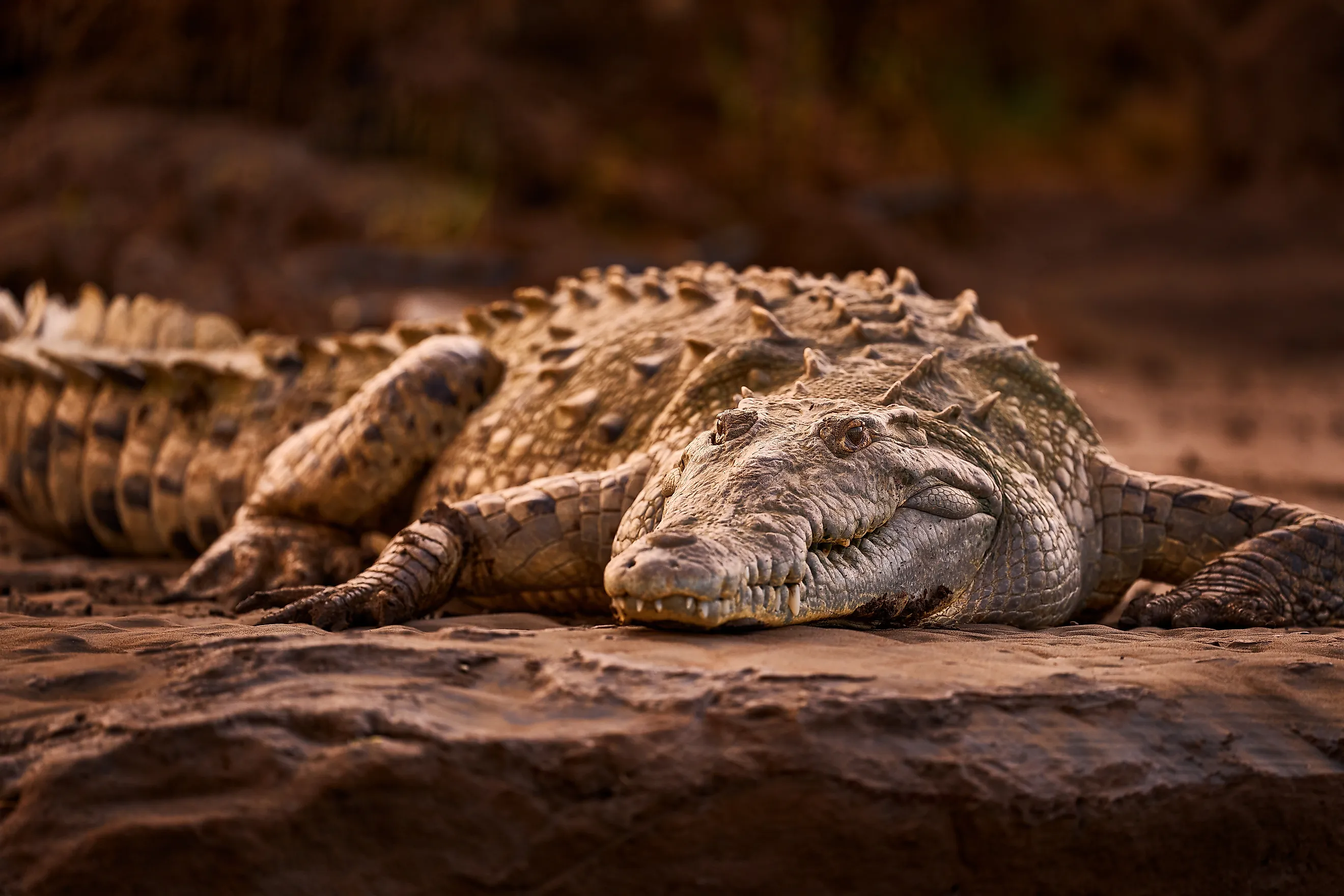
Why American Crocodiles Only Live In South Florida
The American crocodile is the most widely distributed crocodile in the New World, ranging down the coasts of Mexico, through the Caribbean and into northern South America, and the northernmost tip of that entire range is the bottom of Florida. Above roughly the latitude of Miami, it stops. The reason is a combination of two things the animal cannot negotiate around: it needs salt water and it cannot tolerate cold, and in the continental United States those two requirements only overlap in a narrow band of mangrove coast at the very end of the peninsula. That band happens to be the same place American alligators reach their southern limit, which is why South Florida is the only spot on Earth where the two animals live side by side.
Here is what actually constrains them, and why the boundary has recently started to move.
The Salt Gland

The single most important difference between a crocodile and an alligator is not the snout shape everyone learns, it is a set of glands on the tongue. Crocodiles have functional lingual salt glands that actively excrete excess salt from the bloodstream, which allows them to drink, feed and live in brackish and fully saline water indefinitely.
Alligators have the same structures in vestigial form and they do not work. An alligator can tolerate salt water for a matter of hours or days, long enough to cross a bay, but it cannot live there, because it has no mechanism for shedding the salt load it takes on.
That one piece of physiology explains the entire distribution. The American crocodile is described in the literature as inhabiting more saline water than most other crocodilians, and its stronghold in Florida is not swamp but estuary.
Why That Means Mangroves

A salt-tolerant crocodilian needs somewhere that is saline, shallow, warm and structurally complex, and in the western hemisphere that means mangrove estuary. The tangle of prop roots provides cover for juveniles, the shallows hold fish and crustaceans, and the muddy banks and shell beaches supply the nesting substrate.
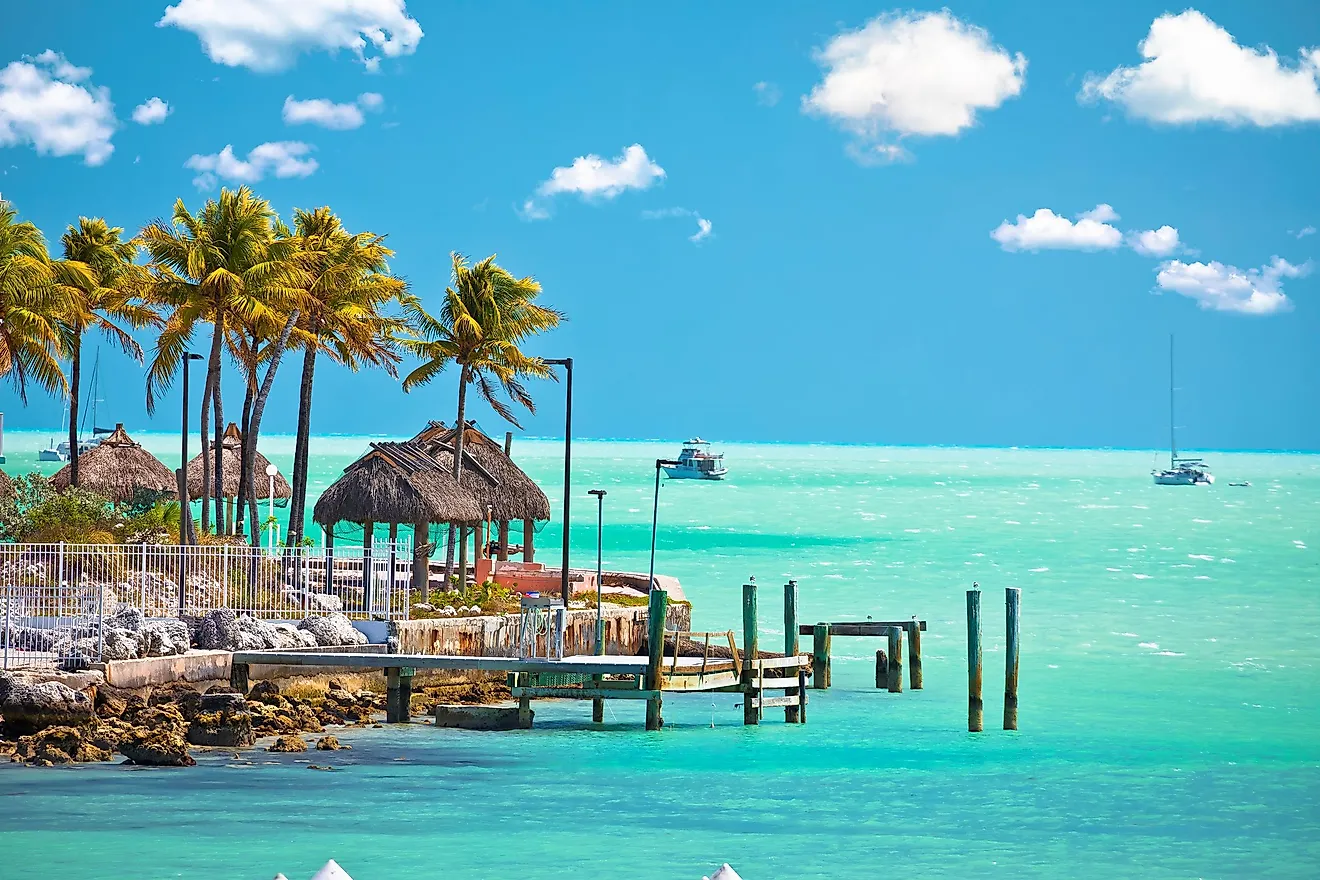
In Florida that habitat exists in a narrow ribbon along the southern coast and through the upper Keys. Everything north of it is either freshwater marsh, which suits alligators better, or developed coastline, which suits nothing.
Cold Draws The Northern Line
Salt explains why crocodiles are on the coast. Temperature explains why they stop where they do. American crocodiles are considerably less cold-tolerant than alligators, which range as far north as North Carolina and Arkansas and survive genuine winter freezes by going dormant in dens. Crocodiles have no comparable strategy, and a hard freeze kills them, particularly juveniles.
South Florida is subtropical rather than temperate, and the winters at the bottom of the peninsula are mild enough for a tropical species to persist year-round. A hundred miles north they are not. That is the whole northern boundary, and it is drawn by a handful of cold nights a decade rather than by anything the animal chooses.
Where They Actually Are

The population sits almost entirely south of the latitude of Miami, across the coastal fringe of Everglades National Park, Florida Bay, Biscayne Bay, northern Key Largo and the upper Keys, along with Biscayne National Park and several state and federal refuges.
The densest concentration is not in a park at all. The cooling canals at the Turkey Point power plant near Homestead turned out to be near-ideal crocodile habitat, being warm, saline, low-traffic and isolated, and researchers now treat it as a distinct study population alongside the Everglades and Biscayne Bay.
By the early 1970s nesting in Florida had contracted to a small area of northeastern Florida Bay and northern Key Largo, which is about as narrow as a range can get before it disappears.
How Close It Came

The Florida population fell below 300 animals and was listed as endangered in 1975, driven down by hunting for hides and by the loss of coastal nesting habitat to development. At that point the species was one bad decade from being gone from the United States entirely.
It has since recovered to somewhere around 2,000 adults, enough for the Fish and Wildlife Service to reclassify it from endangered to threatened in 2007, which is a rare direction of travel for that list. A five-year review conducted between 2013 and 2017 put the minimum non-hatchling population at 898 individuals, with the true figure likely higher.
The species remains listed as Vulnerable on the IUCN Red List across its full international range and sits on Appendix I of CITES, so the American recovery is a regional bright spot rather than a global one.
They Are A Salinity Gauge
Because the animal is so tightly bound to brackish conditions, biologists use it as an instrument. American crocodiles are treated as an ecological indicator species for Everglades restoration, on the basis that their survival and population dynamics track regional hydrology directly.
The logic is specific. Crocodile growth and survival respond to how much fresh water reaches the southern estuaries and when, because that determines salinity, water depth and prey availability. Too much salt and juveniles struggle; too little and the habitat stops being crocodile habitat.
A published study on the influence of salinity on crocodile density in Everglades National Park exists precisely because managers wanted to know what restoring freshwater flow would do to them. The crocodiles are a readout on whether the plumbing is working.
The Boundary Is Moving

The range described above is the historical one and it has started to shift. In 2023 researchers documented the first successful American crocodile nest on the west coast of Florida, which is a genuine range expansion rather than a stray sighting.
Individual animals have been wandering for years. Crocodiles have been recorded in Sarasota and Palm Beach counties, a 700-pound animal was captured at Tarpon Springs in 2013, and in the summer of 2008 one turned up in the surf at Isle of Palms, South Carolina, which is several states outside anything resembling normal range.
Wandering individuals prove nothing much on their own, since a single animal can turn up almost anywhere and die there. A successful nest is a different kind of evidence, because it means conditions somewhere new were good enough not merely to survive but to reproduce.
Why Not Louisiana Or Texas
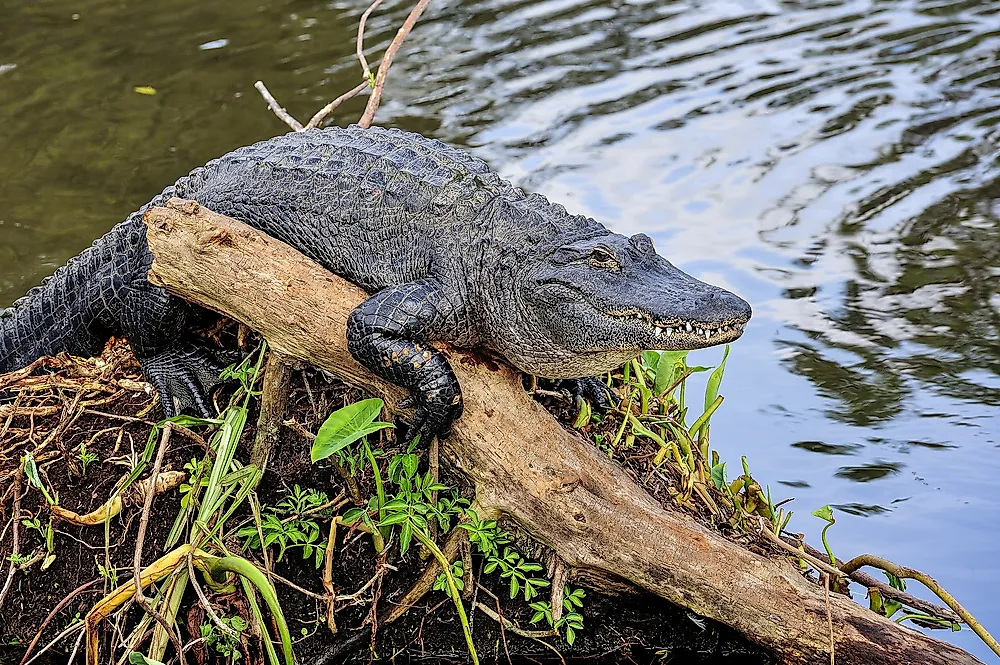
The obvious objection is the rest of the Gulf Coast. Louisiana has enormous coastal marshes, a warm climate by most standards and roughly 4.5 million acres of crocodilian habitat, so it seems like it ought to suit them. It does not, and the state has no established crocodile population whatsoever.
Both constraints fail at once. Louisiana's wetlands are overwhelmingly freshwater swamp, bayou and marsh, which is alligator country rather than estuary, and its winters carry hard freezes that a tropical crocodilian cannot sit through. The result is well over a million alligators and no crocodiles, which is as clean a demonstration of the two requirements as the continent offers.
The same logic rules out the Texas coast, coastal Mississippi and Alabama, and the whole Atlantic seaboard. Individual crocodiles have been recorded far outside their range, including one in the surf in South Carolina, but a stray animal is not a population, and none of those places has ever held one.
Why Alligators Went The Other Way
It is worth stating the mirror image, because the two distributions are shaped by exactly opposite constraints. Alligators handle cold well and salt badly, so they spread north through freshwater systems across the entire Southeast and stop at the coast. Crocodiles handle salt well and cold badly, so they spread along tropical coastlines and stop at the Florida Keys.
The two ranges overlap in exactly one place: the mangrove and estuary belt of South Florida, where it is warm enough for the crocodile and fresh enough in places for the alligator. That overlap is a few dozen miles wide and it is the only one on the planet.
The Short Answer

American crocodiles only live in South Florida because South Florida is the only part of the United States that is simultaneously salt enough and warm enough. The salt glands on their tongues let them use estuaries no alligator can occupy, and their intolerance of freezing weather stops them going any further north to find more.
Everything else follows from those two facts, including the recovery, the reliance on mangrove estuary, the usefulness of the species as a restoration gauge, and the fact that the densest population in the country is sitting in the cooling canals of a nuclear power station because the water there never gets cold.