The National Forests With The Most Bison
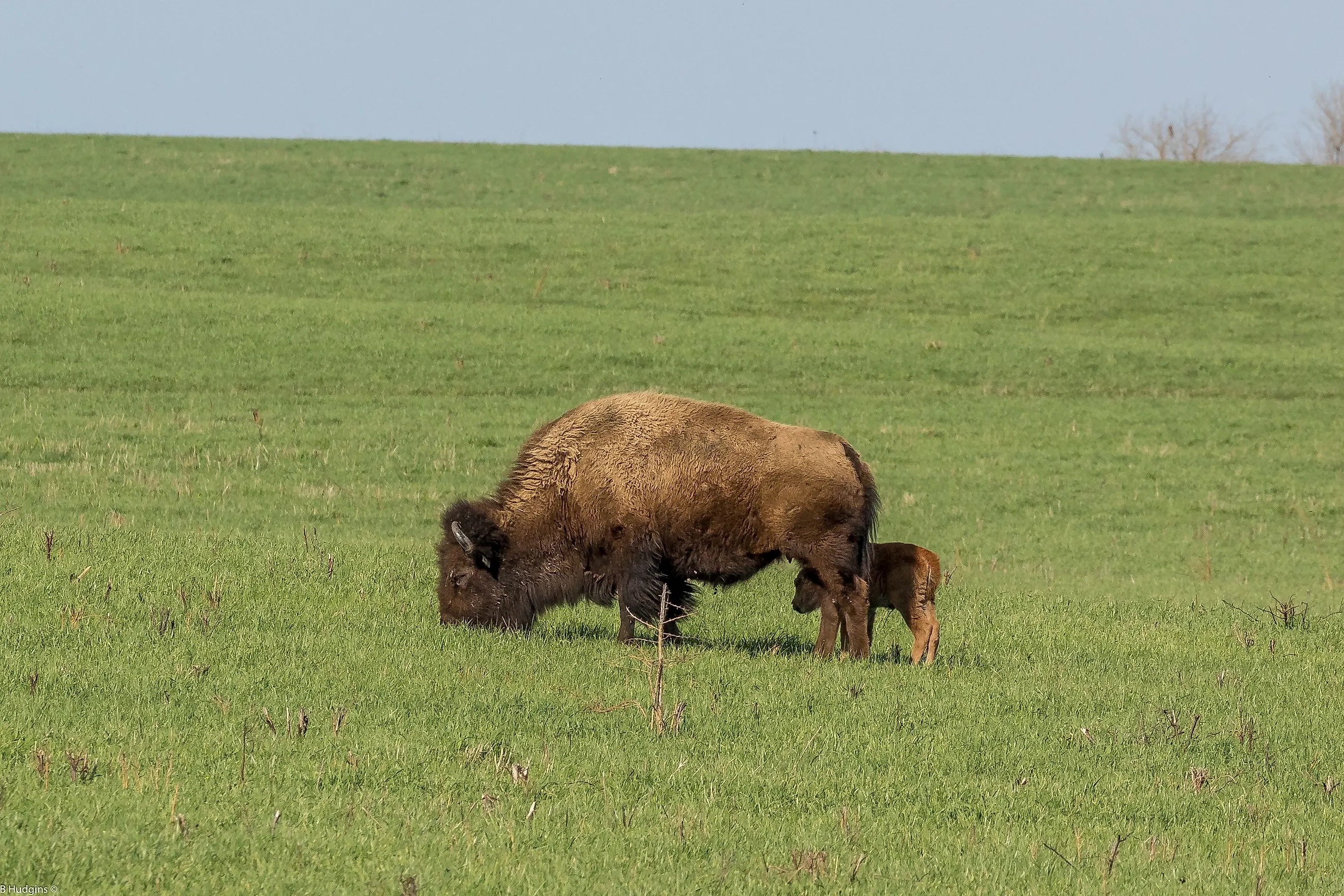
Anyone who's ever heard the song "Home on the Range" has heard about a "home where the buffalo roam." Today, American buffalo, also known as bison, still roam in some surprising places, and the list includes National Forest land. Sadly, American bison populations today are much lower than they once were. In the nineteenth century, settlers in what is now the Western United States were encouraged to kill as many buffalo as they could. This decimated the herds, which once numbered millions of animals, and caused devastation among Indigenous communities that relied on bison as a staple animal. American bison were close to extinction at the beginning of the twentieth century.
However, bison remained a powerful symbol of the United States, which was once used on five-cent coins, better known as "buffalo nickels." These enormous creatures are also crucially important culturally to many Native American communities, especially those that have historically been based on the Great Plains. Today, thanks to conservation efforts, bison populations have rebounded to the point that there are close to half a million bison in the United States, although the vast majority of these are privately owned animals raised on ranches.
However, there are some bison roaming public lands, and they can be spotted (although extreme caution is required near these very large wild animals). These are the National Forests where bison live today.
Custer Gallatin National Forest

This national forest in Montana doesn't have a year-round bison population, but every winter, the seasonal bison numbers can be huge. That's because this National Forest, which borders the famous Yellowstone National Park, serves as part of the winter range for the Yellowstone bison population. When deep snow covers the park's high country, bison move out through its northern and western boundaries into lower valleys such as the Gardiner Basin and the area around Hebgen Lake, then return to Yellowstone with the spring.

This National Forest is over three million acres, and the bison are found mainly in the portions of the forest next to Yellowstone's boundary. Within those areas, however, bison numbers can reach into the thousands, since Yellowstone's bison population is several thousand animals and large numbers can leave the park in harsh winters. Other animals found in the forest include bald eagles and gray wolves.
Bridger-Teton National Forest

Officially, this National Forest, which lies near Yellowstone National Park, doesn't have a bison herd living on it. Instead, visitors can see members of the Jackson bison herd passing through parts of the forest during their seasonal movements between Grand Teton National Park and the National Elk Refuge, where the herd spends the colder months. Bison are migratory herd animals by nature, and these patterns are normal for them, regardless of human-made boundaries.

Bison sightings within the National Forest's boundaries tend to begin with a few individuals in the late summer and early fall, with larger groups, including calves and their mothers, arriving as the weather turns colder. The Wyoming Game and Fish Department manages the herd, with a population objective of 500 animals, and awards a limited number of hunting licenses each year.
Kaibab National Forest

In Arizona, Kaibab National Forest is well known due to its close proximity to the Grand Canyon, which borders the forest on both the canyon's North and South Rims. But beyond that, Kaibab National Forest is home to a unique population of bison. This is a large National Forest, stretching over 1.6 million acres, and the bison population is located in the forest's House Rock Wildlife Area.

The bison herd at Kaibab has been managed for nearly a century by the Arizona Game and Fish Department, working with the Forest Service, and is descended from a herd of bison first brought to Arizona by Charles Jesse "Buffalo" Jones in 1906. The herd's movements are closely monitored for scientific and conservation reasons, and it's been found that much of the herd now stays inside the boundaries of Grand Canyon National Park, due in part to the fact that bison hunting is permitted outside the park, but not within it.
Visitors to the Kaibab National Forest, or to the North Rim of the Grand Canyon, which it borders, may have the chance to spot the bison, which since 2010 have primarily congregated around the canyon's North Rim. Visitors who see a bison are advised to keep their distance and remain in their vehicles, as the animals can weigh over a ton, and may be aggressive if threatened. Other wildlife guests might spot in Kaibab National Forest include black bears, mule deer, the tassel-eared Kaibab squirrel, and more.
Land Between The Lakes National Recreation Area

Located in both Kentucky and Tennessee, though mostly in Kentucky, this is a National Recreation Area managed by the Forest Service, rather than being strictly considered a National Forest. This is one of the largest contiguous blocks of public land in the southeastern United States at over 150,000 acres. Of that land, 700 acres make up the Elk and Bison Prairie where, as the name suggests, elk and bison roam freely.

The bison population at Land Between the Lakes is beloved, and visitors to the park are encouraged to visit the Elk and Bison Prairie with the chance of seeing the bison in person, albeit at a safe distance. The prairie features a 3.5-mile paved scenic loop road, where visitors may drive to observe the wildlife and grasslands. For safety reasons, all guests must remain inside a closed vehicle while in the prairie, to prevent harm to either guests or wildlife. Guests are encouraged to visit when temperatures are cooler to have the best chance of spotting bison and other wildlife, including elk, wild turkeys, and other prairie birds and mammals.
Midewin National Tallgrass Prairie

While technically not a National Forest per se, Midewin National Tallgrass Prairie in Illinois is managed by the US Forest Service, and is the only National Tallgrass Prairie under Forest Service management. The prairie, which spans more than 18,000 acres and has held its designation since 1996, is also home to a herd of bison as of 2015.

Like the Kaibab and Land Between the Lakes herds, the Midewin herd was brought in by people, in this case as part of an ongoing project to naturally restore and sustainably manage the grassland prairie. The initial population introduced numbered only 27 individual bison. The effects of the bison population, and specifically of their grazing patterns on the restoration and management of the grasslands, will be closely monitored through the duration of the reintroduction experiment, which is planned to run for up to 20 years, with adjustments based on research results. For now, though, visitors to Midewin can try to see the bison for themselves from the Iron Bridge Trailhead, on a roughly three-mile round-trip hike to a bison observation overlook. The overlook also keeps visitors at a safe distance from the bison, even while on foot.
Shoshone National Forest

Another National Forest close to Yellowstone National Park, Shoshone National Forest has a relatively small number of bison within its borders, and sighting them can be unpredictable. Shoshone National Forest isn't on a bison migration route, but as free-roaming animals, bison do sometimes wander into it, especially onto grasslands near Yellowstone.

This means that visitors are far more likely to see one or two bison, if any, than the large herds many people associate with the animals. Other large herbivores found in Shoshone National Forest include moose and elk. Even so, the Forest Service recommends keeping watch for bison while driving through forest lands and remaining in your vehicle if you see them.
Where The Buffalo Still Roam
While bison are sadly nowhere near as common a sight as they once were, conservationists and the Forest Service continue to work to change that. Be safe when visiting anywhere with a population of bison, but enjoy seeing them in the "home where they roam!"