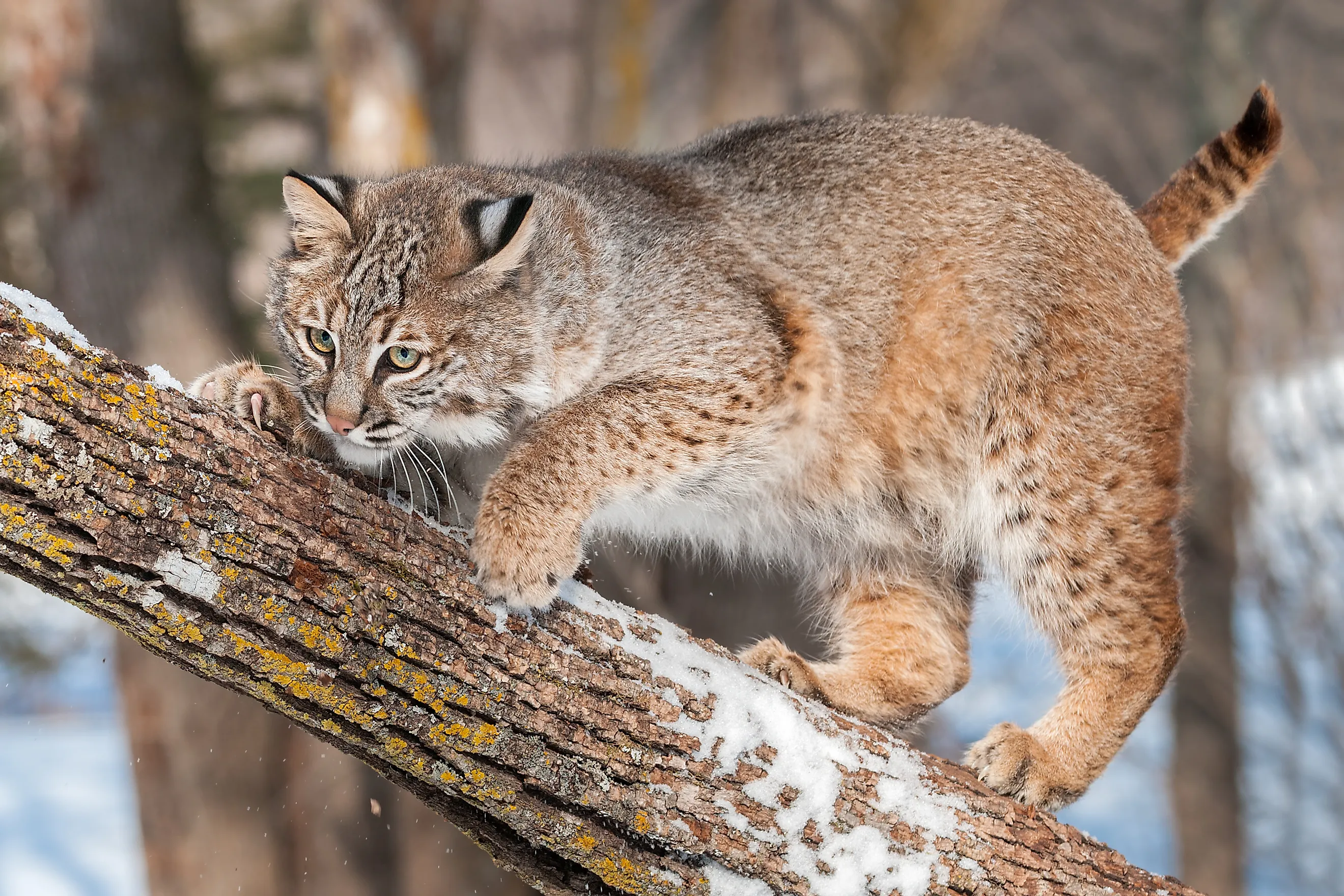
Bobcat
The bobcat (Lynx rufus) is the smallest of the four extant Lynx species and the only one whose range and population remain stable enough to warrant an IUCN classification of Least Concern. Adults weigh between 11 and 30 pounds and stand roughly twice the size of a domestic cat. They can leap up to 12 feet horizontally to seize prey, sprint at speeds of 25 to 30 mph in short bursts, and swim across open water when pressed. The species occurs in 47 of the 48 contiguous United States. Only Delaware, where bobcats were extirpated in the 1850s by deforestation and hunting, lacks a resident breeding population today.
Taxonomic Classification

The bobcat is a single species in the genus Lynx, alongside the Canada lynx (L. canadensis), the Eurasian lynx (L. lynx), and the Iberian lynx (L. pardinus). Historically, taxonomists recognized as many as 12 bobcat subspecies on the basis of pelt coloration and minor morphological differences. The Cat Classification Task Force of the IUCN Cat Specialist Group, in its 2017 revision of the Felidae (Kitchener et al.), reduced these to two valid subspecies divided geographically by the Great Plains:
- Lynx rufus rufus: east of the Great Plains.
- Lynx rufus fasciatus: west of the Great Plains.
The validity of the older 12-subspecies arrangement had been challenged since 1981, when researchers found the genetic and morphological differences between regional populations too small to support so many distinct taxa. The Mexican bobcat population, formerly classified as L. r. escuinapae and listed as Endangered by the U.S. Fish and Wildlife Service, is now subsumed within L. r. fasciatus under the 2017 revision, though the legal listing under U.S. wildlife law remains in effect.
Range and Habitat
The bobcat occurs from southern Canada through the contiguous United States and into northern and central Mexico. The IUCN has assessed the species as Least Concern since 2002, with the most recent reassessment completed in 2016. Population estimates place the United States total at approximately 1 million animals, though density varies widely by region. The southeastern United States supports the highest densities, thanks to mild winters, abundant prey, and extensive forest cover. Arid regions of the Southwest also hold strong populations, particularly in rocky terrain that suits the species' ambush-hunting style.
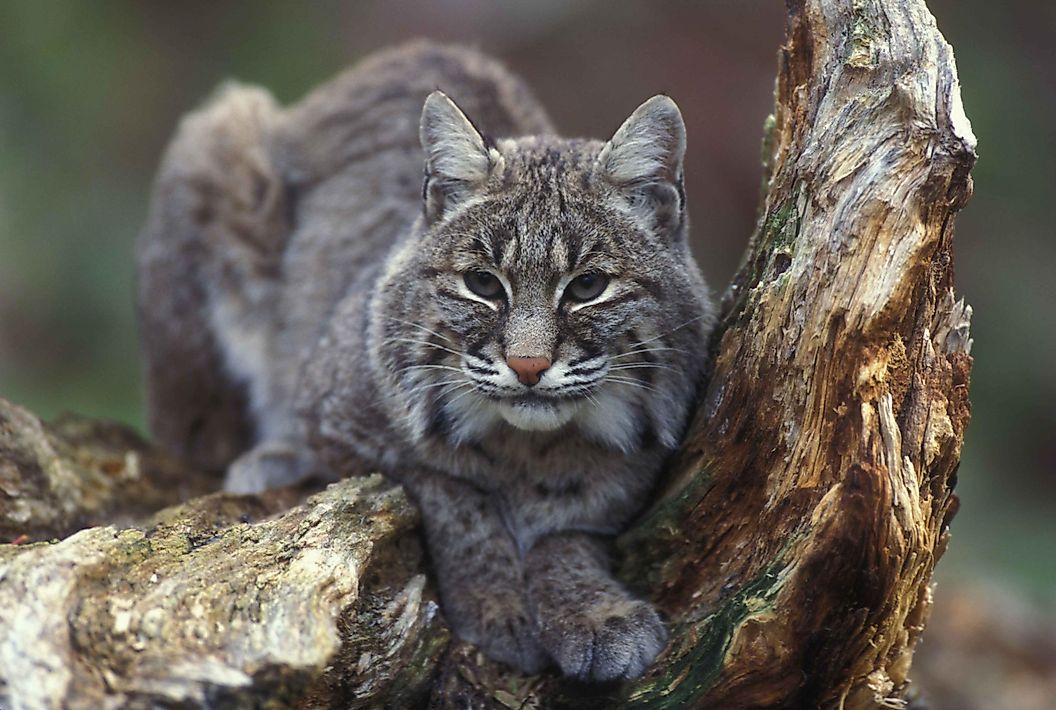
Bobcats occupy a broad range of habitats including coniferous and deciduous forests, swamps, deserts, scrublands, agricultural margins, and suburban edges. The species shows a preference for forested cover that offers concealment for hunting, but tolerates any habitat that provides rock ledges, brush, or downed wood as denning structure. The northern range limit in Canada is set by deep snow, which favors the larger-footed Canada lynx, and by latitude. The southern limit extends into the central Mexican highlands.
Extensive deforestation and unregulated hunting reduced bobcat populations across the eastern United States in the late 19th and early 20th centuries, with several Corn Belt states (Iowa, Illinois, Indiana, Ohio) listing the species as endangered by the 1970s. Forest regeneration on former farmland, combined with state-level legal protection, has since enabled steady recolonization. Delaware remains the only state in the contiguous 48 without a confirmed resident breeding population; the species disappeared there in the 1850s following extensive logging and has not re-established despite occasional confirmed sightings in recent years.
Diet

Rabbits and hares form the bulk of the bobcat diet across most of its range. Eastern cottontail (Sylvilagus floridanus) and New England cottontail (S. transitionalis) dominate the diet of eastern populations. Snowshoe hare (Lepus americanus) features heavily in northern populations. In the southwestern United States, cotton rats (Sigmodon spp.) frequently replace rabbits as the primary prey item.
Bobcats also take rodents (squirrels, mice, voles, woodchucks), reptiles (lizards, snakes), and birds. Avian prey is generally low-flying or ground-nesting, though larger birds such as wild turkeys and nesting waterfowl are taken opportunistically. Documented predation on adult trumpeter swans (Cygnus buccinator) involves attacks on females incubating eggs on the nest rather than birds on open water.
Larger prey items, including small white-tailed deer and fawns, are taken when smaller prey is scarce or when an opportunity presents itself. A bobcat will cache a deer carcass by covering it with vegetation or snow and return repeatedly to feed over several days. Domestic animals, particularly poultry, sheep, and small goats, are occasional prey near agricultural areas.
The bobcat is an ambush predator rather than a coursing hunter. It stalks within close range, freezes, and rushes the prey in a single short burst. Unlike the Canada lynx, which specializes on snowshoe hare and exhibits population cycles synchronized with hare numbers, the bobcat is dietary opportunistic and adjusts prey selection seasonally and geographically.
Physical Description
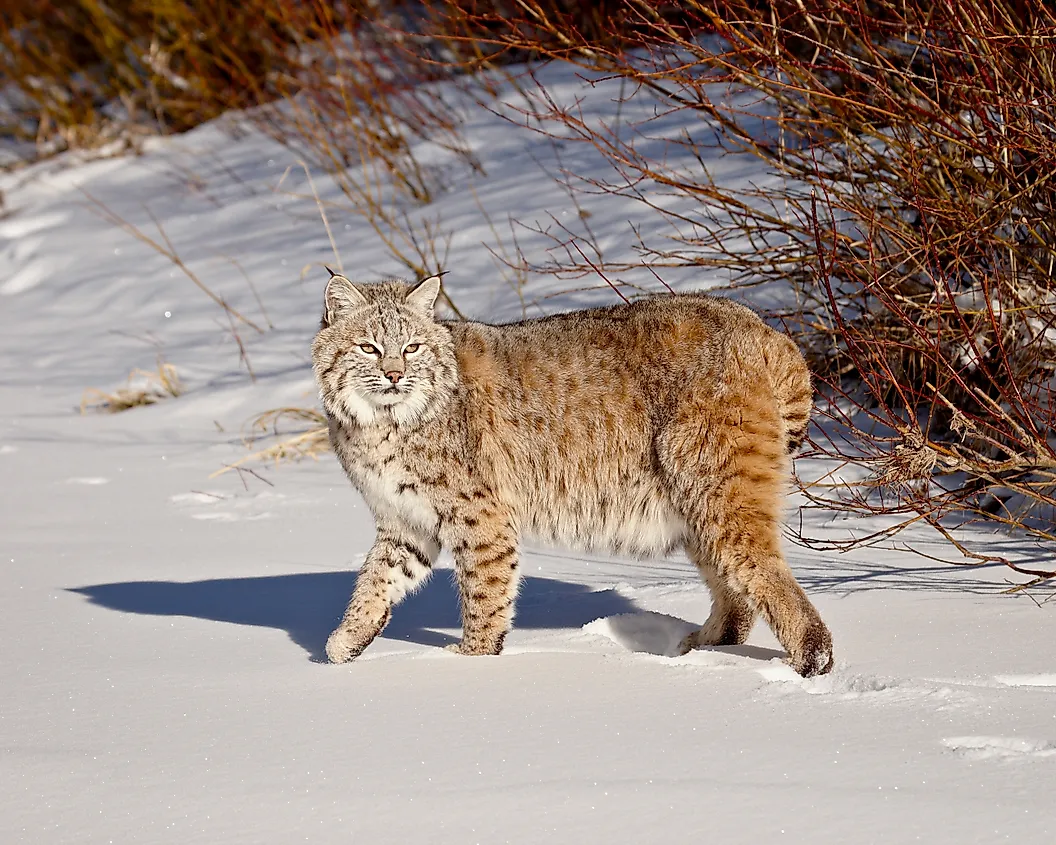
Adult bobcats stand 19 to 22 inches at the shoulder and measure 28 to 49 inches in total length, with the tail itself only 4 to 7 inches long. The short tail (the "bobbed" tail) gives the species its common name. Males are typically 30 to 40 percent larger than females, with adult body weight ranging from approximately 14 to 40 pounds in males and 9 to 25 pounds in females.
The coat is buff to tawny brown above and pale below, with darker spots or stripes scattered across the flanks and limbs. Coloration varies regionally. Bobcats in southwestern populations tend toward grayer, paler coats that match desert substrate, while those in southeastern forests carry more reddish-brown tones, giving rise to the alternative common name "red lynx." A small number of melanistic (black) individuals have been documented in the Greater Everglades of southern Florida, where they make up less than 0.5 percent of the photographed population.
Distinguishing features that separate the bobcat from the Canada lynx include shorter ear tufts, smaller paws without the heavy snow-adapted padding of the Canada lynx, and a tail tip that is black above and white below. The Canada lynx's tail tip is entirely black. The eyes are yellow with vertical-slit pupils typical of small cats, and the nose is pinkish-red. Black bars across the forelegs and a black-and-white facial ruff complete the standard markings.
Behavior

Bobcats are solitary and primarily crepuscular, with peaks of activity at dawn and dusk during warmer months. In autumn and winter the activity pattern shifts toward more daytime hunting, tracking the diurnal activity patterns of their prey. The species is an excellent climber and will retreat into trees when threatened by larger predators or by dogs.
Home range size varies enormously with prey density and habitat productivity. A range-wide analysis of 29 bobcat populations covering 171 males and 214 females found that male home ranges average roughly 1.65 times the size of female ranges. Female home ranges varied more than tenfold across populations, from a few square miles in productive southeastern habitat to over 50 square miles in sparse desert. Females rarely tolerate territorial overlap with other females. Males maintain larger ranges that overlap with several females, an arrangement that facilitates breeding access.
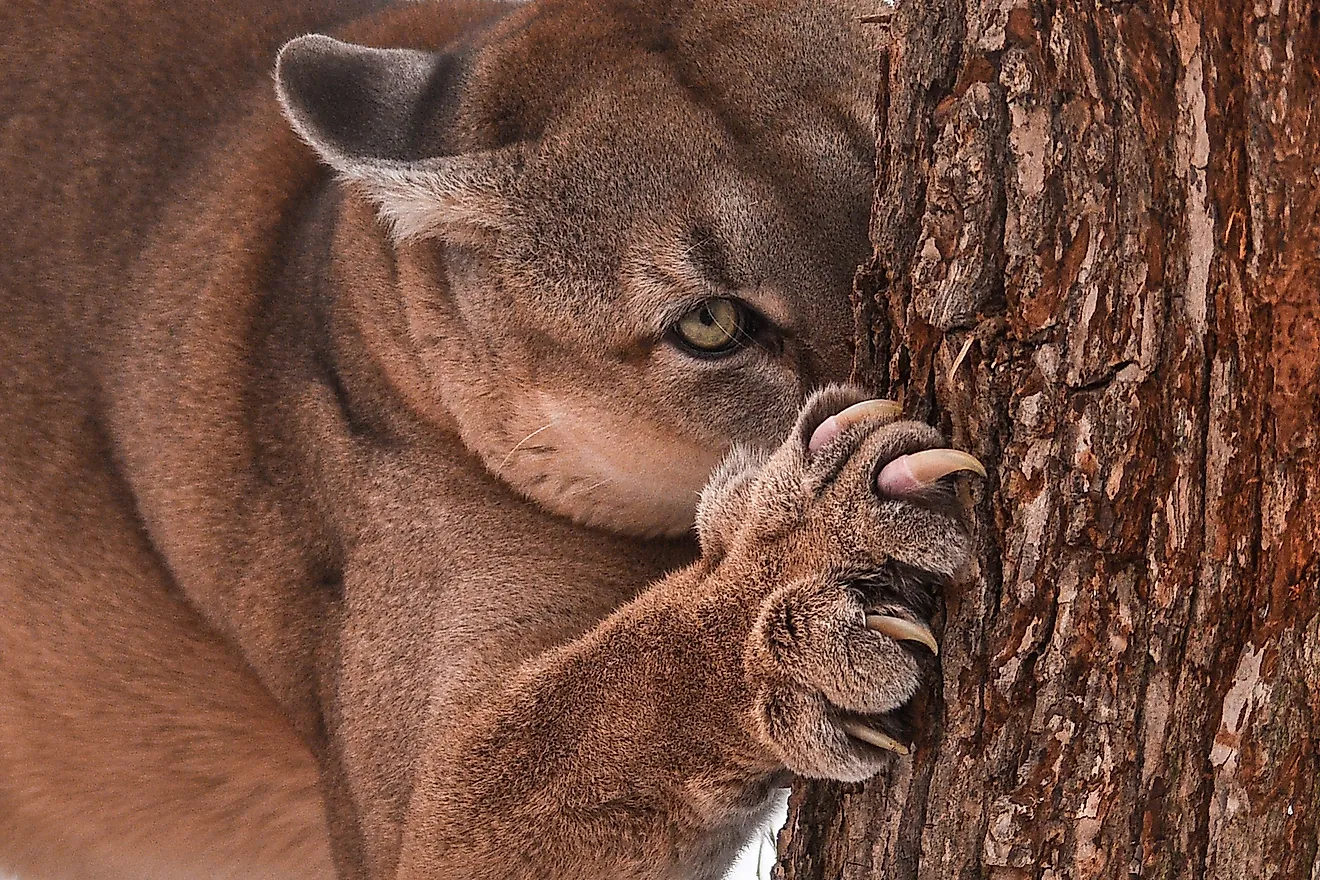
Bobcats mark territory with urine, feces, anal scent gland secretions, and visual signs that include claw scrapes on tree bark and scratched ground. Communication with intruders takes the form of body posture, facial expressions, and vocalizations including hisses, growls, yowls, and the distinctive screeching call associated with the breeding season. Direct physical confrontations between adult bobcats are uncommon. Scent and visual marking generally suffice to maintain spacing between resident animals.
The species occasionally enters suburban margins, particularly where greenbelts, drainage corridors, or wooded ravines connect to undeveloped land. Encounters with people remain rare and almost never aggressive. A bobcat treed by a barking dog is the most common urban-edge sighting reported to wildlife agencies.
Reproduction

Mating season runs from December through April depending on latitude, with peak activity in February and March across most of the range. Males reach sexual maturity at approximately one year of age, with active sperm production beginning in September or October each year. Females may breed in their first year in productive habitat but more typically in their second.
Both sexes mate with multiple partners. After a gestation period of 60 to 70 days, females give birth to one to six kittens, with two to four being typical. Dens are sheltered locations such as rock crevices, hollow logs, dense brush piles, or hollows beneath fallen trees. The female raises the kittens alone. Males play no role beyond mating, and adult males have been documented killing kittens that are not their own offspring.
Kittens open their eyes at approximately 10 days and begin taking solid food at around two months. The mother moves the litter between den sites repeatedly during the first months to reduce the chance of detection by coyotes, foxes, owls, and other kitten predators. Most young disperse from the natal range between eight and twelve months of age. Wild bobcats typically live 10 to 13 years; captive individuals have reached 20 years or more.
The screaming vocalization associated with breeding, often mistaken for a domestic cat fight at much higher volume, is the source of many late-winter rural sightings. People investigate the sound and find a bobcat in their woodlot or yard.
Ecological Role

As the dominant mid-sized predator across much of the United States, the bobcat regulates populations of cottontail rabbits, hares, cotton rats, ground squirrels, and other small herbivores. In regions where larger carnivores (cougars, wolves, black bears) have been extirpated or remain scarce, the bobcat functions as a meso-predator that maintains balance among smaller prey populations. Unchecked herbivore populations in the absence of bobcat predation can produce overgrazing, increased erosion, and degradation of riparian zones.
Indigenous North American cultures have featured the bobcat in oral traditions and ceremonial use across the continent. The Nez Perce of the Pacific Northwest traditionally depict the bobcat and the coyote as oppositional figures in creation stories. Similar pairings appear in cultures across the Southwest, the Great Basin, and the Eastern Woodlands. The species is also associated with fog and stealth in several mythological traditions, in contrast to the more chaotic, far-ranging coyote.
Threats

Adult bobcats face few natural predators. Cougars and gray wolves overlap the bobcat's range in parts of the western United States and have been documented preying on adult bobcats in Yellowstone National Park and elsewhere. Black bears, American alligators in the southeastern range, and golden eagles also occasionally kill adult bobcats. Bobcat kittens face significantly higher predation risk; great horned owls, golden eagles, foxes, coyotes, and adult male bobcats have all been documented preying on kittens.
Anthropogenic threats include habitat loss and fragmentation, particularly in the Midwest where row-crop agriculture has replaced bobcat habitat; vehicle strikes on roads bisecting habitat corridors; legal regulated hunting and trapping in 38 U.S. states and seven Canadian provinces; and incidental poisoning from rodenticides that accumulate in prey species. Bobcats are listed in CITES Appendix II to regulate international trade in furs. The Mexican bobcat population remains listed as Endangered by the U.S. Fish and Wildlife Service.
Despite these pressures, the bobcat remains one of the most successful wild felid species in North America. Recovery from the 19th- and 20th-century population lows has been ongoing for over four decades, and the species now occupies habitat ranges from which it had been extirpated by the 1970s.
A Stable Felid in a Changing Landscape

The bobcat's persistence rests on three traits: a flexible diet that adjusts to local prey availability, a habitat range that includes nearly every plant community in North America except deep snowpack and dense urban cores, and a solitary, cryptic lifestyle that minimizes human conflict. Where other mid-sized carnivores have lost ground over the past century, the bobcat has held it. In many states the species has expanded back into ranges it lost a century ago, an uncommon trajectory among North American mammals of comparable size.