11 Best Natural Wonders To Visit In The Southern United States This Year
Spanning from Texas to Virginia, the American South hosts a remarkable number of must-see natural wonders, from deep caves and fast-flowing rivers to lively wetlands, mountains, waterfalls, and other unusual geological points of interest. A spot like Mammoth Cave extends hundreds of miles beneath Kentucky, while the Everglades cover a vast subtropical wetland in Florida. Elsewhere, New River Gorge cuts through West Virginia, Big Bend spans desert and mountain environments in near the Mexican border, and Cumberland Falls produces a rare "moonbow" under the right conditions. But wherever you head off to this year, these destinations range from easily reached overlooks to places best explored by boat, trail, or guided tour, giving you a broad selection of landmarks to add to just about any trip down South.
Mammoth Cave National Park, Kentucky

Mammoth Cave is the longest known cave system on Earth, with more than 426 miles (686 km) of mapped passageways beneath Kentucky's karst landscape. This awesome underground network includes an array of chambers, narrow tunnels, underground rivers, and other formations shaped by limestone having been dissolved by water over millions of years.
Today, ranger-led tours descend into different sections of the cave, from relatively easy walks to strenuous routes involving stairs and tight passages. Claustrophobic? Above ground, the Green River is also worth a visit, as it cuts right through Mammoth Cave National Park. Here, you can hike wooded trails, paddle the river, and explore sinkholes and other features created by the same geology that formed the cave below.
Big Bend National Park, Texas

Big Bend National Park contains a rare combination of desert, mountains, and river habitat along 196 miles (315 km) of the Rio Grande. On one extreme, the Chisos Mountains rise dramatically from the surrounding Chihuahuan Desert, with Emory Peak reaching 7,825 feet (2,385 m), the highest point in the park. On the other hand, the deep Santa Elena Canyon provides an incredible sight above another impressive geological feature, where rock walls rise more than 1,500 feet (457 m) above the Rio Grande.
The park also contains more than 1,200 species of plants and houses fauna like rattlesnakes, mountain lions, javelinas, and more than 450 bird species. Furthermore, its remote, wild location and exceptionally dark skies make stargazing another major draw.
The Great Smoky Mountains, Tennessee and North Carolina

Great Smoky Mountains National Park presides over 522,427 acres across multiple Southern states, with hundreds of miles of trail in between. But its most distinctive natural feature may be its extraordinary biological diversity. More than 1,500 species of flowering plants grow across the park, with its forests ranging from low-elevation hardwoods to spruce-fir forests on the highest ridges. And this upcoming autumn, the local hardwood forests will produce extensive displays of red, orange, and yellow across the mountains, perfect for a landscape photo or two.
Kuwohi, formerly Clingmans Dome, is another high point, literally, as it rises to 6,643 feet (2,025 m), the tallest point in Tennessee and the highest point along the Appalachian Trail. Many come to see the area's waterfalls, too, with Laurel Falls, Abrams Falls, and Rainbow Falls among the best-known.
Okefenokee Swamp, Georgia

Okefenokee is one of the largest intact freshwater ecosystems in North America, covering roughly 438,000 acres across southeastern Georgia. Its vast wetlands contain a unique blend of cypress forests, peat beds, and water channels formed by centuries of accumulated vegetation, and the unusually blackwater you'll see comes from tannins released by decaying plants, giving many of the channels a dark, tea-colored appearance. The swamp supports more than 400 species of vertebrates, too, including American alligators, sandhill cranes, and river otters.
Visitors can explore the waterways by canoe or kayak, with routes winding through areas such as the Chesser Island and Wilderness trails. A variety of boardwalks and short hiking trails are open as well to get around on foot.
Congaree National Park, South Carolina

Another record-breaking spot, Congaree National Park protects the largest intact expanse of old-growth bottomland hardwood forest in the southeastern United States. This is because the Congaree and Wateree rivers periodically flood the park, creating nutrient-rich wetlands that support towering trees, as well as picturesque cypress knees and stands of tupelos and loblolly pines. Several trees here have reached truly immense sizes for an East Coast forest, including pines exceeding 160 feet (49 m) tall.
The 2.4-mi (3.9-km) Boardwalk Loop provides an easy route through the floodplain, while Cedar Creek is popular for kayaking and canoeing when water levels permit.
Keep your eyes open at night for the remarkable populations of fireflies, too. These brilliant insects create an especially magical spectacle in late spring, when they synchronize into what is seemingly a planned light show across the forest for several weeks.
Natural Bridge Caverns, Texas

The Natural Bridge Caverns near San Antonio contain some of Texas's largest known cave passages and chambers, formed as groundwater slowly dissolved limestone beneath the Edwards Plateau. The caverns descend more than 180 feet (55 m) below the surface, with stalactites, stalagmites, flowstones, and other mineral formations frequently appearing throughout the underground system. Above ground, the 60-ft (18-m) limestone bridge that gives the site its name spans the entrance to the cavern complex.
Here, guided tours explore different sections of the caves and park grounds, while the surrounding property includes surface trails and other geological features you can explore at your own pace. The site's year-round cave environment also provides an interesting contrast to the hot, dry conditions often found above ground in central Texas' Hill Country, making it a good idea to visit if you need to cool down on a summer day.
New River Gorge, West Virginia

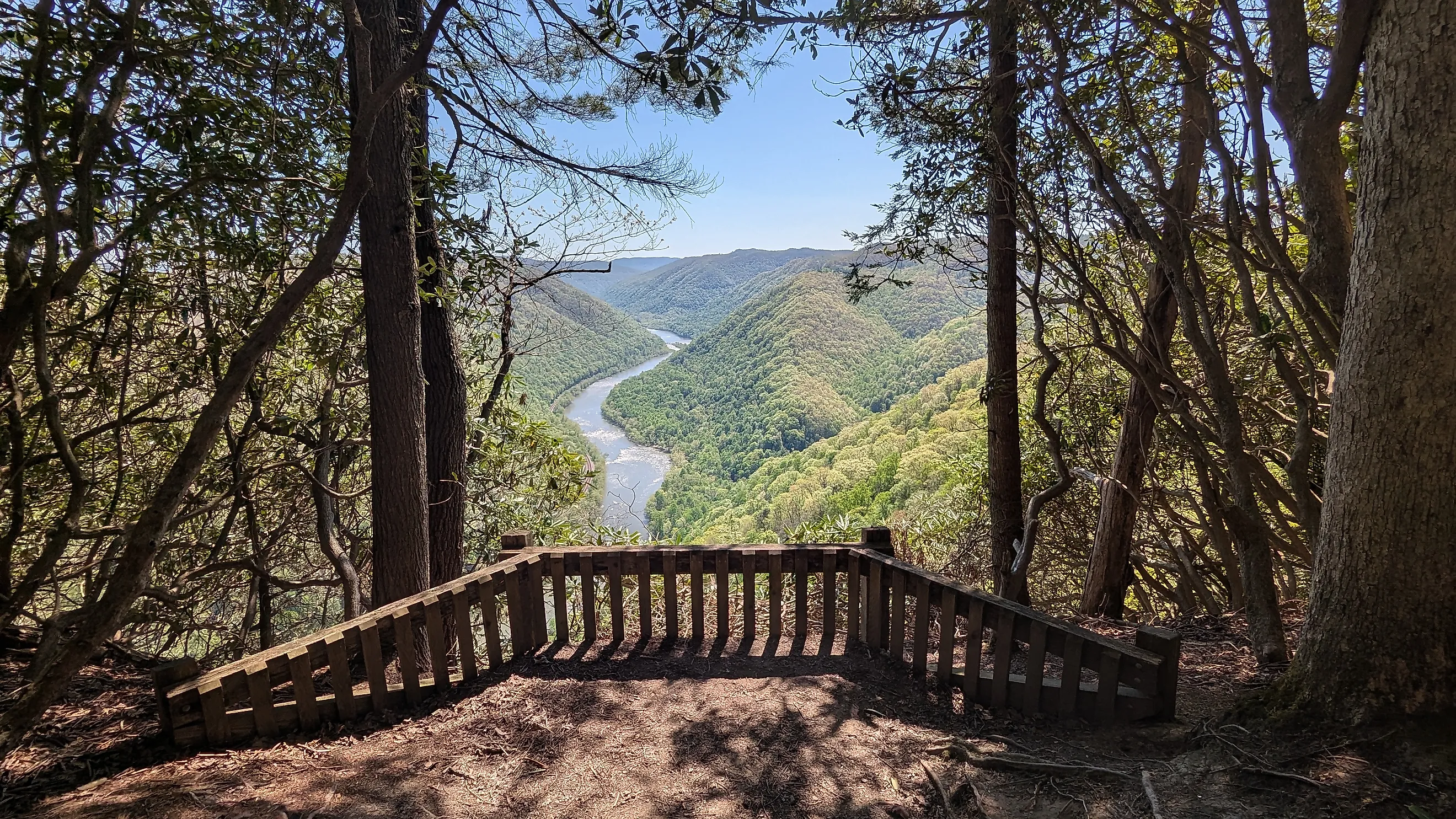
New River Gorge cuts through the Appalachian Plateau for 53 miles (85 km), exposing layers of sandstone and shale that formed roughly 320 million years ago. The New River itself is among the oldest rivers in North America, flowing northward through the gorge despite the surrounding terrain.
New River Gorge National Park and Preserve protects over 70,000 acres along the riverway, with highly sought-after overlooks such as Grandview and Endless Wall revealing the steep canyon walls from within. Check out the 876-foot (267 m) New River Gorge Bridge, too, which spans the gorge near Fayetteville, while the rushing river below is also a hotspot for whitewater rafting through several major rapids. For a more casual sightseeing visit, autumn brings particularly nice color to the hardwood forests covering the gorge walls and lining nearby trails.
Caddo Lake, Texas and Louisiana

Caddo Lake forms one of the largest natural lakes in Texas, creating yet another one of the South's most unusual wetland environments, this time covering roughly 25,400 acres of connected bayous, sloughs, ponds, and flooded forests. Bald cypress trees dominate its waterways, many beautifully draped with Spanish moss and surrounded by shallow, tea-colored water stained by tannins. The waters here also boast more than 190 species of trees and shrubs, along with hosting numerous alligators, snakes, turtles, river otters, beavers, and hundreds of bird species.
Paddling provides the best way to explore this maze of channels, including Big Cypress Bayou, which connects Caddo Lake to the Red River. Camping and hiking are also available inland at the Caddo Lake National Wildlife Refuge.
Cumberland Falls, Kentucky
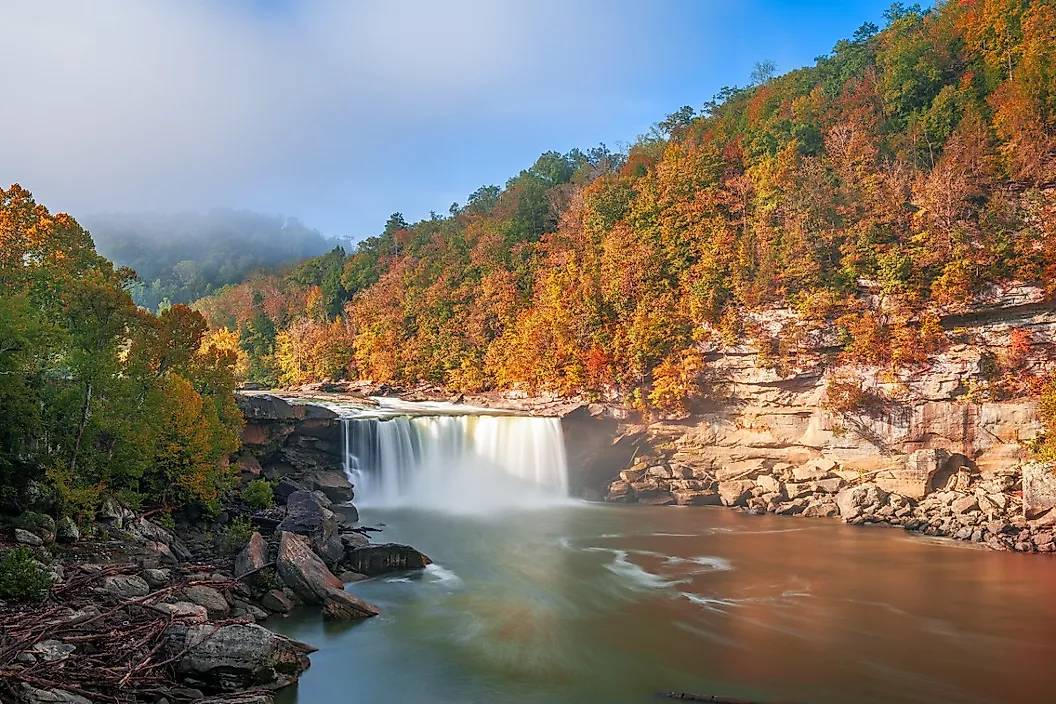
Cumberland Falls is perhaps best known for its "moonbow," a rainbow produced by both moonlight and waterfall spray. The phenomenon is visible during clear nights around a full moon and is one of the few places in the United States where visitors can regularly see one. But during daylight, the Cumberland River can be equally as nice to look at, dropping 68 feet (21 m) over the falls and stretching about 125 feet (38 m) across.
This must-see cascade sits within Daniel Boone National Forest, where several viewpoints along the river and adjacent trails lead through the surrounding woodlands. Nearby, Eagle Falls provides another waterfall hike, while the Cumberland River below the falls is used for rafting and fishing, too.
Cathedral Caverns, Alabama

Cathedral Caverns gets its name from its epic entrance, measuring about 126 feet (38 m) wide and 25 feet (8 m) high. Inside, the cave contains a 45-foot (14 m) stalagmite, a 27-foot (8 m) stalagmite known as Goliath, and other cool formations including stalactites, flowstones, and columns. The system developed in Mississippian-age limestone and interestingly maintains a temperature of about 60°F (16°C) year-round.
Tours here follow a paved route through the main cavern, passing many of its best points of interest and chambers along the way. Outside, there is much to be discovered, too, as Cathedral Caverns State Park covers 493 acres and includes a network of paths through the surrounding forestlands.
Everglades National Park, Florida

The Everglades is a 1.5-million-acre expanse of wetlands, where an immense amount of freshwater moves slowly through sawgrass marshes, mangrove forests, cypress swamps, and coastal bays deep in southern Florida. This national park actually protects the largest subtropical wilderness in the United States and provides vital habitat for American alligators, American crocodiles, West Indian manatees, and the endangered Florida panther.
Shark Valley is widely considered the best starting point, as it provides a 15-mile (24-km) route through a variety of sawgrass prairie not too far from Miami, while the Anhinga Trail passes through a freshwater marsh where alligators and wading birds are commonly seen. Farther south, the Flamingo area then reaches Florida Bay, where the freshwater Everglades meets the salty Gulf of Mexico (Gulf of America).
See the Beauty of the South Today
As you can see, the natural wonders of the South vary widely, from enormous cave systems and odd limestone formations to gigantic swamps, scenic waterfalls, deep river gorges, and desolate desert mountains. Some are defined by their record-breaking features, while others stand out simply for their fascinating geology or diverse wildlife. Whichever you choose to see this year, each shows how much geographic variety exists across this storied region.