Why Spanish Moss Only Grows In The South
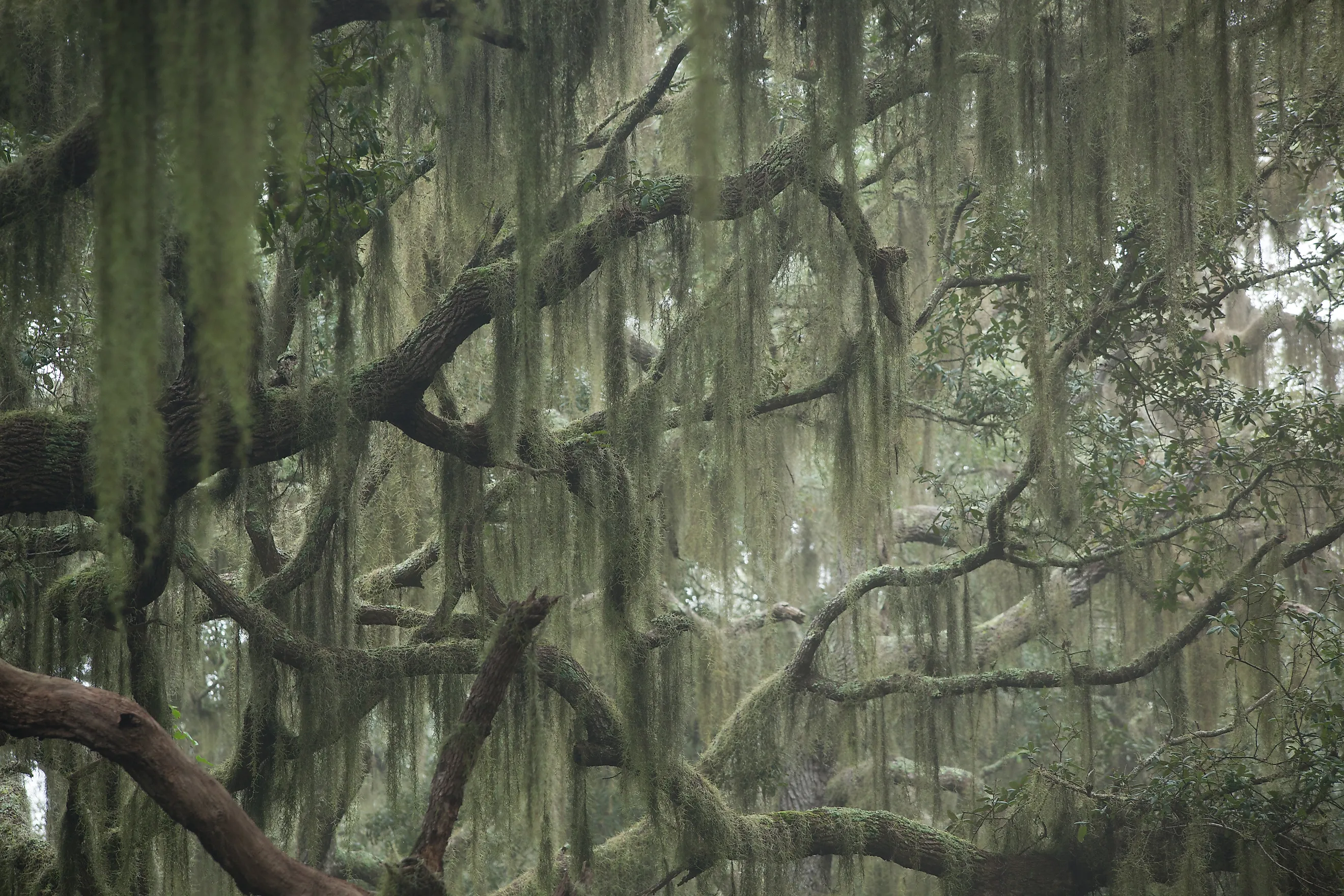
Within the U.S., Spanish moss only grows in the South because it requires two climatic conditions to survive: air humid enough to keep its scaly, water-absorbing surface hydrated between rains, and mild winters that keep the plant from drying out in the cold. Spanish moss, aka Tillandsia usneoides, pulls every drop of moisture and every trace of mineral nutrition directly from the surrounding air and organic debris clinging to tree bark rather than soil.
Wherever the Gulf Coast, the lower Atlantic seaboard, and the humid pockets of the Deep South meet that climate threshold, the plant grows in thick, trailing colonies over tree branches. Step outside that band, into drier inland Texas or the colder reaches of northern Georgia and beyond, and the populations thin to tiny pockets or disappear entirely.
An Air Plant with No Roots
Spanish moss is an air plant belonging to the bromeliad family, making it a closer relative of the pineapple than a true moss at all. Its thread-like stems carry no root system. Instead, the entire surface of the plant is covered in tiny shield-shaped scales called trichomes, each one a disc of dead cells sitting atop a living dome cell, which open to absorb water and dissolved minerals from moisture in the air and on tree bark. The same scales reflect strong light and slow water loss, and they are what give the plant its silvery-grey cast.
This dependence on moisture in the air rather than soil places a hard boundary on where the plant can survive. It does best where relative humidity stays above roughly 60 percent, a level the Gulf Coast and Atlantic lowlands hold through most of the growing season, often climbing past 70 percent during summer months, and it dries out quickly once humidity falls below about 50. Morning fog and heavy dew extend that moisture window even on days without rain, keeping the plant's surface damp long enough to absorb nutrients. Spanish moss is not helpless in dry spells, since it photosynthesizes through crassulacean acid metabolism and can go roughly two months without rainfall, but three to four months of drought will kill it.
The Cold Line

Winter cold sets the second range boundary for this plant, and it tracks the humidity line almost exactly. Spanish moss survives reliably within U.S. Department of Agriculture hardiness zones eight through 11, with zone eight marking the approximate northern edge. Within the coldest part of that range, winter temperatures do not usually fall below about 15 degrees Fahrenheit, and typically then only for brief snaps.
What cold actually does to the plant is worth noting, because it is the same problem as drought. Prolonged exposure to temperatures in the 15 to 25 degree range kills strands through desiccation rather than by freezing them outright, and the damage is worst when the air is dry and windy. The two limits are really one limit: Spanish moss dies wherever it cannot stay damp.
A handful of sheltered microclimates on Virginia's Eastern Shore support isolated strands at the northern edge of the range, but most self-sustaining populations require the milder winter floor found from coastal North Carolina down through Florida, and west across the Gulf States into East Texas. South of the U.S. border, the same climate combination carries the plant through Mexico, the West Indies, Central America, and much of South America, reaching as far as Argentina and Chile.
Despite its European common name, this air plant is native to its range in the Americas, and it is the most widely distributed member of the bromeliad family.
Southern Trees Host the Plant

Two trees native to the American South anchor most of the classic Spanish moss colonies: live oak (Quercus virginiana) and bald cypress (Taxodium distichum). The wide, near-horizontal limbs of the live oak give the plant broad surface area to drape over, and the stems hold their place by growing in a zigzag that tangles around itself and its support rather than by gripping.
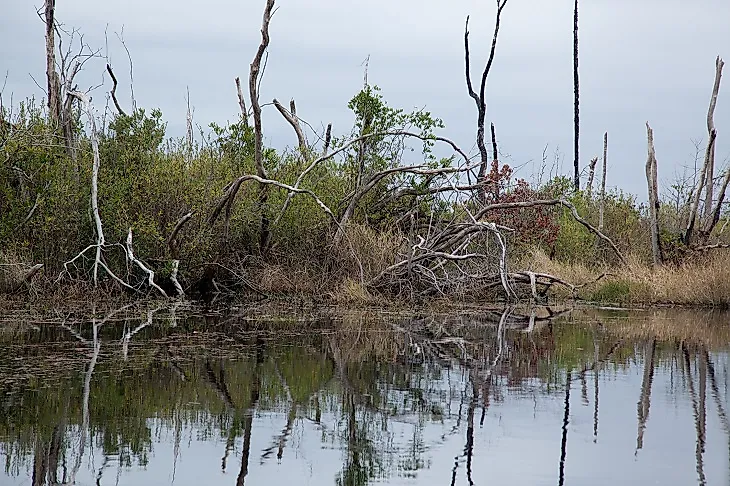
The bald cypress, common in swamps stretching from Louisiana to the Carolinas, offers a similar advantage through its rough, fibrous bark. Both species also leach minerals like calcium and potassium when it rains, providing an additional advantage to living on their branches.

The plant is not actually fussy about which tree it settles on, and botanists have found no evidence that it favors particular hosts. Live oak and bald cypress dominate the postcards because they are abundant across the humid South, because their branch architecture suits a plant that hangs, and because both leach minerals readily. Some tropical trees, by contrast, release chemicals that make their bark an unfavorable place for Spanish moss to establish.
Despite a common misconception, Spanish moss is not a parasitic plant and does not remove nutrients or tap into the tissues of the trees it inhabits. Instead, this air plant simply uses the branches like scaffolding, the way it might use a fence line, and does not harm the trees.
An already unhealthy or dying tree often has a thinning canopy, which lets in more sunlight and can cause the Spanish moss to grow even denser. On the outside, this may look like a thick colony of Spanish moss is killing the tree, but in reality, the tree is typically sick from a different cause, and the moss is simply growing denser because of the thinning canopy.
Where to See Spanish Moss in Southern Parks

Many natural areas across the South provide opportunities to view thriving colonies of Spanish moss draped over mature live oak or cypress trees.
At Highlands Hammock State Park near Sebring, Florida, a Civilian Conservation Corps-built boardwalk winds through an old-growth stand with significant colonies of Spanish moss. A separate boardwalk along the Cypress Swamp Trail routes directly beneath cypress limbs covered in trailing moss.
Skidaway Island State Park on the Georgia coast near Savannah protects a maritime forest of live oak and saw palmetto, where the Sandpiper Nature Trail passes beneath moss-hung limbs before opening onto salt marsh views.
Congaree National Park in central South Carolina protects the largest contiguous expanse of old-growth bottomland hardwood forest remaining in the U.S., where floodplain humidity keeps this plant thriving. The 2.6-mile wheelchair-accessible Boardwalk Loop Trail takes visitors past ancient bald cypress hung with Spanish moss.

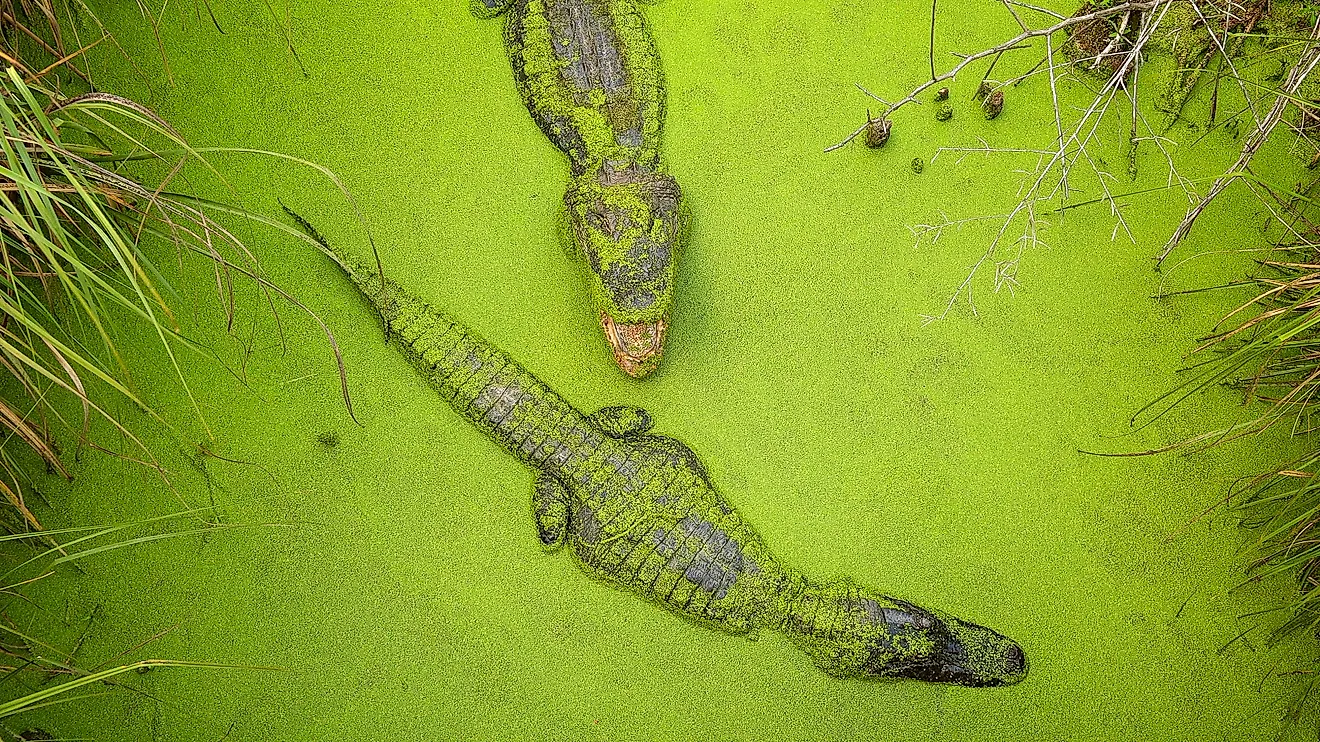
Further west, the Barataria Preserve unit of Jean Lafitte National Historical Park south of New Orleans runs boardwalk trails through bald cypress and tupelo swamp where thick colonies of Spanish moss hang over waterways inhabited by thriving populations of alligators.
A Range Written by Climate
Spanish moss owes its entire southern range to the pairing of humid air and mild winters, with live oak and bald cypress acting as the primary hosts allowing the colonies to grow and thrive. Where those conditions are met along the Gulf Coast and lower Atlantic seaboard, the plant grows abundantly. Move beyond those boundaries, and the climate math works in reverse, thinning the Spanish moss out until it disappears altogether.