Texas Hill Country
The Texas Hill Country is a distinct region of Central Texas known for, as you can imagine, its rolling hills, as well as its longstanding history shaped by Indigenous cultures, Spanish exploration, American incursions, and German settlement. Covering much of the state's central counties, 25 of them to be exact, the area stretches across scenic countryside just outside of San Antonio and Austin.
From underground caves and granite formations to historic towns and winding waterways, the Hill Country remains one of Texas' most recognizable landscapes. It has evolved over the centuries from a ranching and agriculture-based economy to include tourism, wineries, and ample outdoor recreation, which now draws millions of tourists each year. Read on to learn more about this fascinating and sometimes overlooked portion of Texas.
Geography

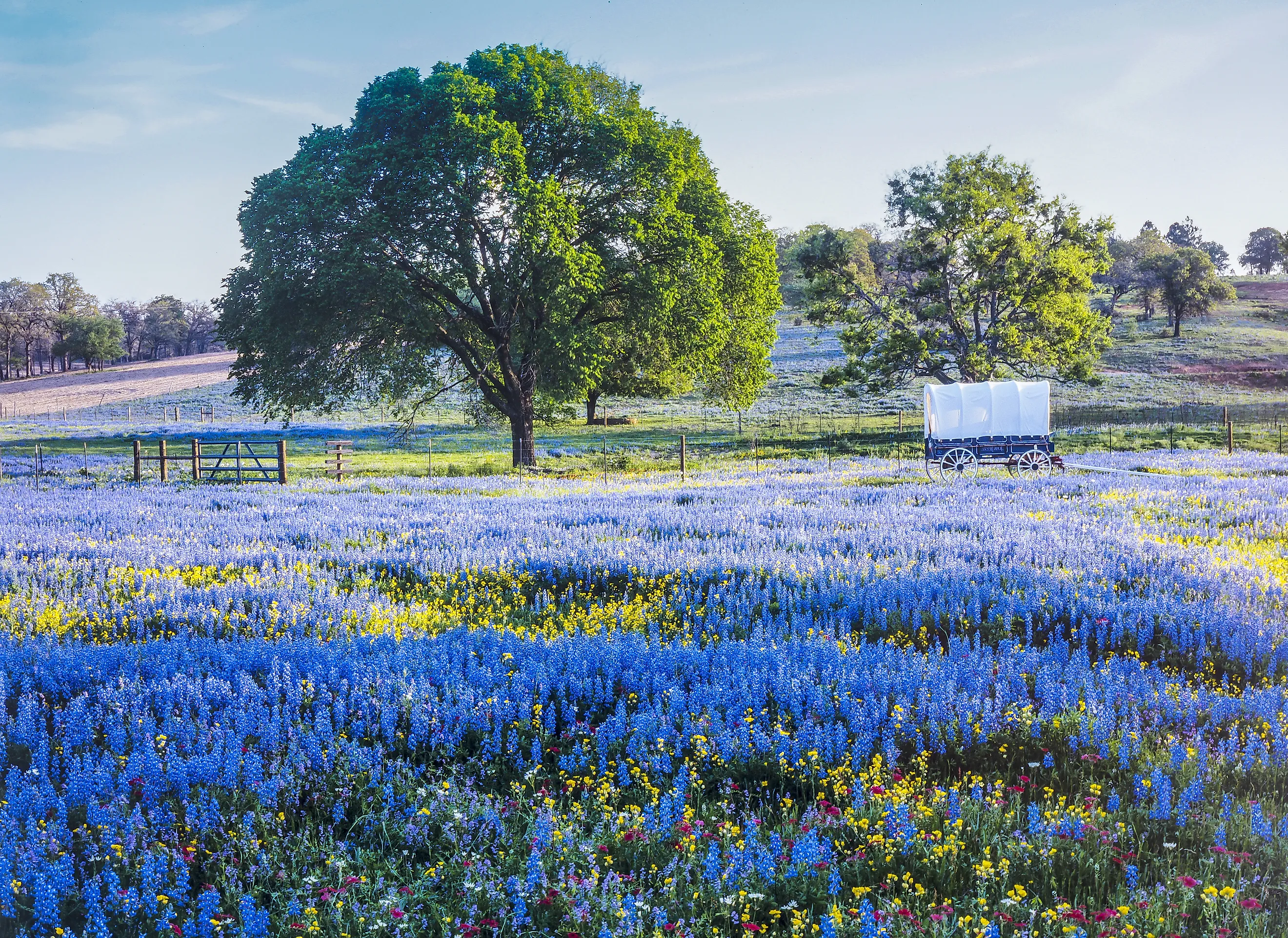
Stretching west of Austin and San Antonio, this region is defined by its rugged limestone terrain, plentiful hills, expansive grasslands, steep canyons, and clear, spring-fed waterways created by millions of years of erosion. Much of the landscape sits atop the Edwards Plateau, a geological formation heavily characterized by its caves, karst features, and underground aquifers, including the Edwards Aquifer, which supplies water to many communities in the area.
The Hill Country's elevation varies significantly as well, with higher ridges reaching above 2,400 ft (732 m) in its western parts, namely in Kimble County. Moreover, rivers such as the Guadalupe, Llano, Pedernales, and Frio cut through the terrain, creating valleys, swimming holes, and some surprisingly lush, forested riparian zones. With that, native vegetation includes live oak, Ashe juniper, mesquite, and grasses adapted to the region's limestone soils and periodic droughts. The landscape also supports a diverse array of fauna, including white-tailed deer, wild turkeys, and numerous bird species, just to name a few.
Climate

The area generally has a humid subtropical climate characterized by hot summers, mild winters, and highly variable rainfall, with the region's limestone terrain and vegetation contributing to rapid changes in water availability during wet and dry cycles. Rainfall averages roughly 25 to 35 in (635-890 mm) annually, with precipitation often occurring during intense thunderstorms rather than steady, regular rain patterns.
Summer temperatures frequently reach the mid-90s °F (mid-30s °C), with prolonged periods of heat and occasional drought affecting river levels, variety of foliage, and overall water supplies, very typical of anywhere in and around mid to southern Texas.
On the other hand, winters are usually short and relatively pleasant, though cold fronts can bring freezing temperatures and occasional ice storms. Spring and fall bring more moderate temperatures, making these two seasons the most popular for outdoor activities.
The Human History

The Texas Hill Country has a long human history dating back thousands of years, with Indigenous groups such as the Tonkawa, Apache, and Comanche using the region's rivers, springs, and wildlife-rich landscapes for hunting, travel, and general living space. Spanish explorers then entered the area in the 1700s, establishing missions and seeking to expand Spanish influence across North America.
Broader European and American settlement increased greatly during the 19th century, particularly after Texas gained independence in 1836 and later joined the United States. German immigrants played a particularly major role in shaping the Hill Country, founding communities such as Fredericksburg in 1846 and influencing local architecture, agriculture, and traditions. Their presence led to the creation of Texan staples such as smoked barbecue, based on meat preservation methods they brought over from Europe, as well as giving several other towns, cities, and communities the Germanic names we still see.
With its huge swathes of undisturbed lands, ranching started out as a defining part of the Hill Country economy. Later on in the 20th century, improved roads, tourism, and a growing focus on recreation modernized many communities, while a number of the oldest towns, continuously working ranches, and natural landmarks continue to reflect the area's past to this day.
Above all, Hill Country's deeply ingrained milieu of Native, German, Spanish, and American, including freed slaves post-Civil War, as Texas was a Confederate state, has given it a rich history that still influences its people, cultures, and economy in many ways.
Economy

As mentioned, the local economy has traditionally been centered around ranching, agriculture, and natural resource industries. Cattle, sheep, and goat production remain important, with the countryside particularly renowned for its role in Texas's goat and mohair industry. Several vineyards and wineries have also sprung up across the area in recent decades, aided by the region's soils, climate, and growing tourism sector.
Tourism and recreation have actually become major economic drivers, with upwards of 2.3 million annual visitors drawn to local state parks, rivers, historic towns, wineries, and other activities. Moreover, numerous small businesses and hospitality services have grown alongside this demand.
Construction and real estate have also expanded considerably, as more people are moving here, and Texas in general, often looking for a lower cost of living when compared to coastal states on both the Pacific and Atlantic sides of the country.
Top Regional Attractions

Texas' Hill Country stands out with its dense combination of cultural offerings, memorable communities, outdoor recreation, and all-around rural charm. To start, the region contains numerous parks and protected areas, including Enchanted Rock State Natural Area, where you are invited to hike across a massive pink granite dome that rises high above the surrounding terrain.
Rivers are another defining feature, with the Guadalupe River, Frio River, and Llano River providing opportunities for tubing, fishing, paddling, and swimming, a particular benefit during sweltering days the area sees in summertime. Other notable spots include Caverns of Sonora, known for its extensive underground formations, and Longhorn Cavern State Park, which features more walkable limestone cave systems formed over eons by ancient waterways.
History-filled locales such as Kerrville, New Braunfels, and Fredericksburg attract curious visitors with their German heritage, abundance of museums, wineries, and nationally recognized attractions like the National Museum of the Pacific War. And close by, larger cities like Austin and San Antonio, of course, come with their own array of urban draws and amenities to be explored.
For foodies, the Hill Country's wine industry has also become a surprisingly major selling point, with vineyards and tasting rooms scattered all throughout the countryside. For newcomers, William Chris Vineyards, Becker Vineyards, and Pedernales Cellars come highly recommended, although there are dozens more, possibly less busy, locations you'll probably cross while driving around.
Experience the Wonders of the Texas Hill Country for Yourself
Combining unique geology, a deep history, and a wide range of attractions, the Texas Hill Country rests within a landscape of more than just open ranchlands. Its plethora of old-timey communities, natural landmarks, and an evolving economy have made the region a must-visit within the Deep South, as well as an ideal place many have opted to settle permanently in current times.
Now that you know a bit about this wonderful destination, will it make it onto your travel itinerary this year?