How Many Crocodiles Are Left In Florida
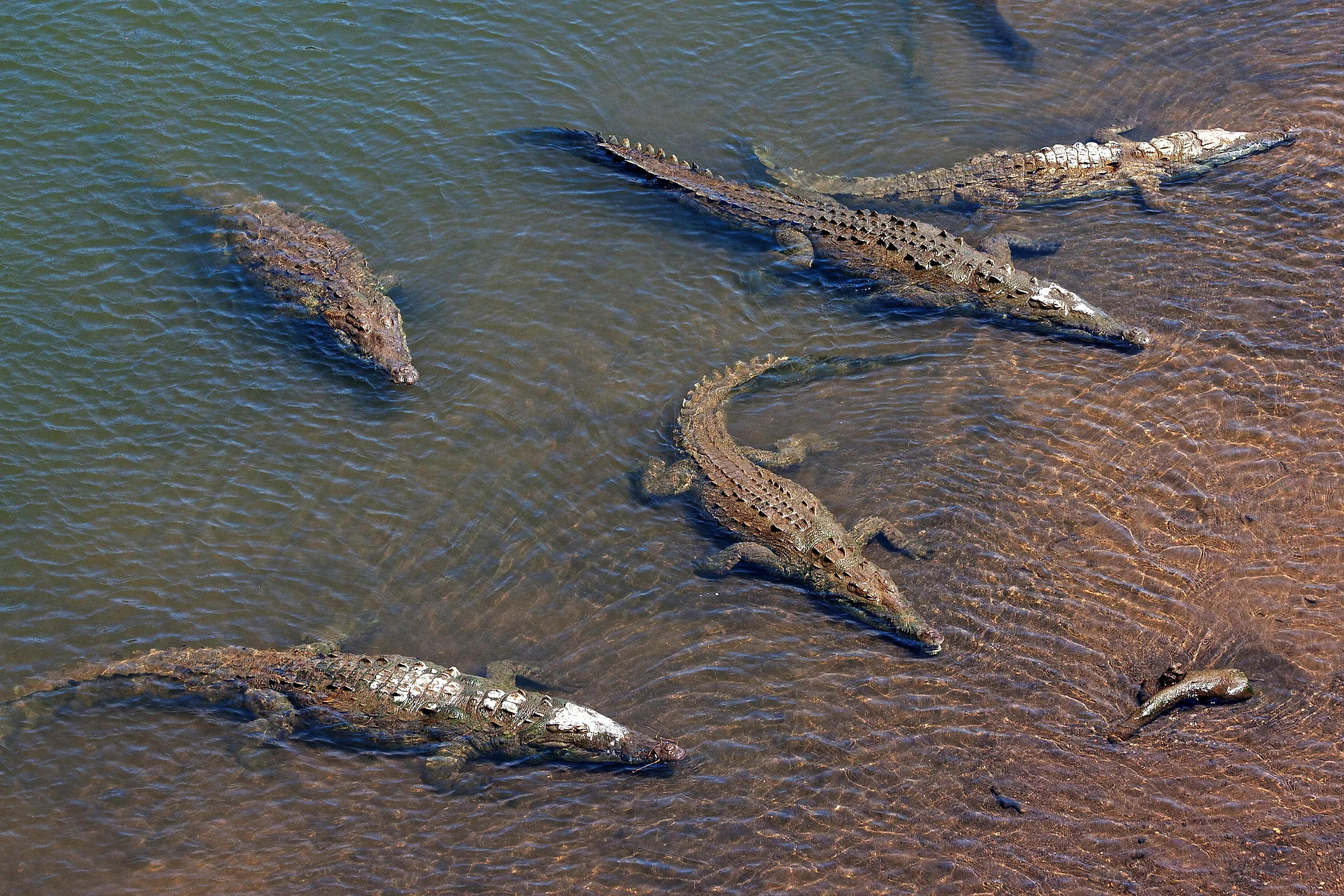
When the American crocodile was listed as endangered in 1975, Florida held a few hundred of them. The Florida Museum now estimates around 2,000, and adds a remark that reframes the whole question: possibly more crocodiles than ever existed in Florida at any time. The federal figure is wider, putting the state's non-hatchling population between 1,306 and 3,150. Whichever you take, this is one of the shorter and more complete recoveries in American conservation.
A Few Hundred To About Two Thousand

The headline numbers come from the state wildlife agency and are not disputed in outline.
Florida's crocodile population was listed as endangered in 1975 and has since recovered from a few hundred individuals to as many as 2,000 adults. The population is now classified as threatened rather than endangered.
The US Fish and Wildlife Service's 2022 figure covers a different category, estimating 1,306 to 3,150 non-hatchling individuals, which includes juveniles as well as adults.
Possibly More Than Ever

The most striking claim about the recovery is that it may have overshot the historical baseline.
The Florida Museum's assessment is that current numbers may represent more crocodiles than existed in Florida at any point in the past. The species has always been rare here.
That is not a statement about abundance so much as about scarcity. Florida sits at the extreme northern tip of a range running down to northern South America, and marginal habitat never supported large numbers.
They Live In A Very Small Area

The population is concentrated into a fraction of one state.
Breeding is restricted to southern Florida, principally Everglades National Park and Florida Bay including Key Largo, with nesting concentrated on the mainland shore between Cape Sable and Key Largo plus Biscayne Bay and the upper Keys.
Most of the breeding range sits inside Everglades National Park, Crocodile Lake National Wildlife Refuge and a private corporation's land, which is unusually tidy for a recovering species.
The Nesting Range Shrank First

Understanding the recovery means understanding what was lost before it.
By the early 1970s, nesting had contracted to a small area of northeastern Florida Bay in Everglades National Park and northern Key Largo. Since the 1930s there had been a gradual disappearance of nesting on Florida Bay islands and an absence of adults from central Key Largo and the coast north of Biscayne Bay.
The species was being squeezed into the southern corner. Reversing that is what the recovery has largely consisted of.
A Power Station Helped

One of the species' strongholds is an industrial site, which is not how these stories usually run.
The crocodile has made a comeback in southern Biscayne Bay where suitable habitat remains and where habitat modifications have made other areas more favorable, because the animals adapt to altered environments.
Turkey Point's cooling canal system is named in federal documents alongside Key Largo, Everglades National Park and Biscayne Bay as important to long-term assessment of the population.
Sightings Reach Tampa Bay

Individual animals wander far outside the breeding range, which generates most of the headlines.
Crocodiles have been observed as far north as Tampa Bay in Hillsborough County on the Gulf coast and Satellite Beach on the Atlantic side. One survey extends the northernmost confirmed Gulf record to the northern end of Lake Tarpon in Pinellas County.
These are individuals rather than populations. The odds of encountering one rise sharply the further south you go.
Salinity Governs Survival

Research on the species as a restoration indicator found a clear and measurable control on how well they do.
Hypersaline conditions negatively affected survival, growth and body condition, most pronounced in northeastern Florida Bay where hydrologic conditions have been most disturbed.
Crocodiles are therefore used as bioindicators for Everglades restoration. Their condition tracks how much fresh water is reaching the estuary.
Recovery Criteria Have Been Met

The five-year review language is unusually confident for a federal document.
The review concluded that Recovery Criterion 1 for the American crocodile had been met, and that the rangewide population in Florida appears to be increasing. Sightings on the southwest coast now occur with increasing frequency.
The species remains federally threatened. The population segment in Florida is the one being assessed, separate from the global species status.
Globally It Is Still Struggling

The Florida picture is not the global one, and the difference is instructive.
Total population across the species' range is unknown but may exceed 10,000. NatureServe records steep historical declines from coastal development, hunting and water diversion, with the trend now stabilized in much of the range.
The threats outside the United States are the ones that decimated the population here: habitat destruction and illegal hunting. Florida solved those. Much of the Caribbean and Central America has not.
A Small Population Is A Fragile One

Two thousand animals in one corner of one state carries an obvious risk.
Florida's natural areas inventory notes that small population size leaves the species vulnerable to catastrophes such as hurricanes. A single severe storm striking Florida Bay during nesting could undo years of gain.
Continued coastal development and incompatible water management remain the standing threats, which is why the listing has moved from endangered to threatened rather than being removed.
The Short Answer

Florida holds roughly 2,000 adult American crocodiles, or between 1,306 and 3,150 non-hatchlings by the federal count, up from a few hundred when the species was listed as endangered in 1975. The population is now classified as threatened and is increasing.
Nearly all of them live in a narrow coastal band from Florida Bay through Biscayne Bay to the upper Keys, with individuals turning up as far north as Tampa Bay. Florida may now hold more crocodiles than it ever has, which says as much about how few there always were as about how well the recovery has gone.