The US Beaches With The Most Shark Attacks
The beaches with the most shark bites are also some of the most crowded in the country. Baitfish crowd the warm shallows, and the sharks follow them toward the surf. Surfers and swimmers pack the same water, and hit-and-run bites are the result. Almost everyone is a case of mistaken identity that heals fast.
Florida claims most of this list, and Volusia County leads by a wide margin. Sharks and people cross paths here more than at any other beach in America.
New Smyrna Beach, Florida

Long known as the Shark Bite Capital of the World, Florida's New Smyrna Beach is consistently recorded as having the highest number of attacks in the United States. Historically, there have been 277 confirmed attacks on humans. There has never been a reported fatality, despite such high numbers. New Smyrna Beach's record for attacks stems from it being one of the busiest surfing beaches in the United States, with large schools of baitfish regularly near the shore. These fish attract blacktip and spinner sharks, and most attacks are hit-and-run bites on surfers with legs and arms dangling in the water. There was one confirmed unprovoked shark bite in New Smyrna Beach in 2025, while Volusia County, which includes New Smyrna Beach, reported six unprovoked shark bites that year.
Daytona Beach, Florida

Also in Volusia County, Daytona Beach has had 67 confirmed shark attacks since records were first kept. There have been no confirmed fatalities at Daytona Beach. Despite its history of coming second to New Smyrna Beach in shark attacks, there were no confirmed attacks in Daytona Beach in 2025. The ISAF does not have data for the highest number of attacks in one year for Daytona Beach. For all of Volusia County, 2016 is the year with the highest number of attacks, with 15 unprovoked attacks that year.
Cocoa Beach, Florida
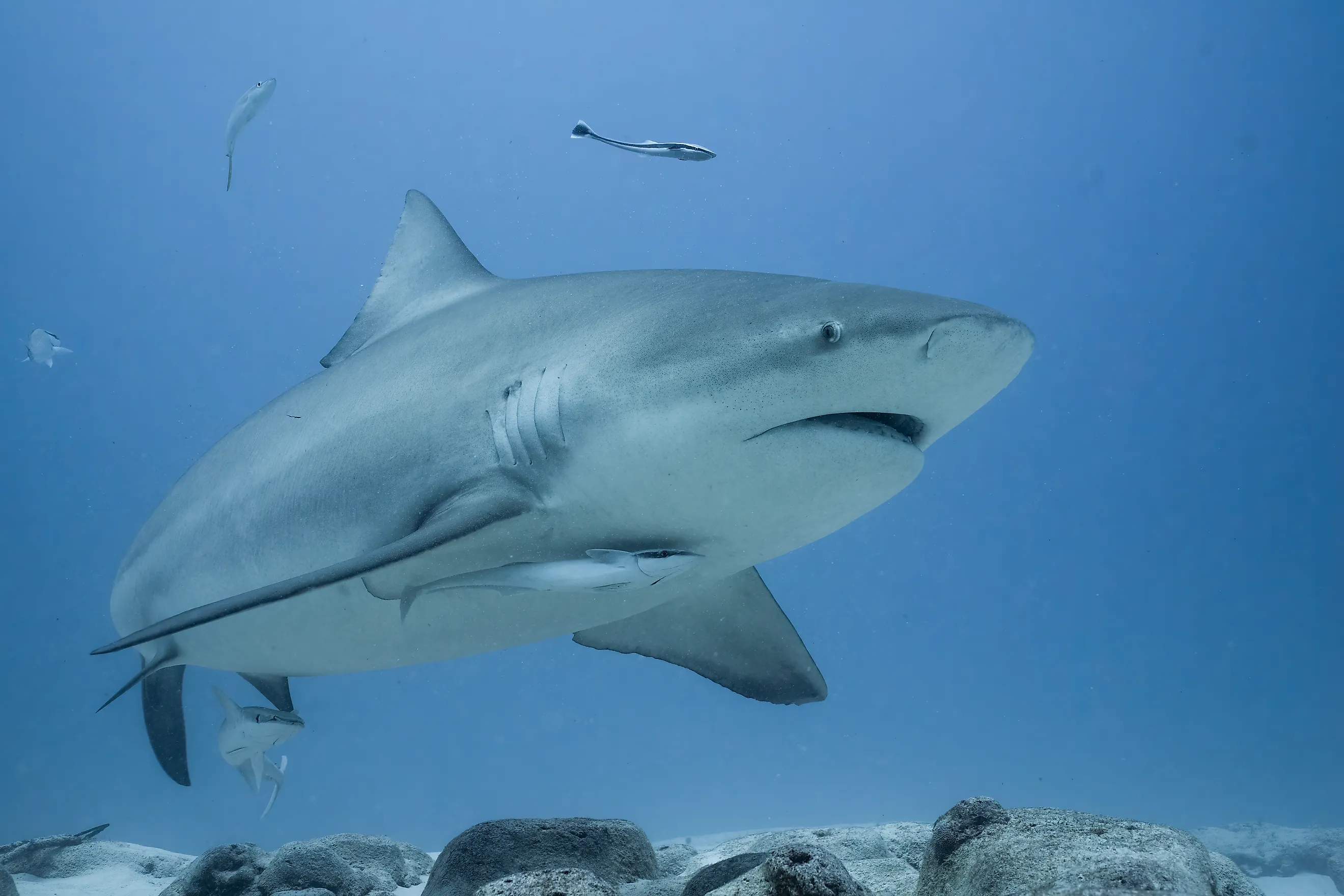
Historically, Cocoa Beach has had 39 unprovoked shark attacks. There has never been a reported fatality at that beach. In 2025, there was one unprovoked attack, which was one of two such attacks in Brevard County. As one of the most popular surfing destinations in Florida, the number of surfers and swimmers in the coastal waters of Cocoa Beach is high. Schools of fish regularly gather in the waters near the shore, which in turn attract sharks. Seasonal shark migrations and warm, shallow water make the area ideal for sharks. Attacks on humans are mostly hit-and-run bites, and once a shark realizes that what it bit was not a fish, it moves on.
Myrtle Beach, South Carolina

This popular beach in South Carolina has the highest historical number of shark attacks outside of Florida, at 36 incidents. Despite the high number of attacks over the years, there has never been a fatality from an unprovoked shark attack at Myrtle Beach. In 2025, there was one unprovoked shark attack, with four in total for the state of South Carolina. Most shark bites at Myrtle Beach come from smaller sharks, such as blacktip sharks, spinner sharks, Atlantic sharpnose sharks, and juvenile bull sharks seeking food near shore.
Palm Beach, Florida

Historically, Palm Beach has had 35 confirmed unprovoked shark attacks. There have been no fatal attacks recorded. Although there were no attacks in Palm Beach in 2025, Palm Beach County as a whole recorded two. Palm Beach lies directly on the migration route of blacktip sharks, and thousands of them share the coastal waters with people in the early spring.
Indialantic Boardwalk, Florida

There have been 30 confirmed unprovoked attacks historically at Indialantic Boardwalk. As with Cocoa Beach, also in Brevard County along Florida's Space Coast, Indialantic Boardwalk draws small migrating sharks that follow schools of fish near the shore. Brevard County has had 156 confirmed shark bites since 1882, reflecting ideal conditions for coastal sharks mixed with heavy human recreational use.
Fort Pierce Inlet, Florida

With 24 confirmed shark attacks historically, Fort Pierce Inlet connects the Atlantic Ocean with the Indian River Lagoon. Strong tidal currents move nutrients through the inlet and support a high concentration of marine life, making it an ideal feeding area for coastal sharks. Migrating blacktip sharks, spinner sharks, bull sharks, and sandbar sharks pass through in the winter and spring.
Jupiter Beach Park, Florida

Located along Florida's southeast Atlantic coast, Jupiter Beach Park draws blacktip sharks, spinner sharks, and juvenile bull sharks that feed on the baitfish near shore. Most attacks on humans are cases of a shark mistakenly grabbing hands and feet for fish. Historically, there have been 23 shark attacks at Jupiter Beach Park, with one confirmed unprovoked attack in 2025.
Riviera Beach, Florida

Located along shark migration routes, Riviera Beach offers abundant prey near the shore. With its heavy recreational use, the area has had 23 unprovoked attacks historically.
Cape Canaveral, Florida and Isle of Palms, South Carolina

Tied for tenth place in historic shark attacks, both locations have had 19 confirmed shark attacks over the years. Neither Cape Canaveral nor Isle of Palms had any confirmed attacks in 2025. Cape Canaveral sits on Florida's Atlantic coast, where seasonal migrations of blacktip, spinner, bull, and sandbar sharks take place. Schools of baitfish along the shore attract the sharks, which then come into contact with people in the water. Isle of Palms lies north of Charleston Harbor, where tidal currents move large volumes of water between the Atlantic Ocean and the harbor's estuaries. Heavy water activity around the island overlaps with migrating sharks, making contact likely.
Dangers At The Beach

Common sense matters most in the coastal waters of the United States. The biggest killer is not the shark but the rip current. Swimmers caught in these fast, narrow channels are swept offshore, and rip currents cause more than 100 drownings a year in the country. They account for over 80% of all surf-beach lifeguard rescues. Flesh-eating bacteria add to the risk, with Vibrio vulnificus causing around a dozen deaths in a typical year along the Gulf and Atlantic coasts. Warm water is also home to the Portuguese man o' war, box jellyfish, and round stingrays. Their stings injure thousands of swimmers each year. Unprovoked shark attacks do happen, yet a swimmer faces far more danger from the water itself than from any shark. Heeding posted warnings and avoiding empty stretches of beach go a long way toward a safe day in the surf.