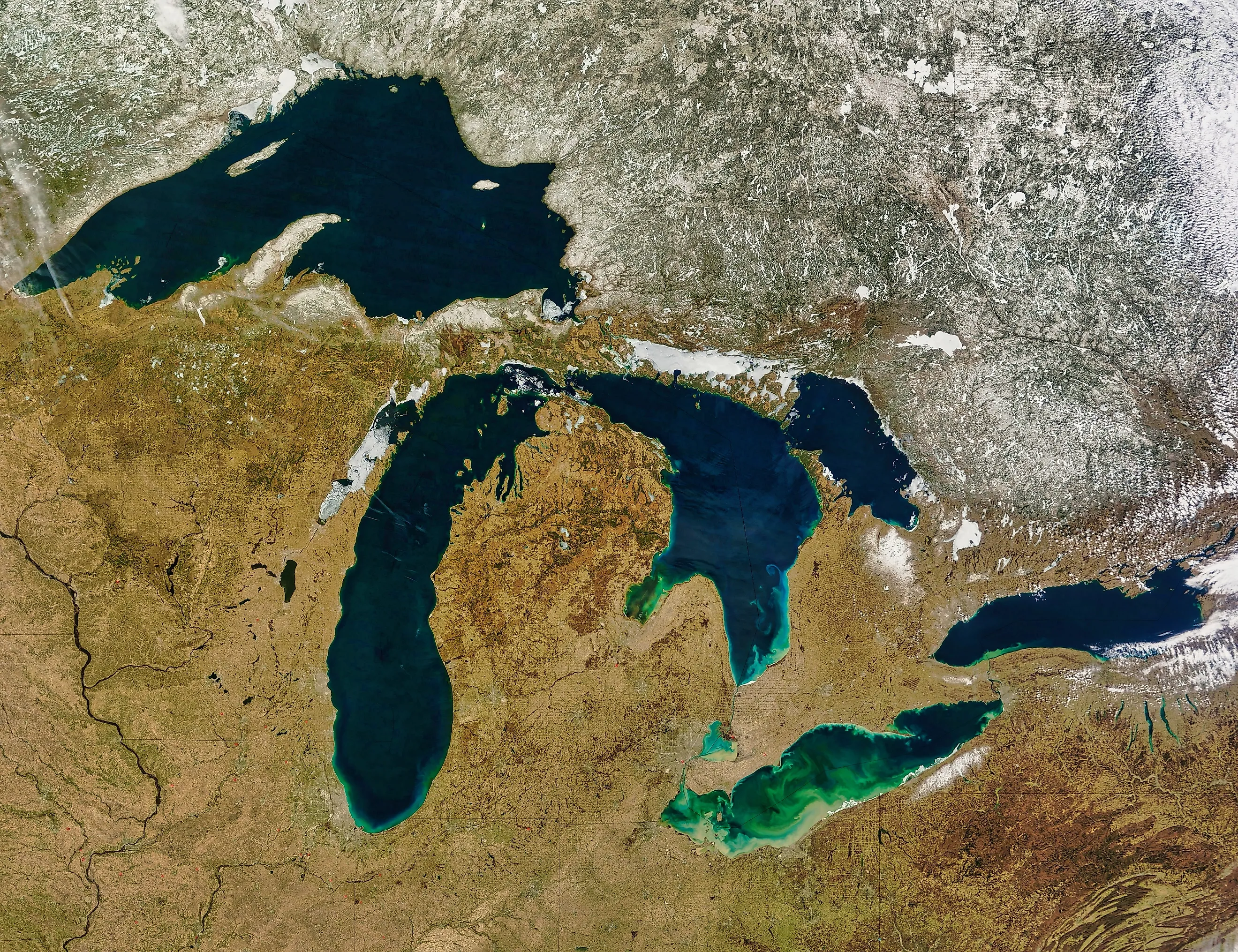
The Great Lakes Ranked By Number Of Islands
The Great Lakes hold tens of thousands of islands, but they are spread out unevenly. Lake Huron has so many that no one can quite agree on the exact amount, while Lake Erie only has a few dozen. Some of these islands have kingdoms, wolf-patrolled wilderness, and tourist destinations.
Even the smallest of the Great Lakes is larger than Rhode Island, Delaware, or Connecticut. However, not every Great Lake has the same number of islands, as most are found in one lake in particular. In addition, there is some ambiguity as to which islands are counted when considering the Great Lakes.
Lake Erie

Lake Erie has the fewest islands, with the Ohio Department of Natural Resources stating that there are 31 islands in total on this lake, with most located within the borders of the state of Ohio.
Its islands sit on a shallow basin, as Lake Erie has an average depth of only 62 feet across its entire 9,910 square miles of water area, with a maximum depth of 210 feet, which is lower than the average of all but one of the other four Great Lakes.

For Ohio itself, these islands are limestone and are part of an archipelago. The largest island on the American side is Kelleys Island, at about 2,800 acres, home to Kelleys Island State Park. However, Kelleys is about 28 percent the size of Pelee Island in Ontario, Canada. At 10,000 acres, it is the largest island on Lake Erie, and it can more than 2 hours to circle around this island on a bicycle.
Wineries are a cornerstone business on both of these islands, as the rich soil and warm air supports grape crops that are used for wine.
Lake Ontario

Some articles list Lake Ontario as having more than 1,000 islands, but in reality the lake contains around 100. The reason for this confusion is that at Lake Ontario's northeastern boundary with the St. Lawrence River, this is an archipelago known as the Thousand Islands.
Despite the name, the archipelago actually contains 1,864 islands in the border between New York and Ontario. During Prohibition, these islands were a hot spot for bootleggers attempting to move alcohol from Canada to the U.S. As they are a part of the St. Lawrence River, most are not official islands in Lake Ontario, save for the notable exception of Wolfe Island.

At 48 square miles, Wolfe Island is the largest of the Thousand Islands, and today is a popular destination for those wishing to enjoy time on the beach or go for a biking ride across its entire landmass.
The second largest island in Lake Ontario is Amherst Island, located 6 miles west of Kingston, Canada. It is part of Loyalist Township, named after the loyalists who supported the British side during the American Revolution and fled the country after the war. It gets its name from Jeffrey Amherst, who served as commander in chief of all British forces in North America.
Lake Michigan

Lake Michigan has 100 islands, which are all located on the northern half of the lake, rather than the southern section. The reason for this is the rock composition and the role of glaciers.
As the Laurentide Ice Sheet began to melt beginning 20,000 years ago, it had several periods of advancing and retreating. This movement eroded the rocks on the southern sections of what would become Lake Michigan, but did not impact the erosion-resistant rocks in the northern section. One such place is the North and South Manitou Islands, located in the Sleeping Bear Dunes National Lakeshore.

These islands are part of a chain of limestone bedrock buried under layers of glacial sand and gravel, poking out from the waves. According to a Native American legend, these rocks were two bear cubs who died while trying to swim across the lake with their mother.
The largest island in Lake Michigan is called Beaver Island at 55.8 square miles, located in the northeastern corner of the lake. This island was once occupied by a Mormon religious leader named James Jesse Strang, who declared himself a king and made the island his kingdom from 1850 until his assassination in 1856.
Lake Superior

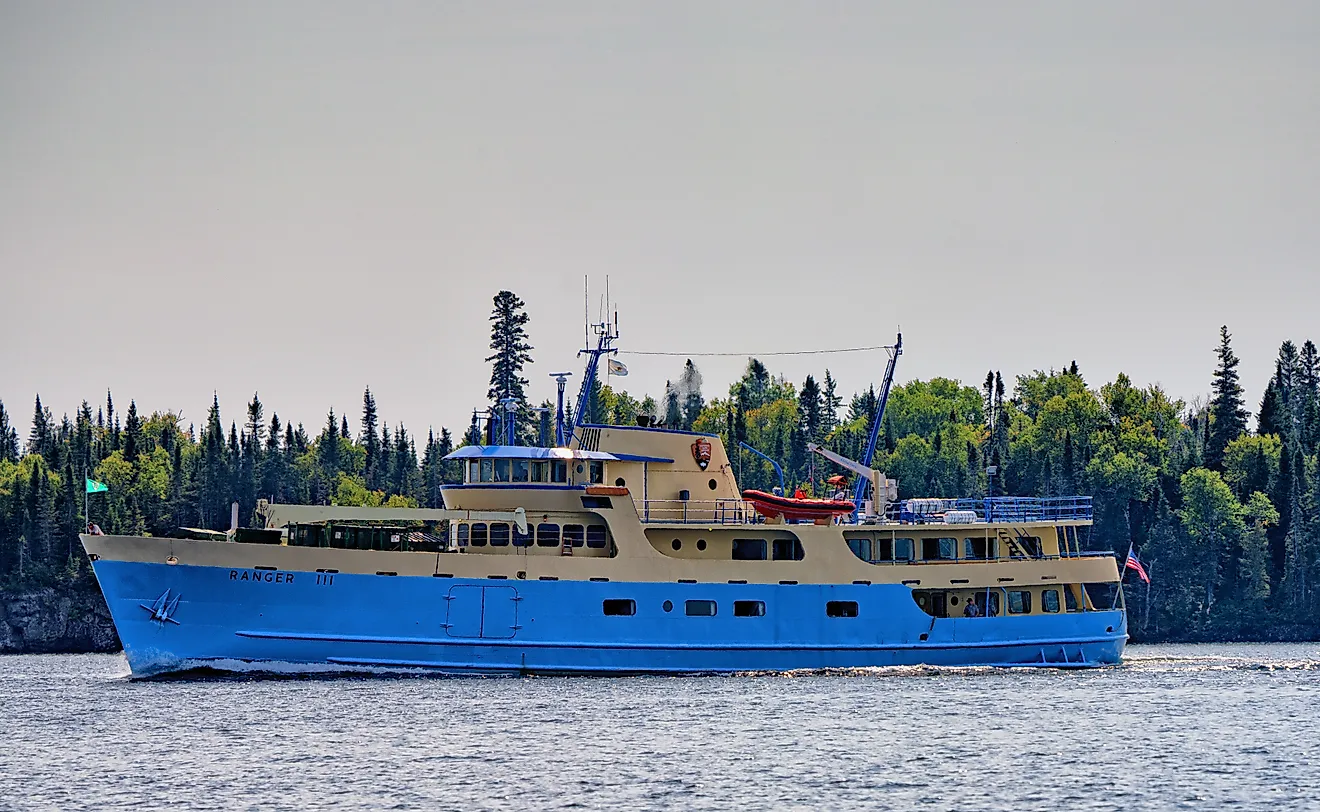
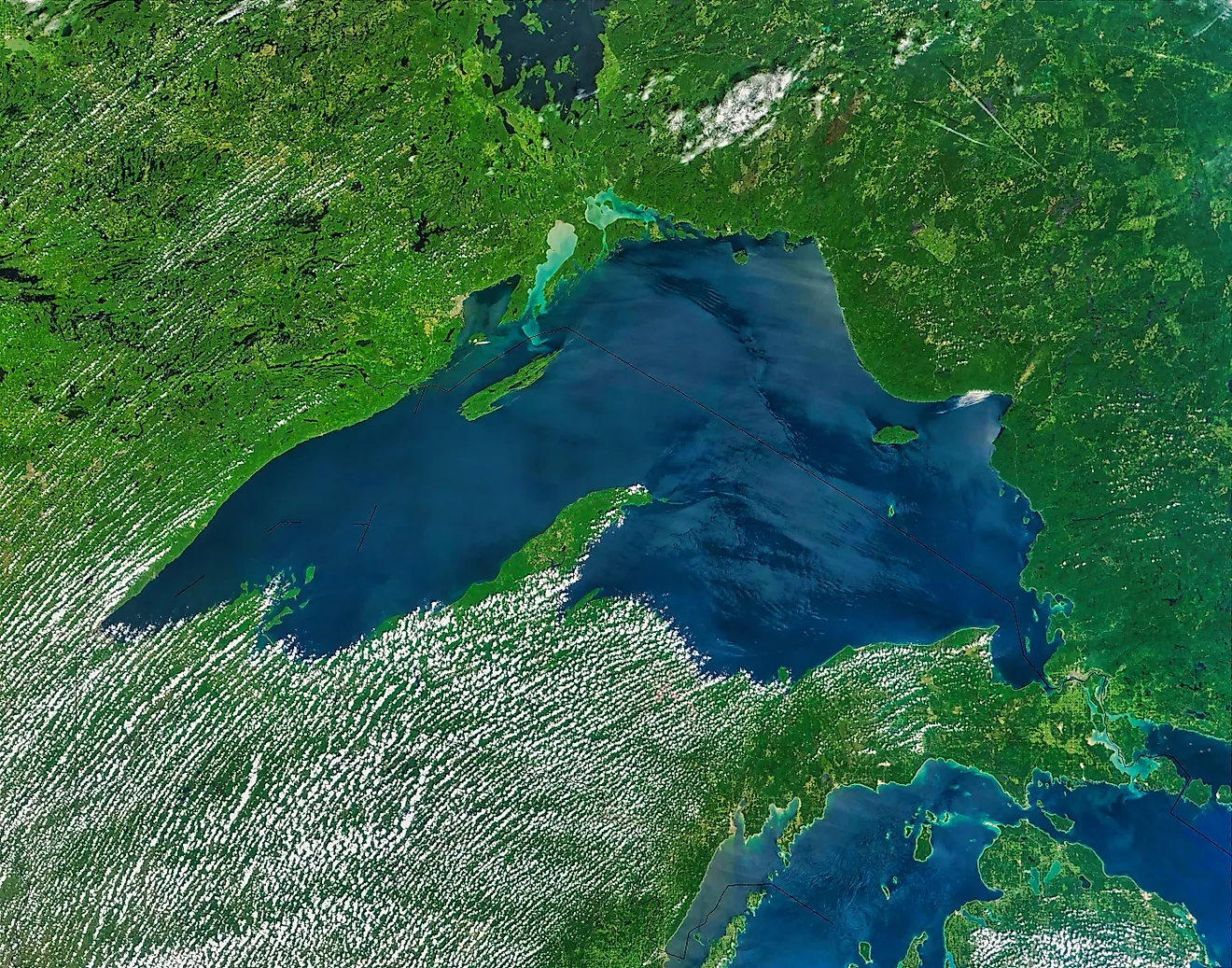
Lake Superior has close to 500 islands across its huge surface area of 31,700 square miles. The largest island in this lake is the only national park in the state of Michigan: Isle Royale National Park.
Isle Royale is 207 square miles and is part of a larger archipelago of 450 smaller islands. The island itself sits on an intersection of volcanic and sedimentary sandstone. On the island are several large mammals, including moose, which arrived in the early 1900s, and wolves, which crossed the ice in the late 1940s.

The other major archipelago in Lake Superior are the Apostle Islands, consisting of 21 islands through the Apostle Islands National Lakeshore. These islands are particularly well known for their sea caves, ice caves, and red sandstone cliffs.
Lake Superior's deep waters hide many shoals right under the surface, including the ancient Superior Shoal. This volcanic basalt formation dates back to 1.1 billion years ago when the continent was almost pulled apart through the Midcontinent Rift. This major event created the deep basin that would one day be filled with Lake Superior's 2,900 cubic miles of water. This event also pushed up rich minerals to the surface, such as copper, which would later be mined throughout Lake Superior.
Lake Huron

No other Great Lake comes close to Lake Huron in terms of islands, with 30,000 of them identified. This is why Lake Huron has the longest shoreline of the Great Lakes, as its official figure of 3,827 miles includes these islands.
Most of its islands are located in the Georgian Bay on the lake's shoreline with Ontario. Some estimates put this bay alone as having more than 30,000 islands, but many of them are only tiny outcrops with no real soil; thus, they are not often included in Lake Huron's total. This bay does contain the largest freshwater island on earth: Manitoulin Island.

With an area of 1,068 square miles, it gets its name from the Algonquian word for spirit. Today, the island is used for fishing, dairy, and as a tourist destination.
One reason Lake Huron has so many islands is because of the erosion resistant Canadian Shield of Precambrian rock in the northern section of the lake. These rocks date back more than 1 billion years, making them some of the oldest rocks on earth.
Most of these islands are empty of humans

Despite the vast number of islands in the Great Lakes, the vast majority of them are tiny and unoccupied by humans. In fact, only around 20 to 30 islands across the entire Great Lakes ecosystem have a permanent human population, such as Mackinac Island in Lake Huron.
In addition, some of its islands are protected wildlife environments such as Isle Royale National Park. The fact that even the smallest of the Great Lakes have dozens of islands shows just how expansive the Great Lakes truly are, and despite so much human development, many of these islands remain isolated, except for the wildlife that find their home here in the midst of these Great Lakes.