The Most Venomous Creatures In The Sea
Every year, stingrays injure an estimated 1,500 to 2,000 people across the United States. Florida's beaches are among the hardest hit, making stingrays a real and painful hazard that most swimmers have learned to live with. But stingrays aren't even close to the most venomous animals in the ocean.
The actual heavyweights are smaller, stranger, and mostly nowhere near a typical US beach. They include a snail armed with one of the most potent venoms in the ocean, an octopus the size of a golf ball with no antivenom, and a jellyfish linked to dozens of deaths a year in some parts of the world. One distinction matters: venomous and poisonous are not the same. Venomous animals inject toxins through a bite, sting, or spine. Poisonous animals are dangerous only if touched or eaten. Every animal here earns its place through venom.
The most venomous animals are not always the most dangerous to people. Toxicologists consider venom potency, the chance of an encounter, and how often a bite or sting becomes serious. Those measures rarely align, which is why no single ranking settles the question.
Australian Box Jellyfish (Chironex fleckeri)
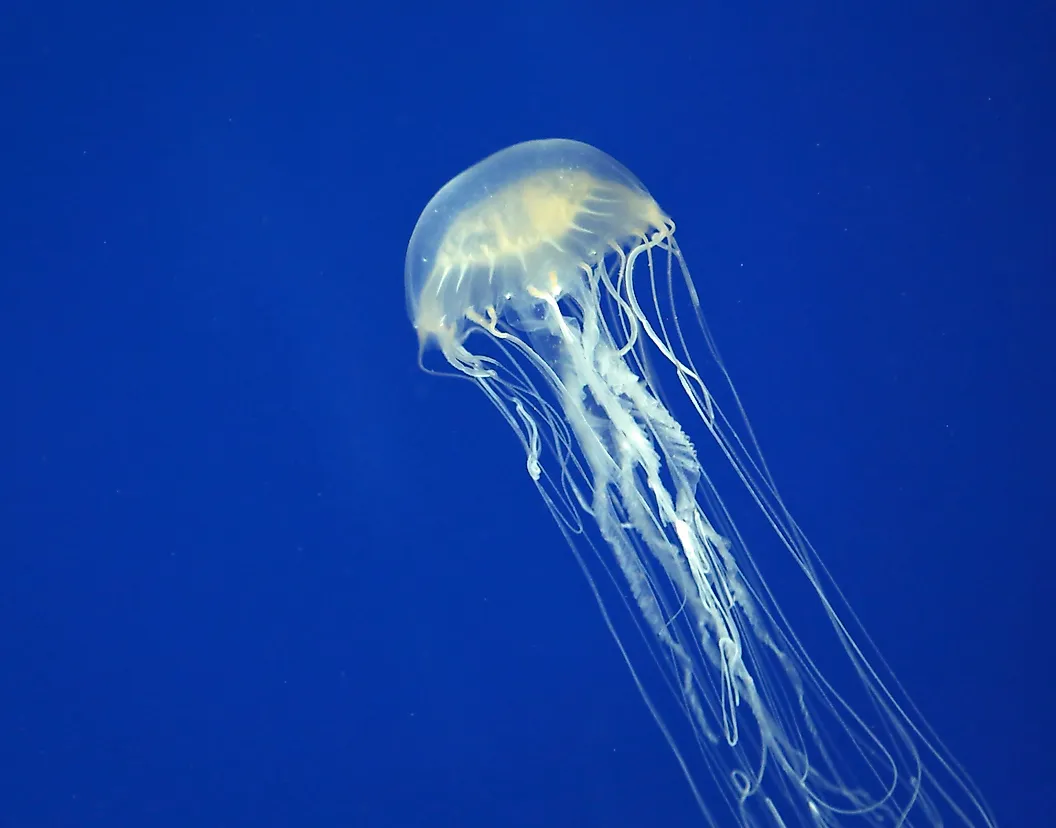
Found in warm coastal waters across the Indo-Pacific and northern Australia, the Australian box jellyfish is widely regarded as the most venomous marine animal alive. Its venom attacks the heart, nervous system, and skin cells simultaneously, and a serious sting can kill an adult within minutes.
Of the roughly 50 known box jellyfish species, only a handful have venom capable of killing humans, and Chironex fleckeri is the most dangerous. Fatality figures for box jellyfish mix different kinds of counts, and it's worth keeping them separate.
In Australia, the species has caused at least 64 confirmed deaths since the 1880s, a historical total, not an annual rate. A box jellyfish sting killed a 14-year-old boy at Queensland's Eimeo Beach in February 2022. The death was only the second recorded box jellyfish fatality in the state in 16 years.
In the Philippines, researchers estimate that box jellyfish stings cause about 20 to 40 deaths each year, though the actual number may be higher because many cases go unreported. There is no reliable global annual total, but the available regional data shows that these jellyfish can be deadly.
Reef and Estuarine Stonefish (Synanceia species)

Widely considered the most venomous fish in the world, stonefish carry venom in 13 needle-like dorsal spines that inject on contact. This means most victims are stung by stepping on one, not by being attacked. The pain has been described by survivors as comparable to being hit repeatedly with a hammer.
Stonefish live throughout the Indo-Pacific, the Red Sea, and East Africa, on reefs, in estuaries, and in shallow tide pools where they're nearly impossible to spot against the sand and coral. Despite the venom's potency, deaths are now rare in places with access to modern medicine.
An antivenom developed in 1959 dramatically improved survival odds, and Australia has recorded no confirmed stonefish deaths since. Historically, the species is believed to have killed islanders across the Pacific and Indian Ocean before antivenom existed.
Geography Cone Snail (Conus geographus)

Cone snails don't attack. They're slow-moving, shelled mollusks that spend their days buried in sand. But the geography cone, found across the Indo-Pacific and Red Sea, delivers one of the most potent venoms of any animal on Earth through a harpoon-like tooth.
The tooth works like a tiny hypodermic needle, injecting venom that can paralyze prey within seconds. In humans, the venom can cause numbness, paralysis, breathing problems, and, without treatment, death. The species has killed divers and shell collectors who picked one up without realizing a living snail was still inside.
Cone snails as a genus are far more widespread than the geography cone alone. The family lives in reef waters off Florida and the Caribbean, too. Most of those species pose little threat to a person, but you can't tell which species you're looking at from the shell alone. For that reason, it is safest never to handle a living cone snail you find underwater.
Sea Snakes

Sea snakes show why the most venomous animal isn't always the most dangerous. By laboratory measures, species such as the Belcher's sea snake and Dubois' sea snake have some of the most potent venom of any snake. But Belcher's sea snake is docile and rarely bites, so confirmed human deaths are uncommon.
The beaked sea snake is the real-world exception. It is more aggressive when provoked and often comes into contact with fishing activity across South and Southeast Asia. It is responsible for many recorded sea snake bite deaths, despite not having the most potent venom.
Blue-Ringed Octopus
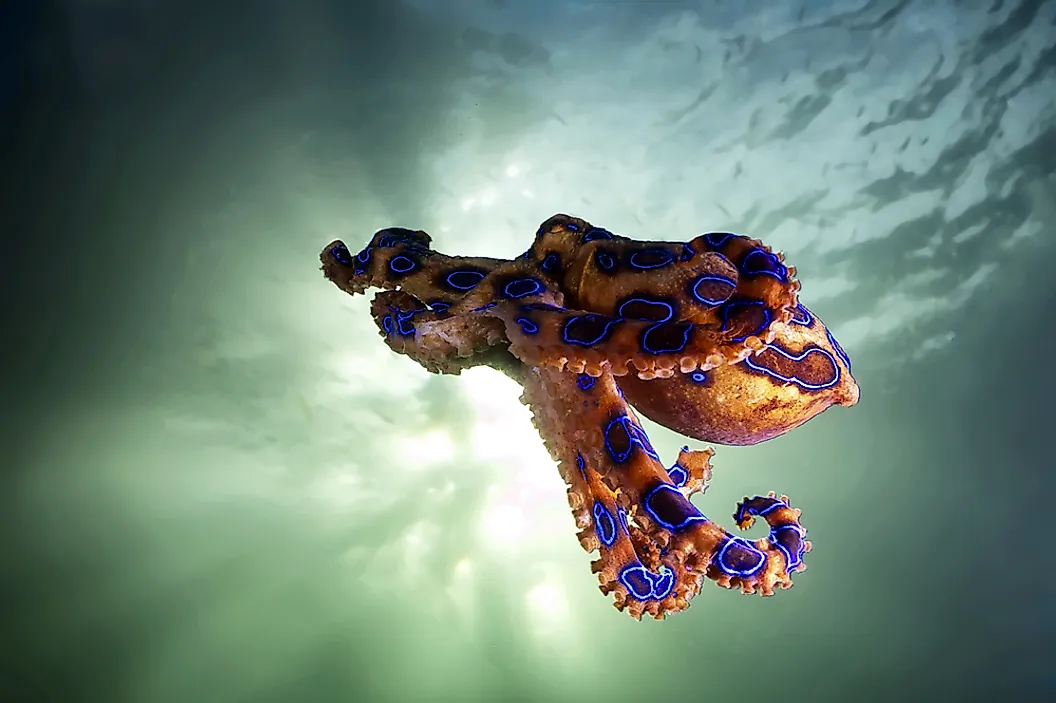
Barely the size of a golf ball, the blue-ringed octopus carries tetrodotoxin, the same neurotoxin found in pufferfish. It delivers the toxin through a small, often painless bite. The toxin blocks nerve signals and can cause fatal respiratory failure, and there's no antivenom. Treatment relies on keeping a victim breathing with mechanical support until the toxin clears the body.
Found across Australian and Indo-Pacific waters, its toxin is genuinely one of the most potent of any marine animal. At least three people have died from blue-ringed octopus bites, two in Australia and one in Singapore, according to the Australian Institute of Marine Science.
But bites remain rare because these octopuses are shy and generally only bite when threatened. Their toxin is extremely potent, but their low encounter and bite rates make the overall risk to humans much lower than their reputation might suggest.
Irukandji Box Jellyfish

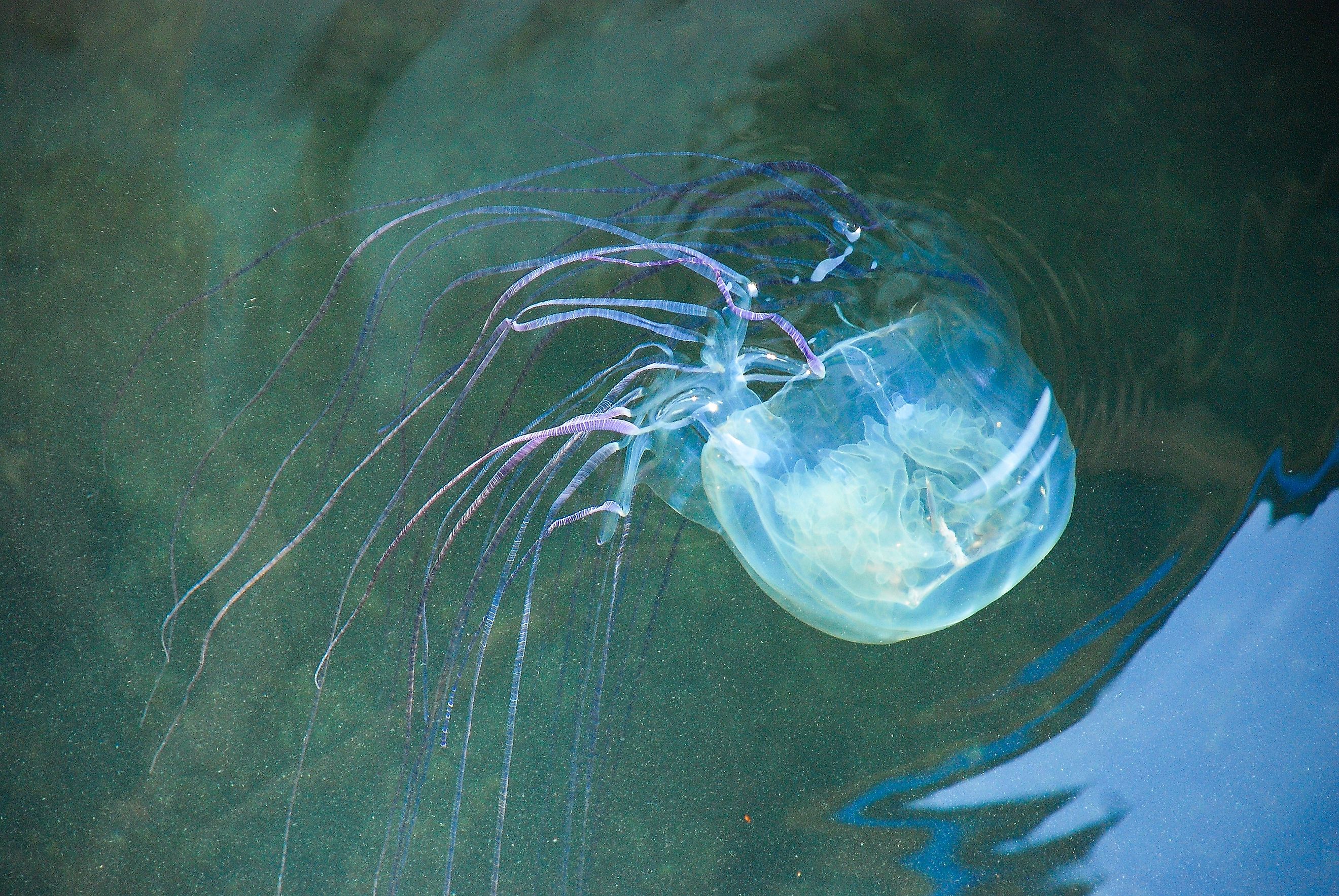
Smaller than a thumbnail, the Irukandji is one of the world's tiniest jellyfish. Some Irukandji species, including Carukia barnesi, measure less than an inch across, with thin, nearly invisible tentacles that can stretch much farther than the body itself.
They're best known from the tropical waters of northern Australia, though similar species turn up in other tropical and subtropical waters. An Irukandji sting can feel mild at first, but symptoms can escalate within minutes into full Irukandji syndrome. This includes intense muscle pain, headaches, nausea, vomiting, breathing problems, and dangerously high blood pressure.
In rare cases, it's fatal. Despite the reputation, serious stings remain uncommon, even in areas such as Australia's Great Barrier Reef.
Venomous, But Not Among The Worst

Several familiar US marine animals are venomous without ranking among the highest-risk species.
Lionfish, an invasive species now established across the Atlantic and Gulf coasts, deliver a genuinely painful sting through venomous dorsal spines. But lionfish venom causes intense pain, not the kind of systemic, often-fatal effects seen in stonefish or box jellyfish venom. Their bigger concern is the damage they can cause to native marine life, not their toxicology.
Stingrays deliver a venomous, extremely painful puncture wound through a barbed tail. But fatalities are exceptionally rare; most stingray injuries are dangerous because of the physical wound and infection risk, not the venom's potency.
The Portuguese man o' war is probably the animal readers most expect, given how often it turns up in "deadly ocean creatures" content. It isn't a true jellyfish. It is a colony of specialized organisms that work together. Its sting can be very painful and occasionally serious, but its venom is not as potent or deadly as that of the stonefish or the box jellyfish.
Potency Is Not The Whole Story
There is no single most venomous creature in the sea. Venom potency, encounter rates, and the number of serious or fatal injuries all tell a different story. The most dangerous animals are often the ones that are hardest to see, easiest to overlook, or least likely to attract attention. Some live far away in the Indo-Pacific, and others, like cone snails, can be found much closer to US shores.