How Senegal's Niokolo Koba Came Back From The Brink
On July 24, 2024, at the 46th session of the UNESCO World Heritage Committee in New Delhi, Niokolo Koba National Park in southeastern Senegal was removed from the List of World Heritage in Danger. The park had been on that list for 17 years. The delisting marked the end of a long conservation arc that began with one of the most catastrophic wildlife declines anywhere in West Africa, an arc that has since produced a doubled lion population, the rediscovery of a giant pangolin not seen in the country in 24 years, and the survival of the last known African wild dogs in West Africa. This is the story of what changed.
The Park

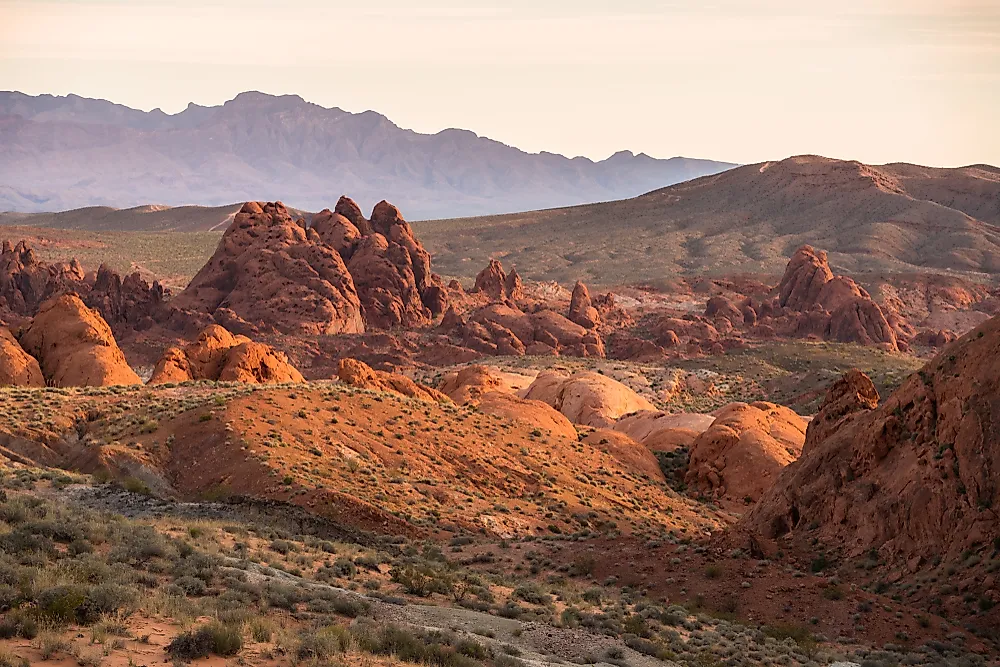
Niokolo Koba covers 9,130 square kilometers (3,500 square miles) of savanna, gallery forest, and floodplain in eastern Senegal, bordering Guinea and lying close to the Gambia. The park is contiguous with Badiar National Park across the Guinean border, forming a single trans-boundary ecosystem along the upper reaches of the Gambia River. It is the second-largest national park in West Africa. The protected area was first established as a faunal reserve in 1925, declared a national park on January 1, 1954, expanded in 1969, inscribed as a UNESCO World Heritage Site in 1981 (and a UNESCO-MAB Biosphere Reserve), then added to the List of World Heritage in Danger in 2007 due to commercial poaching, livestock encroachment, basalt mining, and proposals for the Sambangalou dam upstream on the Gambia River.
A 2006 census carried out by the African Parks Foundation found that populations of hartebeest, buffalo, kob, waterbuck, and roan antelope had each declined by more than 90 percent compared with a 1990-91 baseline. Elephants, lions, leopards, and wild dogs were all reduced to fragments of their historic numbers. Among them: West African lions, which the park's first systematic survey (carried out by Panthera in 2011) counted at only 10 to 15 individuals. Panthera, the global wild cat conservation organization, would return formally in 2017 under a long-term partnership with Senegal's Direction des Parcs Nationaux (DPN). That partnership is the proximate cause of nearly everything that followed.
Florence And The West African Lion

The West African lion is a distinct genetic clade, part of the Northern lion subspecies that also includes the Asiatic lion of Gujarat. It is characterized by a thin mane and a lankier build than the southern lions of the Serengeti or the Okavango. Only 120 to 374 West African lions are estimated to remain in the wild, the species having lost roughly 99 percent of its historic range. Niokolo Koba holds one of just two viable populations left in West Africa (the other is the W-Arly-Pendjari Complex straddling Benin, Burkina Faso, and Niger), and the W-Arly-Pendjari population is itself under heavy political and security pressure.
In June 2021, Panthera and DPN collared their first lion in Senegal: a roughly 9-year-old lioness named Florence, or "Flo," a member of the Simenti pride. It was the first lion ever fitted with a GPS collar in the country. Over the following years Florence produced three litters totaling nine cubs, accounting for approximately one third of the park's entire lion population. Three of her male cubs eventually formed the park's first male coalition, a social structure that lions only form when numbers are high enough to warrant competition between males. By the time of the UNESCO delisting in 2024, the lion population had grown to roughly 40 individuals, up from the 10 to 15 of 2011 and the 29 recorded in 2021. In May 2022, six West African lions in Niokolo Koba were GPS-collared in a single operation. Panthera's stated goal is 50 lions by 2025 and 100 by 2030, with the park's long-term carrying capacity estimated at 180 to 240 animals.
Florence herself was not recorded on any camera trap, by any ranger, or by any visiting tourist during all of 2024, a gap that worried Panthera's monitoring team through the 2025 large carnivore census. Whether or not Flo reappears, the Panthera West and Central Africa Regional Director Dr. Philipp Henschel has said that "when the history of Niokolo Koba's recovery is written, Florence above all others will likely be recognized as the critical driver of West African lion recovery in one of this big cat's last strongholds." The 2024 IUCN assessment continues to list lions globally as Vulnerable, with the West African subpopulation classified as Critically Endangered.
The Region's Largest Leopard Population

Niokolo Koba holds the largest remaining leopard population in West Africa, estimated at around 400 individuals. The species has lost between 86 and 95 percent of its historical distribution in the region, double the rate of leopard range loss across the African continent as a whole. The Panthera Leopard Program, led by Dr. Guy Balme, ran a multi-year camera trap survey in five potential West African leopard strongholds: Niokolo Koba, the W-Arly-Pendjari (WAP) Complex across Benin/Burkina Faso/Niger, Taï and Comoé National Parks in Côte d'Ivoire, and Mole National Park in Ghana. The Niokolo Koba phase of the project established the park as the single most important leopard refuge in the region.

The 2023 camera trap survey alone deployed 217 cameras across 111 stations covering roughly 52 percent of the park (about 4,392 square kilometers). The same survey documented 44 wildlife species and contributed the dataset that supported the UNESCO delisting decision. Camera trap data also fed into Panthera's anti-poaching strategy: patrol distances increased five-fold between 2017 and 2024, and signs of poaching in the original pilot area (covering 25 percent of the park) dropped by 87 percent over that period.
West Africa's Last African Wild Dogs

The African wild dog (Lycaon pictus), specifically the West African subspecies (Lycaon pictus manguensis), has all but disappeared from the rest of West Africa. Niokolo Koba is the last confirmed stronghold for the species in the region. The 2021 camera trap images that first prompted this article (showing a pack including pups roughly six to eight months old) suggested an actively breeding group that was likely using the dry riverbed of the Niokolo River as a movement corridor. The IUCN SOS subsequently funded an emergency conservation programme for these wild dogs, including faecal DNA analysis to estimate pack size and genetic diversity across the park.
African wild dogs are wide-ranging and extremely shy of humans, so direct observation is rare. The camera trap network has been the only practical way to monitor them. Across the broader continent, the species is classified as Endangered on the IUCN Red List, with population estimates of roughly 6,000 adult individuals globally.
The Ghost Elephant And A Quiet Comeback

The African elephant situation in Niokolo Koba is the bleakest of the park's headline species. Decades of poaching for ivory and meat have reduced the park's elephants to what may be a single bull, photographed periodically by Panthera and DPN camera traps and nicknamed the "Ghost Elephant" by researchers. The African savanna elephant (Loxodonta africana) was listed as Endangered by the IUCN on March 25, 2021, separated from the African forest elephant (Loxodonta cyclotis) into two species in that same assessment. The Ghost Elephant was captured on video again in the 2023-2024 monitoring cycle, sparking discussions among researchers about the technical feasibility of relocating elephants from other parts of Africa to rebuild a breeding population at Niokolo Koba. DNA extraction from dung samples continues across the park in case additional individuals are present but uncaptured by the camera network.
The Giant Pangolin Returns After 24 Years

At 1:37 AM local time on March 8, 2023, a Bushnell camera trap deployed in a dry riverbed in the eastern part of Niokolo Koba photographed a giant pangolin (Smutsia gigantea). It was the first objectively documented evidence of the species in Senegal since 1967, and the first photograph of the species in the park since 1999. The rediscovery was published on April 26, 2024, in the African Journal of Ecology by Mouhamadou Mody Ndiaye, Marine Drouilly, Philipp Henschel, and colleagues, drawing on the Panthera/DPN survey that had also identified the resurgent lion population. Giant pangolins are nocturnal, solitary, and rarely seen outside their burrows, which makes the species especially difficult to detect; only 5.3 percent of West African protected areas have any documented evidence of their presence.
The giant pangolin is currently listed as Endangered on the IUCN Red List, with populations across its range collapsing under pressure from the global pangolin scale trade. The Niokolo Koba photograph confirms that the park represents one of the last sites in West Africa where the species still occurs. The same camera trap network has also documented the Western Derby eland (Taurotragus derbianus derbianus), the largest antelope species in the world, which now survives in only one wild population, located inside Niokolo Koba.
Other Species On Camera

Beyond the headline carnivores, Niokolo Koba's camera network has documented more than 70 mammal species, 329 bird species, 36 reptile species, and 20 amphibian species across more than 1,500 plant species. Among the documented mammals: Guinea baboon (Papio papio), Western chimpanzee (Pan troglodytes verus, of which around 23 individuals are estimated to occur in the park), green monkey, patas monkey, Western red colobus, roan antelope, African buffalo, common warthog, spotted hyena, African civet, and several porcupine and small carnivore species. The Western chimpanzee population is considered stable. A 2025 study published in Ecology and Evolution documented primates entering aardvark burrows around the Niokolodge ecotourism facility, raising potential One Health questions about zoonotic disease pathways between burrow-using mammals.

Bird species documented include the Abyssinian ground hornbill (Bucorvus abyssinicus), Arabian bustard, black-crowned crane, martial eagle, bateleur, and white-faced whistling duck. The park is a designated Important Bird Area under BirdLife International criteria.
What Got The Park Off The Endangered List

The UNESCO World Heritage Committee cited several specific reasons for the July 24, 2024, delisting. Monitoring of emblematic species had been significantly stepped up. Anti-poaching surveillance had expanded across the entire park rather than the pilot zone. A mine pollution control system had been installed at the eastern border. Water and soil analysis equipment had been deployed. A formal program to control the invasive shrub Mimosa pigra had been implemented. Senegal had also formally committed to reappraise development plans, including the proposed Sambangalou dam upstream, that had originally triggered the in-danger inscription.
The seven-year arc of improvement, from roughly 2017 onward, mapped almost exactly onto the Panthera-DPN partnership. Other partners played important supporting roles, including the Leo Foundation (which organized a June 2024 ranger training in collaboration with the Great Plains Foundation), the Lion Recovery Fund (which financed the lion population recovery target), the Royal Commission of AlUla (Saudi Arabia), and the European Union-funded BIOPAMA Programme. The 2024 delisting was the result of these layered, sustained interventions rather than any single program. As Panthera's regional director Dr. Henschel put it after the decision, the park retains the potential to be "nurtured into the Serengeti of West Africa" if current investments continue.
What Comes Next
The delisting does not mean the threats are gone. The 2024 IUCN assessment still classifies West African lions as Critically Endangered. The African wild dog population in the park remains small enough to depend heavily on the Niokolo River corridor for movement. The Ghost Elephant may or may not have produced offspring. The Sambangalou dam proposal remains live in the regional development pipeline. The invasive Mimosa pigra has been pushed back but not eliminated. What has changed is the trajectory: from sustained collapse across the late 20th century to measurable, monitored recovery across the past decade. The Niokolo Koba model has already begun informing conservation strategies at the W-Arly-Pendjari Complex and other West African protected areas. The next decade will test whether this is a one-park exception or the start of a regional turnaround.