Ecosystem Engineer
- Ecosystem engineers modify, alter, create or destroy their habitat.
- There are two main types of ecosystem engineers, known as allogenic and autogenic.
- Ecosystem engineers are essential to the functionality of their given ecosystem and add diversity and richness
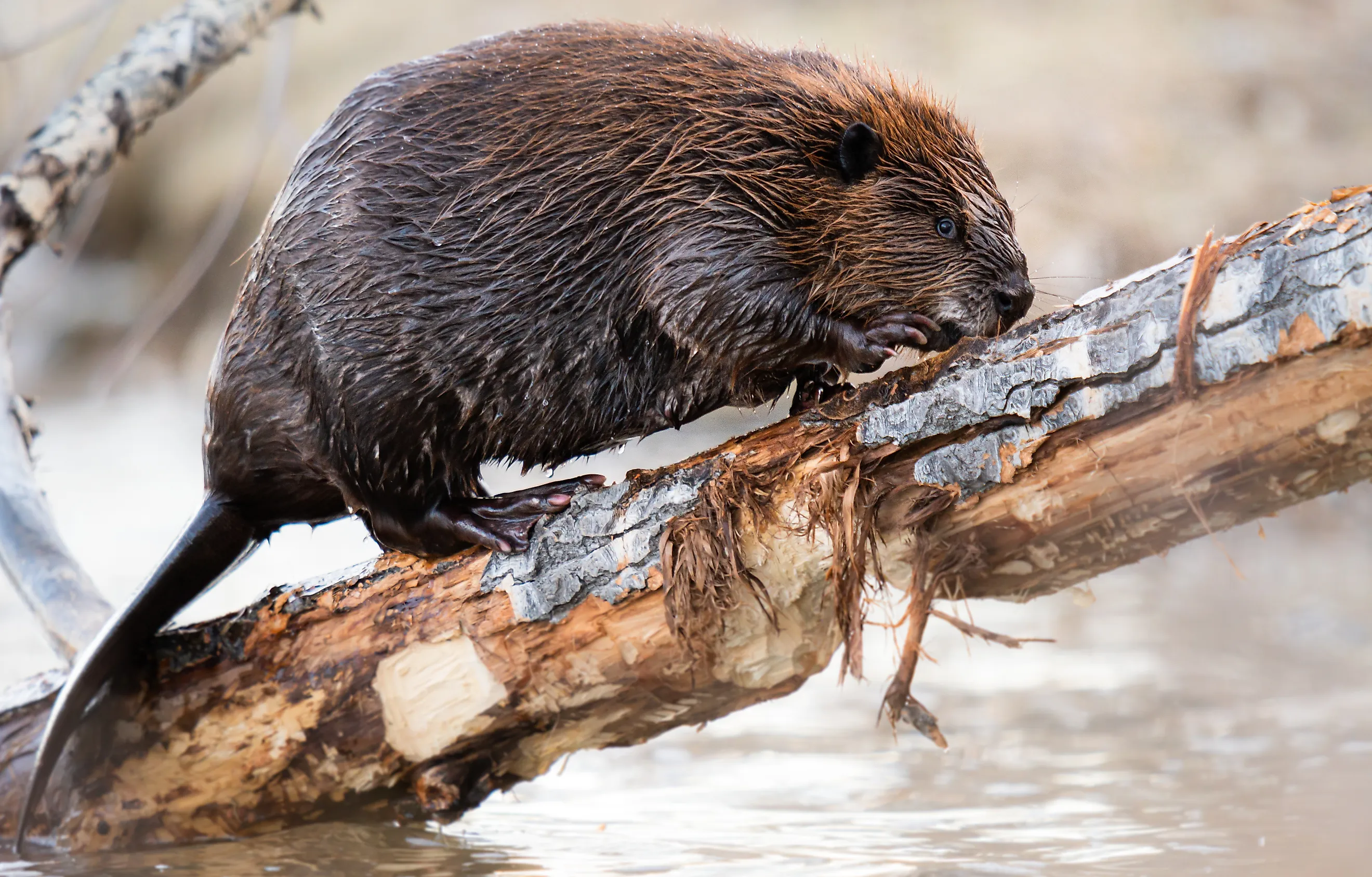
Some species shape their habitats so directly and on such a scale that without them the habitats themselves collapse or become unrecognizable. These are ecosystem engineers: organisms that build, modify, or maintain the physical structures and conditions that other species depend on. A beaver fells trees and dams streams, turning a flowing creek into a chain of ponds and the wetlands around them. Reef-building corals secrete the limestone framework that becomes the foundation for the most diverse marine habitats on Earth. African elephants knock down trees, dig waterholes, and disperse large seeds at a scale that shapes the structure of the savannas they live in. The term was formally defined by ecologists Clive Jones, John Lawton, and Moshe Shachak in a 1994 paper in the journal Oikos titled "Organisms as ecosystem engineers," and the framework has since become one of the most useful tools in conservation biology because it identifies the species whose disappearance produces the largest ripple effects across the ecosystems that depend on them.
Types of Ecosystem Engineers
Jones and his coauthors split ecosystem engineers into two categories based on how they act on their environment. The distinction matters because conservation strategies for the two groups can look very different.
Allogenic engineers alter the biophysical environment around them by physically transforming materials. They cut, dig, build, trample, dam, dredge, and dislodge. The most familiar example is the beaver, which fells trees with its incisors and uses the cut wood and mud to dam streams. The dam itself is the engineering output. The pond that forms behind it is the new habitat: slower water that supports amphibians, waterfowl, fish that need still pools, and aquatic vegetation that could not establish in a flowing creek. Other allogenic engineers include elephants, prairie dogs, gopher tortoises, badgers, woodpeckers, and the many burrowing rodents that turn soil over and create cavities used by dozens of secondary species.

Autogenic engineers alter their environment by what they themselves are made of and how they grow, rather than by acting on external materials. The most prominent autogenic engineers are large plants and reef-building organisms. As trees grow, their trunks and branches become substrate for vines, mosses, lichens, and epiphytes; nesting cavities for birds and small mammals; and corridors that connect canopies and let arboreal animals move across an entire forest without descending. Old-growth coast redwood and Douglas fir forests in the Pacific Northwest contain layered habitats that did not exist before the trees grew tall enough to create them. In the ocean, reef-building corals and oysters are autogenic engineers in the same sense: their bodies, alive or dead, are the structure that the surrounding community depends on.
Examples Across Land and Water

Beavers are the textbook case in temperate freshwater systems. North American beaver populations were trapped down by an estimated 90% during the 18th- and 19th-century fur trade, with knock-on consequences for stream hydrology, wetland habitat, and water tables across much of the continent. Beaver reintroduction and tolerance programs have expanded across the western United States, Britain, and Scandinavia over the last two decades. Eurasian beavers were officially reintroduced to England in 2022 after centuries of absence, and beaver-built wetlands are now studied as natural infrastructure for flood mitigation, drought buffering, and water purification.

Reef-building corals construct calcium-carbonate skeletons that accumulate over thousands of years to form the largest biological structures on Earth. Coral reefs cover less than 1% of the ocean floor but support roughly 25% of all marine species. Climate-driven bleaching events, ocean acidification, and pollution have produced steep coral declines worldwide; the Great Barrier Reef has experienced six mass bleaching events since 1998. Reef loss is a textbook ecosystem-engineer collapse, since the entire community of fish, invertebrates, and seaweeds depends on the reef framework persisting.

African elephants are the largest living terrestrial allogenic engineers. By pushing over and stripping trees, they prevent the closing of savanna canopy and maintain mixed grassland-woodland mosaics. By digging waterholes during droughts, they create water access for many smaller species. By passing large seeds through their digestive tracts and dispersing them in dung, they keep many tree species in circulation that no smaller animal can move. The decline of forest elephants in Central Africa, driven by poaching, has been linked to measurable reductions in the density of large fruit-bearing trees, with implications for forest carbon storage as well as biodiversity.

Prairie dogs were once estimated at over five billion individuals across the North American Great Plains. Their colonies, called towns, can cover thousands of acres and consist of interconnected burrow systems that aerate soil, recycle nutrients, and provide habitat for at least 150 documented secondary species, including the burrowing owl, swift fox, ferruginous hawk, and the black-footed ferret, whose entire wild range collapsed when prairie dog populations did. Black-tailed prairie dog numbers have fallen by an estimated 95% from historical levels through poisoning, plague, and habitat conversion. Black-footed ferret recovery has been entirely contingent on prairie dog conservation.

Earthworms are the engineers Charles Darwin spent his last book on. The Formation of Vegetable Mould Through the Action of Worms, published in 1881, documented how earthworms turn over the entire upper soil layer of a temperate landscape every few decades, mixing organic matter with mineral soil, creating drainage channels, and laying the foundation for the soils that almost all terrestrial plants depend on. The same group of organisms can also be ecosystem disruptors when introduced outside their native range. Invasive European earthworms in the previously worm-free forests of the upper Midwest and Great Lakes have transformed forest floor structure, accelerated leaf-litter decomposition, and reduced understory plant diversity in measurable ways.

Sea otters are an allogenic engineer that operates by predation rather than construction. By eating sea urchins, otters prevent the urchins from grazing kelp forests down to bare rock, and intact kelp forests are themselves autogenic engineers that support hundreds of species and store substantial coastal carbon. The collapse of sea otter populations along the Pacific coast through the 19th-century fur trade was followed by widespread urchin barrens. Otter recovery, where it has happened, has been followed by kelp forest recovery, with knock-on effects on fish, invertebrates, and shorebird populations.

Mangroves are autogenic engineers in tropical coastal zones, where their dense root systems trap sediment, build land, attenuate wave energy, and create nursery habitat for many commercially important fish species. Roughly 20% to 35% of global mangrove cover has been lost to coastal development, aquaculture, and conversion to agriculture since the 1980s. Mangrove restoration is now one of the most-funded ecosystem-engineer conservation strategies, both for biodiversity and for storm protection.

Salmon connect ocean ecosystems to inland forests in a way few other species do. Spawning salmon return marine-derived nitrogen, phosphorus, and other nutrients from the ocean to the rivers and streams where they hatch, and bears, eagles, and other predators distribute salmon carcasses across the surrounding forest. Studies of Pacific Northwest watersheds have shown measurable marine-origin nitrogen in tree growth rings hundreds of meters from spawning streams. Salmon are not engineers in the construction sense, but in the nutrient-flow sense they perform an analogous function, and the collapse of salmon runs has cascading consequences for inland forest productivity.
Why Ecosystem Engineers Matter for Conservation
The ecosystem-engineer concept matters in conservation for one central reason: the loss of an engineer rarely produces a one-for-one decline. It produces a cascade. Removing beavers from a watershed does not merely remove beavers; it eliminates the wetlands those beavers built, along with the amphibians, waterfowl, fish, and water-table function that depended on those wetlands. Removing prairie dogs from a grassland does not merely remove prairie dogs; it eliminates the burrow systems and aerated soil that 150 other species use. Coral bleaching does not merely kill the corals; it strips the structure on which a quarter of marine biodiversity is built.
The same logic works in reverse. Restoring an ecosystem engineer can recover habitat function faster and more broadly than almost any other conservation intervention. Beaver reintroductions in the western United States and Britain have produced documented recoveries of riparian vegetation, fish populations, and water storage capacity within years. Sea otter recovery has restored kelp forests across stretches of the Pacific coast. Reintroduction of bison to the American Plains, where it has been pursued at scale, has begun to restore the patchy grazing and wallowing patterns that supported native grassland diversity.
Conservationists increasingly use the ecosystem-engineer framework to prioritize species for protection. A small fish that lives only in a single ecosystem-engineer-built habitat may matter less, in functional terms, than the engineer that built the habitat in the first place. The framework also informs restoration ecology: rather than trying to recreate an entire community species by species, restoration projects increasingly focus on returning the engineer and letting the rest of the community reassemble around it.
The Limits of the Framework
Not every species that affects its environment counts as an ecosystem engineer in the technical sense, and the framework has real limits. Jones and his coauthors specifically excluded effects that operate primarily through trophic interactions (predation, herbivory) from the original definition, although later authors have argued for a broader reading. The line between "engineer" and "ordinary participant" is sometimes blurry, and the same species may be a clear engineer in one setting and a minor presence in another. The concept also overlaps with related terms, particularly "keystone species," which describes species with disproportionately large effects relative to their abundance regardless of mechanism. Many keystone species are also ecosystem engineers, but not all ecosystem engineers are keystone species, and not all keystone species are engineers.
Despite these caveats, the ecosystem-engineer framework has held up because it captures a structural feature of ecological communities that other concepts miss. A small number of species build the physical and chemical scaffolding that the rest of the community lives in. Identifying those species, protecting the ones that remain, and restoring the ones that have been lost is one of the more concrete and tractable problems in modern conservation biology.