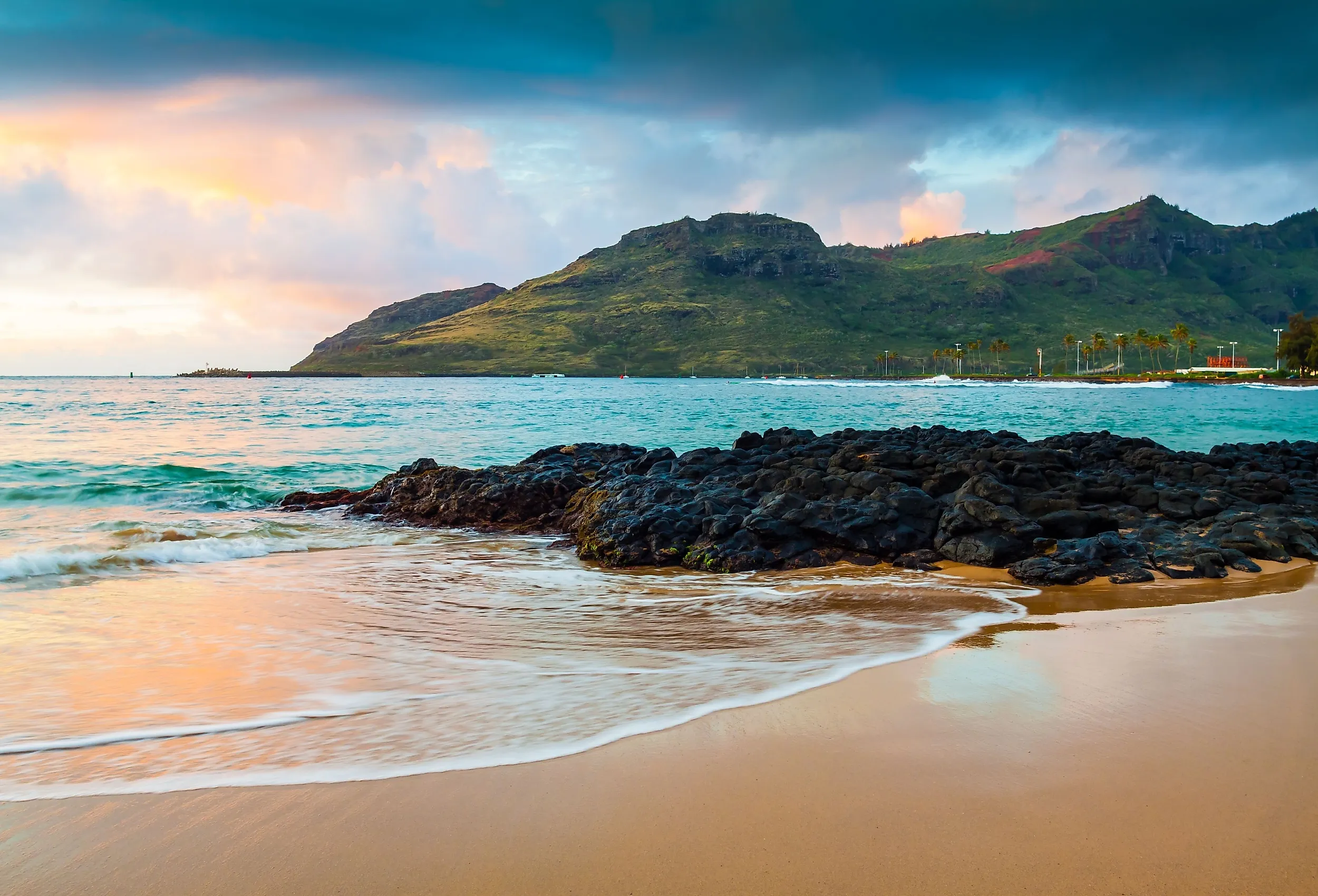
Why Hawaii Has No Native Snakes
Hawaii has no native land snakes for one simple reason: the islands rose out of the open Pacific Ocean from a volcanic hotspot, never connected to any continent, and snakes cannot swim 2,300 miles. Every plant and animal native to the Hawaiian Islands had to arrive by air, by floating, or by hitching on something else. Snakes can do none of those things. They are sensitive to saltwater, cannot survive weeks at sea without food, and the ocean currents that reach Hawaii do not originate from anywhere snake populations are dense. The result is one of the few large landscapes on Earth where snakes simply do not belong, and a wildlife system that evolved over millions of years without any defense against them.
That absence is more than a tourist convenience. Every snake that has appeared on land in Hawaii has arrived illegally as a pet or accidentally as a stowaway in cargo. State law treats their possession as a class C felony punishable by up to $200,000 in fines and three years in prison. The reason for that severity sits about 3,800 miles west of Honolulu, on the island of Guam, where a single introduced snake species has destroyed the local bird population and continues to cause hundreds of power outages a year. Hawaii has spent decades trying to make sure the same does not happen there.
Hawaii's Volcanic Origins

Hawaii formed from a volcanic hotspot in the middle of the Pacific. For millions of years, a plume of magma has punched up through the Pacific Plate as it drifts northwest, piling up shield volcanoes one after another to form the Hawaiian-Emperor seamount chain. The Big Island is still growing because two of its massive volcanoes, Mauna Loa and Kīlauea, are both active. When lava flows down their slopes and reaches the ocean, it cools and hardens, adding new land to the island. Kīlauea's 1983 to 2018 eruption sequence alone added more than 500 acres of new land to the Big Island, and the 2018 lower East Rift Zone eruption added another 875 acres.
Hawaii was never connected to any continent. There are no land bridges, no shallow continental shelves, and no stepping-stone paths from Asia or North America. Every native plant and animal on the islands arrived across thousands of kilometers of open ocean. Birds could fly. Seeds could float on currents or be blown in on storms. Insects could ride hurricane systems. But snakes (and frogs, and most mammals) had no way of making the crossing. As evolutionary biologist Robert C. Thomson of the University of Hawaii at Mānoa has put it, the same isolation that allowed Hawaii to develop so many unique endemic species also kept others out entirely. The ocean acted like a filter.
Why Snakes Never Reached Hawaii

For any species to establish itself on a remote island, three conditions have to line up. It has to survive the trip. It has to arrive with enough members to reproduce. And it has to find suitable conditions on arrival. In their 1967 book "The Theory of Island Biogeography," ecologists Robert MacArthur and E.O. Wilson showed that the chance of a species reaching an island falls steeply with distance and that the chance of it persisting falls with island size. Hawaii is small, remote, and located on the side of the Pacific where the prevailing currents come from snake-poor regions. Snakes never had a real shot.
Their physiology made the odds even worse. Land snakes are sensitive to prolonged saltwater exposure, which damages their skin and disrupts their internal salt balance. They cannot survive multi-week ocean crossings without food. And unlike sea turtles or marine iguanas, no land snake species has evolved adaptations for true long-distance ocean dispersal. The one snake that genuinely is adapted to ocean travel, the yellow-bellied sea snake, does occasionally turn up in Hawaiian waters, but it is a fully marine species that hunts in open ocean and rarely comes ashore.
Hawaii Has No Native Land Reptiles At All

The absence of snakes is part of a broader pattern. Hawaii has no native terrestrial reptiles and no native amphibians of any kind. All the gecko and skink species visitors see on the islands were introduced by humans, most accidentally through cargo ships and shipping containers. Five species of marine turtles are native to Hawaiian waters, including the green sea turtle (honu) and the hawksbill (honuʻea), but they live in the ocean and only come ashore to nest.
Two snake species have established a limited presence on the islands, both through human activity. The Brahminy blind snake is tiny, harmless, soil-dwelling, and parthenogenetic (it reproduces from unfertilized eggs, so a single individual can establish a population). It arrived in Hawaii through the horticultural trade in plant root balls. The yellow-bellied sea snake is the marine species mentioned above, which occasionally washes ashore during storms but has never established a land population.
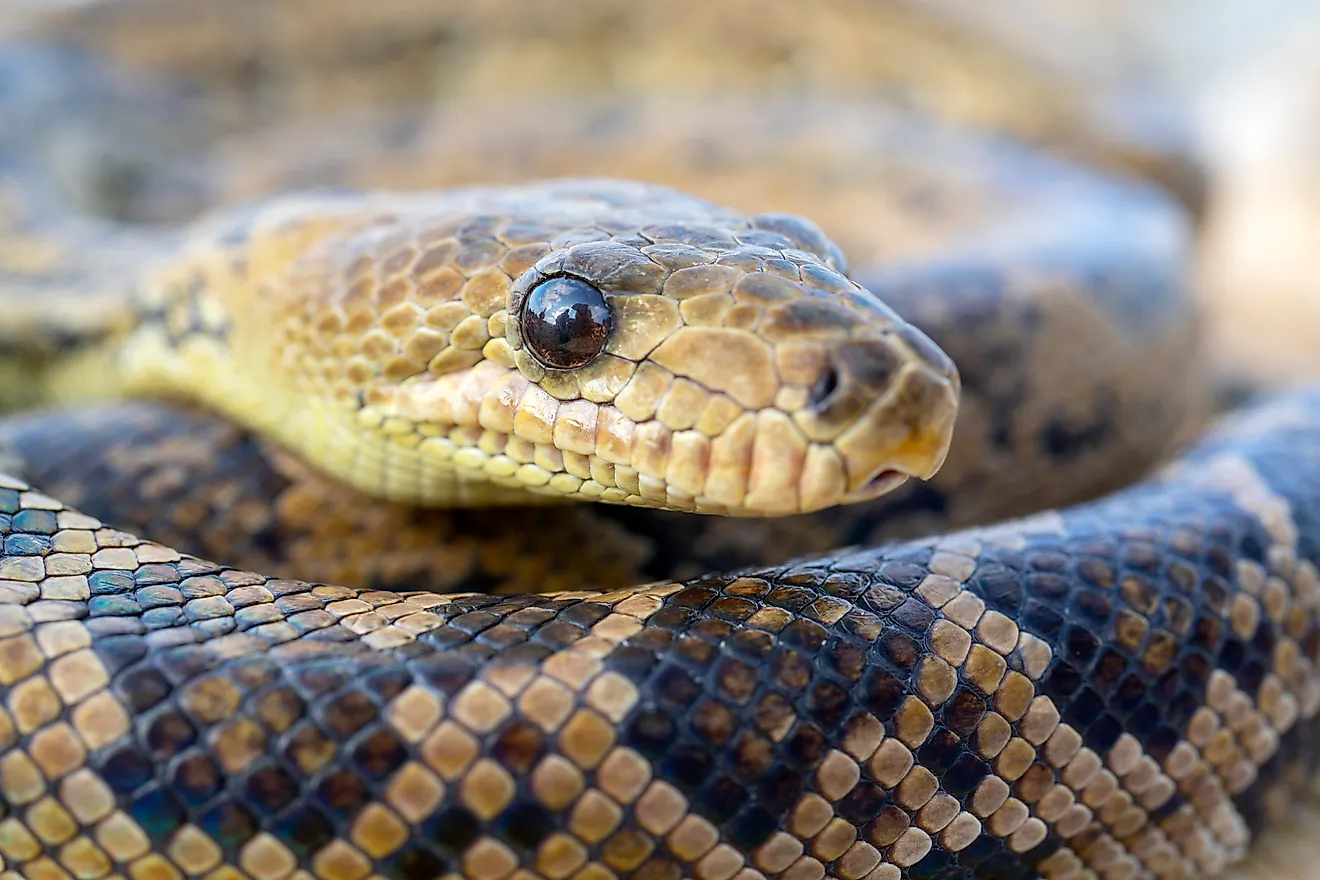
Other snake species have turned up sporadically as illegal pets, escapees, or accidental stowaways. Hawaii Department of Agriculture records over the past decade include captured corn snakes, ball pythons, gopher snakes, boa constrictors, and garter snakes. None has established a permanent population, in part because of the rapid-response system Hawaii has built around any sighting.
The Cost Of Snake-Free Evolution

The absence of snakes over millions of years did not leave Hawaiian wildlife untouched. It actively shaped how those species behave, where they nest, and what they recognize as a threat. A peer-reviewed 2020 study published in Ecology and Evolution tested this directly. Researchers at Hakalau Forest National Wildlife Refuge on Hawaii Island presented native Hawaiian forest birds and introduced bird species with three stimuli at their nests: a rat model, a snake model, and a tree branch as a control.
Every endemic Hawaiian bird species tested, including the ʻElepaio, ʻŌmaʻo, Hawaiʻi ʻAmakihi, and ʻIʻiwi, showed no defensive response to the snake. They simply did not recognize it as a predator. The red-billed leiothrix, an Asian species introduced to Hawaii about a century ago, retained its ancestral ability to identify snakes as a threat. The study concluded that native Hawaiian birds are exceptionally vulnerable to snake predation because they have no evolved recognition of snakes at all. Many of these species nest on the ground or in low shrubs, which would have been safe behavior in a snake-free environment and which would be catastrophic if snakes ever established.
Why Even One Snake Is A Serious Problem

Island ecosystems are uniquely vulnerable to new predators, and snakes are among the hardest invaders to control once they arrive. A single fertilized female is enough to start a population because many snake species store viable sperm for extended periods after a single mating. The 2012 paper "Exceptional long-term sperm storage by a female vertebrate" documented a captive eastern diamondback rattlesnake that produced healthy offspring from sperm stored for 71 months, nearly six years, the longest confirmed record in any female vertebrate.
Once snakes are established, detection becomes the hardest problem. They are nocturnal, secretive, and excellent climbers. USGS research on brown treesnakes has repeatedly confirmed that visual detection probability collapses at low densities, so by the time sightings become common, the population is already too large to eradicate. The window between "first arrival" and "established invasion that cannot be reversed" is narrow.
Guam's Brown Treesnake Crisis: A Warning For Hawaii

Guam is what Hawaii is working to prevent. The brown treesnake (Boiga irregularis), native to Papua New Guinea, the Solomon Islands, and parts of Indonesia and Australia, arrived on Guam shortly after World War II, almost certainly as a stowaway in military cargo. The first sightings were inland from Guam's seaport in the early 1950s. By the 1960s the snakes were widespread, and by the early 1980s their density had reached an estimated 100 individuals per hectare in some areas, among the highest snake densities ever recorded.
Guam's native landbirds collapsed in parallel. Of the 12 native forest bird species present before the snake arrived, ten have been extirpated from the main island and several exist nowhere else. The koʻkoʻ (Guam rail) survived only because biologists captured 21 birds in 1987 and began a captive breeding program; they were reintroduced to Rota and to the small offshore Cocos Island in the 1990s. Several lizard species and the Mariana fruit bat have also been pushed to the edge.
The economic damage has been almost as dramatic. The brown treesnake is an excellent climber and is drawn to power lines, where its long body bridges live conductors and causes short circuits. A peer-reviewed analysis in Biological Conservation documented more than 1,600 snake-caused power outages on Guam between 1978 and 1997, with single islandwide outages costing in excess of $3 million each. In some forested areas of Guam, brown treesnake densities reach an estimated 13,000 snakes per square mile. The US Department of Agriculture's National Wildlife Research Center has estimated that if brown treesnakes ever established themselves in Hawaii, the annual economic damage would fall between $593 million and $2.14 billion. In October 2020, brown treesnakes were discovered on Cocos Island, a 33-hectare (83-acre) atoll about 1.5 miles off the southwest coast of Guam, the first time the species has established a population outside Guam itself. The discovery confirmed how rapidly the snake can spread along active shipping routes if biosecurity slips.
How Snakes Reach Hawaii And How The State Responds

Snakes do not reach Hawaii naturally. Every documented arrival has come through human activity: cargo shipments, military aircraft, shipping containers, nursery plants, and illegal pet imports. The Guam-to-Hawaii cargo route is the highest-risk pathway and receives the most surveillance. Hawaii's response combines strict laws, multilayered cargo inspections, and biological detection.
Possessing or transporting a snake in Hawaii without authorization is a class C felony, punishable by fines up to $200,000 and up to three years in prison. The state runs a no-questions-asked amnesty program at any Hawaii Department of Agriculture office, the Honolulu Zoo, the Pana'ewa Rainforest Zoo in Hilo, and any Humane Society location, in part because officials would rather take in a snake than have someone release it into the wild. The Hawaii Department of Agriculture's Plant Quarantine Branch operates a detector dog program that inspects incoming flights and cargo from Guam and other risk areas; in 2023 the branch conducted 1,037 brown-treesnake-targeted inspections, and the dog program added another 510. Permanent snake traps are maintained along the perimeter of Hickam airfield and at Daniel K. Inouye International Airport.
In August 2024, the US Department of the Interior approved more than $3.66 million for brown treesnake control across the Pacific, of which $375,000 went directly to Hawaii's interdiction and detector-dog program. The remainder funded USGS research, the multi-agency Brown Treesnake Rapid Response Team, the CNMI interdiction program, and US Fish and Wildlife Service coordination. The last brown treesnake found alive in Hawaii was discovered dead in 1998, a record Hawaii is working hard to preserve.
What Travelers Need To Know

For visitors, the practical reality is straightforward. There are no native snakes anywhere in Hawaii. You will not see one on trails, on beaches, or anywhere on land. The only snake that turns up in Hawaiian waters is the yellow-bellied sea snake, which stays well offshore and rarely interacts with people; it is venomous but not aggressive and only dangerous if handled. If you do see a snake anywhere in Hawaii (in cargo areas, on a hike, at a harbor, anywhere) do not approach it, do not handle it, and do not try to capture or kill it. Call the Hawaii Department of Agriculture's statewide PEST Hotline at 808-643-PEST (7378) immediately. Every reported sighting triggers a rapid response, because Hawaii has built one of the most aggressive island biosecurity systems in the world specifically to keep an ecosystem that took millions of years to evolve from being unraveled by a single careless cargo shipment.