Why Some National Parks Have No Large Predators At All
The geographic isolation of Haleakala National Park has prevented large terrestrial predators from ever naturally reaching the Hawaiian Islands. The extreme desert environment of White Sands National Park has allowed the introduced African oryx to thrive without their population being naturally controlled by large predators. Black bears and mountain lions were eradicated from Congaree National Park during the 19th century due to hunting, land clearing and habitat loss. The absence of large predators changes how visitors experience national parks in the United States. While Yellowstone National Park is known for its large concentrations of grizzly bears, visitors to the following national parks do not need to plan around the possibility of encountering a bear or mountain lion on the trail.
Dry Tortugas National Park, Florida

American alligators are synonymous with water in Florida. But not in Dry Tortugas National Park. At 70 miles west of Key West, this national park is mostly open water with seven small islands. It is so remote it is only accessible by boat or seaplane. Not only does the park's geographic isolation prevent large predators from getting there, but even if they did, they would not be able to sustain themselves. The clue is in the name. Dry Tortugas lacks any natural sources of freshwater. Most of the wildlife lives below the surface of the turquoise water. Visitors can confidently camp on the beach and snorkel through coral reefs alongside over 400 species of fish, five species of turtle, and nurse sharks. Many people safely swim and snorkel near these docile sharks without incident.
Congaree National Park, South Carolina

Congaree National Park was once home to wolves, black bears, and mountain lions. But not anymore. The last wolves were shot and trapped out 200 years ago. Black bears occasionally crop up in the nearby Wateree Swamp, although sightings in the park remain elusive. Confirmed sightings of mountain lions are non-existent in South Carolina in modern times. Although the park contains the largest intact expanse of old-growth bottomland hardwood forest left in the southeastern United States, it is a relatively small national park at over 26,000 acres. The landscape has been altered by humans, such as the inclusion of a 2.6-mile-long boardwalk through the park. Despite waters from the Congaree and Wateree Rivers flowing through the floodplain, alligators remain a rare sight in the park, remaining deep in the park's backcountry and often unseen by people.
Mammoth Cave National Park, Kentucky

Deep in the recesses of the longest known cave system in the world, Mammoth Cave National Park is home to a variety of plant and animal life. Even after mapping over 400 miles of passageways, the end is still not in sight. Due to the darkness, there is not enough energy to support a large food web. It is only able to support small specialized predators like crayfish, cave fish, and bats, which visitors can observe on cave tours. There is more to the park than the cave, though. Above ground, there are over 80 miles of trails to explore in the park. Black bears were once in the area, although due to agricultural development and urbanization in the late 19th and 20th centuries, the population experienced a severe decline.
White Sands National Park, New Mexico

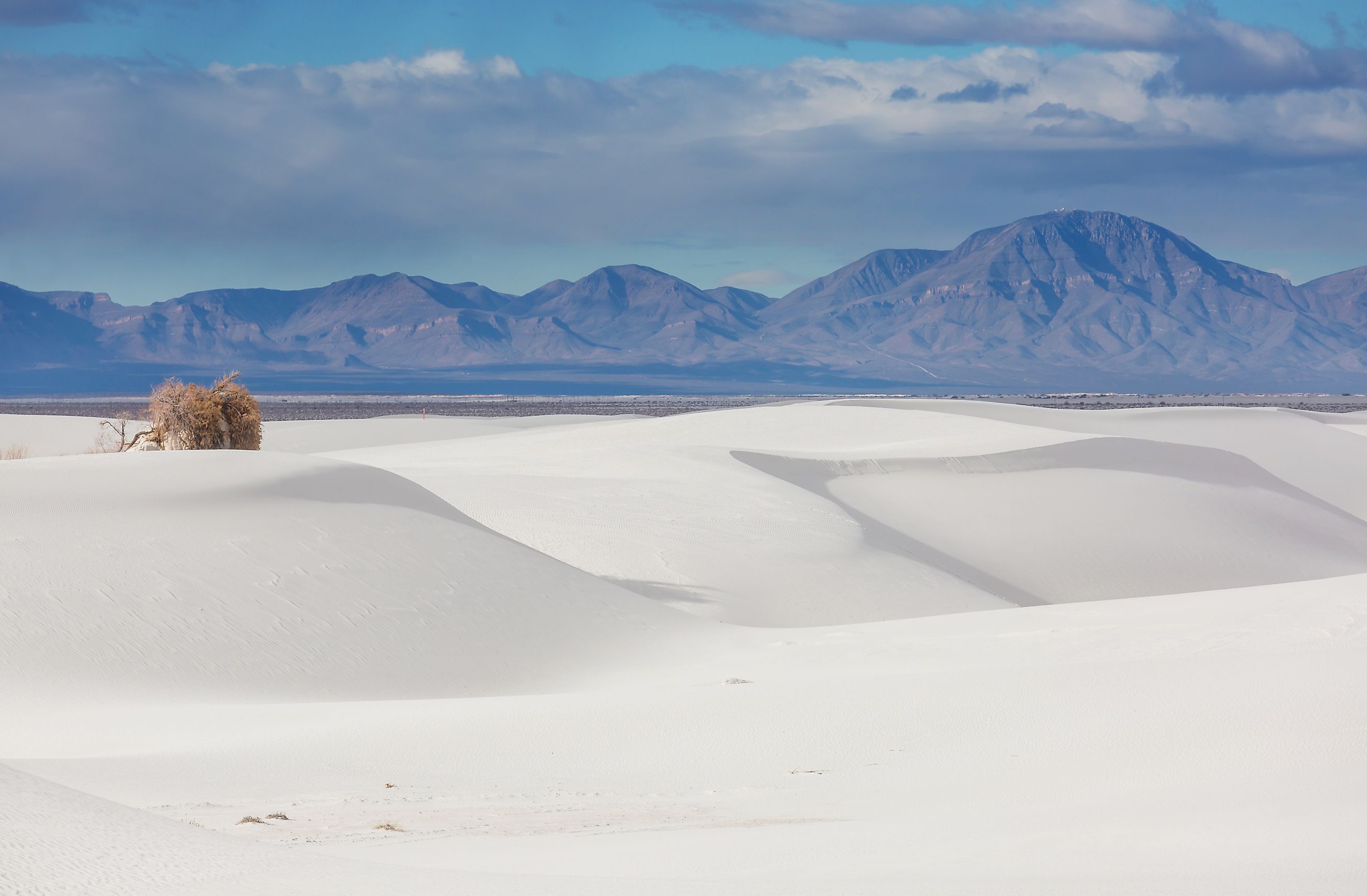
There is very little surface water. Most animals are nocturnal because of the intense daytime desert heat. Life at White Sands National Park must adapt to the harsh environment of the world's largest gypsum dune field. But large apex predators are absent from the park, while smaller predators like coyotes and bobcats are present. Bears and cougars instead live in the Rocky Mountain region of New Mexico. The 275 square miles of desert has allowed the African oryx, an introduced species, to promote big game hunting in New Mexico. While lions hunt them in Africa, there are no predators in the park that can effectively control the numbers. As a result, they have managed to thrive and reproduce by feeding on the abundance of desert grasses, yucca, buffalo gourds, and mesquite bean pods.
Theodore Roosevelt National Park, North Dakota

Coyotes are the most common predator in Theodore Roosevelt National Park, but they are no match for the American bison, the largest mammal in North America. Despite covering 70,000 acres of badlands and prairies in North Dakota, the park does not have enough habitat for predators big enough to hunt bison, like wolves, mountain lions, and grizzly bears. Although an occasional mountain lion may pass through the park, there are not any established individuals. When people started ranching and farming on the prairie, they changed the habitat that these animals needed to survive. While bison were driven locally extinct during the 1800s, they were reintroduced, unlike wolves and grizzly bears. Since there are no predators to naturally manage bison, some of them are rounded up every few years and given to Native American tribes, or other parks that need bison.
Channel Islands National Park, California

Channel Islands National Park doesn't just lack predators. It has a low species diversity in general, home to only four native land mammals. The park is composed of five islands off the coast of southern California. The largest mammal is the island fox, the smallest species of fox in North America and perfectly suited to island life. It is believed to have arrived on the Channel Islands thousands of years ago, likely brought by early Native peoples. These islands, along with others off the coast of California, never reconnected to the mainland during ice ages, meaning large terrestrial predators could not easily migrate onto them. Even if they could, island life is challenging. There is not enough space or prey that predators require. Instead, the island fox, at 13 inches tall and weighing up to five pounds, reigns supreme as the island's top predator.
Haleakala National Park, Hawaii

Hawaii is practically devoid of any native land animals. At 2,397 miles from San Francisco, the Hawaiian Islands are the most isolated chain of islands in the world. Large predators are not capable of swimming across thousands of miles of Pacific Ocean to reach the islands. The volcanic landscape of Haleakala National Park is mostly inhabited by native animals that are the descendants of those able to fly to the islands, like birds and bats, as well as those light enough to be carried by birds like snails, insects, and spiders. However, the lack of large predators is creating adverse effects in the park. Invasive goats, pigs, and deer are not naturally managed or predated, leaving them to decimate native vegetation. The park has started removing populations of invasive ungulates as well as setting up fences as preventative measures.
Parks Without Predators
For one reason or another, these parks are without large predators. Channel Islands is too small for them. Haleakala is too isolated for them. Mammoth Cave historically pushed them out due to agricultural development. Predators are a key aspect of the natural world. In some of these parks, the lack of natural predators creates an issue. In Theodore Roosevelt National Park, the lack of grizzly bears means that the park has to manually manage the bison population. In Haleakala, a predator is needed to manage ungulates that are decimating native vegetation. Although the premise of encountering a grizzly bear or mountain lion is frightening, their presence indicates a healthy food web.