15 Most Underrated US National Parks
The US has 63 national parks, and if you only know the greatest hits, you know maybe a dozen of them. Everyone funnels into Yosemite, the Grand Canyon, and Yellowstone, takes the same photo from the same overlook, and waits in the same line for the same parking spot. Meanwhile, dozens of parks just as worth your time sit nearly empty, scattered through deserts, islands, swamps, and canyons most people never think to visit. The National Park Service runs more than 400 sites across some 85 million acres, so there is plenty of room to wander. Here are fifteen of the most underrated parks in the system, and what makes each one worth the detour.
Glacier Bay National Park and Preserve, Alaska

Glacier Bay is a park you mostly experience from the water, which is part of why so few people set foot in it. Most visitors see it from a cruise ship deck as the boat noses up the bay toward the Fairweather Mountains, where tidewater glaciers calve chunks of ice into the sea. It is the homeland of the Huna Tlingit, who have told its stories for generations, and it doubles as a working laboratory where scientists track how fast the ice is retreating. Come for the glaciers and the humpback whales, pack rain gear because the weather is reliably gray and wet, and watch the shoreline for bears and mountain goats.
Black Canyon of the Gunnison National Park, Colorado

Some canyons are wide and sunny. Black Canyon is the opposite, a dark, dizzying slot so narrow and so deep that parts of the floor get only about half an hour of direct sun a day, which is exactly how it earned its name. The Gunnison River spent two million years sawing down through rock nearly two billion years old, some of the oldest exposed anywhere in North America, leaving behind the Painted Wall, a 2,250-foot cliff that is the tallest in Colorado. It is also Colorado's least-visited national park and a certified dark sky park, so the stargazing after dusk is as good as the vertigo during the day. Drive the South Rim in summer, or strap on snowshoes in winter.
White Sands National Park, New Mexico

White Sands looks like a glitch in the desert: 275 square miles of blinding white gypsum dunes rolling between the Sacramento and San Andres mountains, the largest gypsum dune field on the planet. The sand stays cool to the touch even at midday, and because gypsum behaves a lot like snow, the park gift shop sells sleds so you can toboggan down the dunes. Hike it, bike it, drive it, or just watch the whole field turn gold at sunset. Ten backcountry campsites let you stay after the gates close, and Alamogordo and Las Cruces are near enough for dinner. White Sands National Park information is available here.
Big Bend National Park, Texas

Big Bend is what happens when Texas decides to be remote on purpose. Set in the southwest corner of the state along the Rio Grande, it packs desert, mountains, and river canyons into one enormous, gloriously empty park. Birders treat it like a pilgrimage, because more bird species turn up here than in any other national park, so the binoculars actually earn their spot in the bag. Sleep in one of the campgrounds, backpack into the Chisos Mountains, or book a room at the Chisos Mountains Lodge, then drive the Big Bend stretch of the Chihuahuan Desert at dusk when the heat finally breaks.
Saguaro National Park, Arizona

Saguaro is the park that protects a cactus, and not just any cactus: the towering, many-armed saguaro that basically defines what a desert looks like in the popular imagination. The park wraps around Tucson in two districts, one on each side of the city. In the Tucson Mountain District, the Signal Hill trail leads to rock art left by the ancient Hohokam people; in the Rincon Mountain District, pine forest and backcountry campsites climb into cooler air. Bike, hike, or ride a horse through the cactus, or just creep along the Cactus Forest Loop drive trying to spot the tallest one. More on Saguaro National Park is worth a look before you go.
Lassen Volcanic National Park, California

Lassen is Yellowstone's quiet cousin: the same bubbling mud pots, hissing fumaroles, and faint sulfur smell, at a fraction of the crowd. The whole park sits on the volcanic plumbing left by Lassen Peak, which last erupted just over a century ago, and the Bumpass Hell boardwalk carries you out over a basin of boiling ground without singeing your shoes. In summer, hike past alpine lakes and meadows; in winter, the snow piles deep enough for skiing and snowshoeing. The night sky out here runs dark enough that a telescope earns its trunk space.
Great Basin National Park, Nevada

Great Basin sits in the middle of Nevada's empty middle, which is exactly why almost nobody goes and exactly why you should. Wheeler Peak rises to 13,063 feet, and on its flanks grow bristlecone pines, the oldest non-clonal living things on Earth, some of them pushing 5,000 years. Below ground, the Lehman Caves drip with marble formations on ranger-led tours. Above ground, the sky carries so little light pollution that the park runs its own astronomy programs. Camp at Grey Cliffs, hike the Timber Creek loop, and plan to stay up late. The Great Basin National Park page has trip details.
Shenandoah National Park, Virginia

Barely 75 miles from Washington, DC, Shenandoah is a long, skinny ribbon of the Blue Ridge that feels a world away from the capital. Skyline Drive runs 105 miles down the spine of the park with an overlook seemingly every mile, and more than 500 miles of trail peel off it, including a good stretch of the Appalachian Trail. Black bears are common, the spring wildflowers and fall color are the main events, and a string of small towns in the valley below make easy basecamps. It is popular by underrated-park standards, but walk a mile down any trail and the crowds evaporate.
North Cascades National Park, Washington

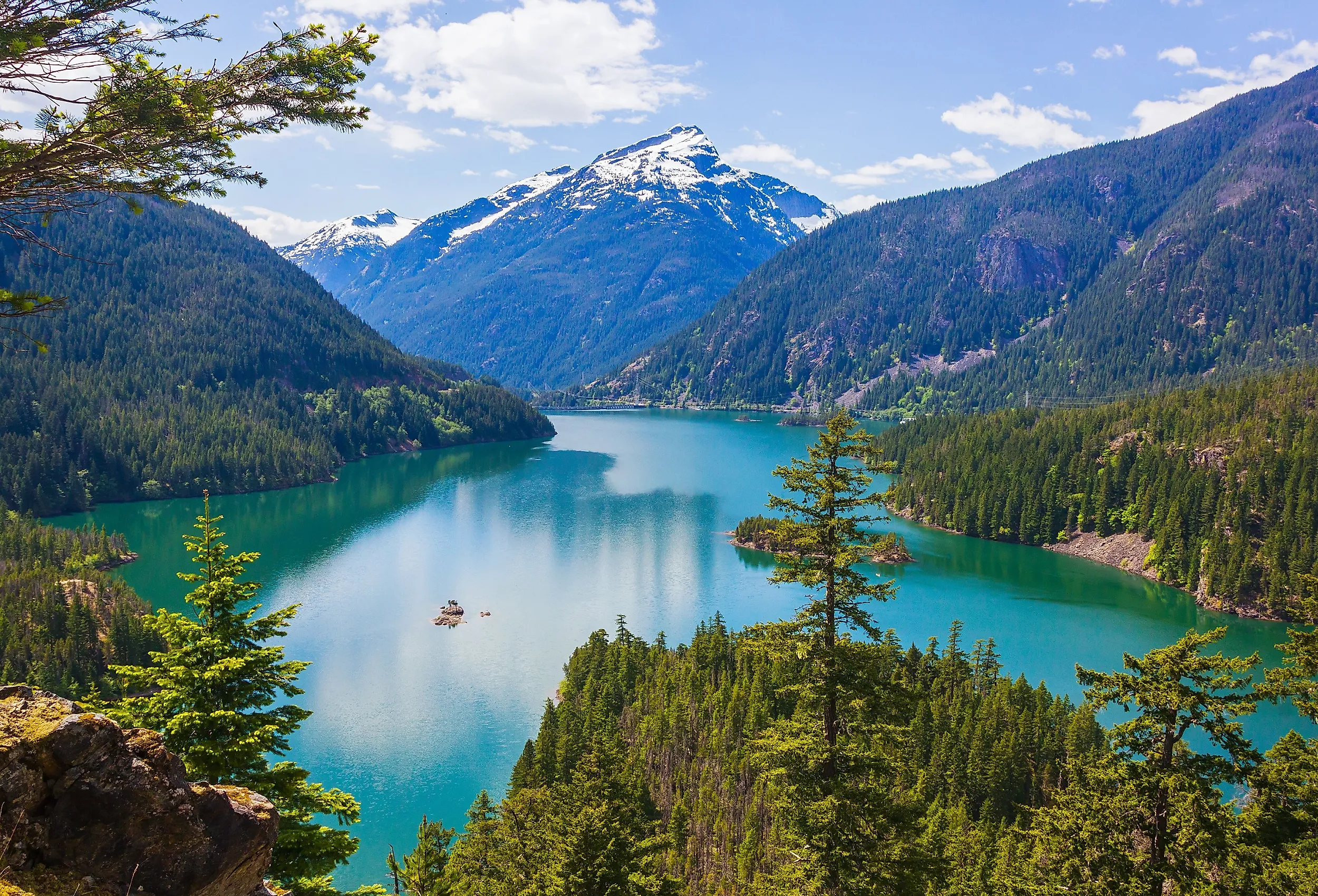
Here is the strange part: North Cascades is one of the least-visited national parks in the country, and it sits about three hours from Seattle. People simply forget it is there. They are missing more than 300 glaciers, more than any park outside Alaska, plus the milky turquoise of Diablo Lake, sawtooth peaks, and the Stehekin Valley, a settlement so remote you can reach it only by boat, floatplane, or your own two feet. Visit in the warm months for the hiking and boating; in winter the avalanche danger is real, but so is the solitude. Start with the North Cascades National Park overview.
Isle Royale National Park, Michigan

Isle Royale is the park that makes you work for it. It is a wilderness island in Lake Superior reachable only by ferry or floatplane, and it shuts down completely from fall through spring because the winters are too brutal to keep it open, the only national park that closes for half the year. Fewer people visit in a whole year than pour into the Grand Canyon on a busy day, yet the ones who do come back more often than visitors to almost any other park. The draw is total quiet: backpacking and paddling among moose, loons, and one of the most studied wolf populations in the world. Pack everything in, pack everything out, and do not expect a cell signal.
Carlsbad Caverns National Park, New Mexico

From the Chihuahuan Desert surface, you would never guess what is underneath: more than 100 known caves, including the enormous Carlsbad Cavern you can walk straight into through its natural entrance, descending into rooms the size of stadiums and hung with stone formations. Take the self-guided route or a ranger tour, then come back up for a desert hike like the Guadalupe Ridge Trail, carrying far more water than feels necessary. The headline act is the bats. On summer evenings, hundreds of thousands of them spiral out of the cave mouth at dusk, and a few mornings a year you can watch them pour back in at dawn. The Carlsbad Caverns National Park page covers tour options.
Virgin Islands National Park, St. John

Most national parks are about mountains or deserts. This one is about turquoise water and white sand. Roughly two-thirds of the island of St. John is protected parkland, so the beaches at Trunk Bay and Honeymoon Bay come without the resort sprawl, and the snorkeling over the reefs is the real reason to come. On land, trails lead past the ruins of old sugar plantations and to rock carvings left by the Indigenous Taino. Hike to a secluded cove, paddle to a quieter beach, and remember that paradise here is federally protected.
Sequoia National Park, California

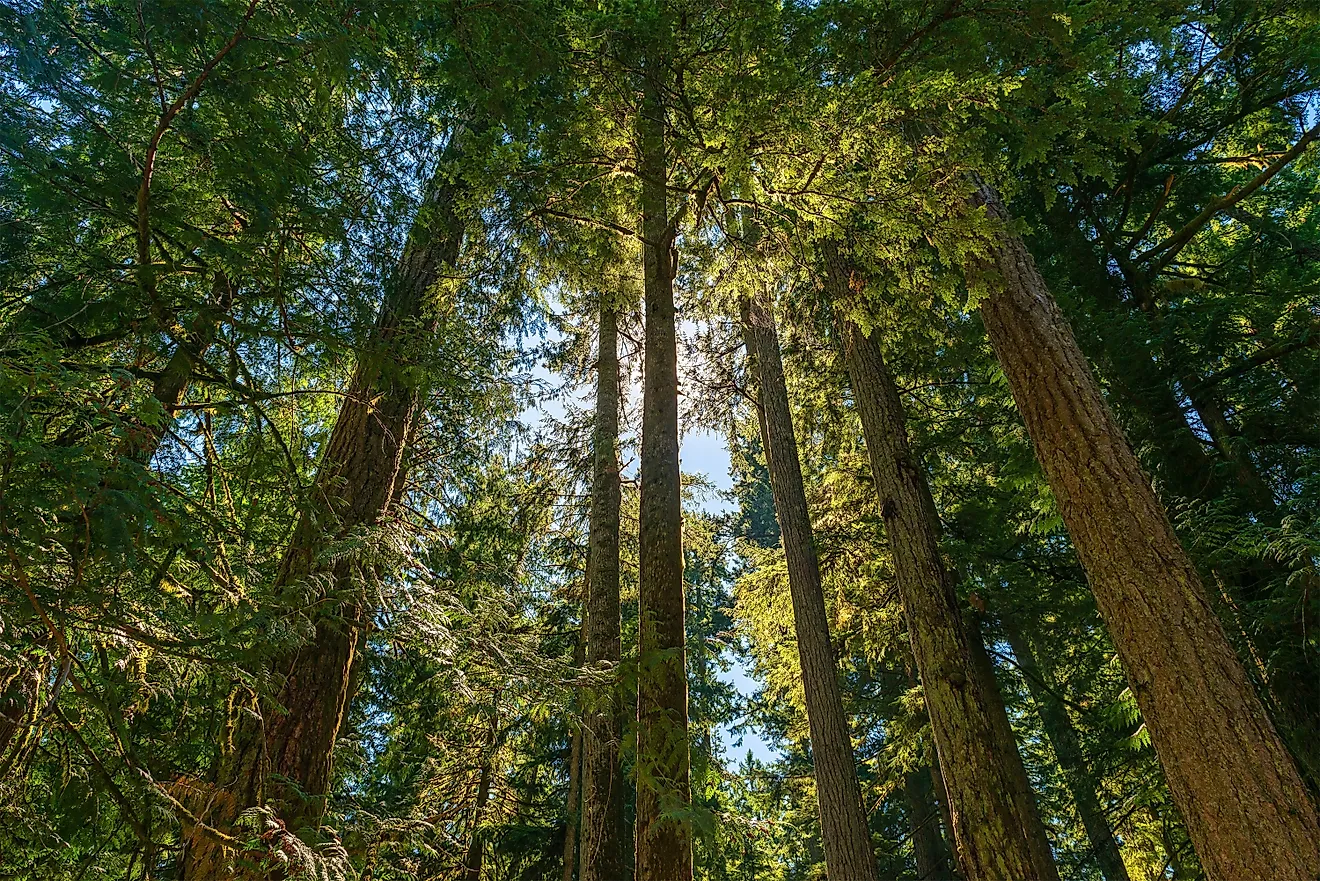
You go to Sequoia to feel small. The park protects groves of giant sequoias, the largest living things on Earth by volume, including General Sherman, a single tree that weighs in around 2.7 million pounds. Climb the stone staircase up Moro Rock for a view over the Great Western Divide, wander the Giant Forest and its museum, and keep an eye out for bears along the rivers. It is better known than most parks on this list, but it still sees a fraction of Yosemite's crowds next door, and standing under a 2,000-year-old tree never gets old. Plan a trip with the Sequoia National Park guide.
Congaree National Park, South Carolina

Congaree protects the largest stretch of old-growth bottomland hardwood forest left in the country, a periodically flooded forest of record-breaking trees fed by the nutrients the Congaree River carries in. You can walk the boardwalk loop above the swamp, or paddle the Cedar Creek canoe trail under a canopy of bald cypress draped in Spanish moss. The strangest show comes for a couple of weeks in late spring, when synchronous fireflies blink on and off in unison, one of only a few places in the world where they put on that display. Camp in the backcountry and let the frogs handle the soundtrack.
Voyageurs National Park, Minnesota

Voyageurs is a park you explore by boat, not by car. Up on the Canadian border, it is built around a chain of big lakes, including Rainy, Kabetogama, and Namakan, and most of the campsites can be reached only by water, so a canoe or motorboat is less a luxury than a requirement. The shoreline is all exposed rock ridges and boreal forest, dotted with oddities like the Ellsworth Rock Gardens, a hillside of abstract sculptures one man built by hand. It is a certified dark sky park, too, so on a clear night the northern lights can put on a show. Just note that the lakes lock up with ice by November. The Voyageurs National Park page has paddling routes.
The Best Seat Is the Empty One
The famous parks are famous for good reasons, and there is no shame in seeing them. But the trade is always the same: the bigger the name, the longer the line. The fifteen here ask for a little more effort, a ferry ticket, a longer drive, a permit, a willingness to be somewhere with no cell signal, and they pay it back in room to breathe. Pick the one that matches your idea of a good time, whether that is glaciers, cactus, caves, or fireflies, and go while it is still the quiet option.