The State Parks With The Best Stargazing
State park agencies across the United States manage over 20 properties holding International Dark Sky Park certification from DarkSky International, verifying night sky quality through rigorous optical standards. Certification depends on lighting and land-management standards rather than a single sky rating, though the darkest of these sites rank near the top of the nine-point Bortle scale used to describe light pollution.
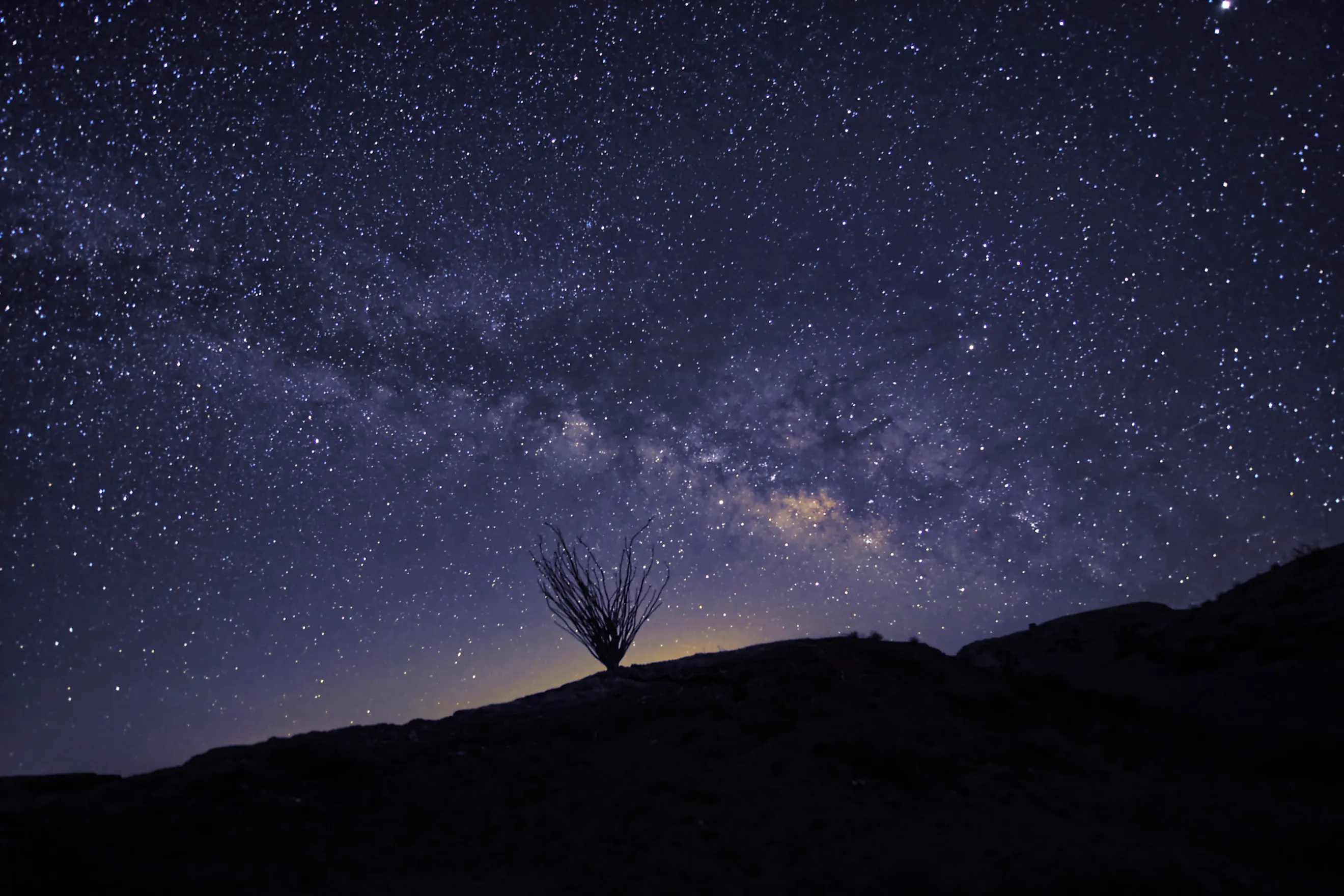
In Class 1 zones, the Milky Way core casts distinct shadows on the ground, and the zodiacal light remains visible year-round. Class 2 sites allow the naked eye to resolve individual stars in the Milky Way. A separate instrument, the Sky Quality Meter (SQM), records sky luminance in magnitudes per square arcsecond. The scale tops out at approximately 22.0, representing the darkest possible natural sky.
Six certified properties, including the South Llano River in Texas and Sinks Canyon in Wyoming, represent a cross-section of these state-managed dark sky zones. Each park operates under a specific state agency, which dictates reservation windows, entry fees, and operational rules. Several of these sites maintain astronomy infrastructure, such as telescope pads or stargazing decks, and all maintain strict lighting standards to preserve optical clarity.
Big Bend Ranch State Park, Texas

The extreme geographic isolation of Big Bend Ranch State Park positions it far enough from urban centers to achieve the highest tier of night sky preservation. Measurements here consistently exceed 21.8 on the Sky Quality Meter, in skies dark enough that the Milky Way casts visible shadows. The Texas Parks and Wildlife Department manages the 311,000-acre property in the Trans-Pecos region, which borders Big Bend National Park to the east and Mexico to the south. The park achieved International Dark Sky Park status in 2017.
The landscape consists of high desert Chihuahuan terrain, with elevations ranging from 2,500 to 5,000 feet. This altitude, combined with the region's arid climate, creates the atmospheric stability required for high-contrast stellar observation. The park maintains a dedicated astronomy field equipped with concrete pads for telescopes. Visitors are advised to use red-light flashlights to preserve night vision and avoid stepping off established paths.
The region's average annual precipitation of less than 15 inches ensures that cloud cover obscures the sky on fewer than 30 nights per year, providing one of the highest probabilities of clear viewing windows in the continental United States. This atmospheric dryness minimizes water vapor absorption, allowing infrared wavelengths from distant galaxies to reach ground-level telescopes with significantly less attenuation than in more humid climates.
Medicine Rocks State Park, Montana
The remote sandstone formations of Medicine Rocks State Park shelter a pocket of exceptional darkness in the northern Great Plains. While specific SQM readings fluctuate with seasonal weather, the park's certification as an International Dark Sky Sanctuary in 2020 confirms skies dark enough to reveal the zodiacal light and the full structure of the Milky Way.
Managed by Montana Fish, Wildlife & Parks, the 330-acre property sits in eastern Montana, far from the light domes of Billings or Bismarck. The park's unique geology features eroded sandstone pillars and arches, creating natural windbreaks that reduce local atmospheric turbulence. This stability allows telescopes to resolve fine details on planetary surfaces that are often blurred in more exposed locations.
The elevation of 3,379 feet places observers above much of the ground-level haze found in lower valleys. Access is via secondary roads near Ekalaka, requiring visitors to plan for limited services in the surrounding area. The park maintains minimal artificial lighting, adhering to strict dark sky protocols. Winter temperatures frequently drop below zero, making late spring through early autumn the optimal window for observation. The site's isolation ensures that the northern horizon remains free of artificial glow, allowing for uninterrupted views of circumpolar constellations.
Sinks Canyon State Park, Wyoming
The deep limestone gorge of Sinks Canyon State Park shelters a pocket of exceptional darkness in the Rocky Mountains, shielded from regional light pollution by the 10,000-foot peaks of the Wind River Range. Sky Quality Meter readings here frequently exceed 21.6, allowing the naked eye to resolve the Milky Way's core with exceptional contrast.
Managed by Wyoming State Parks, the 600-acre property received International Dark Sky Park certification in 2023, distinguishing it as the first state park in Wyoming to achieve this designation. The park's unique geology, where the Popo Agie River disappears into a cavern and re-emerges downstream, creates a localized microclimate that often stabilizes atmospheric turbulence for clearer viewing.
The park maintains strict lighting ordinances that require all fixtures to be fully shielded and emit warm-spectrum light, ensuring that the visitor center and campground do not contribute to skyglow. The high elevation, ranging from 5,200 to 6,000 feet, reduces atmospheric water vapor, sharpening the view of faint deep-sky objects. Winter snows frequently close the road from November to April, making late spring through early autumn the optimal window for observation.
Kodachrome Basin State Park, Utah

The remote high-desert location of Kodachrome Basin State Park isolates it from major light sources, allowing the site to maintain exceptionally dark skies. Sky Quality Meter readings here frequently reach 21.9, nearing the theoretical maximum for natural skies and enabling the naked eye to detect the zodiacal light even in summer.
Managed by Utah State Parks, the 2,300-acre property gained International Dark Sky Park certification in 2019, joining a select group of Utah parks with this designation. The park's elevation of 5,800 feet places observers above much of the atmospheric turbulence found in lower valleys, sharpening the view of faint deep-sky objects.
Access is via State Route 12, positioning the park between Bryce Canyon National Park and the Grand Staircase-Escalante National Monument. The park maintains a designated astronomy area with leveled concrete pads specifically engineered to minimize ground vibration for high-magnification telescopes. Because the park sits in a high-elevation rain shadow, clear sky conditions prevail for over 250 nights per year, offering one of the most reliable observation windows in the Intermountain West. The surrounding sandstone chimneys act as natural windbreaks, reducing local atmospheric distortion and allowing for stable viewing of planetary details.
Anza-Borrego Desert State Park, California

The vast expanse of the Colorado Desert within Anza-Borrego Desert State Park creates a buffer against coastal light pollution, enabling the site to maintain exceptionally dark conditions. Sky Quality Meter readings here frequently exceed 21.6, a level of darkness that allows the zodiacal light to remain visible throughout the year. Managed by California State Parks, the 600,000-acre property gained International Dark Sky Park certification in 2018, distinguishing it as the largest state park in California with this designation.
The park's topography, characterized by badlands and open valleys, provides unobstructed 360-degree views of the celestial sphere. Access is via State Route 78 and S2. The park operates multiple campgrounds, though the most remote sites offer the darkest conditions for astronomical observation.
Winter months bring the clearest skies, as summer monsoon moisture can occasionally obscure the horizon. The area is home to desert bighorn sheep and rattlesnakes, requiring visitors to remain aware of wildlife when exploring beyond developed areas after dusk.
South Llano River State Park, Texas
Sparse population density in the Texas Hill Country provides the foundational darkness required for South Llano River State Park to maintain high-quality night skies. Regular Sky Quality Meter readings here exceed 21.6, and the park earned its dark sky certification in 2018. The park encompasses 2,800 acres along the South Llano River and is managed by Texas Parks and Wildlife.
The landscape consists of juniper-oak woodlands and open grasslands, providing unobstructed views of the southern horizon. A dedicated astronomy amphitheater with a concrete telescope pad and seating serves as the primary viewing area. Access is via Ranch Road 386. The park's low level of light pollution allows observers to distinguish the zodiacal light, a faint glow caused by sunlight reflecting off interplanetary dust, which is rarely visible in more developed regions.
The park's position in the central Texas hill country offers a clear view of the southern sky, allowing the bright core of the Milky Way to appear nearly overhead during summer nights. Dry air from the west frequently clears out humidity that typically blurs starlight in other parts of the state, resulting in sharper views of planets and star clusters. These stable atmospheric conditions mean that even small telescopes can reveal fine details on the moon and separate close double stars that often appear as single points of light in more turbulent air.
The State Parks' Darkest Skies
These six state parks demonstrate that high-quality astronomical observation exists within the state park system. By meeting the optical thresholds defined by DarkSky International, these properties provide verified dark sky experiences with SQM readings ranging from 21.6 to 21.9. The operational frameworks for these sites are dictated by individual state agencies, which manage reservation windows, entry fees, and specific regulations.
For observers seeking the darkest possible skies, these state parks offer a scientifically verified alternative with established astronomy infrastructure. The data confirms that with proper lighting management and geographic isolation, state park systems can maintain night sky quality suitable for detailed stellar observation.