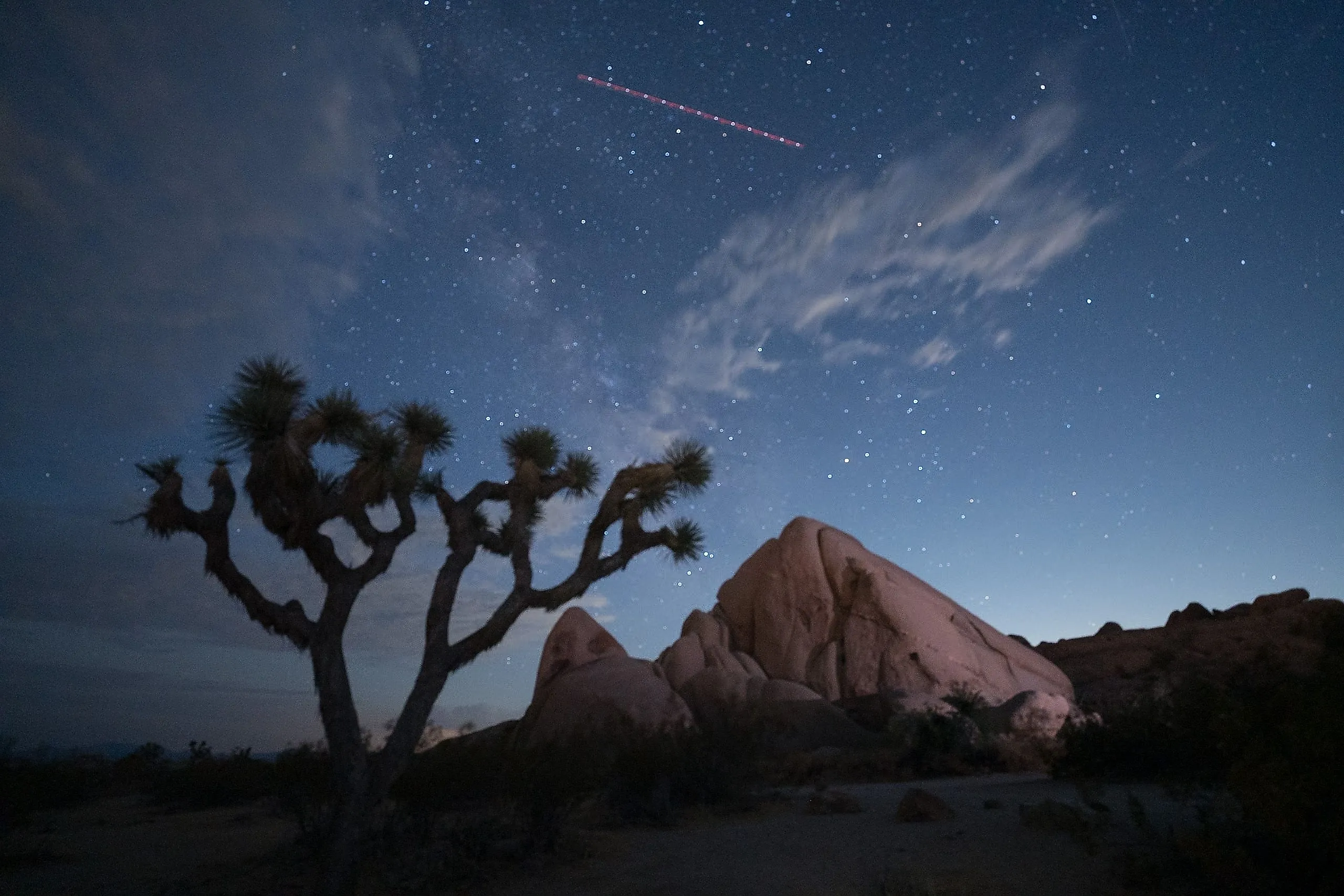
The Darkest National Parks For Stargazing
Stargazing was not in the original mission plan for US National Parks as they initially developed not long after the American Civil War. When Yellowstone National Park became the first protected natural reserve, through an order signed by President Ulysses S. Grant in 1872, there was not a single light bulb in all of the Wyoming territory, before it was even a state. At that time, most of the continental United States was so undeveloped that even in the biggest cities, prior to the invention of electricity, the night sky was completely visible in a pristine state, coast to coast, and you could stargaze anywhere on the continent. In fact, standing on top of a tall building in New York City, in those years, might have been an even better place to see stars than many more natural settings, especially after all the city gas lights had been extinguished for the evening. But times have changed and now 2/3 of contemporary Americans are unable to see the Milky Way from their own backyard. And so it seems in hindsight that early efforts to preserve large swaths of land within the National Park system represent valuable foresight by previous generations, who may have only "dimly" perceived in earlier times that a dark sky would be another key reason to protect these natural environments.
Saguaro National Park, Arizona

Our journey begins with the Saguaro National Park, the only national park in the US to be designated as an Urban Night Sky Place by the International Dark-Sky Association (IDA), the world's premier organization dedicated to developing programs to better protect natural dark sky areas that could be adversely affected by a city's artificial light glow. Saguaro was the 9th such labeled location in the world. While this is a powerful indicator that Saguaro is a great place to stargaze, the designation is a relative marker compared to objectively defining the national parks with the darkest sky, as this is specifically in relation to its proximity to an urban environment. So, Saguaro is dark even though it is only 15 miles to the east of Tucson, Arizona, location of IDA headquarters. This is a good space to begin the conversation as Saguaro represents a certified area curated in this direction and the closest national park to IDA. Highlighting the park's dark sky features also draws the public to visit and to engage in stargazing there, a phenomenon in several other dark sky parks. The National Park Service highlights a scenic drive and 2 specific hikes within the park, after dark, that provide excellent sky lookout vistas. In the Rincon Mountain District, the best stars can be seen while cruising along Cactus Forest Drive or hiking the Loma Alta Trailhead. In the Tucson Mountain District, Bajada Loop Drive provides a "stellar" 5 mile hike, closed to vehicles after dusk.
Big Bend National Park, Texas

Big Bend National Park has the strongest claim to be the darkest national park in the Lower 48 at night for stargazing, based on the least artificial light pollution. This 801,163 acre park is 70 miles from the nearest small towns, Alpine or Marathon, and 300 miles from the nearest major cosmopolitan area, El Paso. Additionally, Big Bend extends along the Rio Grande for 118 miles of undeveloped terrain, the border between Mexico and the United States. That sounds remote but how are we able to tell scientifically whether Big Bend actually does have darker skies than any other national park? The answer is through the Anthropogenic Light Ratio (ALR). ALR compares the sky's total brightness to a standard natural night time level discovered by combining satellite scans versus camera shots taken from within the park. A good ALR is generally judged as any number below .33 as can be seen in an Nighttime Sky Quality Map developed by Katy Abbot when she was an intern with the Geoscientists in the Park (GIP) at Big Bend from 2019-2020. Abbot's project demonstrates 4 primary ALR ratings ranging from Good (ALR less than 0.33) down to Milky Way Invisible (ALR greater than 10.0). An excellent stargazing viewing perspective in Big Bend is from the Chisos Mountains, reaching well above 7000 ft. Big Bend's lowest ALR on record is 0.03, only 3% brighter than a naturally dark sky, from a reading taken at Sotol Vista in 2003 and 0.11 as recently as 2022.
Glacier National Park, Montana

Shooting like a star up to the northernmost US border with Canada, Glacier National Park in Montana is a certified Dark Sky Park, a different designation than the Urban Night Sky Place category. It shares that status with Waterton Lakes National Park of Canada, and is thus the first transboundary Dark Sky Park, often referred to jointly as Glacier-Waterton International Peace Park. The National Park Service Night Sky Division has documented exceptionally dark skies at Logan Pass, the highest point for viewing the sky at Glacier, another perfectly dark spot ideal for stargazing. The National Park Service conducts astronomy programs at Glacier on an ongoing basis. The Big Sky Astronomy Club is also a great resource that hosts events at Glacier, such as Star Parties at Logan Pass as well as other outings at additional sites in northwest Montana, geared towards astronomy amateurs. Another way to gauge dark sky quality is by using the Bortle Scale, a 9 class estimate, spanning darkest to lightest, that is based on the visibility of certain key constellations or star clusters like the Milky Way. Glacier consistently falls in the 1-2 Bortle scale range and is also one of the few places in the Lower 48 where you can see both the Milky Way and the Aurora Borealis (Northern Lights).
Acadia National Park, Maine

Acadia National Park is a rare exception on the cosmopolitan northeastern coast of the US. It is the largest dark sky zone in this region, complemented by great views of starry skies over the Atlantic Ocean, 170 miles above Portland, Maine. Park services advertise Stargazing at Cadillac Mountain as an excellent location to see the stars here. After 9 pm, visitors are encouraged to bike or hike to the summit. Other noted vantage points for stargazing are the Seawall Picnic Area on the western side of Mount Desert Island (MDI), the Jordan Pond House, after lights go out, and the Ocean Path with multiple vantage points between Sand Beach and Thunderhole. The Worcester Polytechnic Institute sponsored the Acadia Night Sky Initiative, which mapped nearest light pollution zones and public education initiatives to bring more awareness to the importance of maintaining dark skies, which also impact plant and wildlife. 70% of mammals and 60% of all known animal life are nocturnal and depend on natural light cycles. The town of Bar Harbor, on the eastern side of Mount Desert Island, exudes the largest light pollution threat to Acadia. It has been subject to light control ordinances since 2009 that mandate commercial and residential lighting be shielded from above or through being pointed down. In a study sponsored by College of the Atlantic, research indicated that sky visibility went from 13,000 stars in the sky on the west side of the island, within the park, to only 1,500 over the town area.
Badlands National Park, South Dakota

Originally called "Mako Sica," meaning "Land Bad," by the original inhabitants of South Dakota, the Lakota tribe, Badlands National Park sounds like trouble. Yet the notoriously rugged, harsh terrain in this 244,000 acre national park is perhaps a primary reason, considering its lack of cosmopolitan development, that the area is a perfectly dark backdrop beneath spectacularly starry skies. The nearest significant urban environment is Rapid City, located 75 miles to the west, ensuring that there is very little artificial light pollution. Badlands carries the distinction of being the most recently designated Dark Sky Park on July 17, 2026. The designation, as awarded by Darksky International, involves not only a recognition of exceptionally dark, natural skies but also a commitment to preserving the integrity of this aspect of the environment in years to come. Badlands National Park fosters appreciation of night skies through educational resources and events like the annual Badlands Astronomy Festival, hosted by the National Park Services (NPS) Night Sky Division and the professional telescope company Celestron. Nightly viewing opportunities are advertised for the Cedar Pass Amphitheater where at least 7,500 stars are regularly visible.
Voyageurs National Park, Minnesota

Voyageurs National Park near International Falls, Minnesota has the unique feature of having such low, natural light at night that the vast waters here reflect the stars. The park is named for the Voyageurs, French Canadian fur traders who were the first known European explorers of the region in the 1600s. Though proposal plans go back to the 1890s, it did not become a national park until 1975. In 2020, Voyageurs received its Dark Sky Park certification, the gold standard for stargazing in the national park system. Known especially for its 30 total lakes, there are night dark sky boating tours that are especially popular with the Border Guide Service's Dark Sky Tour, completely on the water. This 2+ hour long adventure is available from May 15th-October 1st each year. There are other ideal night viewing lookout spots across the 218,000 acres of the park like the Rainy Lake Fishing Pier, Beaver Pond Overlook, and the Observation Deck at Kettle Falls Dam. Additionally, the park hosts a series of events that are specifically geared to stargazing such as the Summer Star Party and Boreal Stargazing Week. Voyageurs is the only Dark Sky Park in Minnesota and is another rare spot in the Lower 48 where visitors can also view the Northern Lights.
Mammoth Cave National Park, Kentucky

Though many people are aiming to go underground at Mammoth Cave National Park, as it contains the largest cave system in the world at more than 426 miles long at this stage of exploration, the park is also an awesome place to view stars from above the ground. It has carried the highly esteemed Dark Sky Park certification since 2021. Located 90 miles from Louisville, Kentucky to the north and 90 miles from Nashville, Tennessee to the south, the 52,830 acre park offers above ground night sky viewing attractions such as Star Parties at the Camp Store Amphitheater, held seasonally around specific star events like the Perseid Meteor Showers in August and the Geminid Meteor Showers in December. These meteor showers can best be appreciated from within a dark sky designated location where anywhere from 60-120 meteors per hour can be viewed on especially dark nights, under ideal conditions when they occur during a low moonlight period. If you do happen to make it to one of the night sky events above ground at Mammoth Cave, they also offer the underground Star Chamber Tour, a nighttime tour that descends into the cave, where lanterns reflect off of crystallized saltpeter and gypsum deposits 180 ft below the surface, recreating a starry night effect worth experiencing.
Joshua Tree National Park, California

Joshua Tree National Park is one of the most celebrated bases for astrotourism in the United States. It has a Bortle night sky rating that varies between 2-4, yet it is frequently identified as an ideal Dark Sky Park, partly because of its accessibility to millions of people in Southern California. It is about 3 hours away from Los Angeles, as well as San Diego, making it a poster child for stargazing. The nearest city is Palm Springs about 40 miles away, which is the urban center responsible for some light pollution on its western edge. It has been certified as a Dark Sky Park by the IDA since 2017. Its desert features such as dry air and mountain heights exceeding 5000 ft are optimal settings for clear skies and better proximity to stars. Quail Springs, Hidden Valley, and Cap Rock are some of the best places to stargaze here. Stargazing tours are regularly offered in the park on a regular basis. In addition to the ALR and Bortle ratings that we have previously covered in this article, there is one more test often used called a Sky Quality Meter (SQM), based on a readout from an instrument aimed at a single point in the sky measuring light emission. Ranges vary from a completely dark sky at 22.00 to a bright city at 18.00. Guides within the Morongo Basin portion of the eastern park have registered 21.16 SQM, which is considered an excellent indicator of a dark sky.
The Power of Star Suggestion
That wraps up our tour of darkest national parks for stargazing. There are still several standout Dark Sky National Parks that we did not cover, especially in the Southwest, such as Bryce Canyon, Arches, Zion, Capitol Reef, Death Valley, Great Basin, and even the Grand Canyon! At Canyonlands National Park, another certified Dark Sky Park, the NPS estimates that up to about 15,000 stars can be visible on a clear night under ideal conditions. Astrotourism is on the rise in the United States as a distinct subculture. Unique glamping pod mini-observatories are popping up near many of these parks such as The Summit at Big Bend. AirBNB specifically markets to stargazing travelers. It is cool to get the latest Celestron telescope. Amateur astrophotographers are making waves by posting incredible shots of star clusters and planets in various social media outlets. Much of this is due to the momentum generated by DarkSky International's ability to market the coveted Dark Sky Park certification effectively as a carrot for competing parks ever since it launched the Dark Sky Places program in 2001. This creates a worthy goal and a mission for parks to strive towards. By applying specific pressure points to the parks to follow through on light ordinances, provide education to the public, and develop stargazing types of events throughout the year, in order to obtain and maintain their Dark Sky status, the bar is raised towards ecological improvement.
Whoever thought we would talk about seeking more darkness as the ultimate key towards revealing the most organic brightness from above?