What Happens If The Colorado River Stops Reaching Lake Mead
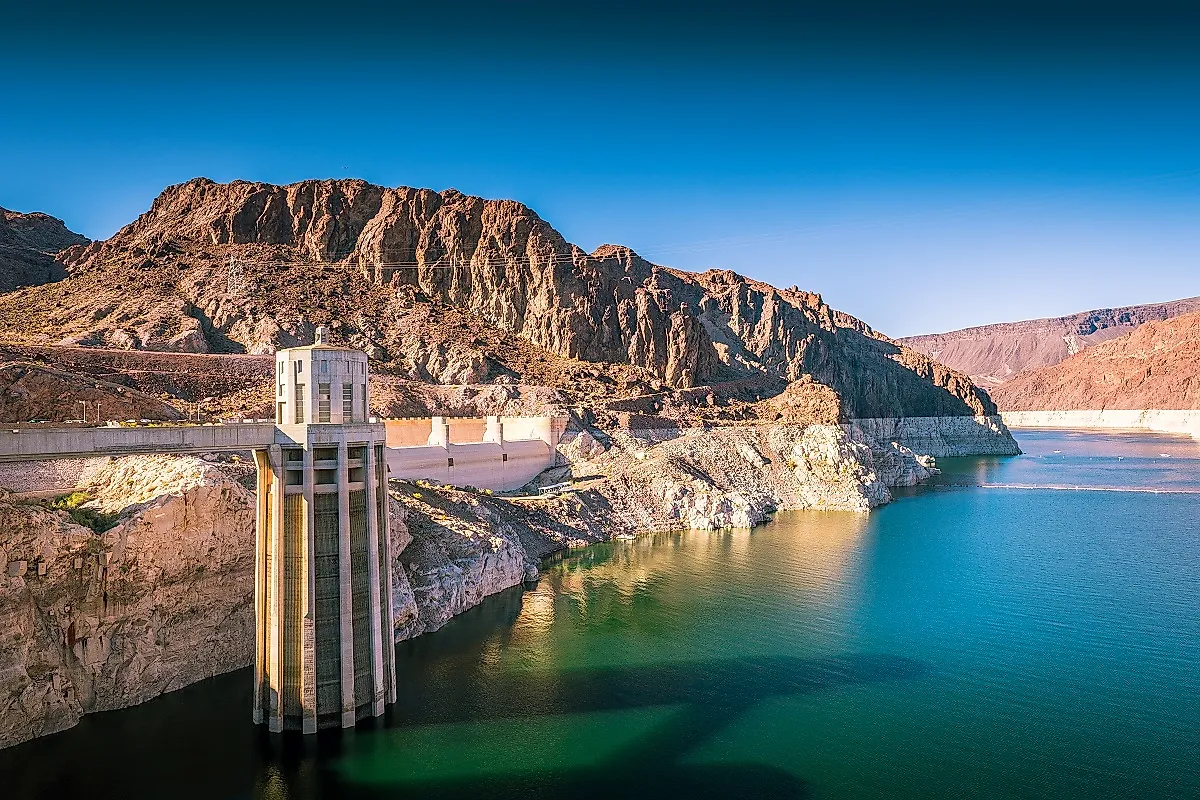
Straddling the desert border between Nevada and Arizona, Lake Mead is the cornerstone reservoir of the American Southwest. Holding the single largest storage capacity in the United States, it supplies essential drinking water, agricultural irrigation, and hydroelectric energy to over 25 million people in parts of California, Nevada, Arizona, and northern Mexico. However, a multi-decade megadrought combined with rising temperatures has pushed the Colorado River system to its limits.
If the Colorado River were to physically stop reaching Lake Mead, the reservoir would rapidly drop below its lowest diversion points and sever municipal water access for major Southwestern cities, trigger severe crop failures across millions of acres of desert farmlands, shut down Hoover Dam's power plant, and cause regional economic losses in the hundreds of billions of dollars. While a total drying up of the Colorado River before it hits Lake Mead is extreme, understanding how it could happen reveals just how fragile the Southwest's primary water lifeline truly is.
Could This Really Happen?

For the Colorado River to stop reaching Lake Mead entirely, the upstream system would have to experience a complete physical blockage of flow. The primary bottleneck lies roughly 280 miles (450 kilometers) upstream at Glen Canyon Dam, which holds back Lake Powell. Under the delivery obligations set by the 1922 Colorado River Compact, Lake Powell acts as the regulatory valve that captures Rocky Mountain snowmelt and releases it downstream into the Grand Canyon and onward to Lake Mead.
If Lake Powell's surface drops below an elevation of 3,370 feet (1,027 meters) above sea level, it becomes what hydrologists call a "dead pool". At this point, the water level falls below the dam's lowest outlet pipes, preventing water from passing through Glen Canyon Dam by gravity. Unless massive bypass infrastructure is built, water would stop flowing out of Lake Powell. As of mid-August 2026, Lake Powell's surface level was approximately 3,520 feet (1,073 meters).
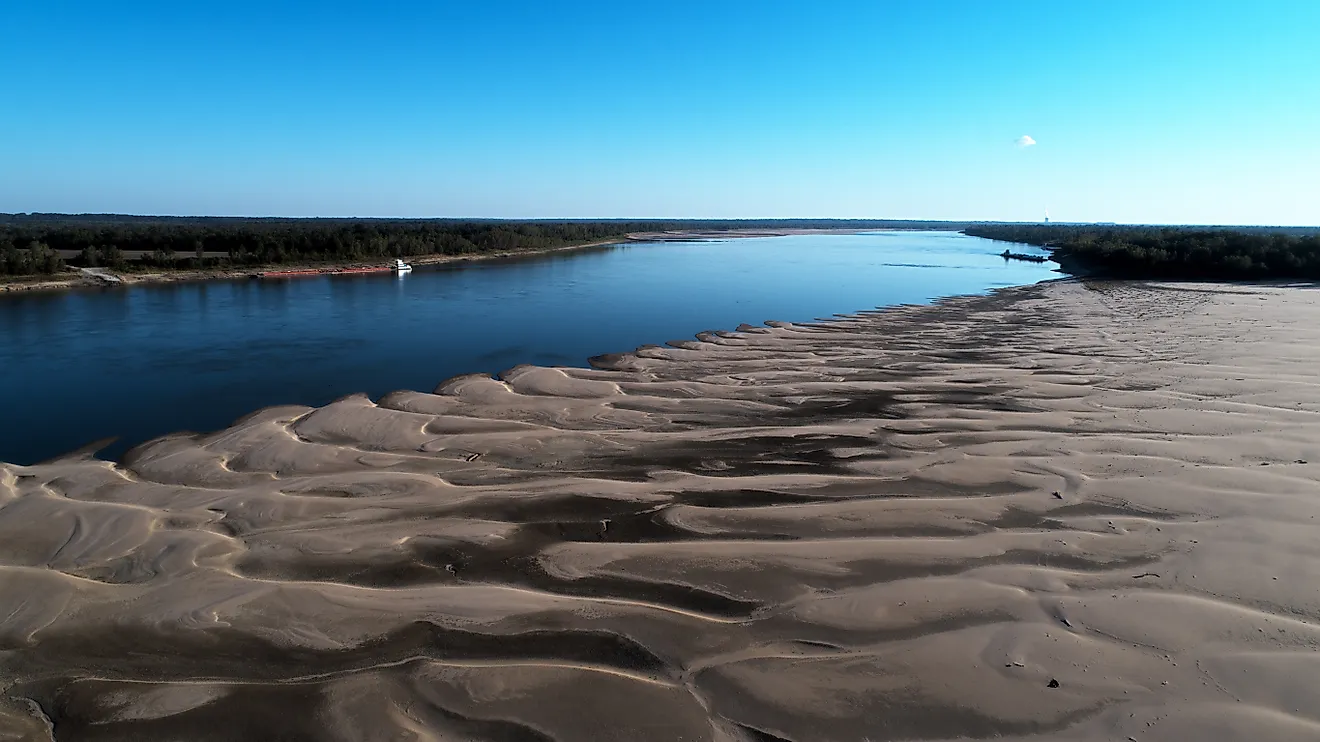
The possibility of Lake Powell becoming a dead pool is still unlikely in the immediate short-term, but the odds are steadily increasing. Climate change has reduced average river flows by approximately 20% in the past quarter-century. The decline is accelerating. Lake Powell fell almost 32 feet (9.8 meters) in the year to August 2026, reaching its lowest level since the reservoir first filled. That leaves the surface roughly 150 feet (46 meters) above dead pool and only about 30 feet (9 meters) above the elevation at which Glen Canyon Dam can still generate power.
How Long Would Lake Mead Last?

If upstream inflows from the Colorado River completely ceased, Lake Mead would be forced to operate solely on its existing stored water. Sitting in August 2026 at roughly 27% capacity, its lowest level on record, Lake Mead holds approximately 7 million acre-feet of active storage. At the current water outflow rate of 9.6 million acre-feet per year and evaporation rate of 800,000 acre-feet per year, Lake Mead would dip below its dead pool elevation of 895 feet (273 meters) in well under one year. Even if the outflow rate was cut in half, Lake Mead would become a dead pool in fewer than 1.5 years. From there, Lake Mead would inevitably vanish due to evaporation.
Water Supply Impacts

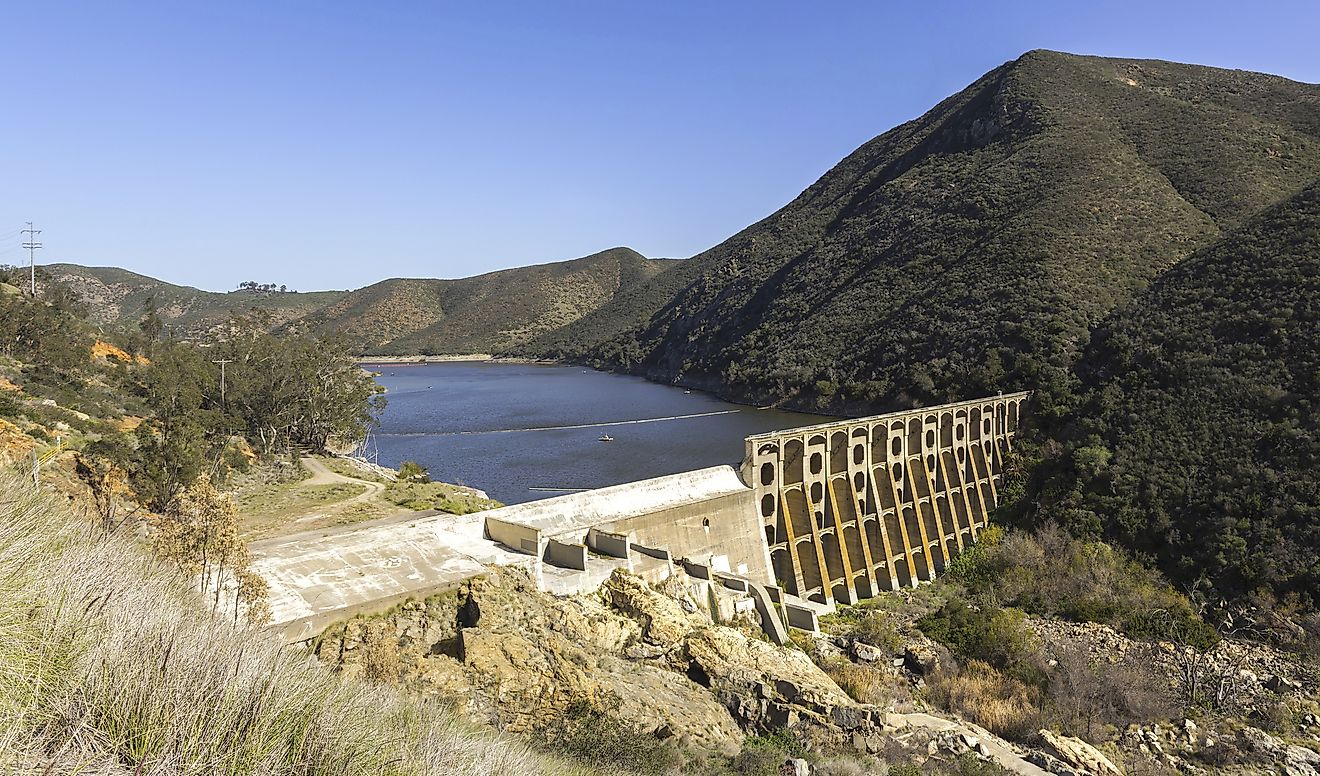
The rapid depletion of Lake Mead's existing water reserves would have devastating effects on municipal water supplies. The city most directly exposed is Las Vegas, which receives roughly 90% of its municipal drinking water directly from Lake Mead. Fortunately, Las Vegas built a deep "third straw" intake closer to the bottom of the lake, allowing it to pump water even if Lake Mead becomes a dead pool. However, without incoming river flows, the lake would quickly drop below even this deepest intake.
For downstream cities like Phoenix, Tucson, Los Angeles, and San Diego, the loss of Lake Mead's water would be felt even faster. These cities rely on canals like the Central Arizona Project (CAP) and the Colorado River Aqueduct, which pull water downstream of Hoover Dam. Once Lake Mead hit its dead pool elevation, Hoover Dam would stop releasing water downstream. Cities would be forced to rely on local groundwater and costly ocean desalination, backed by severe emergency rationing that would leave urban areas with a fraction of their normal supply.
Agricultural Impacts

Agriculture consumes roughly 75% of the human water allocations along the Colorado River basin. Regions like California's Imperial Valley and Arizona's Yuma County depend almost entirely on river water to irrigate winter crops. Yuma alone produces roughly 90% of the leafy green vegetables consumed in North America during the winter months.
If the river ceased to flow into Lake Mead and Hoover Dam releases were halted, millions of acres of farmland would dry up. The Imperial and Coachella valleys in California would face immediate agricultural collapse. Farm laborers would lose their livelihoods, and local farming communities would collapse economically. Produce prices across the United States would climb sharply because of winter crop shortages.
Electric Grid Impacts

In addition to serving as a massive water bank, Lake Mead provides low-cost, carbon-free hydroelectricity via Hoover Dam. The dam's generators produce power for over 1.3 million people across Nevada, Arizona, and California. However, generating power requires "hydraulic head," which is the water pressure created by a deep reservoir.
Hoover Dam reaches its "minimum power pool" at an elevation of roughly 950 feet (290 meters). If water stops entering Lake Mead and the lake drops below 950 feet, the turbines can no longer spin, and power generation drops to zero. Losing Hoover Dam's capacity, combined with the loss of Glen Canyon Dam's power upstream, would strain the Western regional grid. Utilities would be forced to buy expensive, often dirtier electricity from fossil-fuel plants, driving up energy costs and complicating clean-energy goals.
How to Avoid This Scenario

Preventing the Colorado River from cutting off supply to Lake Mead requires urgent action from state governments and federal water agencies. First, the seven basin states must permanently renegotiate water allocations. The legal water rights established a century ago over-allocated the river based on historically high flows. Lowering municipal and agricultural water usage through significant but manageable cutbacks is essential to holding reservoirs above critical thresholds.
Second, water districts must invest in infrastructure upgrades. Upstream at Glen Canyon Dam, federal engineers are studying ways to drill lower bypass tunnels that would allow water to pass downstream even if Lake Powell drops below its conventional outlets. Downstream, cities must expand water recycling and industrial reuse, alongside crop-switching incentives that encourage farmers to plant low-water crops like sorghum instead of high-water crops like alfalfa.
The Price of Inaction

The Colorado River is the fundamental life-support system for the modern American Southwest. While the scenario of the river completely failing to reach Lake Mead represents an environmental worst-case outcome, it serves as a stark warning. Avoidance is entirely dependent on proactive human policy. By replacing century-old legal claims with realistic conservation, the region can ensure that the Colorado River continues to flow into Lake Mead for generations to come.