The Strongest Current In American Waters
The answer depends on whether you mean fast or powerful, and the two point to opposite ends of the country. By speed it is Deception Pass in Washington, a strait between two islands where the water runs at eight knots and more, which is roughly twice the pace of the Gulf Stream. By sheer force it is the Gulf Stream itself, which moves slowly by comparison and carries more water than every river on Earth combined. One of these you can stand beside and watch. The other you can only measure.
Deception Pass Wins On Speed

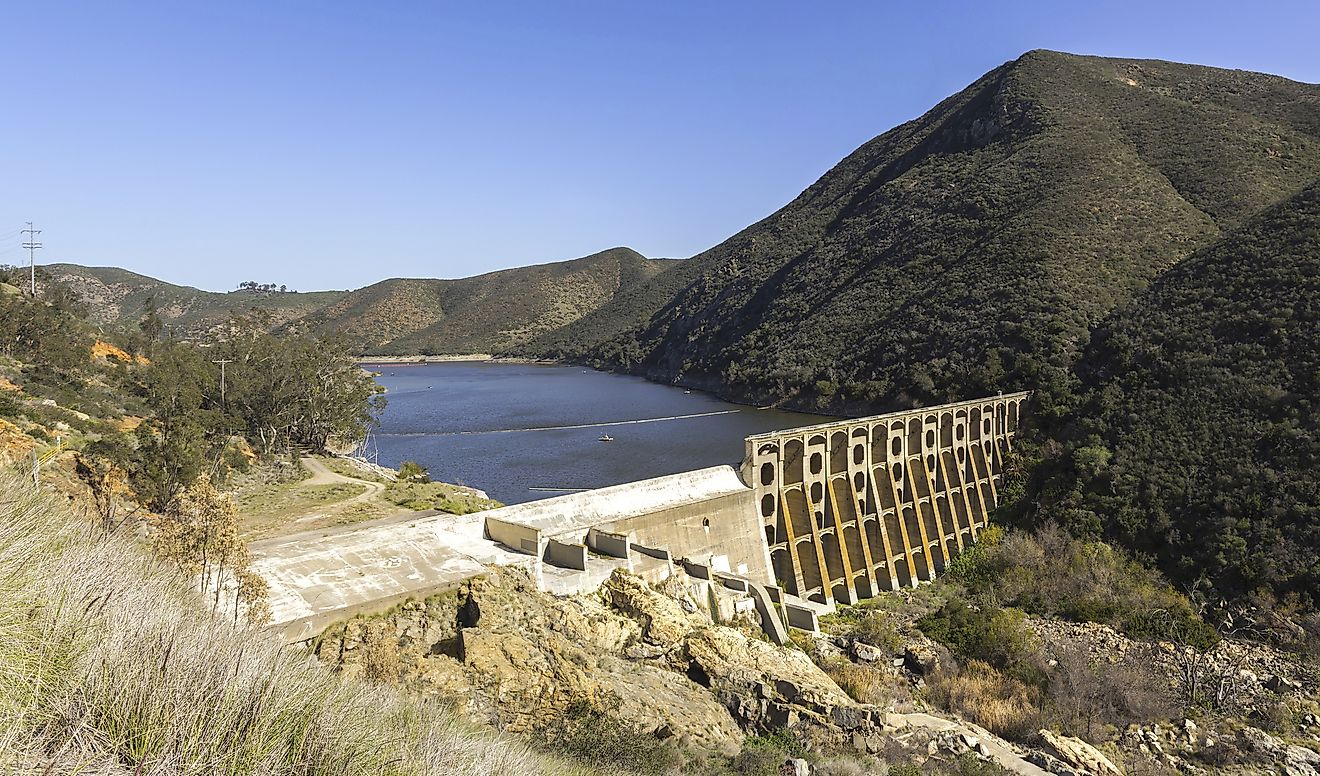
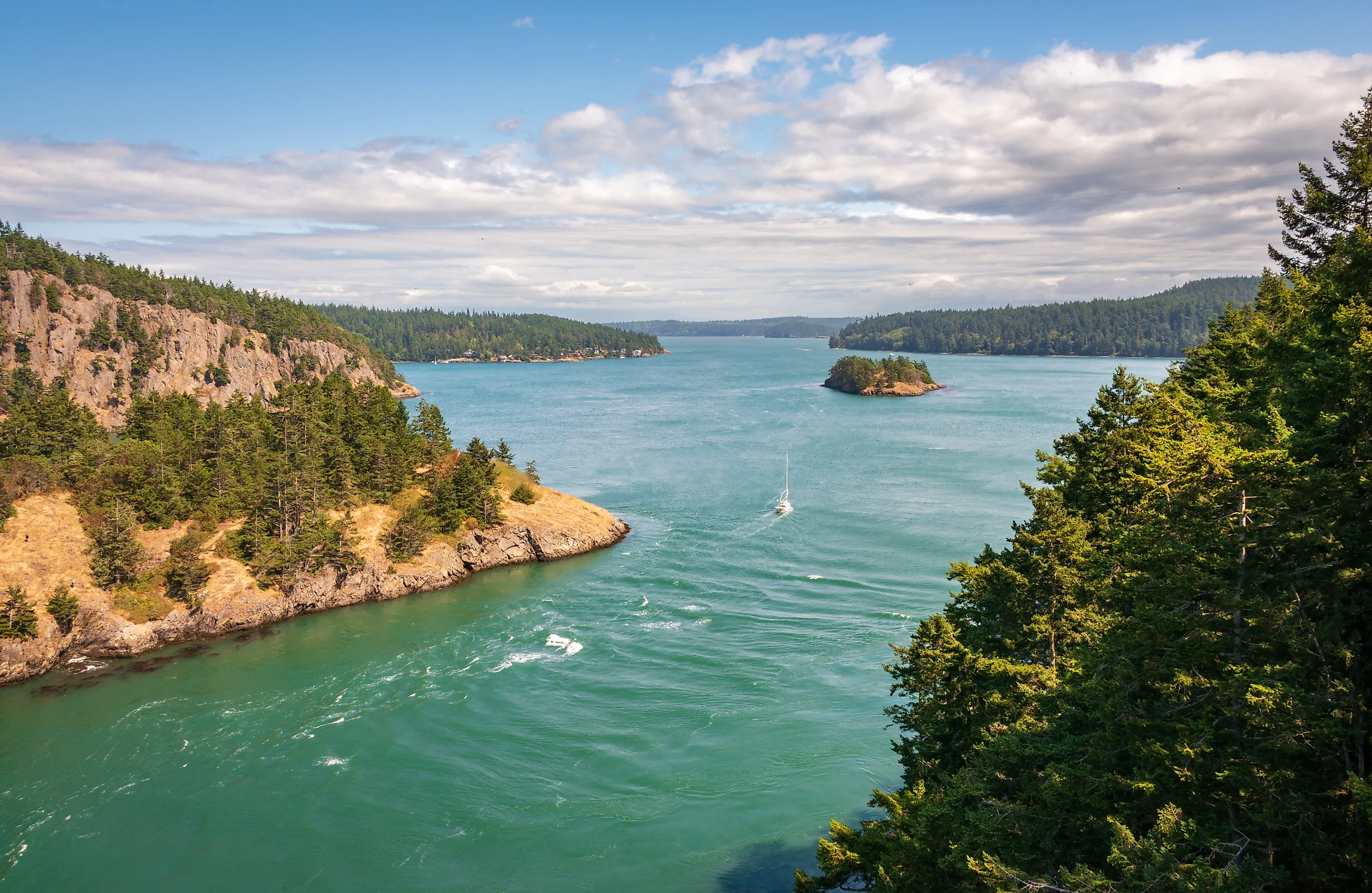
Deception Pass separates Whidbey Island from Fidalgo Island in northwest Washington, and the water moving through it reaches about eight knots, or 9.2 miles per hour, reversing direction between ebb and flood.
Analysis of the Puget Sound system puts it bluntly. The strongest currents in the whole system occur at Deception Pass, where speeds in excess of eight knots can occur, with some assessments putting the maximum at nine. The Tacoma Narrows, the next strongest channel in the sound, manages about 5.5.
NOAA maintains a list of the fastest tidal currents in North America, and Deception Pass sits at the top of the American entries.
It Is Not A Normal Tidal Current

The reason Deception Pass beats everything else is a mechanism most tidal passages do not have. Ordinary tidal currents are driven by water sloshing in and out as the tide rises and falls. Deception Pass is different. Its current is hydraulic, caused by an actual difference in water level between the eastern and western ends of the pass.
That height difference arises because high and low tide arrive at different times at either end, and because the character of the tide differs between them. The result is water running downhill through a gap, which is a more forceful arrangement than water merely sloshing.
Alaska Is The Close Second

Southeast Alaska's channels run Deception Pass close, and in places the published figures go higher. Sergius Narrows, on the route between Sitka and the inside passage, is NOAA's other top American entry at 6.3 knots on the flood and 4.9 on the ebb. Navigational guidance for southeast Alaska notes that tidal currents in the region can reach 10 knots in certain channels, with eddies, overfalls and tide rips.
The difference is measurement. Deception Pass has a well-documented peak at a single named station. Alaska has a very large number of channels, some of them poorly surveyed, where the water may well run faster on a given day.
The Biggest Tides Are Somewhere Else Again

Cook Inlet has the largest tidal range in the United States and the fourth largest in the world, at around 30 feet in places, which sounds like it should produce the fastest water.
It produces currents up to about six knots as the inlet narrows, which is fast but not record-setting. A big tidal range moves an enormous volume of water, and if it has somewhere wide to move through, the speed stays moderate.
Speed comes from constriction rather than from range. A modest tide squeezed through a narrow gap beats a huge tide spread across a wide inlet.
The Gulf Stream Is Slow And Overwhelming

Switch from speed to power and the ranking inverts completely. The Gulf Stream travels at between one and nine miles per hour, with its core running around four knots, so Deception Pass is roughly twice as fast at peak. What the Gulf Stream has instead is width, depth and relentlessness. It is tens of miles across and hundreds of meters deep, and it never stops or reverses.
It transports something on the order of 30 million cubic meters of water per second, which is many times the combined flow of every river on the planet. Deception Pass is a few hundred meters wide and changes its mind every six hours.
Reversing Is The Key Difference

The distinction underneath all of this is between currents that go somewhere and currents that just go back and forth. A tidal current is oscillating. It accelerates, peaks, slackens to nothing at slack water, then runs the other way. Over a full day it transports very little net water, however fast it moves in the moment.
An ocean current is unidirectional. The Gulf Stream has been carrying warm water north for as long as the Atlantic has had its current shape, and the net transport is the entire point. Fast and futile against slow and consequential.
Why It Matters At Deception Pass

Eight knots is faster than anybody can swim and faster than many small boats can make headway against.
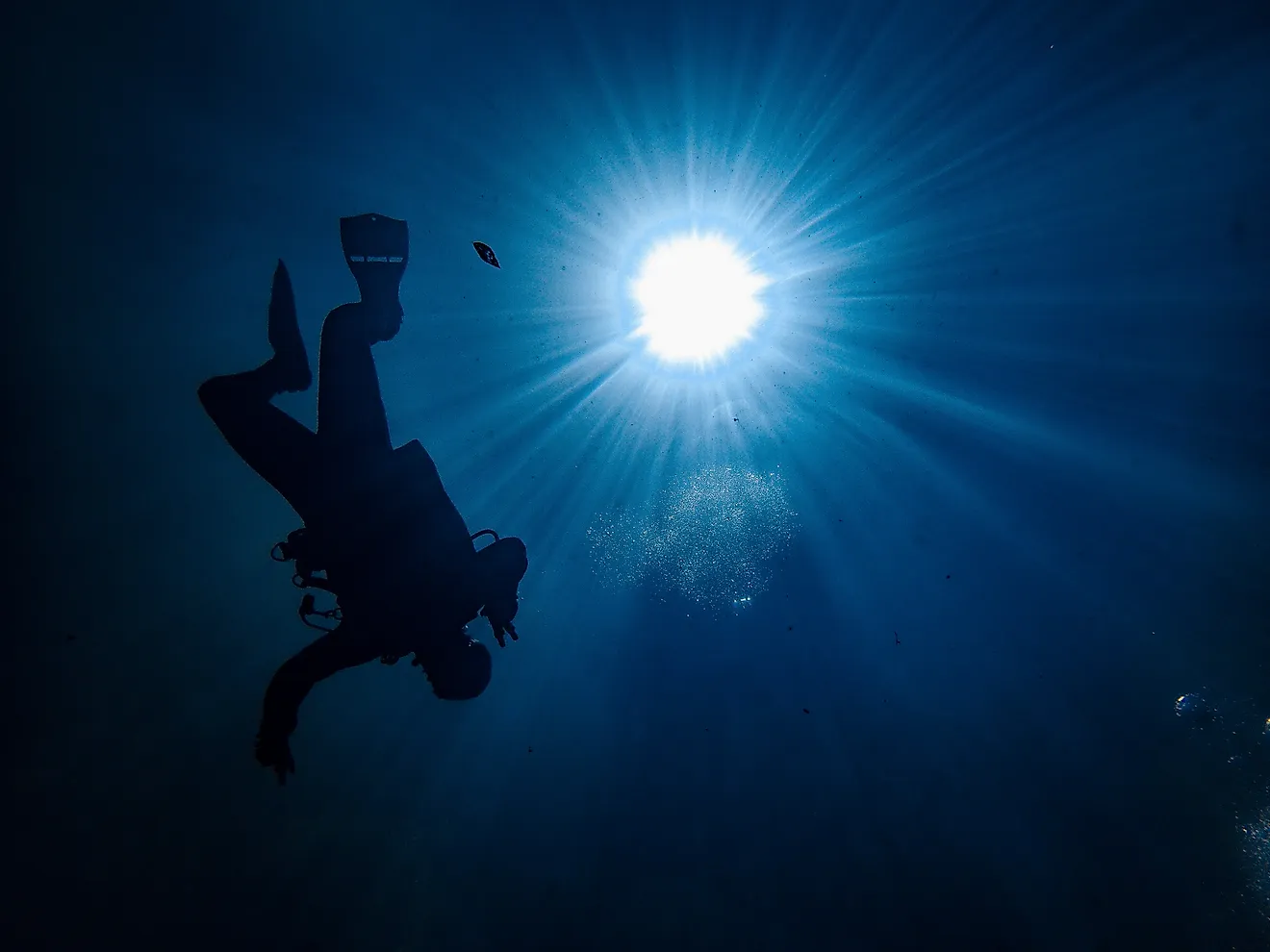
The pass generates standing waves, whirlpools and overfalls on the bigger exchanges, and the water visibly boils under the bridge. Diving there is described as dangerous and suitable only for competent and prepared divers, and kayakers plan passage around slack water rather than attempting to fight it.
It is also one of the few places in the country where a strong tidal current is genuinely a spectator attraction, because a road bridge happens to cross directly above it.
The Large Tidal Exchange Feeds Everything

One consequence of all that moving water is biological rather than nautical. The enormous volume passing through Deception Pass constantly delivers nutrients and plankton, which supports an unusually colorful and dense assemblage of marine life for the Pacific Northwest. Strong tidal passes tend to be rich ones for the same reason, since filter feeders do well where food is delivered to them at speed.
That is the quiet upside of a current violent enough to be a hazard.
So Which One Is It

Both answers are defensible and they are measuring different things.
If strongest means fastest water, it is Deception Pass at eight knots and above, with several southeast Alaska channels credibly close or higher on days nobody was measuring. If strongest means most powerful, it is the Gulf Stream, which moves more water than all the world's rivers while traveling at half Deception Pass's speed.
The honest version is that a tidal strait wins any sprint and an ocean current wins everything else.
The Short Answer

The fastest current in American waters is at Deception Pass in Washington, where a water-level difference between the two ends of a narrow strait drives flow at eight knots and more, twice the speed of the Gulf Stream.
The most powerful is the Gulf Stream, which is slower than a brisk walk and carries more water than every river on Earth. Speed and strength are not the same measurement, and in American waters they sit on opposite coasts.