The Year The Mississippi Hit Its Lowest Level Ever
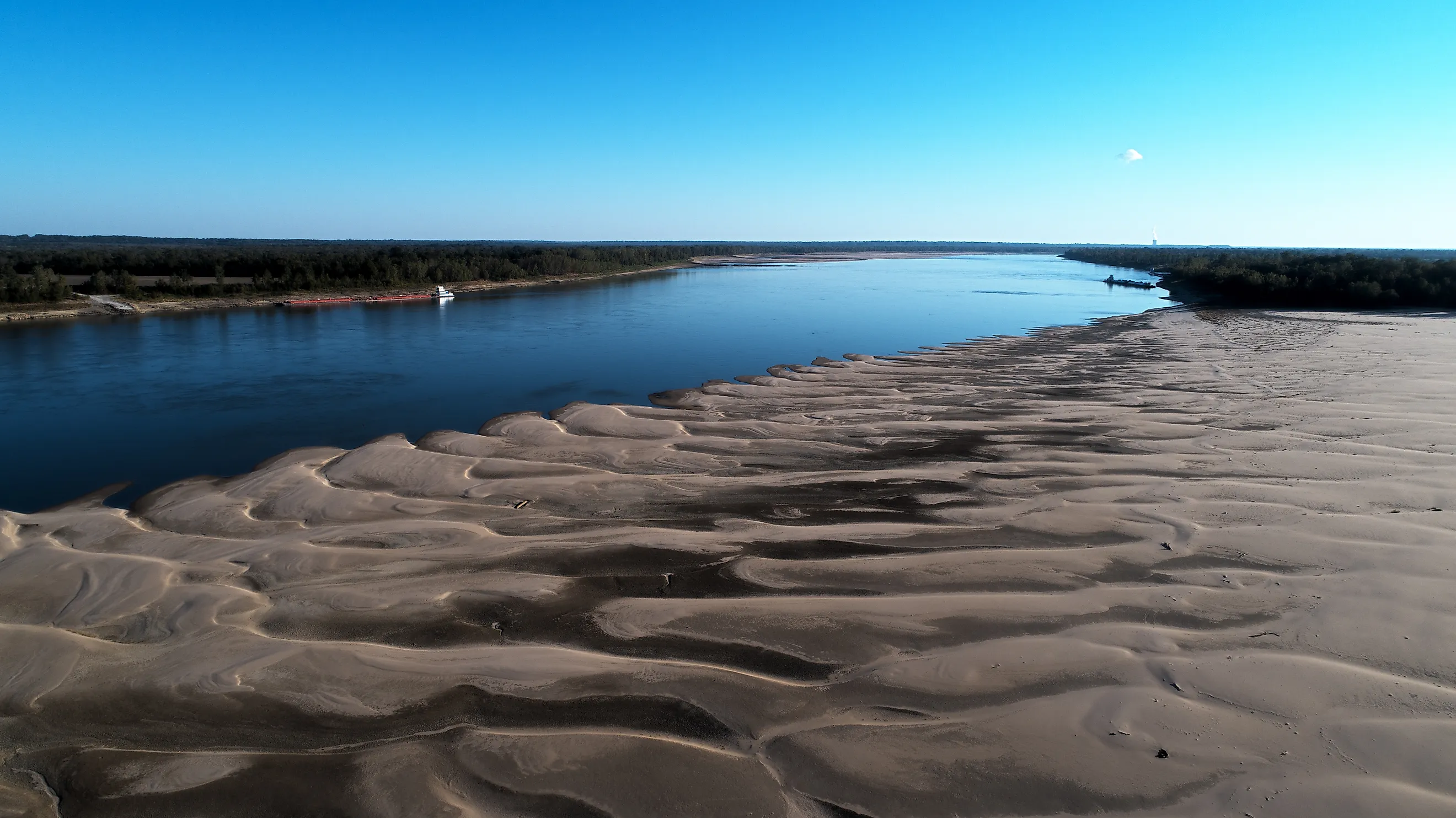
Besides being a key word for spelling bees, the Mississippi River is one of the largest river systems in the world, with many states relying on it for potable water. In 2023, the Mississippi River hit its lowest level ever recorded, surpassing a previous record from 2022. This low water level occurred in October of both years, following high temperatures and low precipitation, which led to an overall drought. The impact was widespread along the river, from contaminated waters in Louisiana leading to drinking water advisories to interrupted river boat traffic in Missouri. The Mississippi River reached its lowest level on October 17, 2023, but had been experiencing low levels since June 2022 and continues to have low-water issues to today.
The records of 2023 and 2022

Water levels from mutliple cities and connected rivers, like the Ohio River, are measured to monitor the Mississippi River. Memphis sits in the Lower Mississippi, which means it is directly impacted by lower precipitation in the middle and upper basins, especially at the confluence of the Ohio and Mississippi Rivers, which takes place at Cairo, Illinois. Memphis is also a key place to measure water due to its important location as a major logistics hub for railroads, air traffic, and river travel. In fact, it has five Class I railroads, according to Barrett Distribution Centers, an honor shared with only two other cities.
The water level was measured in Memphis, Tennessee, at a record of -12.04 feet on the Memphis gauge on October 17, 2023. On the Ohio River at Cairo, Illinois, the gauge fell to 4.5 feet, its lowest since 1901.
This event broke a previous record, set the previous year. Cairo, Illinois, recorded water levels of 4.8 feet, while Memphis, Tennessee, saw levels of -10.8 feet on the Memphis gauge.
The last major drought in the Mississippi River took place in 2012, but water levels were much higher in that event, with the lowest reported being 7.2 feet in Cairo and -9.86 feet in Memphis, Tennessee.
Low water level causes

Drought.gov notes that low water levels are normal in the autumn and winter as precipitation decreases in those seasons. However, with this low level in October 2023, it was driven by a flash drought.
The Lower Mississippi River levels are driven not only by rainfall in a region, but also further north, as the Lower Mississippi River gets 90 percent of its water from rivers upstream by the time it flows through Cairo, Illinois. The remaining 10 percent comes from the Arkansas, White, Yazoo, and St. Francis Rivers. This means that water levels are directly impacted by rainfall further north.
NOAA reported in 2023 that precipitation was below average across the upper Mississippi, specifically in the states of Minnesota, Iowa, and Illinois. Wisconsin was the only state that year to have levels near its average. The situation was even more dire in the Great Plains, with less than two inches of rain reported over sections of eastern Nebraska during the spring months of March to May, which is the driest this area has ever been since 1934.
Overall, precipitation over the entire Mississippi River basin during this 2023 drought was 5 percent below average.
This was paired with average temperatures that were much above average across the entire Mississippi River basin, with Mississippi and Louisiana rising to their record warmest levels. During a historic heatwave and severe drought, Baton Rouge, Louisiana, had an average high of 101.9 degrees Fahrenheit from August 8 to 29.
These warm temperatures didn't just make the drought worse; they also exacerbated evaporation from the river.
Broader impacts

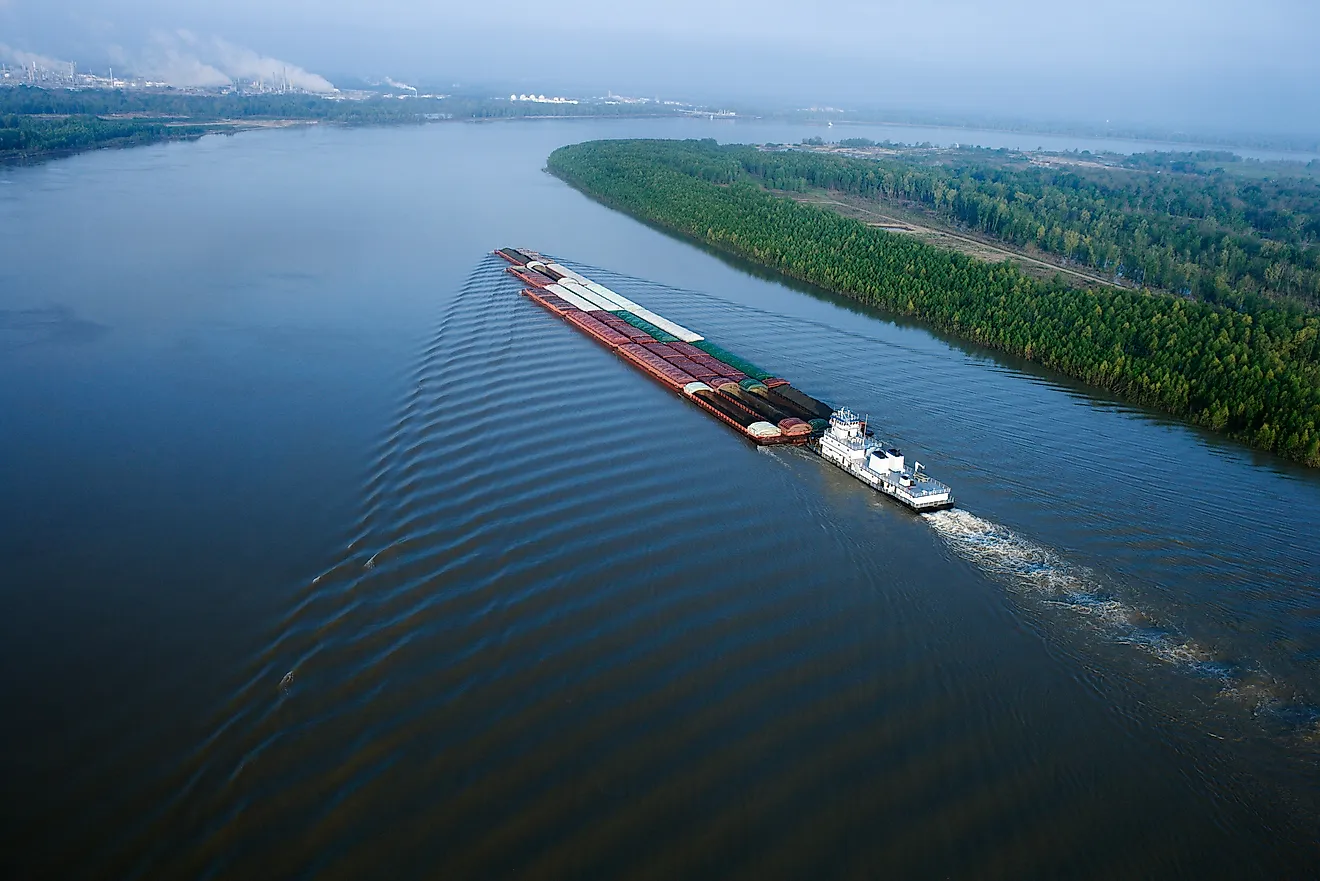
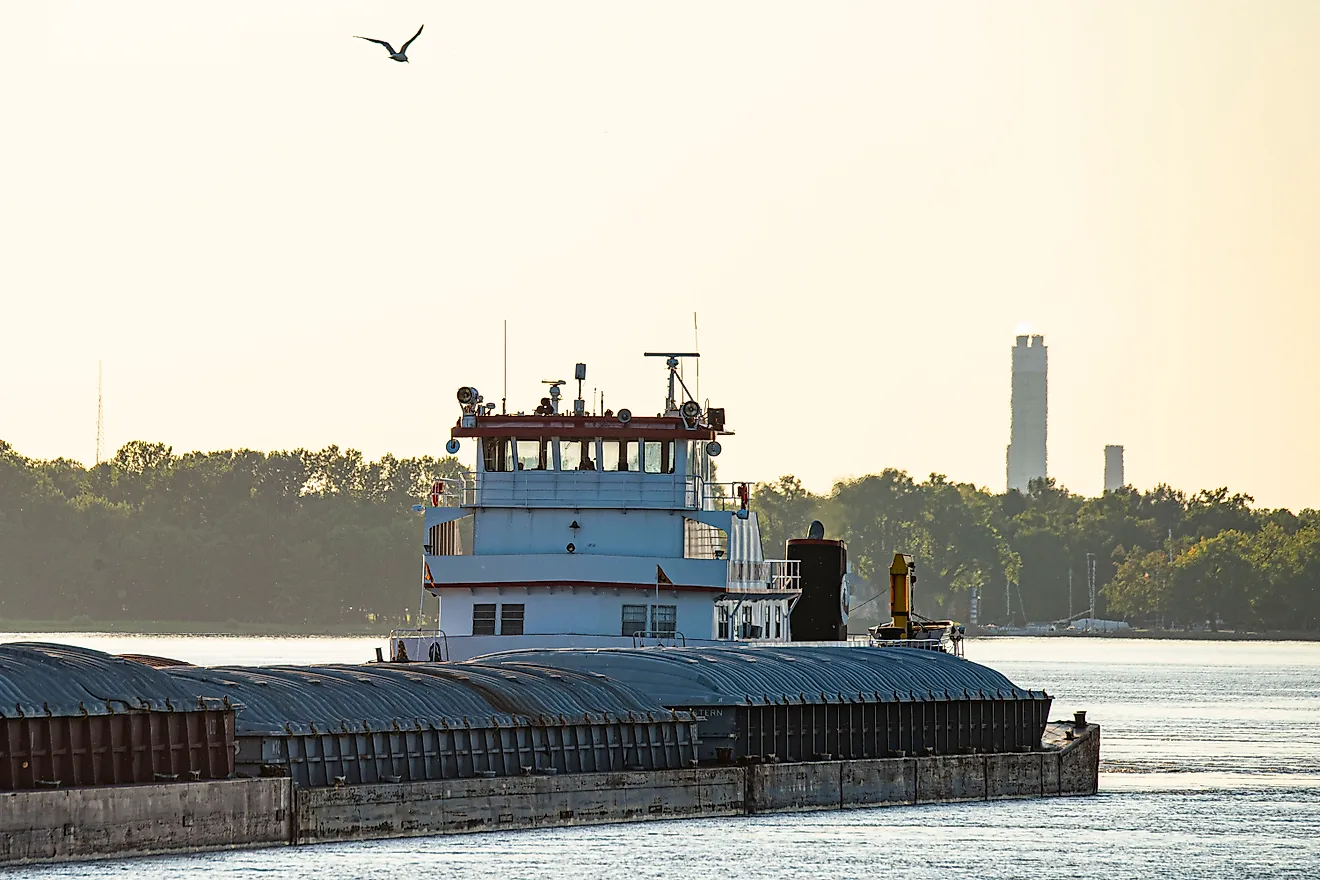
Firstly, this low water level directly impacted barge traffic. Barges deliver close to 90 percent of agricultural exports on the Mississippi River, which is an estimated 660 million tons. When water levels are low, this can greatly impact this vital commercial pathway.
To respond to this, the transportation industry had to lower the draft allowance for barges by reducing the amount of product in the barges. In addition, boats would need to tow fewer barges than usual. This accounts for slower transit times for goods and higher costs.
Secondly, in Louisiana, the Mississippi River was low enough that saltwater from the Gulf of Mexico began to flow up the river, especially in sections where the river's bottom sits at a lower elevation than the Gulf of Mexico.
On September 27, 2023, then-President Joseph R. Biden declared a state of emergency in Louisiana due to the intrusion of saltwater threatening drinking supplies in multiple parishes. In response, residents along the Missisissipi river had to drink bottled water and reduce their use of tap water, and the U.S. Army Corps of Engineers delivered 153 million gallons of water along with reverse osmosis water purification units. The engineers can also deploy a temporary dam underwater called a saltwater sill that can slow down the advance of saltwater upstream.
When the Mississippi River is low, it can reduce the amount of water going into aquifers, especially the Mississippi River Valley Alluvial Aquifer, used for agriculture. Wildlife can be impacted as well, as fish flee from warm shallow waters to deeper waters, where they can become isolated and more vulnerable to predators. Fishers also have less access to popular fish species such as bass.
When did the low level end?

The drought impacting the Mississippi River officially ended on February 2, 2024, according to a press release by the U.S. Army Corps of Engineers Mississippi Valley Division.
At that point, it announced that there were no more draft restrictions for barges moving down the Mississippi River, and there was no longer a need for water dredges. These dredges were used to clear out sand and sediments that would prevent the flow of barges.
This was primarily due to rainfall upstream. This rainfall also restored levels in Louisiana, preventing saltwater from reaching New Orleans.
These drought-like conditions existed from 2022 to early 2024.
Is the Mississippi River still under threat?
The Mississippi River is continuing to have low water levels. In September 2025, the river had lower water levels, drought conditions, and low-water advisories, though it was not as severe as it was in 2023. This was in part driven by dry conditions on the Ohio River, as it contributed about 8 percent of overall water flow for the Lower Mississippi, compared to its usual figure of 50 percent, as of September 18th of that year.
Drought.gov notes that this is the 4th year in a row that the Mississippi River has seen low levels. In order to address these issues, governmental agencies will have to continually monitor water levels and install dredges and sills as needed both to keep waterways open and prevent the flow of saltwater.
This Midwest riverway is deeply impacted by conditions across its entire length. Low rainfall up north can cause low levels down south, leading to record-breaking lows.