The State Parks With The Most Copperheads
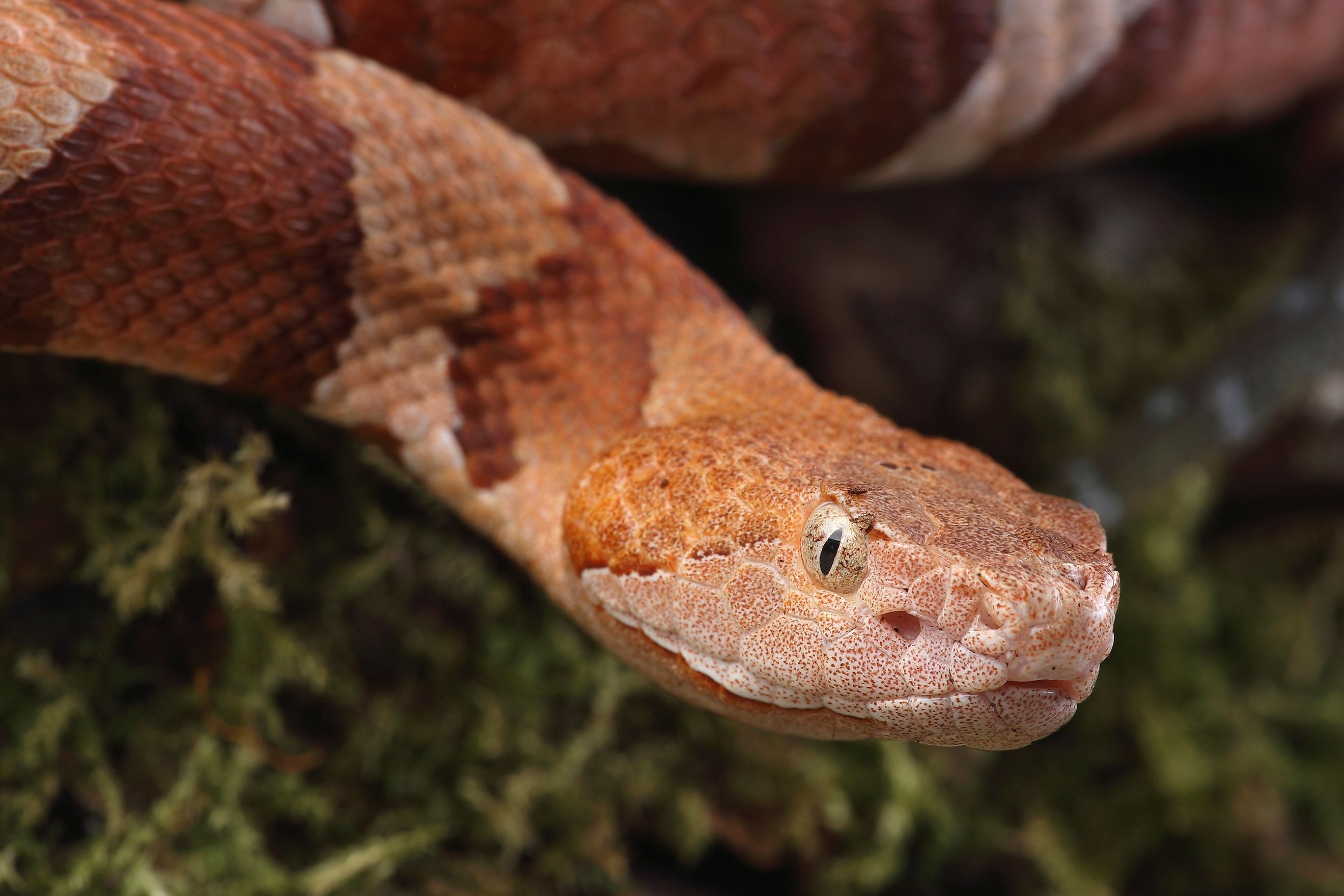
A copperhead’s whole strategy is to let you walk right past it. It holds still, matches the leaves, and bites only when a hand, a paw, or a boot comes down on it, which is exactly what happened to a dog at Sleeping Giant State Park in Connecticut in June 2024. Firefighters carried the dog down on a stretcher, and the owner learned two days later that the “leg injury” was a snakebite.
At each of these five, state officials have said in writing that copperheads live there, in trail guides, on posters, and in one case in a Facebook post about a snake named Red Hot Cheeto. The advice that comes with those warnings is the same in every state, and it is worth reading before the hike.
Giant City State Park, Illinois

The Illinois Department of Natural Resources places the eastern copperhead in the southern third of the state, south of Illinois Route 16, with a second population up the lower Illinois River valley. Giant City State Park, outside Makanda in the Shawnee Hills, sits well inside that range, and the park's own trail brochures say so without hedging. The guide for the three-quarter-mile Indian Creek Nature Trail notes that copperheads hibernate in the sandstone bluffs and can be seen along the trail, and it calls the copperhead the only venomous snake known to breed in the park. The same line is printed in the guide for the Giant City Nature Trail and for the twelve-mile Red Cedar backpacking loop, which is why the park ranks among the better documented copperhead hotspots in Illinois.
Illinois has four native venomous snakes, but cottonmouths keep to swamps and wet bottomlands and the two rattlesnakes are protected species with narrow ranges, which leaves the copperhead as the one a hiker here is likely to meet. IDNR describes its preferred ground as upland forest and river bluffs with sandstone or limestone outcrops, a fair description of the park's namesake "streets," the passages between sandstone blocks on the Giant City Nature Trail. The agency also notes that copperheads sun themselves on exposed ledges, so the rock shelves beside the trail deserve a look before anyone sits down.
Sleeping Giant State Park, Connecticut

The June 2024 rescue at Sleeping Giant took six people, including two firefighters who did most of the carrying, to get one dog down the mountain on a stretcher. Hamden Animal Control used the incident to repeat a message park officials have put out for years. The officers named rocky hillsides and open woods, along with the edges of swamps and meadows, as the places copperheads use, and they recommended high-top boots and a short leash. In July 2017, park officials had photographed copperheads on the property and published the pictures with the same advice, pointing out how completely the snakes vanish into the ground cover. The pattern repeats across the snake-heavy state parks of New England.
The geology is the reason for the warnings. Sleeping Giant is a trap rock ridge, part of the basalt spine that runs up the Connecticut River valley, and the Connecticut Department of Energy and Environmental Protection says the state's greatest concentration of copperheads lives on exactly those Central Connecticut Lowland ridges, in Hartford, Middlesex, and New Haven Counties. Hamden is in New Haven County. DEEP's advice for hikers and climbers on trap rock is to be careful where they put their hands and feet, since the talus slopes and ledges below the summit are also the snakes' preferred basking spots.
Cunningham Falls State Park, Maryland

Maryland has two venomous snakes, the eastern copperhead and the timber rattlesnake, and the Maryland Department of Natural Resources states on its parks wildlife page that both have been documented at Cunningham Falls State Park in Frederick County. The park covers the Catoctin Mountain slopes around Hunting Creek Lake and the 78-foot cascade the park is named for, with rock outcrops on the ridgetops that DNR itself points to as wildlife viewing spots. Those outcrops are where the two pit vipers overlap, and the venomous-snake poster DNR produces for its parks lists sturdy closed-toe shoes and a look before putting a hand or foot on a rock or log.
The numbers put the risk in proportion. Maryland Poison Control fields about 100 snakebite calls a year statewide, roughly half of them involving venomous snakes and most of those involving copperheads, and DNR notes that many of them happen when someone tries to capture or kill the snake. Every snake in Maryland, venomous included, is protected from killing under state regulation, so the correct response to a copperhead on a ridgetop trail is distance rather than a stick, here and at the other Maryland state parks where snakes are part of the deal.
Dinosaur Valley State Park, Texas

At Dinosaur Valley State Park, about 60 miles southwest of Fort Worth, the busiest ground is the Main Track Site in the Paluxy River, where R.T. Bird found the first sauropod trackway in the world in the 1930s. In late April 2023, rangers found a broad-banded copperhead there, caught it, and moved it to a remote corner of the park. The snake objected to the handling so strongly that staff named it Red Hot Cheeto, and commenters on the park's Facebook post complained that the rangers should have killed it. Park staff replied that every species of wildlife in the park is protected, that rangers have "a healthy respect" for snakes, and that snakes have a crucial role in the ecosystem there.
The species matters here. Most of the broad-banded copperhead's range is in Texas, and taxonomists split it from the eastern copperhead as its own species, Agkistrodon laticinctus, in 2015, so the snake near the tracks was a different animal from the one at Sleeping Giant. Its habits are the same. After the Cheeto episode, staff asked visitors to turn around if a snake is on the trail, to leave it alone, and to call a ranger, who will relocate it if needed, the standard line at the Texas state parks with the heaviest snake traffic.
Myrtle Beach State Park, South Carolina

Myrtle Beach State Park opened in July 1936 as South Carolina's first state park, and a 100-acre stand of oceanfront maritime forest, one of the last on the Grand Strand, takes up a third of its 312 acres. That forest is copperhead habitat. Park staff publish a copperhead notice telling visitors that the snakes "may be encountered while walking on our trails or in the campground," and it adds that copperheads have excellent camouflage and may hold still, hoping to blend into the leaf litter, rather than move off. Snakes are protected under state park law there, so the notice is about coexistence rather than removal, and the half-mile Sculptured Oak Trail through the forest is where it applies most. The forested sections of other copperhead hotspots in South Carolina, Hunting Island State Park among them, carry similar notices.
The posted rules for campers are short. Wear closed-toe shoes at all times, and carry a flashlight for any walk through the woods or campground after dark. If a copperhead is in view, walk away from it slowly. A snake on the campsite itself is a job for the ranger on duty, not for whoever has the longest tent pole.
How To Hike Where Copperheads Live

The Missouri Department of Conservation says the copperhead is the most common venomous snake in Missouri, that it bites an estimated 100 or more people there each year with a fatality rate of about 0.01 percent, and that most of those bites happen when someone tries to kill or handle the snake. A copperhead death in Missouri in July 2014, at Sam A. Baker State Park, began with a camper picking the snake up to show it to his son. The agency adds that copperhead venom is mild compared with a rattlesnake's and that about a quarter of venomous snakebites are dry, with no venom injected, but every bite still gets medical attention.
Season matters too. Dustin Thames of the Tennessee Wildlife Resources Agency says adult copperheads give birth between August and October, and once fall temperatures drop, the snakes come out of cover to bask in daylight after a summer of mostly nocturnal movement. That puts the most adults and juveniles on trails in October, on ground covered in leaves the same color as the snake. His advice matches what staff at every park on this list already post. Leave the sandals at home, stay on the marked path, keep the dog away from logs and rock piles, and walk around any snake rather than over it. Handled that way, a copperhead on the trail is a sighting to tell people about rather than a stretcher carry down a mountain.