The US Lakes Where Piranhas Have Been Caught
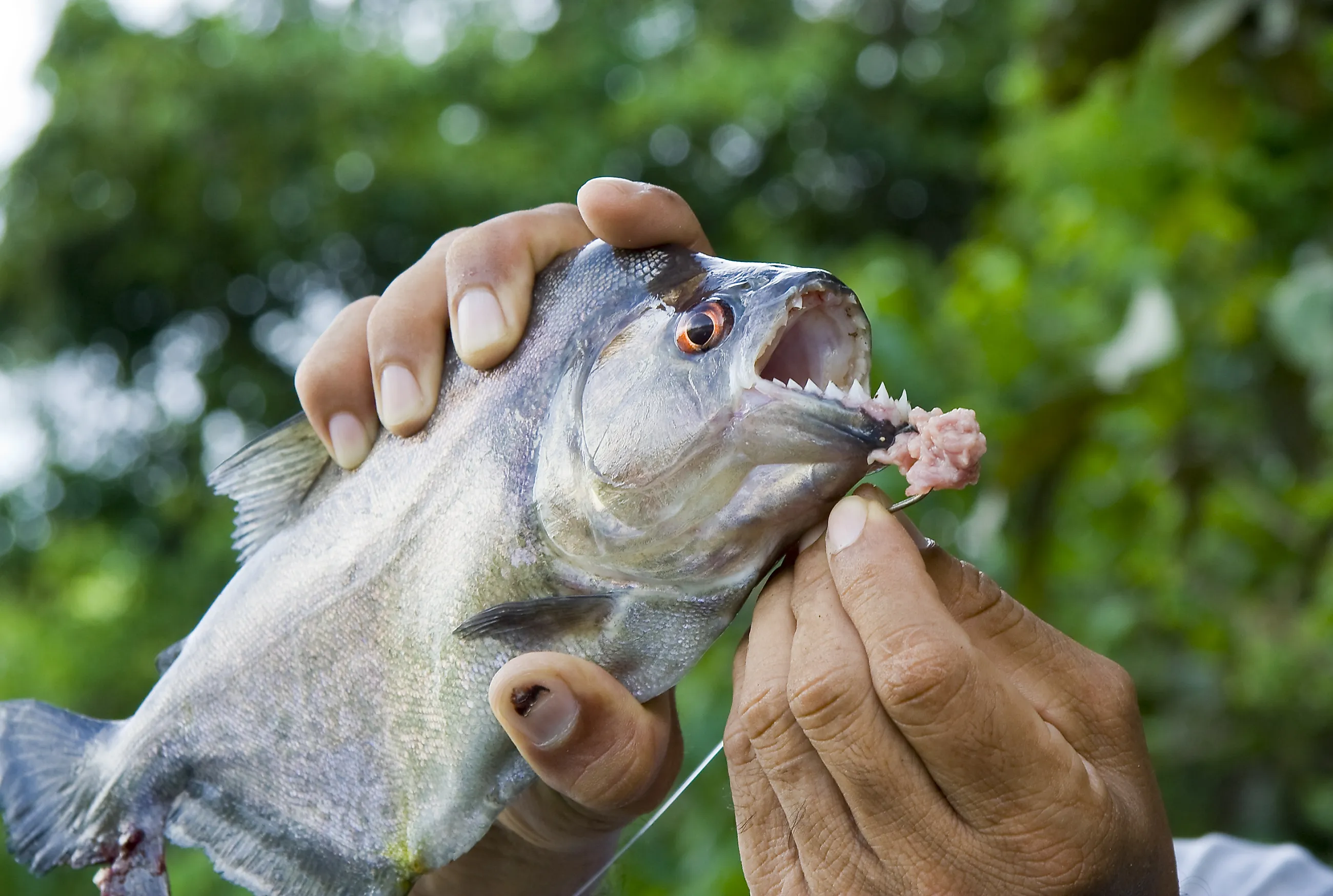
A fish with razor-sharp teeth is the last thing anyone expects to pull from an American lake. Piranhas are freshwater predators native to South America, yet wildlife agencies have documented them in US lakes and reservoirs for decades, with aquarium releases the most likely explanation. The latest case came in August 2026, when an 8-year-old reeled in a 2-pound red-bellied piranha at a lake outside Philadelphia.
These catches matter mainly for ecology. A federal risk assessment found that introduced piranha populations in the United States have either failed to establish or been eradicated. Individual released fish can still prey on native species. The documented catches come from wildlife agency records, federal ecological risk assessments, or news reports citing officials. Pacu, a related fish with crushing teeth, are often mistaken for piranhas.
Ridley Park Lake, Pennsylvania

On Saturday, August 8, 2026, Seamus Coffey was fishing at Ridley Park Lake in Delaware County with his dad. He had already landed two catfish when something bigger tugged his line. Pennsylvania Fish and Boat Commission officials said the 9.5-inch, 2-pound catch was a piranha. Officials suspect someone had kept the fish as a pet before illegally releasing it into the lake.
Seamus at first thought he had caught a bass. His father, Michael, thought it looked like a large bluegill, something they had not caught before. The family first returned the fish to the water, then retrieved it and left it for a snapping turtle, according to local reporting. State officials believe it was an isolated incident.
Duban Lake, Minnesota

A piranha was captured in Duban Lake in Rice County, Minnesota, in July 1993, and a museum specimen preserved the evidence. Local biologists first misidentified the fish as pacu, but it was later recorded as a red piranha. The USGS notes that such mix-ups are common because pacu and piranhas are often confused, despite differences in their teeth.
The federal risk assessment describes a pattern in northern states. Reports usually involve a single fish caught on hook and line in summer, or one found dead when temperatures drop. Red piranhas can tolerate water temperatures as low as around 50 degrees Fahrenheit, making Minnesota winters a major obstacle to their establishment.
University Lakes, Louisiana

LSU's mascot is a tiger, but in May 2021 the lakes near the Baton Rouge campus produced a different kind of predator. An angler caught a red piranha in University Lakes. Fisheries agents began checking the lake for any others and asked anglers who catch one not to return it to the water.
Although piranhas have a fearsome reputation, the department noted that they are more likely to scavenge on dead or dying prey, including fish and crustaceans. The Louisiana Department of Wildlife and Fisheries said the fish was most likely an illegally kept pet that someone dumped. All piranha species are illegal to possess or sell in Louisiana.
Aberdeen Lake, North Carolina

A piranha turned up in Aberdeen Lake in Moore County, North Carolina, in September 2022. Two fishermen caught the fish on September 24 and showed it to Aberdeen resident Chad Ray, who was at the lake celebrating his son's birthday. Ray photographed the dead fish, took it home, and posted the pictures on Facebook, where they were shared more than 20,000 times.
The North Carolina Wildlife Resources Commission confirmed the catch, and the record appears in USGS data as well. Officials suspected the fish was an aquarium pet that had outgrown its tank and been released into the lake. The commission said the fish was unlikely to survive the winter, as water temperatures below 50°F would prove fatal.
Lake Bentonville, Arkansas

Lake Bentonville is a catfish and largemouth bass lake, the kind of place where the biggest surprise is usually a snagged log. Angler Roger Headley caught a piranha there on May, 1 2015, at first mistaking it for a large perch. When he reached to remove the hook, the fish opened its mouth and tried to bite him.
The Arkansas Game and Fish Commission confirmed the 8-inch piranha. Keith Stephens, the commission's Assistant Chief of Communications, said a few pacus and piranhas are caught in Arkansas waters from time to time, usually after owners release unwanted pets. Officials reported finding piranhas in local lakes about twice a year, including a previous catch at Beaver Lake's Hickory Creek Marina in 2014. No breeding populations have been established in the state.
Tom Bass Park Lake, Texas

On August 27, 2011, five-year-old Lindsay Schutte was fishing with her family at a lake in Harris County's Tom Bass Regional Park when she hooked a hand-sized fish that had taken a piece of hot dog. It was her first fishing trip, and after about an hour, she finally reeled in the unusual catch. Her mother, Christi, managed to remove the hook and put the fish in a bucket of water.
When her six-year-old son, Jack, tried to pick it up, the fish bit him, leaving a deep wound that bled heavily. Unsure of what they had caught, the family went to a nearby Bass Pro Shops store to identify it. Employees suspected it was a piranha and turned it over to authorities. Texas Parks and Wildlife confirmed it was a red-bellied piranha.
It was the second verified piranha ever in Texas waters, and the first since a fish taken at Boerne City Reservoir in Kendall County in 1982. Officials suspected an aquarium owner dumped it. A 2011 announcement noted that a first offense for possessing a prohibited fish could bring a fine of up to $500, and that subsequent convictions can carry more severe penalties.
Wahiawa Reservoir, Hawaii
Oahu's Wahiawa Reservoir is a 350-acre, privately owned irrigation reservoir, and piranhas were first reported there in June 1992. The sighting led to "The Great Piranha Hunt," the title of a 1992 article in Hawaii Fishing News. A mature female piranha was taken on February 23, 1993.
A later study titled "Forensic biological pursuits of exotic fish origins: piranha in Hawaii" examined where she came from. According to the USGS summary of the case, there was no indication the species had become established. The case is one of the few US piranha records that led scientists to investigate the origin of the fish, not merely its identity.
Simi Valley Golf Course Lake, California

A golf course lake already has plenty of hazards, from stray golf balls to snags that trap fishing hooks. The California Department of Fish and Wildlife recorded a single red-bellied piranha collected from a golf course lake in Simi Valley, Ventura County, in 1998. California's other records include a piranha captured in a Riverside County pond in 1987. The pond was drained afterward, and no further fish turned up.
Two were caught in a Santa Barbara County park pond in 1989, but experts suspect they were pacu. All piranha species are on California's restricted animals list, and the state asks anyone who finds one not to release it, but to freeze it and contact the CDFW's Invasive Species Program department.
The Pacu Cases

Some of the most famous piranha stories involve a lookalike. The Michigan Department of Natural Resources documented three pacu reports in July 2016, two from Lake St. Clair and one near Port Huron. Unlike piranhas, pacu have blunt, human-like teeth.
A 2021 Dallas Morning News report citing USGS data documented North Texas pacu at Lavon Lake in 1987, Eagle Mountain Lake in 2000, Lake Texoma in 2003, and Ray Perry Lake in 2007. The report counted 27 pacu records in Texas since the 1980s. Federal records note an Alabama fish once reported in a newspaper as a red piranha that turned out to be a pacu.
A Small Risk To Swimmers
A single piranha in a lake is unlikely to threaten swimmers, and experts consider the species' man-eater reputation greatly exaggerated. It should not be handled casually, though. The bigger concern is ecological.
Introduced piranhas could prey on native species and compete with them, so agencies ask anglers to report catches. California's wildlife agency says red piranhas can survive water as cold as 50 degrees Fahrenheit, though temperature is one factor among many in whether a population takes hold. If you catch a suspected piranha, do not release it, and contact your state wildlife agency.