Why Great Lakes Freighters Have Their Bridge At The Front
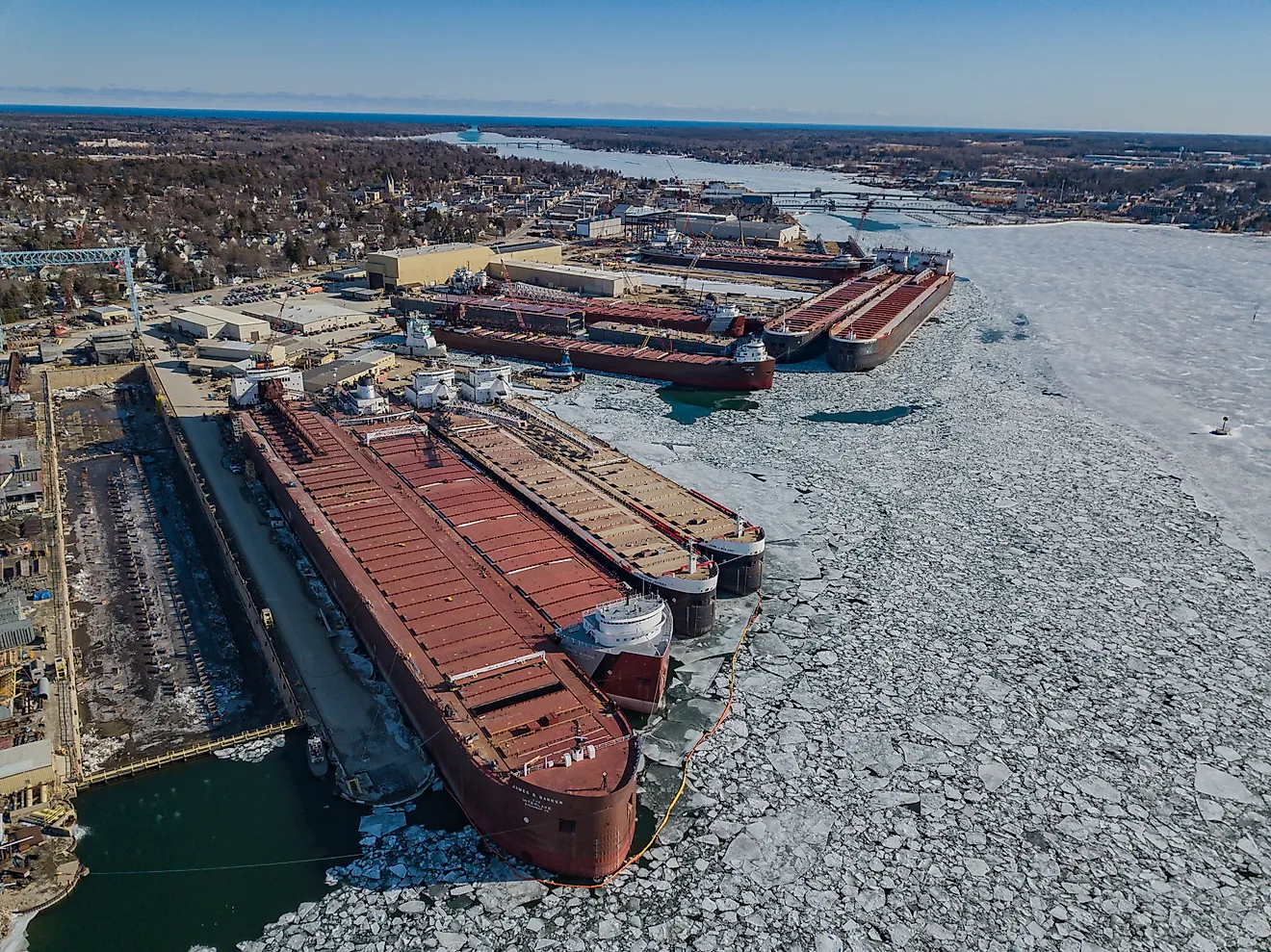
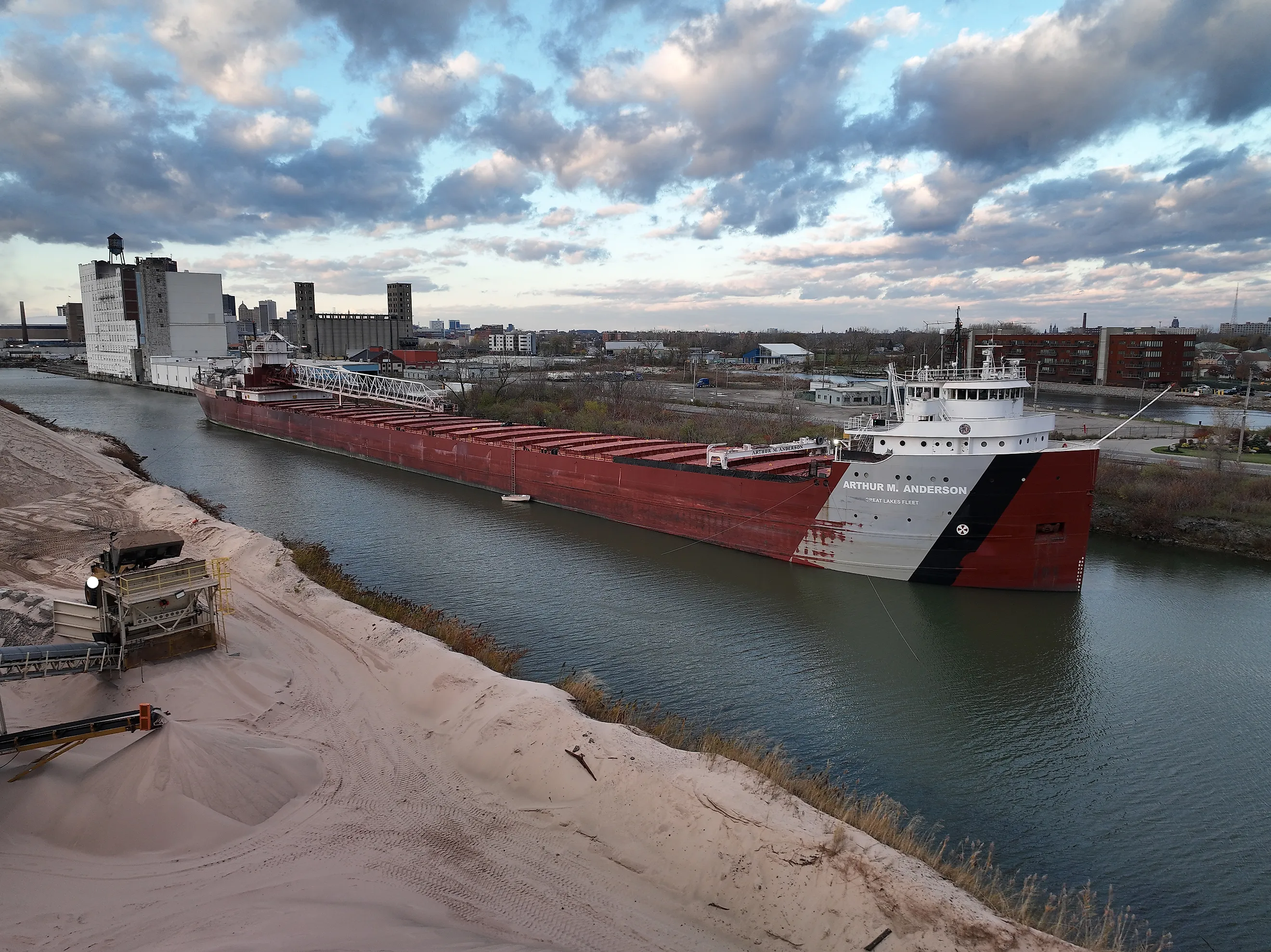
Great Lakes freighters carry their pilothouse at the bow because the first ore carrier built for the lakes did. The R.J. Hackett of 1869 put its engine at the stern and its navigators at the front, with one long row of cargo hatches between them. That layout shaped the iron ore fleet on the Great Lakes for more than a century and gave the wheel a far better view. The shape is fading now, since no shipyard has built a laker that way since 1974. What follows is the why: the reasons the bridge went forward, why the shape held for a hundred years, and why it finally moved aft.
It Copied The First Ore Carrier On The Lakes

A wooden steamer launched at Cleveland in 1869 set the shape lake freighters kept for more than a century. Elihu Peck built the Hackett for an ownership group that included Peck himself and Captain Robert J. Hackett. Steam barges of the day had already moved their machinery aft and their pilothouses forward. The Hackett carried that arrangement into a ship designed from the keel up for bulk ore.
Heavy oak keelsons and iron cross-bracing let Peck build one large, uninterrupted hold beneath a row of hatches. The Hackett brought the first cargo of iron ore into Cleveland in 1871. Shipyards around the lakes quickly copied the plan. Over the next four years, they turned out 46 more wooden bulk carriers built the same way.
The Hatches Had To Match The Ore-Dock Chutes

The ore docks at Marquette, Michigan, dictated where the Hackett's hatches went. Peck designed those evenly spaced hatches to match the dock chutes there, which let the ship load and unload quickly. With one house up front and another over the engines, the hatches could run unbroken along the deck between them.
The William A. Irvin shows the same plan at full scale. Launched in 1937 as the flagship of a steel company's ore fleet, it carries 18 hatches over three cargo holds. Each opening measures 38 by 11 feet (11.6 by 3.4 m). An electric crane rolling on deck rails lifted the steel covers.
Using Hulett unloaders on shore, the Irvin once emptied a load of iron ore in two hours and 55 minutes. The ship's museum says that record still stands.
A Bow Wheelhouse Sees What Radar Cannot

On the St. Marys River, narrow channels and strong currents test the pilots who take freighters between Lake Superior and Lake Huron. State historians credit the Hackett's layout with a second gain beyond cargo space. From a pilothouse up front, visibility improved greatly.
That visibility counts most in tight water. Ed Harris, a St. Marys River pilot, told a maritime trade magazine in 2007 that losing sight of the bow worried him most. Near the banks, he explained, the water pulls at a ship and makes it harder to steer. By radar alone, he said, a pilot cannot tell which way the bow is swinging until it is too late. The downbound channel through the rock cut measures 300 feet (91 m) across.
Why The Shape Held For A Century

For a century the forward house was simply how a lake bulk carrier was built, and the habit held long enough to shape the first thousand-footer. In 1972, the first thousand-footer on the lakes sailed with its pilothouse at the bow. The Stewart J. Cort came north from Ingalls Shipbuilding in Pascagoula, Mississippi, as just a bow and a stern joined together. That short hull, nicknamed "Stubby," measured 182 feet (55 m) long and 105 feet (32 m) wide. At Erie, Pennsylvania, shipwrights cut Stubby apart and joined it to a midbody built there.
The finished ship stretched 1,000 feet (305 m) and left on its maiden voyage on May 1, 1972. No other thousand-footer steers from the bow, and every crew cabin on the Cort sits forward as well. Its after cabin houses the shuttle boom of the self-unloading system.
The Interlake Steamship Company now runs the Cort on a regular iron ore route between Superior, Wisconsin, and Burns Harbor, Indiana. A large "#1" painted on its aft house marks its place as the first of the thousand-footers.
Why Self-Unloaders Ended It

The Algosoo ended the run two years later. Launched in 1974, it remains the last laker built with the pilothouse forward and the engines aft. No later thousand-footer copied the Cort's forward pilothouse either.
The William Clay Ford lost its place to self-unloaders. Built for Ford Motor Company in 1953, it was a 647-foot (197 m) straight-decker carrying iron ore and coal to Ford's Rouge plant. Even after a lengthening to 767 feet (234 m), it could not keep up.
Its owner replaced it with two self-unloaders, which moved cargo ashore with their own belts and booms at any lake port. The Ford went to the scrapyard in the late 1980s, but its pilothouse did not.
What The Split Deck Meant For The Crew
Two cabins, one at either end, divided a classic laker's crew. On the Hackett, the engine-room crew lived at the stern alongside the galley. The pilothouse rode at the bow, a ship's length away.
On the Irvin, the forward section holds the pilothouse, a chart room, and the captain's office and quarters. Four guest staterooms paneled in walnut share that end of the ship, along with a lounge. The steel company used the Irvin to host its most loyal customers on seven-day round trips. Guests dined in their own room on deck, between the first and second hatches.
The long cargo deck separated the two houses. The Irvin's builders ran the side-tank bulkheads up to the spar deck, which formed two tunnels for sheltered passage fore and aft in stormy weather. Aboard the Valley Camp, which sailed with a crew of 32, the museum now rents out the old officers' mess and galley for events.
Where You Can Still See A Forward Pilothouse

Four retired pilothouses along the lakes and their rivers open to the public, each beside its own stretch of water. On the Detroit River, the William Clay Ford's pilothouse now rests beside the Dossin Great Lakes Museum on Belle Isle in Detroit. Visitors can try docking the Ford on a video simulator. A periscope salvaged from the submarine USS Tambor lets them watch passing ships.
The Valley Camp, moored just below the Soo Locks in Sault Ste. Marie, Michigan, keeps its pilothouse up on the bow. Visitors can also look into the captain's and guest quarters, and the ship's 2026 season ran from May 8 to October 17. Back on Lake Superior, the Irvin gives daily tours from May to September at the Minnesota Slip in Duluth.
The Col. James M. Schoonmaker has the oldest pilothouse of the group, from 1911. Guest suites sit directly below it in the bow. The wheelhouse carries two steering wheels, the second a backup in case a steering cable broke. The ship lies on the Maumee River near the western end of Lake Erie, at the National Museum of the Great Lakes in Toledo, Ohio. Its season runs from May to October.
How To Spot One From Shore
A pilothouse at the bow marks a laker built in 1974 or earlier. The layout dates from the Hackett, when hatches had to line up with dock chutes and the wheel needed a clear view ahead. The Algosoo was the last of that line. The Stewart J. Cort is the exception worth looking for, since it is the one thousand-footer still steering from the bow. The "#1" on its aft house is the second clue.