The Lakes That Beat Back An Invasive Species
In 1997, California poisoned every northern pike out of Lake Davis, and two years later the fish were back. The state came again in 2007, this time hitting the whole reservoir and its connected waters at once, and the pike have not returned since. Clearing an aquatic invader after it has spread is brutally hard, because a few surviving fish, plant fragments, tubers, or eggs can restart the whole population. On the lakes here, crews beat those odds, whether by wiping the invader out entirely or by knocking its numbers low enough for native fish, aquatic plants, and water clarity to climb back. The tools ranged across rotenone, herbicides, commercial netting, angler harvest, and years of dogged monitoring, and biologists count the payoff in clean surveys and recovering natives.
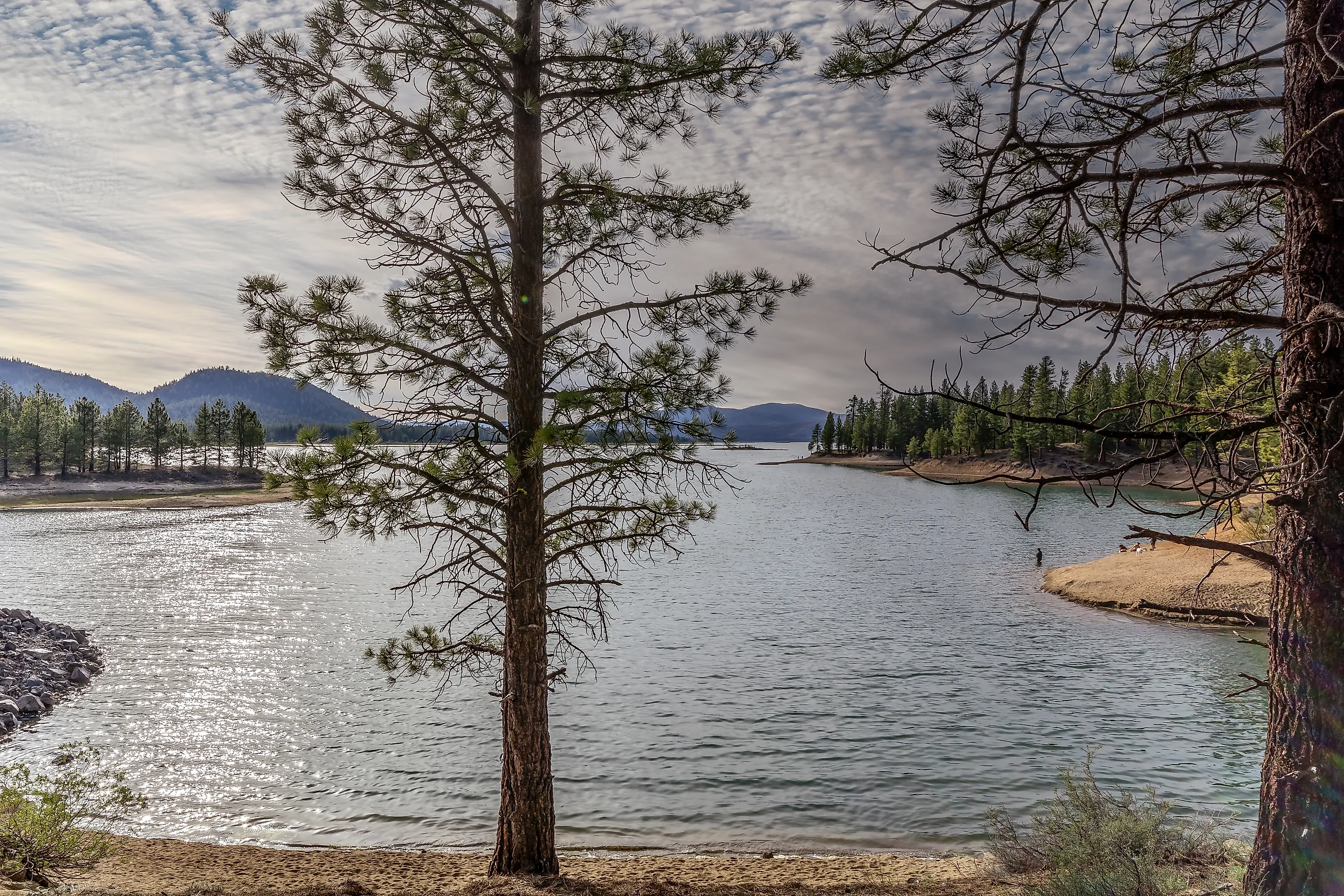
Lake Davis, California

Northern pike were discovered in Lake Davis in 1994. The state attempted an eradication in 1997, but the fish turned up again in 1999. The California Department of Fish and Wildlife prepared a second operation with the U.S. Forest Service and treated the reservoir with rotenone in 2007. Crews targeted the predatory fish across the reservoir and connected waters instead of relying on routine harvest.

No northern pike are currently known anywhere in California. State crews have also resumed regular rainbow trout stocking at Lake Davis, which is what makes the turnaround matter to anglers. The reservoir sits in Plumas National Forest near Portola, and several campgrounds, day-use areas, and boat ramps line the water. A fish that survived California's first eradication attempt has now been absent since the much larger 2007 treatment.
Stormy Lake, Alaska

Northern pike had already gutted Stormy Lake's native fishery before Alaska Fish and Game treated the roughly 400-acre lake in September 2012. Pike preyed on Arctic char and rainbow trout until the lake could no longer support a viable sport fishery, and the same fish threatened salmonids elsewhere in the Swanson River drainage. Biologists collected native fish for restoration, then treated the lake and its outlet creek with rotenone. The chemical had fully degraded by January 2013, and native fish began returning that March. Crews added several thousand hatchery-reared Arctic char fingerlings the following summer.

A 2014 netting survey found native salmonids recovering. Water-quality readings were similar before and after treatment, and surveys found comparable invertebrate diversity. Alaska Fish and Game now records the invasive northern pike population as successfully removed.
Lake Manitou, Indiana

The Indiana Department of Natural Resources detected hydrilla in Lake Manitou in the summer of 2006. The state imposed immediate access restrictions on the 775-acre reservoir near Rochester, a lake built in 1827. Hydrilla can reproduce through fragments, tubers, seeds, and buds, so a boat or a piece of equipment can carry it into uninfested water.

State crews followed the restrictions with a decade of aquatic herbicide treatments. Disappearing plants were not enough to close the project. Surveyors kept searching intensively for another three years, looking for growth that could have survived below the surface.
That monitoring turned up five consecutive years without a hydrilla detection. The Indiana DNR now classifies Lake Manitou as fully eradicated and reports that the response appears to have kept the plant from reaching other water bodies. Few aquatic weed projects end this cleanly, particularly against a species that can survive through buried tubers.
Pipe Lake, Washington

Hydrilla once grew in Pipe Lake and nearby Lake Lucerne in King County. The plant can build dense underwater stands and reproduce through fragments, tubers, seeds, and turions, and small pieces left behind after treatment can seed new growth. That is why the state pushed for complete removal rather than control. Private contractors worked with the Washington State Department of Ecology, King County, Maple Valley, and Covington on the eradication program.
Washington's Invasive Species Council records hydrilla as eradicated from both lakes in 2006, and later monitoring found no regrowth. The long clean stretch matters because the crews did not stop when the last visible plants disappeared. Surveyors kept watching for plants that might emerge later from surviving material. Pipe Lake has now gone about two decades without a confirmed return of the original infestation.
Great East Lake, Maine and New Hampshire

Variable-leaf watermilfoil can turn a small introduction into a large management problem because it spreads mainly through fragmentation. Maine's Department of Environmental Protection warns that broken pieces can establish new plants and that dense growth can interfere with swimming, fishing, and boating. Great East Lake escaped that outcome. Maine's environmental department lists its variable-leaf milfoil population as eradicated in the state inventory of lakes with invasive aquatic species. The result stands out because department staff describe established variable milfoil as extremely difficult to remove completely. Prevention continues around the lake through weed surveillance and efforts to keep plant fragments from traveling on watercraft. Those precautions matter on a lake shared by Maine and New Hampshire, where a boat can move among many regional waterways in a single season. The recorded infestation is gone, and surveyors keep watching for any new introduction.
Yellowstone Lake, Wyoming

Lake trout remain in Yellowstone Lake, so the National Park Service still runs one of America's largest invasive-fish suppression programs. The predator was discovered there in 1994 and fed heavily on native Yellowstone cutthroat trout. Lake trout spend much of their time in deep water, beyond the reach of the many bears, eagles, ospreys, and other animals that catch cutthroat near shore or in spawning streams. Commercial crews and park staff have removed millions of lake trout through intensive gillnetting, including more than a quarter million in a single recent season.

The Park Service reports that the lake trout spawning stock has fallen roughly 87 percent from its peak around 2010. Cutthroat trout have increased as predation pressure eased. Park Service biologists have documented cutthroat returning to spawning streams, along with renewed bear activity. Bald eagles have come back around those feeding areas, and ospreys have begun to return as well.
Lake Pend Oreille, Idaho

Lake Pend Oreille's kokanee were in severe trouble by the early 2000s. Idaho Fish and Game estimated fewer than 200,000 adult kokanee in 2001, and the count later fell to about 10,000 in 2007. Predation by lake trout was one of the pressures driving the decline.
Idaho expanded commercial netting and paid anglers to harvest lake trout. Biologists also fitted adult lake trout with telemetry transmitters. The tagged fish led crews to two important spawning areas about 15 miles apart, which gave netters much more precise places to work. By 2016, anglers and netters had removed about 177,000 lake trout, and monitoring showed adults and juveniles down by more than 80 percent.
Kokanee fishing reopened in 2013 after the adult population climbed back above a million fish, its strongest showing in years. Lake trout removal continues today, and Idaho still pays anglers for harvested fish to protect kokanee and native bull trout.
Lake Wingra, Wisconsin

A major common carp removal in the winter of 2008 changed measurable conditions in Lake Wingra. Carp feed along the bottom and stir up sediment, which can keep shallow water cloudy and hold submerged plants back. Researchers had 12 years of ecological records from before the removal, and they followed the Madison lake for another 17 years, from 2008 through 2024. Mean summer water clarity rose 64 percent after carp numbers fell. Aquatic vegetation spread into deeper water and reached a maximum colonization depth of 3.96 meters within four summers.

The clearer conditions held through the entire post-removal record examined in a 2026 study in the journal Ecosystems. Nutrient concentrations also declined after the intervention. Common carp were still present, and Eurasian watermilfoil expanded along with other submerged vegetation, yet the clear-water, plant-dominated state persisted for 17 years. Comparable shallow-lake shifts often last only five to ten years, according to the researchers.
What the Successes Have in Common
The pattern across these lakes is that the treatment was only the start. Rotenone or herbicide cleared the invader, but the durable outcomes came from years of surveys afterward, whether that meant Washington surveyors watching Pipe Lake for regrowth or Indiana crews searching Lake Manitou for growth hidden below the surface. Scale mattered too. Where an eradication reached every connected water at once, as at Lake Davis, the invader stayed gone; where the target was a fast-breeding predator in a large lake, as at Yellowstone Lake and Lake Pend Oreille, managers settled for relentless suppression and measured success in recovering natives rather than in a clean survey. Either way, the lakes that beat back an invader did it with patience as much as chemistry.