The US Lakes Where Invasive Snakeheads Have Been Found
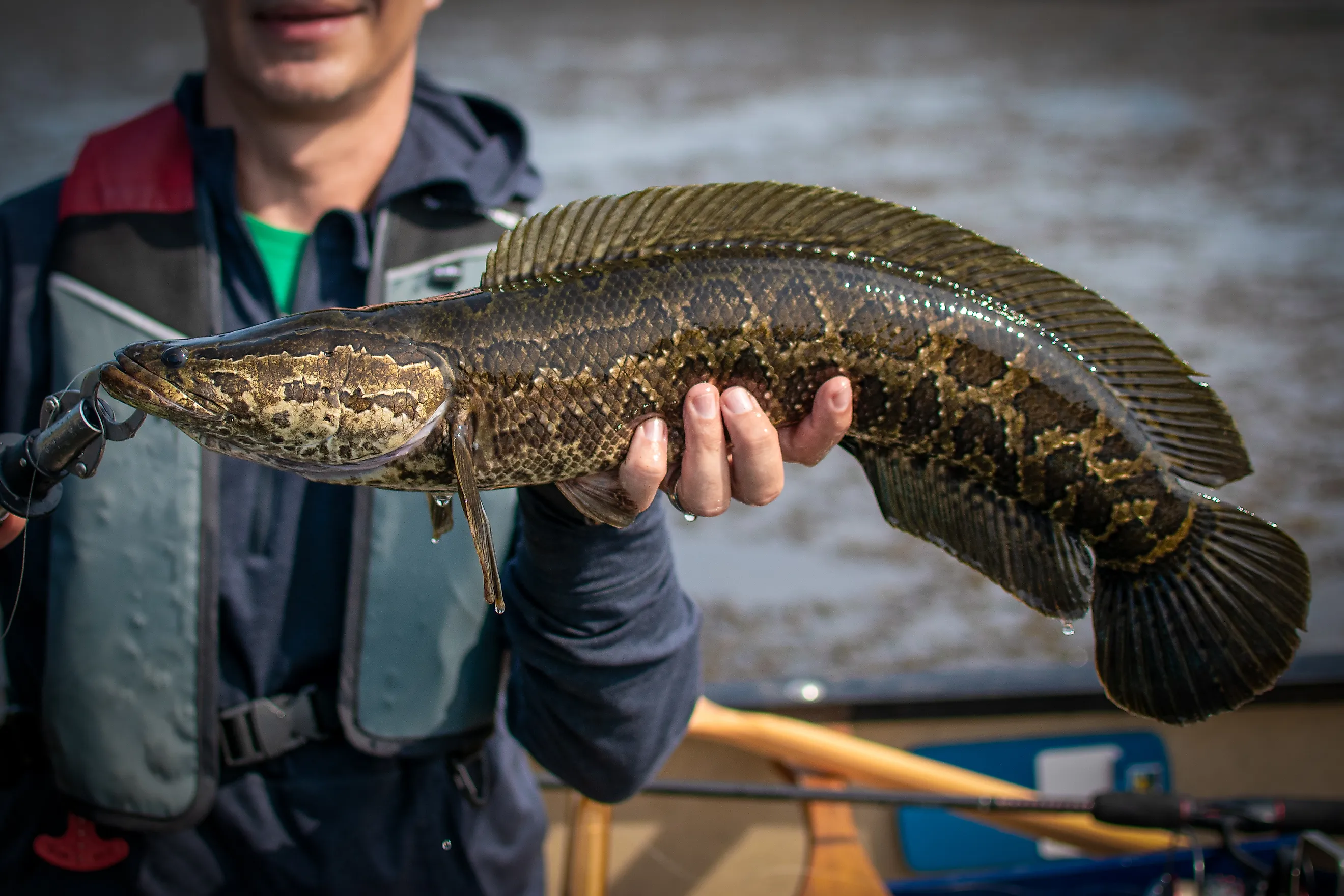
Snakeheads are no longer a one-pond oddity in the United States. Federal records place them in city park lakes, reservoirs, oxbows, and tropical impoundments. Some support established populations. Others have produced only one confirmed fish. Most mainland records involve the northern snakehead, Channa argus, an air-breathing predator native to East Asia. Hawaii has long-established blotched snakeheads, while South Florida supports goldline snakeheads. A capture alone does not prove a breeding population. The U.S. Geological Survey tracks individual collection records and assigns population status when the evidence supports it. The lakes below stand out for dated specimens, repeated collections, nests, fry, or direct evidence of reproduction.
Meadow Lake, New York

Meadow Lake puts a heavily documented northern snakehead population in the middle of Queens. New York State Department of Environmental Conservation work cited by USGS recorded 34 snakeheads between June 2005 and October 2010. One federal entry lists fish measuring 15 to 28 inches, and the database marks the population as established. The collections came from a lake inside Flushing Meadows Corona Park, only a short distance from the Unisphere and the park's broad lawns.
The dates keep returning. Federal records include collections in 2005, 2006, 2008, 2009, and 2010. That gives biologists several years of confirmed observations from one compact urban lake. Meadow Lake also connects with the wider Flushing Creek system. Its snakehead record belongs to a linked urban waterway, with 34 collected fish supplying unusually strong evidence for a New York City lake.
Willow Lake, New York

Willow Lake sits just south of Meadow Lake in the same Queens park and has its own substantial northern snakehead record. USGS data cite 17 fish collected between June 2005 and October 2010. Collections occurred in multiple years, and the population is listed as established. Willow is smaller and marshier than Meadow, with broad wetland edges and shallow water. Those conditions suit a fish that USGS describes as an obligate air-breather capable of surviving in poorly oxygenated habitat. Northern snakeheads commonly use sluggish lakes, ponds, canals, and reservoirs. Here, the urban surroundings make the record especially memorable. A wetland lake in Queens held enough snakeheads for repeated collections across five years. The evidence also has a clear paper trail through a New York DEC study devoted specifically to northern snakeheads in Willow and Meadow lakes.
Lake Artemisia, Maryland

Lake Artemisia in College Park joined Maryland's snakehead map in 2019. The USGS Nonindigenous Aquatic Species database records northern snakehead there with established status. The lake falls within the Middle Potomac-Anacostia-Occoquan drainage, where the species already had a substantial regional presence.
Its location makes the record easy to picture. Lake Artemisia is a public park lake inside the Washington metropolitan area, surrounded by trails and suburbs. Maryland's federal dataset contains hundreds of snakehead records across the same broad drainage.
The 2019 entry names Lake Artemisia directly. There is no need to infer the waterbody from a county or nearby river record. For a lake-focused project, that precise locality gives College Park a clear Maryland lake record. The federal table dates it to 2019.
Conowingo Reservoir, Pennsylvania and Maryland

Summer 2023 brought the first documented northern snakehead reproduction in Conowingo Reservoir. Anglers and Pennsylvania Fish and Boat Commission biologists also captured multiple fish there. Monitoring had intensified after 21 snakeheads passed Conowingo Dam during fish-lift operations in May 2020. By August 2023, the commission still described abundance as low, yet breeding had been documented.
Conowingo occupies the lower Susquehanna River behind a major hydroelectric dam. That geography gives the 2020 fish-lift count and the later reservoir captures a clear sequence. First came documented passage at the dam. Three years later came multiple catches and reproductive evidence. Few lake records trace the arrival of snakeheads this neatly. Pennsylvania issued its reproduction announcement on August 2, 2023. The reservoir occupies the Maryland-Pennsylvania reach of the lower Susquehanna.
Lake Pelham, Virginia
Lake Pelham near Culpeper carries a concise federal record with a clear locality. USGS lists a northern snakehead from the lake in 2015 and marks the occurrence as established. The reservoir belongs to the Rapidan-Upper Rappahannock drainage, outside the tidal Potomac waters most closely associated with Virginia snakeheads. Another established reservoir record appears in the same drainage at Hunting Run Reservoir in 2013. Lake Pelham is also a municipal water-supply reservoir, giving fisheries work there significance beyond recreational angling. The federal database names Lake Pelham itself as the locality. The confirmed record places this Culpeper reservoir directly in the national distribution data for Virginia. USGS lists Lake Pelham and Hunting Run Reservoir in the same HUC, both with established status.
Stewart Lake, New Jersey

Stewart Lake in Woodbury yielded eight northern snakeheads on August 2, 2011. The USGS specimen entry also notes a reported nest and marks the population as established.
The nest adds reproductive evidence. Northern snakeheads build floating nests in vegetation, and both parents guard their eggs and fry. USGS reports that spawning in the United States can begin in late April and continue through August.
Stewart Lake lies in the Lower Delaware drainage, where snakeheads had already appeared in creeks, ponds, and the Delaware River. Eight fish in one collection give the locality numerical weight. The nesting report adds direct reproductive context to a compact suburban lake in Gloucester County. The same specimen entry places Stewart Lake in the Lower Delaware drainage.
Crystal Lake, New Jersey

Crystal Lake in Burlington County has a clean paper trail. A northern snakehead about 14 to 16 inches long was recorded there on April 8, 2012. The same USGS entry notes another catch reported to New Jersey Fish and Wildlife in August 2011. Federal data list the lake occurrence as established. Two reports in consecutive years give the site a stronger history than a single undated sighting.
Crystal Lake belongs to the Crosswicks-Neshaminy drainage in the wider Delaware River region. The 2012 record includes a voucher photograph and identifies the fish as a direct sighting report. The documentation is unusually concrete: a named lake, a measured fish, a dated federal entry, a photograph, and an earlier catch already on file. That is a solid evidentiary package for a relatively small New Jersey lake.
Flat Lake, Arkansas

Flat Lake places Arkansas's snakehead invasion in the low, wet country of the Lower White River drainage. USGS lists a northern snakehead from the lake in 2017 with established status. The same federal records contain many eastern Arkansas occurrences in bayous, ditches, lakes, and river-connected wetlands. Snakeheads were first discovered in the state in 2008. Their biology fits these slow waters: USGS describes Channa argus as tolerant of low oxygen and fond of shallow, muddy habitat with vegetation. Several established 2017 records also appear nearby in Laboring Bay and elsewhere in the Lower White drainage. Flat Lake is one named piece of a much broader Arkansas population spread through floodplain waters. The federal table places the lake in Arkansas County.
Merrisach Lake, Arkansas
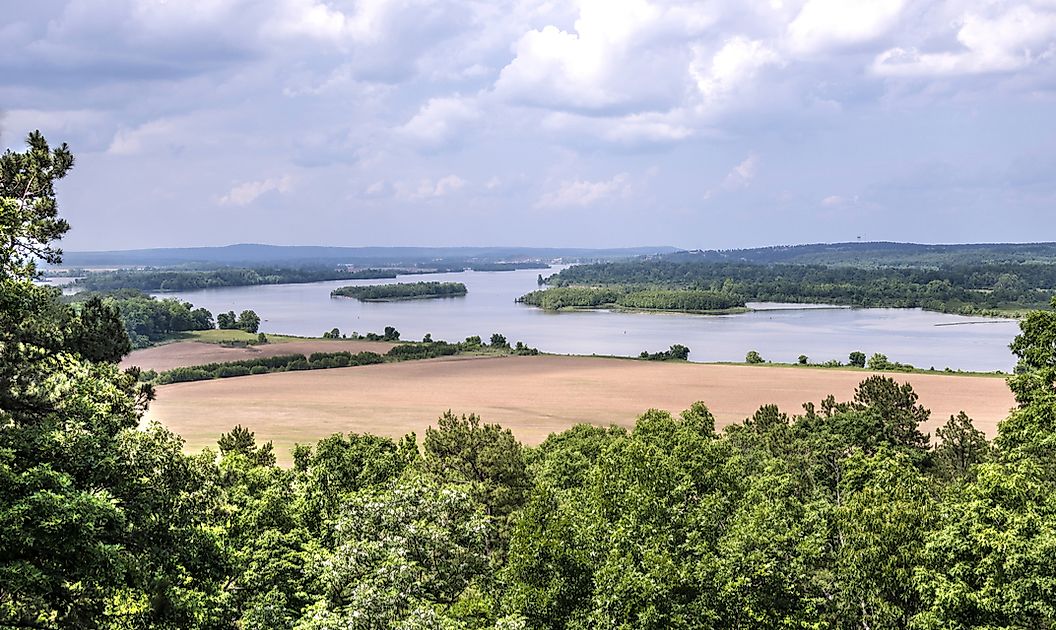
Merrisach Lake and Old Merrisach Lake form a dense cluster in the Arkansas records. USGS lists numerous established northern snakehead collections from Old Merrisach Lake in 2017. A confirmed Merrisach Lake record followed in 2018. Arkansas Game and Fish Commission data supplied the underlying records.
Both waters lie in the Lower Arkansas drainage near Tichnor. Individual federal entries identify adult fish, and the collection table repeats Old Merrisach Lake across multiple 2017 records. The sequence is easy to follow in the federal table. Several adults appear in the older lake, followed by a named record from Merrisach Lake the next year. USGS assigns established status to those lake records, matching the wider eastern Arkansas population. The federal table places both waters together in HUC 08020401.
Lake Beulah, Mississippi

Lake Beulah has one of the most vivid records in the federal database. On June 5, 2019, observers encountered northern snakeheads in this Mississippi River oxbow during flooded conditions. USGS notes a fry ball with two adults and says one adult was captured. The occurrence still carries an unknown population status in the database.
Another confirmed fish appeared six years later. Mississippi State University graduate students captured it on June 24, 2025. The collection point was on the east bank, about two kilometers south of the Bolivar County boat launch.
Young fish beside adults make the 2019 observation unusually rich in detail. The 2025 capture adds a second date well after the first. Lake Beulah sits beside the Mississippi River, and the 2019 record specifically notes flooding during the encounter. Those field notes give the oxbow a snakehead record tied closely to real river conditions.
Wahiawa Reservoir, Hawaii

Wahiawa Reservoir, better known as Lake Wilson, shifts the species entirely. The invasive fish documented here is the blotched snakehead, Channa maculata. USGS records place it in the reservoir in 2002 and 2004 with established status, while broader Oahu records reach back to 1870. Hawaii's snakehead record predates the mainland outbreaks that attracted national attention in the 2000s. Lake Wilson sits in central Oahu, where introduced freshwater fishes have a long history. The federal collection table names the waterbody as "Wahiawa Reservoir (=Lake Wilson)," leaving little ambiguity about the site. Its two modern reservoir records sit inside an island population that has persisted for generations. USGS also lists older Oahu reservoir records from 1900 and 1984 that may refer to Wahiawa.
Tamarac Lake, Florida

Tamarac Lake produced a striking number in the USGS database. Forty-four goldline snakeheads were collected there on August 21, 2001. The industrial-park lake in Tamarac carries established status. Florida records once used the name bullseye snakehead for these fish. Current USGS taxonomy identifies the established South Florida species as Channa aurolineata, the goldline snakehead.
More catches were already appearing around Tamarac that same year. A nearby canal collection in October 2001 contained 16 fish, alongside other records from the connected canal system. The lake sits within Broward County's web of artificial freshwater channels and impoundments. Forty-four fish in one collection gives Tamarac Lake a substantial single-event count in Broward County. USGS lists release for food and dispersal among the recorded pathways.
Lake Wellington, Florida

Lake Wellington delivered two substantial goldline snakehead collections within nine days. Florida Fish and Wildlife Conservation Commission data recorded by USGS list 13 fish on September 21, 2016. Nine more followed on September 30. The first group ranged from about 254 to 864 millimeters and weighed up to 3,632 grams. Both records carry established status. The measurements capture several fish across a broad size range in the same suburban lake. Nearby canals in Palm Beach County also hold goldline snakehead records, placing Lake Wellington inside an extensively connected freshwater system. Twenty-two documented fish from two September sampling events give this lake an unusually strong numerical record. The records were verified directly through Florida Fish and Wildlife Conservation Commission data.
Silverwood Lake, California

Silverwood Lake holds California's only confirmed snakehead record. A northern snakehead was collected from the San Bernardino County reservoir in 1997. California's Department of Fish and Wildlife says snakeheads are not established anywhere in the state. USGS treats the occurrence as a failed introduction.
No established population followed the Silverwood discovery. California wildlife officials still identify the 1997 fish as the state's sole confirmed snakehead occurrence.
The specimen earns Silverwood a place here on the strength of direct confirmation. Its status is simple: one verified fish in one reservoir, followed by nearly three decades without an established California population. At Silverwood, the documented introduction stopped at detection. California still reports no established snakeheads statewide. The state wildlife agency continues to cite that 1997 specimen as its only confirmed occurrence.
Lake Wylie, North Carolina

Lake Wylie produced a snakehead large enough to be memorable and unusual enough to trigger a taxonomic correction. On April 19, 2009, a 31-inch, 12.7-pound gravid female was caught in shallow water in the Paw Creek arm west of Charlotte. The fish was first identified as a northern snakehead. Genetic work and closer examination later identified it as a blotched snakehead, Channa maculata.
Biologists electrofished the area the following day and found no additional specimens. USGS lists the population status as unknown. The fish was preserved at the North Carolina State Museum as NCSM 53258, giving the record a permanent museum voucher. No established blotched snakehead population has been documented in Lake Wylie. The 2009 female remains a thoroughly verified isolated capture from a major reservoir.