What Happens To Page If Lake Powell Hits Dead Pool
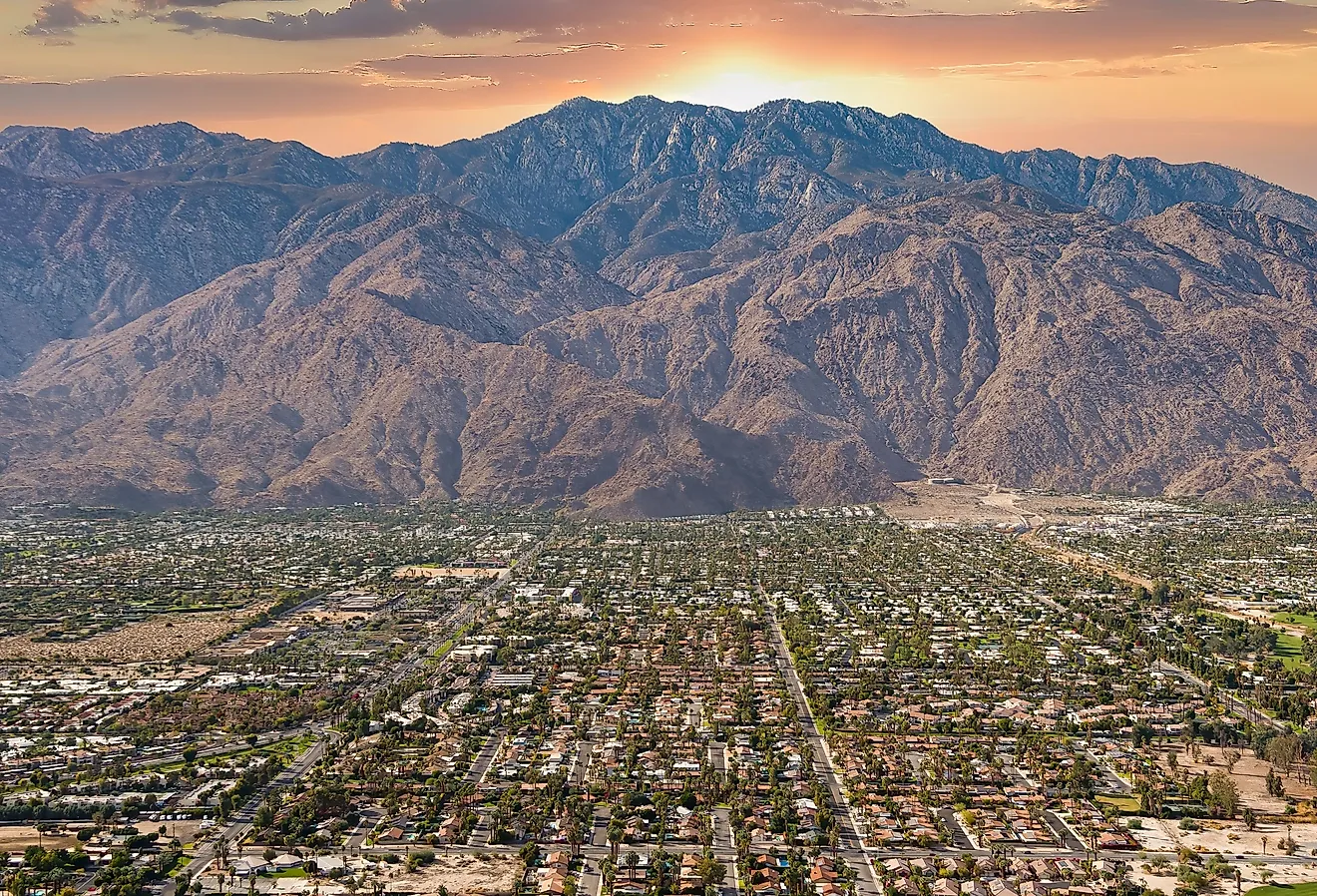
Page, Arizona, sits beside Glen Canyon Dam, the dam behind Lake Powell, and the boat launches, electricity, river trips, and tap water in town all depend on that lake. Each of them works only while the water stays above a certain height, and each one has its own cutoff. On October 29, 2026, Lake Powell stood about 160 feet above dead pool, the level at which no water can pass through the dam at all. For a town of about 7,500 people that serves an estimated 3 million tourists a year, a drop to that level would shut these off one at a time, and only one of them was built to keep working all the way down.
Every Boat Ramp Near Page Would End Far Above the Water

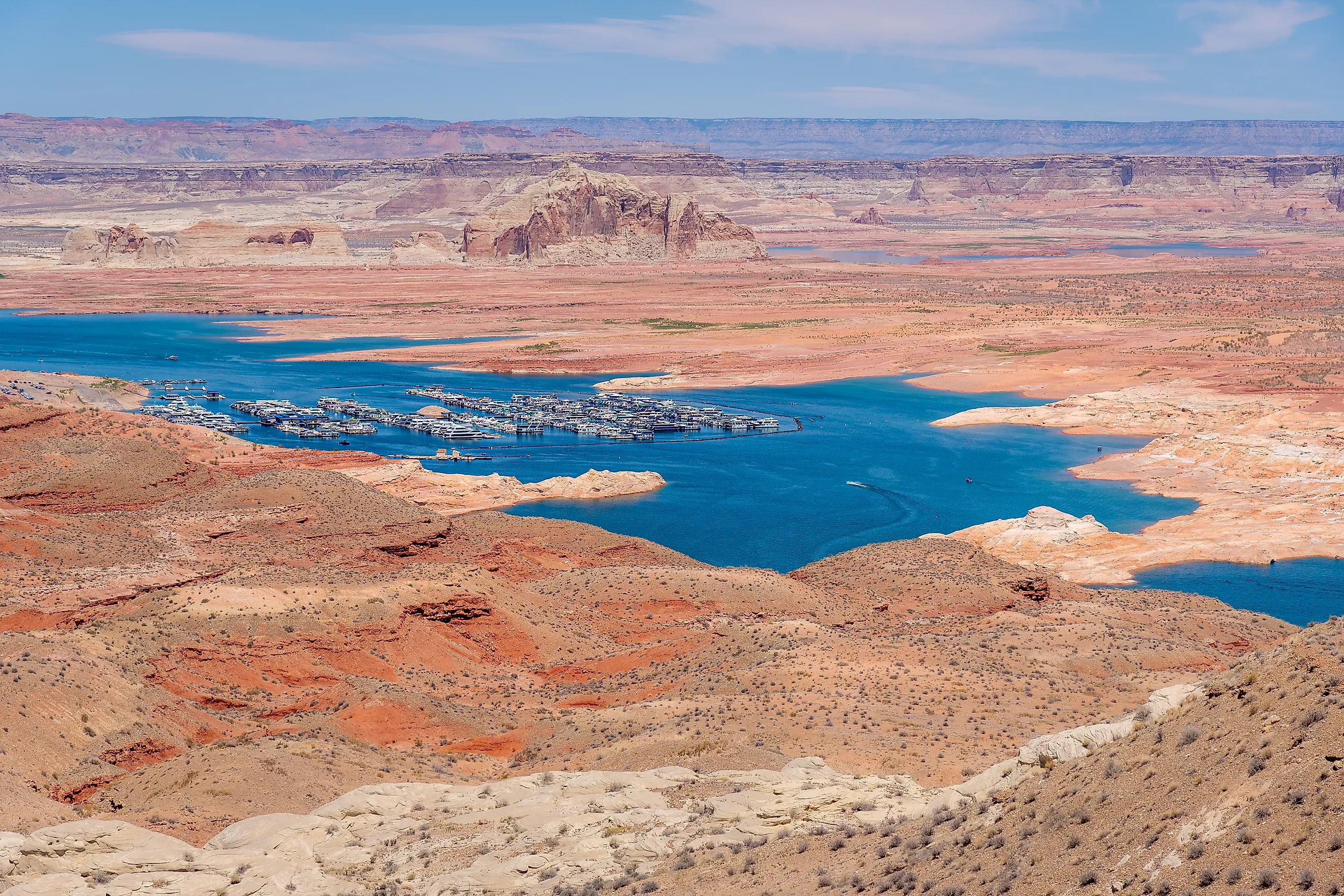
Every ramp near Page is listed or designed for water no lower than about 3,515 feet, so at dead pool, boaters around town would have nowhere to launch. The lowest is the Stateline Auxiliary Ramp at Wahweap, the one motorboat ramp near town in use in late October, rated down to 3,515 feet with plate mats laid on its surface below 3,524. A new ramp at Antelope Point, costing about $81 million, is designed to reach water as low as 3,520 feet. At dead pool, the lake surface would sit about 145 feet below the bottom of the Stateline ramp and about 150 feet below the new one.
Most ramps around Page already end above the water. At Wahweap, the Main Launch Ramp needs at least 3,545 feet, and the public ramp at Antelope Point Marina needs 3,588, about 57 feet above the late-October lake. The boat tour to Rainbow Bridge, which leaves from Lake Powell Resort at Wahweap, is listed as unavailable until further notice, and the monument's docks no longer reach land once the lake drops below 3,548 feet.
Page's Tourism Slump Would Deepen

Lake Powell lies within Glen Canyon National Recreation Area, which also takes in the Horseshoe Bend overlook and Lees Ferry, and in 2024, visitors to the recreation area and Rainbow Bridge spent $518.2 million in nearby communities. Visits fell to 3.7 million in 2025, about 1.5 million fewer than in 2023. In July 2026, with the lake still about 150 feet above dead pool, Judy Franz, executive director of the Page Chamber of Commerce, said business owners reported visitor traffic down about 30%. At dead pool, boaters near Page would have no ramp to the lake, and the float trips below the dam would have no released water.
Tours of Antelope Canyon, a slot canyon on Navajo land a few miles outside Page, run on dry land and would continue at dead pool. Entry is by guided tour only, and as many as 3,500 visitors a day go through Upper Antelope Canyon in peak season.
Page Would Lose the Dam's Share of Its Electricity

Glen Canyon Dam's power plant stops at 3,490 feet, 20 feet above the centerline of the intakes that feed its eight penstocks. Below that line, all water leaving Lake Powell would bypass the turbines, which have a combined capacity of 1,320 megawatts and in 2022 supplied power reaching as many as 5.8 million homes and businesses in seven states.
Power the turbines do not produce has to be bought elsewhere, and in 2024, routing nearly 900,000 acre-feet around the generators to cool the river for native fish cost about $19 million in replacement power. Page got about 40% of its electricity from the dam in 2022, and Bryan Hill, who runs the town's public power utility, warned that year that continued dry conditions could mean an additional 25 to 30% in power costs.
No Dam Water Would Reach the River at Horseshoe Bend

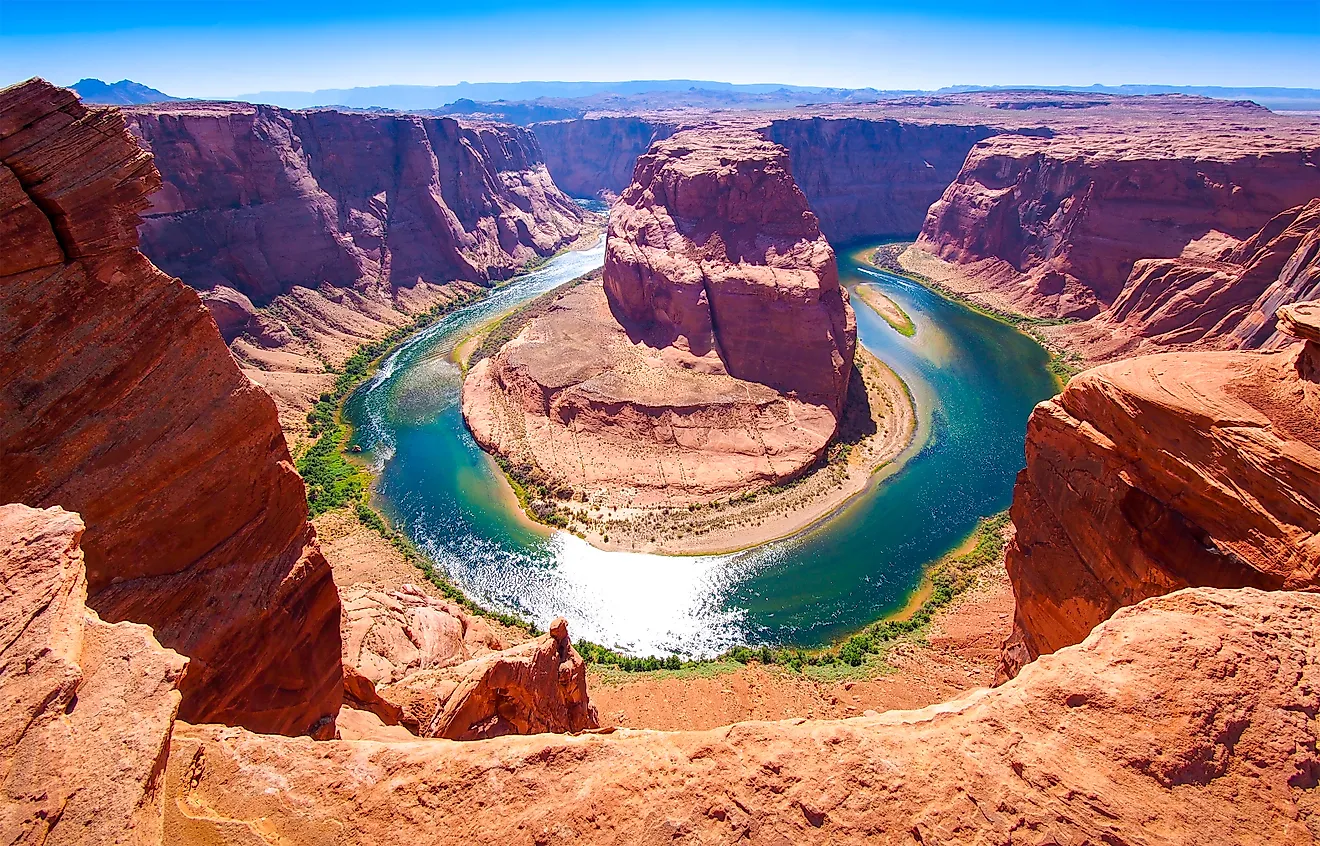
About 2 million visitors a year walk out to the Horseshoe Bend overlook along U.S. Highway 89, about 5 miles south of the dam's Carl Hayden Visitor Center, where the rim stands more than 1,000 feet above the Colorado River. The green water curling around the sandstone below is lake water released through Glen Canyon Dam.
Below 3,490 feet, that water would have to come through the river outlet works, four 96-inch steel pipes also called bypass tubes, with intakes centered at 3,374 feet. At full pool, the four together pass 15,000 cubic feet per second, less than half the 33,200 the penstocks can carry, and their safe flow drops as the lake falls. Under Reclamation's 2024 interim guidance, each pipe is limited to about 1,200 cubic feet per second at 3,400 feet and to zero at 3,390, because fast water in the steel pipes can cause cavitation damage. From that point, 20 feet above dead pool, the river beneath the overlook would get no releases from the dam.
Float Trips and Trout Fishing Below Page Would Lose Their Flow

The released water that passes Horseshoe Bend fills the 15.5-mile Glen Canyon reach, a rainbow trout fishery that ends at the mouth of the Paria River at Lees Ferry. Half-day float trips run through this stretch past the bend, and Lees Ferry is the launch point for Grand Canyon river trips, which carried 23,777 passengers on 1,050 trips in 2023. Once releases stopped at 3,390 feet, the trout water and the float route below the dam would have no flow coming from Lake Powell.
The reach is already warming as the lake drops, because the penstocks draw from the lake's warmer upper layer, where invasive smallmouth bass live. Juvenile smallmouth bass were found below the dam on July 1, 2022, and the species spawns in water of 61°F and above. By early August 2026, the river below the dam was running at about 69°F and had been above that threshold for more than a month, and federal officials had decided against releasing colder water through the outlet works, citing significant hydropower concerns.
How Close Lake Powell Is to Dead Pool

Glen Canyon Dam's 2026 release was cut to 6 million acre-feet, down from 7.48 million, and between 660,000 and 1 million acre-feet is being released to Lake Powell out of Flaming Gorge Reservoir in Wyoming and Utah by April 2027. By late October, the lake had gained about 600,000 acre-feet since its record low of about 3,516.6 feet in mid-September, helped by heavy rain in the Four Corners. Reclamation's October 2026 projections, processed on October 8, show a new low of about 3,516 feet in February 2027 in the most probable case and about 3,497 feet by September 2027 in a dry case, seven feet above minimum power pool.
Reclamation has floated ways to keep water and power moving at lower elevations, including a new tunnel through the dam and rerouting the outlet works so they could generate power. According to a Glen Canyon Institute report from early 2026, those options could cost between $500 million and $3 billion, and a decade to build them would be optimistic.
Page's drinking water is the one dam connection built to last to dead pool. In November 2022, the town's main intake, at 3,480 feet, was in danger of rising above the waterline, which threatened the water supply for Page and the neighboring LeChee Chapter of the Navajo Nation. By that December, Reclamation crews had finished a new connection to two of the dam's bypass tubes, the same pipes that would carry the river's last releases. Water can reach that connection as low as 3,362 feet, and it was built to keep Page and LeChee supplied even if the lake drops to 3,370. The taps in town would keep running through the last 20 feet of decline after the river below Horseshoe Bend stopped receiving releases from the dam.