The Most Successful Invasive Species Removal Programs In US Lakes
Invasive species have caused billions of dollars in damage to lakes and waterways across the United States, altering ecosystems that took thousands of years to develop. Whether it's a predatory fish, an aggressive aquatic plant, or a parasite capable of devastating native fisheries, once an invasive species becomes established, removing it can be extraordinarily difficult.
However, it's not impossible to get the upper hand. These seven lakes provide examples of some of the most notable invasive species success stories in the country. In the Great Lakes, managers spent decades reducing sea lamprey populations that devastated native fisheries. At Caddo Lake in Texas, they combined herbicides and biological controls to keep giant salvinia from overwhelming the ecosystem. These and the other examples below show how persistence, innovation, and long-term planning can help reverse the damage caused by invasive species.
Great Lakes Sea Lamprey Control Program

The Great Lakes Sea Lamprey Control Program is one of the longest-running and most successful invasive species management efforts in the world. Although efforts to control the sea lamprey started in the 1940s, the program really took off with the development of the Great Lakes Fishery Commission in 1955, a coordinated effort between Canada and the US. By the time the Commission formed, the sea lamprey had been wreaking havoc in the Great Lakes for decades.
Native to the Atlantic Ocean, the sea lamprey was first spotted in Lake Ontario in the 1830s and gradually spread to all the Great Lakes. In little time, it devastated the trout and whitefish populations. Rather than a typical mouth, the sea lamprey has a round, jawless disc that serves as a suction cup. Inside are rows of sharp, horn-shaped teeth that grip the host's skin and scales. A tongue-like structure rasps away the tissue and secretes anticoagulants so the blood of the host continues to flow, on which it feeds. One sea lamprey can kill up to 40 pounds of fish during its lifetime.

Today, several methods of control are employed, including the use of lampricides, barrier dams, and trapping. Lampricides are the primary control method and involve killing the larvae before they develop their teeth and move from the tributaries into the lakes. Barriers are used to block access to spawning habitat, and adult lampreys moving into the tributaries to spawn are trapped. Additionally, there has been some success in using natural odors and alarm cues to alter the predator's migration and mating habits. The result of multiple efforts has been the reduction of the lamprey population by up to 95%, allowing native fisheries to recover.
Yellowstone Lake Lake Trout Removal Program

Officials have yet to pinpoint exactly how lake trout ended up in Yellowstone Lake, but biologists believe they were most likely introduced illegally by humans sometime in the 1980s. How they got there is less of a concern than how to get rid of them.
Rumors of lake trout in Yellowstone Lake began in the 1980s, and in 1994, the rumor was put to rest when one was caught in the lake. By then, they had already started taking their toll on the native cutthroat trout that inhabited the lake. Lake trout are predatory. One of them alone will eat more than 40 cutthroat trout a year, so it was not long before the cutthroat spawning population collapsed by about 90%. In the late 1970s, the lake held an estimated 3.5 to 4 million cutthroat; by the mid-2000s, fewer than 400,000 remained. Soon, their absence began to be felt elsewhere. Animals such as bears, osprey, otters, and eagles traditionally preyed on the cutthroat trout. As lake trout spend most of their lives in deep water and do not migrate into shallow tributaries, they were not an accessible alternative for these predators.

An intensive effort to restore Yellowstone Lake to its former habitat for cutthroat trout has included removing millions of lake trout using gillnets, large-mesh nets that trap the fish in a specific area. Research was also conducted to better understand the lake trout's habits so crews could target their operations. Although lake trout will likely never be eradicated from Yellowstone Lake, suppression is allowing cutthroat trout populations to improve in parts of the lake and its tributaries. Recovery is uneven and incomplete: intensive gillnetting and targeted removal have helped stabilize cutthroat numbers, and the population is trending in a positive direction in monitored zones, but it is still considered a managed recovery rather than a full restoration.
Diamond Lake Tui Chub Eradication Program

The tui chub may not have the fearsome reputation of a lake trout or sea lamprey, but this small minnow nearly turned Oregon's Diamond Lake into a murky, algae-filled body of water. Like Yellowstone's lake trout, it remains uncertain exactly how the fish arrived, but biologists believe they were introduced via a live-bait dump. The first recovery project, in 1954, cut an outlet channel, lowered the lake, and dosed it with powdered rotenone, a fish-management chemical commonly used to remove invasive fish. The lake was restocked in 1955, and the trout fishery came back and held for decades. Then the chub returned, turning up in the lake again by the early 1990s.
Tui chub reproduce rapidly and feed on zooplankton, the tiny organisms that help keep algae levels in check. As the chub population exploded, the zooplankton population crashed. Without enough zooplankton grazing on algae, the lake began experiencing severe algal blooms. Water clarity declined, fishing suffered, and the trout fishery that had made Diamond Lake a popular destination began to deteriorate. By the early 2000s, the problem had reached a breaking point. Biologists estimated there were tens of millions of tui chub in the lake. Water quality continued to worsen, and efforts to manage the fish through traditional means proved ineffective. State officials concluded that the only realistic solution was to start over, and in 2006, Diamond Lake was drawn down about eight feet and treated once again with rotenone. The treatment was one of the largest lake restoration projects of its kind in the western United States, and it removed virtually the entire established population.

The results were dramatic. Water clarity improved significantly, algae blooms declined, aquatic insect populations rebounded, and the trout fishery recovered. Unlike many invasive species programs that focus on long-term suppression, the Diamond Lake project achieved what few lake restoration efforts ever accomplish: the successful eradication of an established invasive population, a rare outcome in large-lake restoration projects. Today, Diamond Lake is often cited as one of the most successful invasive fish removal projects in North America and a rare example of an ecosystem that was largely restored after an invasive species had fundamentally altered it.
Lake Davis Northern Pike Eradication Program

Northern pike are prized sport fish in many parts of the country, but they had no business being in California's Lake Davis. Officials believe the fish were dropped in illegally in the early 1990s, possibly by anglers hoping to establish a recreational fishery. What followed became one of the state's most aggressive invasive species battles.
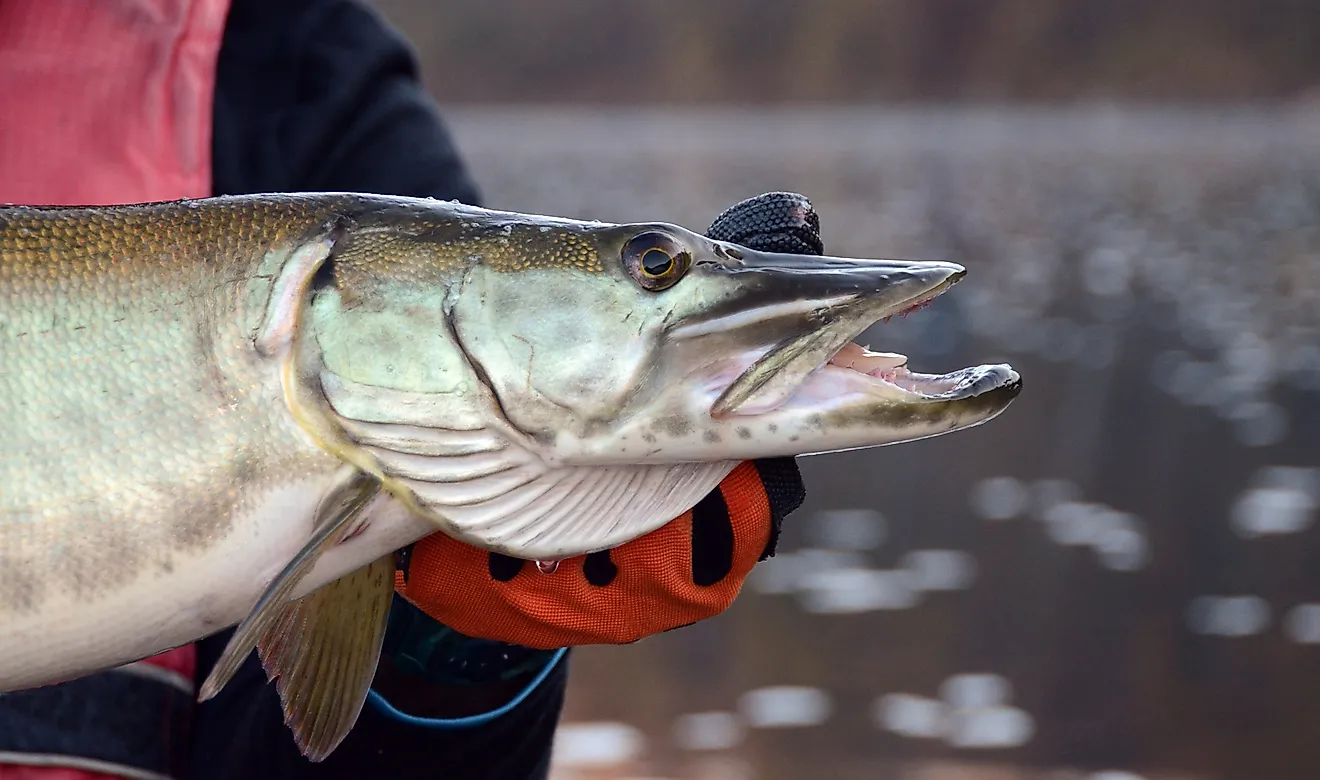
Equipped with long, torpedo-shaped bodies and mouths full of sharp teeth, pike are ambush predators capable of consuming large numbers of fish. If the species spread into connected waterways, it could threaten native fish populations and salmon runs throughout the Sacramento-San Joaquin watershed. So the California Department of Fish and Game launched an eradication effort using rotenone in 1997. It worked, but only temporarily. Northern pike were rediscovered in the reservoir in 1999. Managers were never able to determine whether the fish had survived the first treatment or had been reintroduced, forcing them to rethink their strategy. The second eradication effort took shape over the following years. The Department of Water Resources kept Lake Davis at reduced water levels and installed a "strainer" at the base of the dam. The lower water levels made it easier to target the remaining pike. In 2007, officials conducted a second rotenone treatment.

The gamble paid off. Follow-up monitoring found no surviving northern pike, and California ultimately declared the species eradicated from Lake Davis. The reservoir's trout fishery was restored, and the threat posed by the Lake Davis population was eliminated before the species could spread. Today, Lake Davis joins Diamond Lake as one of the few examples of a successful large-scale eradication of an invasive predatory fish in the United States.
Utah Lake Common Carp Removal Program

Unlike many invasive species, the common carp's arrival in Utah Lake was no accident. Carp were intentionally introduced throughout the United States in the late 1800s as a food source, but what seemed like a good idea at the time eventually created major ecological problems in lakes across the country.
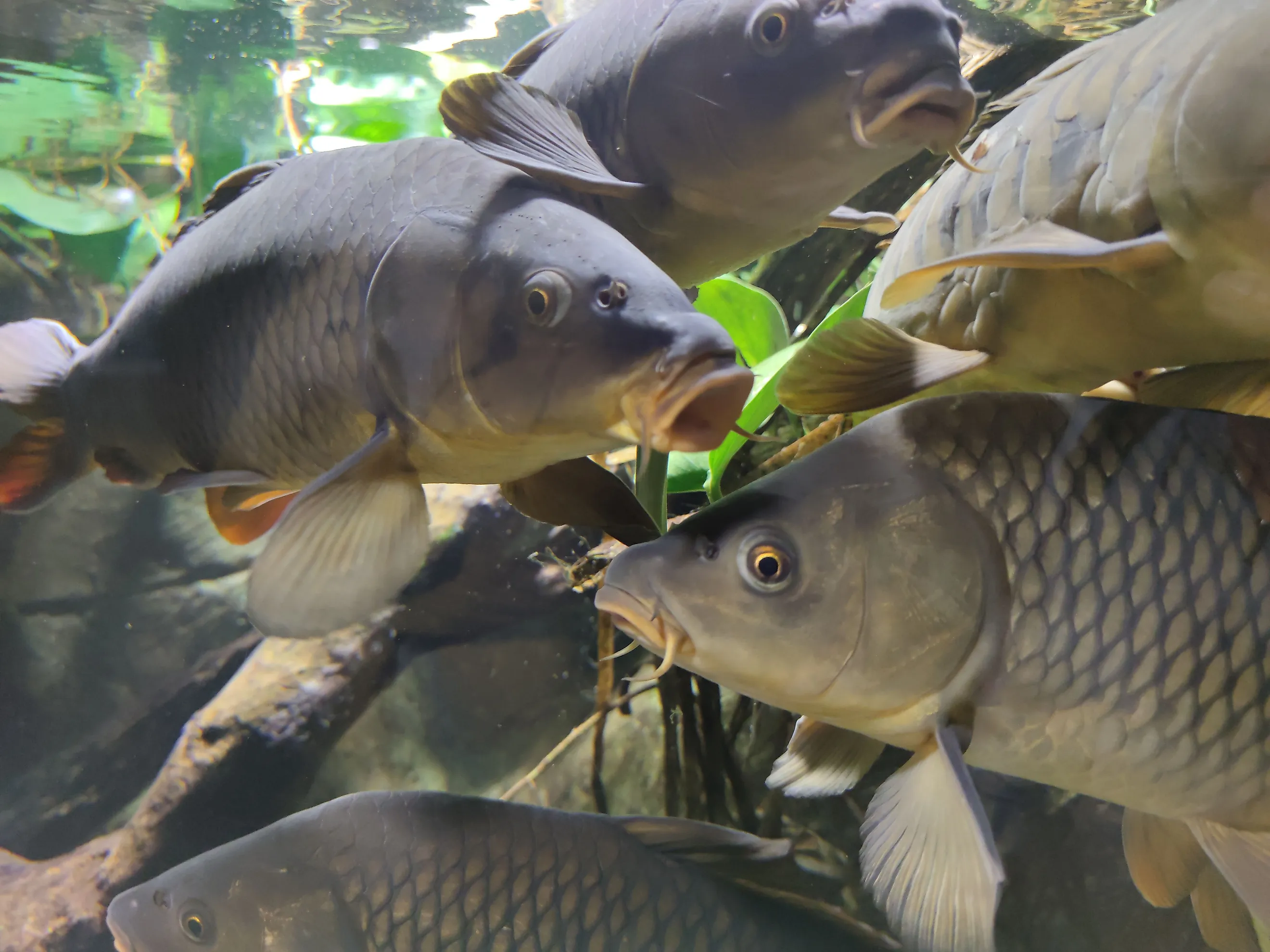
For decades, common carp dominated Utah Lake. The fish feed by rooting through bottom sediments in search of food, a behavior that constantly stirs up mud and sediment. As millions of carp disturbed the lake bottom, water clarity declined, and native aquatic plants struggled to survive. The murky water created poor habitat for native fish species, including the once-endangered June sucker, which is endemic to Utah Lake and its tributaries. By the early 2000s, biologists recognized that the carp had fundamentally altered the lake's ecosystem, contributing to the decline of many native fish species. Rather than attempting an expensive and unrealistic eradication, managers focused on dramatically reducing the population. Commercial fishing operations were brought in to remove carp by the ton, year after year. The effort eventually removed millions of pounds of fish from the lake.

As carp numbers declined and other restoration efforts continued, signs of recovery began to emerge. Native aquatic vegetation started returning to areas where it had been absent for decades, and water quality improved in some parts of the lake. Habitat conditions became more favorable for native species, and the June sucker was downlisted to threatened in 2021, up from its earlier endangered listing. Also helping the June sucker were a stocking program and the creation of juvenile rearing habitat. The work is still ongoing, but Utah Lake has become one of the nation's most notable examples of how sustained, large-scale removal of an invasive fish can begin reversing decades of ecological damage. While common carp remain present, their reduced numbers are helping give native plants and fish a chance to reclaim parts of the ecosystem they once dominated.
Lake George Eurasian Watermilfoil Control Program

Not every invasive species arrives with sharp teeth or a voracious appetite. Sometimes the threat comes in the form of a seemingly harmless aquatic plant. Such was the case when, in the 1980s, Eurasian watermilfoil found its way into Lake George, one of New York's most popular lakes. Native to Europe, Asia, and northern Africa, Eurasian watermilfoil was first documented in North America in 1942. Once established, the plant spread rapidly beneath the water's surface, forming dense mats that crowded out native vegetation, interfered with boating and swimming, and altered fish habitat.
Like many invasive aquatic plants, even small fragments can break off and drift to new areas, where they take root and start entirely new colonies. Although somewhat similar to the native northern watermilfoil, the invasive species has several distinguishing features. It has 12 to 21 leaflet pairs per leaf, a stem about as thick as a pencil, and delicate, feather-like leaves that go limp when taken out of the water.

Rather than relying solely on herbicides, managers in Lake George adopted a hands-on approach. Divers were sent underwater to manually remove plants and their root systems, while specialized suction equipment vacuumed plant material from the lake bottom. The painstaking process required thousands of hours of work and careful monitoring to locate new infestations before they could spread. The effort has proved worthwhile. While Eurasian watermilfoil has not been completely eradicated from Lake George, populations have been dramatically reduced in many areas and prevented from overwhelming the lake. The program is widely regarded as one of the nation's best examples of long-term invasive aquatic plant management, demonstrating how early detection and persistent removal can protect a lake without dramatically altering its ecosystem.
Caddo Lake Giant Salvinia Control Program

When giant salvinia arrives in a waterway, it does not take long for people to notice. The floating fern can double in size within a week or less under favorable conditions, creating thick mats that cover the water's surface like a green carpet. When the plant appeared in Caddo Lake along the Texas-Louisiana border, officials knew they were facing a serious threat. Native to South America, giant salvinia blocks sunlight from reaching underwater plants and reduces oxygen levels in the water. Left unchecked, it can smother entire sections of a lake, making boating difficult, degrading fish habitat, and disrupting recreation. In some locations around the world, infestations have become so dense that waterways have become nearly unusable.

Managers attacked the problem using several different methods. Herbicide treatments were used to reduce large infestations, while crews monitored the lake for new growth. Perhaps the most innovative part of the program was the introduction of salvinia weevils, small insects that feed almost exclusively on giant salvinia. As the weevils spread through infested areas, they began damaging the plants and slowing their explosive growth.
The combination of chemical treatments and biological control helped reduce giant salvinia across significant portions of the lake. Although the plant remains present and requires ongoing management, the program has prevented it from completely dominating Caddo Lake. Today, the project is often cited as one of the most successful examples of using a biological agent to help control an invasive aquatic plant in the United States.
Turning the Tide
Across the United States, invasive species have repeatedly pushed lakes and waterways to the edge of ecological collapse, reshaping food webs and degrading habitats that took millennia to form. Yet the seven lakes highlighted here show that even severe damage is not always permanent. Whether through full eradication, as at Diamond Lake, or long-term suppression, as at Yellowstone Lake and Utah Lake, these cases demonstrate that recovery is possible when science, persistence, and sustained management align over time.
What these efforts ultimately share is not a single solution, but long-term commitment. Chemical treatments, mechanical removal, biological controls, and physical barriers have all played a role, but none succeed in isolation. Some lakes have been largely restored, while others remain in managed recovery, proving that invasive species control is rarely a finish line. Instead, these stories underscore a central truth: while invasive species can permanently alter ecosystems, consistent and coordinated action can still shift the balance back toward recovery.