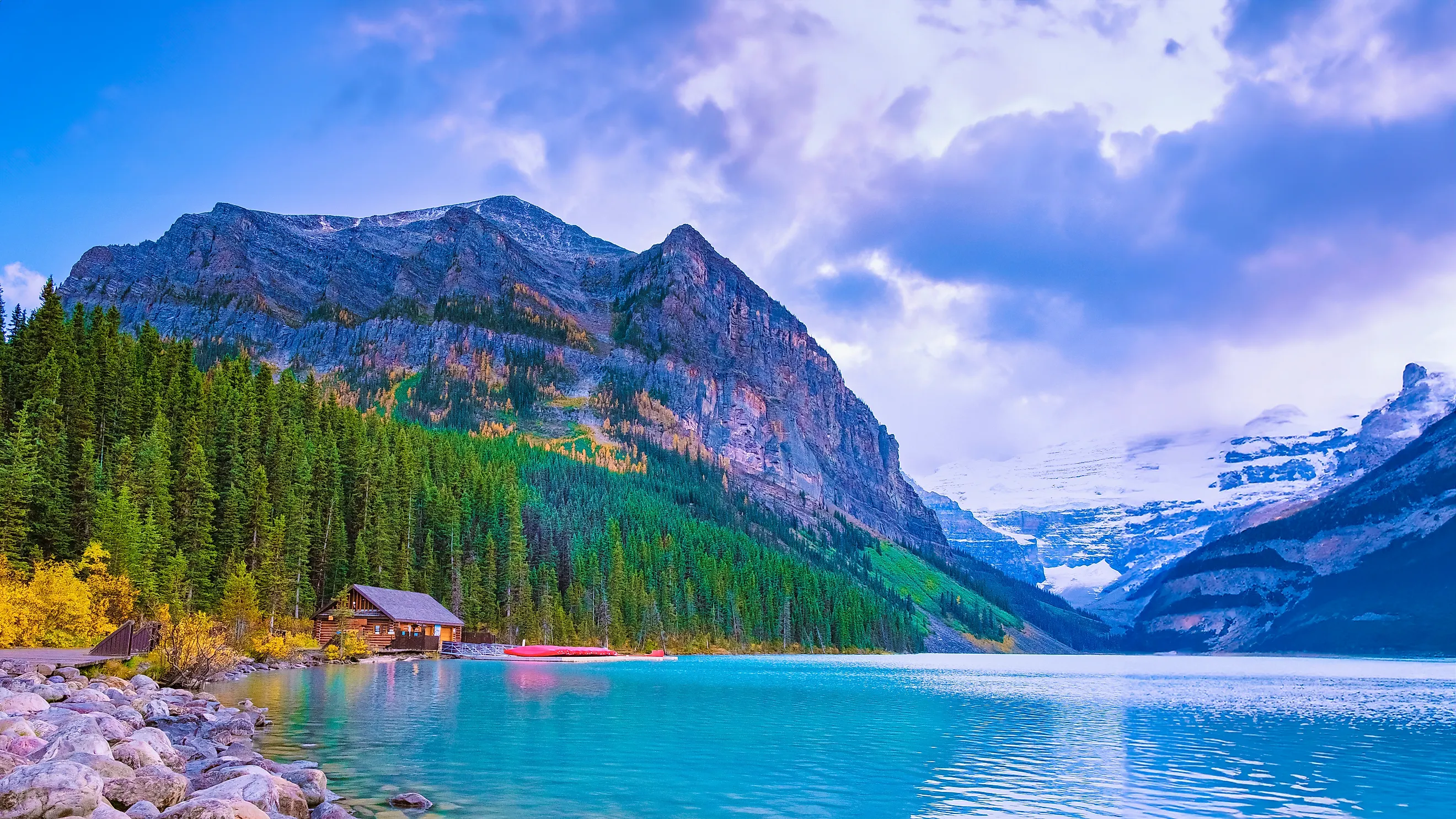
The Cleanest Lakes in Canada
Canada has an estimated 2 million lakes. Many are so isolated in the wilderness that they are inaccessible. Many are small and mostly untouched. There are approximately 879,800 lakes over 24 acres in size, while the number of lakes over 1.1 mi² is 31,752, and over 38 mi², the number is 561. With its millions of lakes over a large and sometimes inaccessible landmass, scientific monitoring networks do not maintain an official list of the cleanest lakes. With the empirical data available, a rough list of Canada’s cleanest lakes can be assembled, based on low nutrient content and high dissolved oxygen levels. This list does not contain the most remote or smallest lakes, but the one thing that all the lakes listed have in common is colder year-round climates, undeveloped watersheds, and human activity being highly regulated.
Conversely, Canada’s most polluted lakes are heavily industrialized or are in areas with large-scale mining operations. They are often in the more southern reaches of Canada, such as the lower Great Lakes, Erie, and Ontario, all of which suffer from invasive species, due to shipping traffic, toxic algae due to nutrient loads from agricultural run-off, and, in the case of Lake Erie, a shallow basin with warmer weather, making for a perfect breeding place of algae. British Columbia’s remote Quesnel Lake is the site of one of Canada’s worst mining disasters, when the Mount Polley mine's tailings facility had a dam breach in 2014, spilling over 6 billion gallons of contaminated materials into the lake and surrounding bodies of water, which are major spawning grounds for salmon, as well as sources of drinking water for surrounding communities.
Great Bear Lake (Northwest Territories)

Great Bear Lake is the largest lake located entirely within Canada’s borders. Inside Northwest Territories, the lake lies within the subarctic boreal zone. It is also undeveloped, far from industrial centers. Human use of the lake is limited by its location to fishing, mostly by First Nations, especially Sahtú Dene, and primarily Bear Lake People (Sahtúot'ı̨nę). The Sahtúot'ı̨nę are the only human population located on the shores of Great Bear Lake. There are also Métis located in the surrounding region.
There is no commercial fishing on the lake; Great Bear Lake is strictly managed to protect its ecosystem. Fishing is only permitted for First Nations and Métis use, as well as highly regulated sportfishing. There is no agriculture along the shores, with sustenance for the local populations coming from hunting and fishing, food flown in, and some limited home gardening within the brief growing season. The pristine water of Great Bear Lake is so exceptionally pure that it is a global standard for clean water research. There is little surface runoff, which limits any algae growth. The unimpacted dissolved solids and oxygen levels make for extremely clear and clean water, which remains sweet-tasting and is safe for drinking after treatment.
Lake Superior (Ontario; Minnesota, Michigan, and Wisconsin)

The International Joint Commission, the Canadian and US initiative to protect water systems shared by the two nations, states that Lake Superior is the cleanest of the Great Lakes. Canadian governmental reports classify offshore phosphorus levels as good. As the first in the chain of Great Lakes, Lake Superior flows into Lake Huron (which is technically joined to Lake Michigan), then down to Lake Erie, and finally to Lake Ontario. That trajectory limits contamination from the more polluted lower lakes. Lake Superior’s high water quality comes from low nutrient levels, and from receiving water from direct precipitation that is clean, and a watershed that is untouched by dense urbanization and agricultural runoff.
Its climate conditions, and being a deep and cold lake, make Lake Superior less susceptible to invasive plants and algae. Lake Superior is classified as oligotrophic, and it has naturally low levels of phosphorus and nitrogen. That, combined with the cold lake conditions, prevents the algal blooms that are found in Lake Erie and Lake Ontario. The water is cold year-round, averaging about 40°F, restricting bacterial growth and organic decay. Contaminants are further limited as the amount of land that drains into the lake is small compared to the lake’s large surface area.
Lake Louise (Alberta)

Located in Banff National Park, Lake Louise is a glacial lake renowned for its turquoise-blue water. It is fed by meltwater from the Victoria Glacier on Mount Victoria, and studies show that glacier-fed lakes tend to carry low nutrient levels. Lake Louise is also free of industrial runoff. Monitoring the lake is taken seriously, and its overall health is regularly tested and maintained. Treated tap water from the lake is considered to be excellent and safe. Untreated, Lake Louise is not drinkable, but this is true for any lake or body of water that contains bacteria and parasites.
The main issue for Lake Louise is glacial rock flour, the mineral runoff from glaciers. Even meltwater directly from glaciers is dangerous to drink, even though it appears pristine and clear. The effect of rock flour is that the water can be gritty to consume untreated. Although swimming is permitted, it is rarely done due to year-round near-freezing temperatures (averaging 39°F, even in the summer). Swimming in water that is colder than the body's temperature is dangerous. The other main issue found in Lake Louise is whirling disease, which Parks Canada detected in the lake in 2026. This is an infectious parasite that devastates trout populations. Because it is pristine alpine water, users are required to clean, drain, and dry their boats before entering the lake.
Kluane Lake (Yukon)

Fed by the Kaskawulsh Glacier, Kluane Lake is the largest lake in Yukon. With extremely low turbidity and no chemical pollution, the lake water is pristine and clear. There is no human population density anywhere along the shore, with only two settlements, Burwash Landing and Destruction Bay, both of which serve mainly tourist activity along the Alaska Highway. Kluane Lake is within the traditional territory of the Southern Tutchone people, primarily Kluane, Champagne, and Aishihik.
The lake is ecologically healthy, with mostly clear blue water. Some cloudiness occurs from glacial runoff. There is virtually no point-source pollution, and drinking water from wells at Burwash Landing passes all standard Canadian quality tests. The water is highly oxygenated year-round, and while there is some natural, sediment-bound mercury, the effects on lake trout are among the lowest in Canada. The main issue that affects the lake is melting glaciers diverting the primary water supply and lowering water levels. The exposed dry sediment on the shores can fill the air with dust during windstorms.
Clearwater Lake (Manitoba)
This lake, known traditionally as Atikameg Lake (Cree for "whitefish"), is famous for its clear and turquoise waters. The waters are so clear that it is possible to see the bottom of the lake at depths of 36 feet. Located just north of The Pas, this Manitoba lake is spring-fed, with an undeveloped limestone basin that filters out pollutants. A karst lake, Clearwater Lake was formed by acidic rainwater dissolving the soluble limestone bedrock. The lake’s water has very few suspended organic particles or algae, which preserves its clear turquoise color.
The Manitoba government classifies Clearwater Lake as a High Quality Surface Water. This official designation limits development and enforces rigorous environmental regulations. Cold throughout the year, the lake does attract swimming, as well as scuba diving and fishing. Motorboating is permitted on the lake, but boaters must follow speed rules, as well as the clean, drain, and dry directive, and make certain that watercraft are free of invasive species.
Emerald Lake (British Columbia)
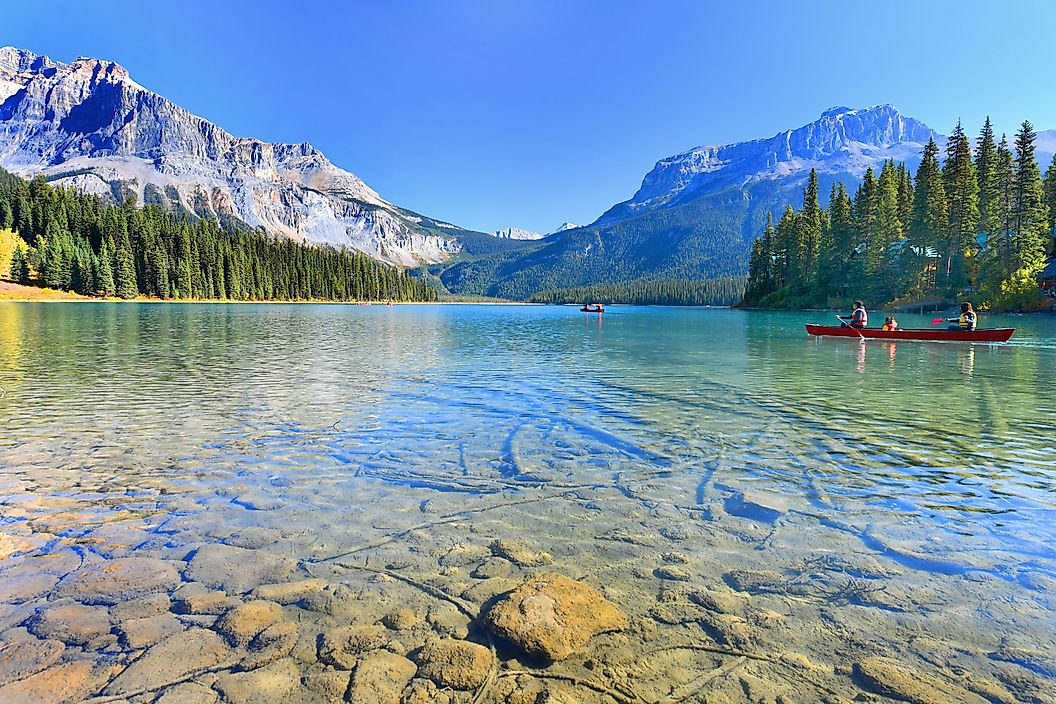
Emerald Lake is located in the Rocky Mountains near the British Columbia/Alberta border. Situated within Yoho National Park, it is fed entirely from snowmelt and glacial runoff, with no human contamination. As a high-altitude alpine lake, Emerald Lake freezes over for half the year, limiting pollution from typical sources. The glacial rock flour suspended in the runoff scatters sunlight and gives the lake its vivid turquoise color.
Located within Yoho National Park, Emerald Lake is federally protected, which prevents industrial and commercial development. There is significantly low pollution in the protected watershed, keeping the ecosystem clean. With the short season when the lake is not frozen, the long winter, lasting from autumn to early June, limits the growth of organic matter, such as algae. With a fragile aquatic ecosystem and a reputation for being a quiet and peaceful destination, motorized boats are heavily restricted. Boating is generally limited to canoes, kayaks, and paddleboards. This prevents contamination from motor oil and fuel. The ecosystem does face one recent threat: in 2025, Emerald Lake became the site of the first suspected case of whirling disease in British Columbia, an invasive parasite harmful to trout and salmon, which led Parks Canada to temporarily close the lake and nearby waters.