The Top Paper-Producing States In America
American mills produced 66.3 million tons of paper and paperboard in 2025. Containerboard accounted for 36.1 million tons of that production, and tissue production reached 7.8 million tons. As demand for traditional printing and writing papers has changed, packaging grades have become an increasingly large part of the industry, with printing and writing paper capacity at 7.7 million tons in 2025.
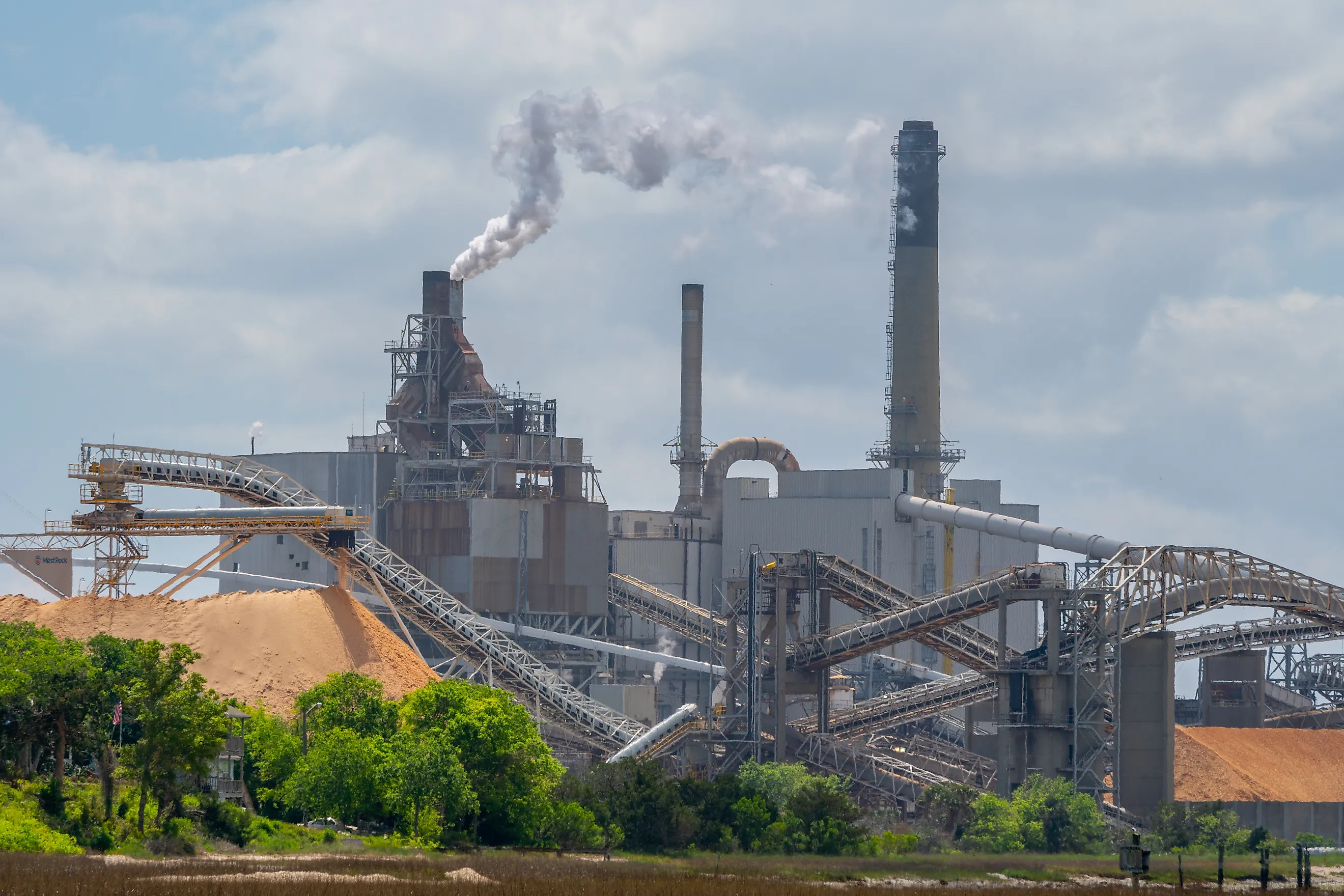
Production is concentrated in states with large mill networks, forest resources, and established manufacturing industries. The country's leading paper-producing states span the Southeast, Midwest, and Northeast, where papermaking has long played an important role in American manufacturing. Their output covers containerboard, paperboard, tissue, printing papers, and specialty grades.
Wisconsin

Wisconsin has one of the largest concentrations of paper production in the US, with mills throughout the Fox River Valley and around Green Bay. The state's mills produce tissue, printing and writing paper, and specialty grades. Paper converters turn large rolls into packaging, labels, and other products.
The Fox River corridor is one of the country's best-known paper regions. Appleton, Menasha, and Kaukauna developed major paper manufacturing operations along the waterway. In 2023, the state had 30 pulp and paper mills and 166 converting plants, according to the American Forest & Paper Association.
Georgia

Georgia is a major Southern paper-producing state, supported by extensive commercial forests and large pulp, paper, and paperboard facilities. The state's production includes containerboard, packaging paper, tissue, and other grades. Individual mills also operate at a substantial scale. Packaging Corporation of America's Valdosta mill, for example, has produced hundreds of thousands of tons of kraft linerboard annually. Georgia also has several other large integrated pulp and paper operations.
The paper industry plays a sizable role in Georgia's manufacturing economy. In 2019, paper manufacturing accounted for 6.2% of the state's total manufacturing payroll, showing just how important papermaking is to the sector.
Alabama

Alabama combines extensive pine and hardwood forests with a large concentration of pulp, paper, and paperboard mills. The state's paper sector has long benefited from its access to transportation networks connecting mills with manufacturers and consumers.
Alabama also has a particularly strong concentration of paper-related production jobs. The Bureau of Labor Statistics reported 3,430 paper goods machine setters, operators, and tenders in the state in 2023. The combination of timber resources and large-scale mills makes the state a major center of Southern paper production.
Florida

Better known for other forest products, Florida also has a substantial pulp and paper industry. The state's extensive pine and hardwood forests provide fiber for mills producing packaging, tissue, and other paper products.
Florida's paper industry also benefits from its location within the Southeast and along the Gulf Coast, giving mills access to major manufacturing and consumer markets throughout the region. The combination of forest resources, established mills, and transportation connections has made paper production an important part of Florida's forest products industry.
Louisiana

Louisiana's paper production is closely tied to the state's forests and major waterways. The state has historically ranked among the country's leading paper-producing states, particularly in pulp and paper production. Nationally, printing and writing capacity has fallen from nearly 18 million tons in 2015 to 7.7 million tons in 2025, reflecting the industry's shift toward packaging and other grades.
Southern pine and hardwood resources supply mills throughout the state, while the Mississippi River and Gulf Coast provide transportation routes for raw materials and finished products. The mills in Louisiana increasingly produce packaging grades and paperboard alongside other paper products.
Pennsylvania

Forests, rivers, railroads, and established industrial markets underpin a large and diverse paper manufacturing base in Pennsylvania. The state's facilities produce a range of paper and paperboard products rather than relying on a single grade.
Paper manufacturing employed 21,542 people in 2019, and 5,570 paper goods machine operators worked in the state in 2023. These figures show the scale of the production workforce supporting the state's mills and converting facilities.
South Carolina

Local forest resources and manufacturing infrastructure support a large pulp and paper industry in South Carolina. The state's mills produce packaging grades, paperboard, and other products used throughout the Southeast.
South Carolina also has a highly concentrated paper-production workforce. In 2023, the state employed 3,970 workers in that machine-operating occupation, meaning the occupation is nearly three times as concentrated there as in the US workforce overall.
North Carolina

North Carolina's paper industry combines forest resources with a large manufacturing base. The state has mills producing paper, paperboard, and packaging materials, with production concentrated in several established manufacturing regions.
North Carolina counted 16,279 paper manufacturing workers in 2019 and 4,540 paper goods machine operators that year. The state also has large integrated facilities that process southern pine and hardwood fiber into pulp and paper products.
Ohio

Paper production in Ohio is closely connected to the industrial Midwest and its transportation network. Mills manufacture paperboard, packaging materials, and other grades for companies throughout the region.
Paper manufacturing accounted for 17,188 jobs in 2019, with 5,410 machine operators in the same occupation in 2023. Ohio's location gives paper manufacturers access to large industrial and consumer markets across the Midwest and Great Lakes region.
New York

New York has a long paper-making history centered on forests and waterways in northern and central parts of the state. Current mills produce paper and specialty grades alongside converted paper products.
New York employed 13,836 people in paper manufacturing in 2019. The state also counted 4,100 paper goods machine operators that year, reflecting the continuing scale of its paper-production workforce.
Illinois

Illinois is an important paper producer within the industrial Midwest. Its paper facilities are positioned near major transportation networks and large consumer and manufacturing markets, supporting production of packaging and other paper products.
Illinois recorded 15,213 paper production jobs in 2019, along with 4,320 in the same machine-operating role that year. Illinois' paper industry connects production facilities with the state's manufacturing and distribution network.
Maine

Maine has one of the country's largest papermaking traditions and an industry closely tied to its extensive forests. The state has produced paper from spruce and fir fiber for generations, with mills historically concentrated along rivers that supplied both water and transportation.
Paper manufacturing accounted for 14.1% of total manufacturing payroll in 2019, the highest share among states. The state also had 810 paper goods machine operators in 2023, and the occupation was more than twice as concentrated in Maine as in the US workforce overall.
America's Paper Industry Is Changing
US paper production now centers heavily on packaging and other products rather than the printing papers that dominated earlier decades. In 2025, boxboard production reached 12.4 million tons. Packaging paper production also increased 1.7% during the year.
The geographic pattern is broad. Southern states have large pulp and paper operations supported by forest resources, while Northern and Midwestern paper centers continue producing a variety of paper products. These states form the major production base for the paper and paperboard products used across the country, including shipping boxes, food packaging, tissue, specialty papers, and other manufactured goods.