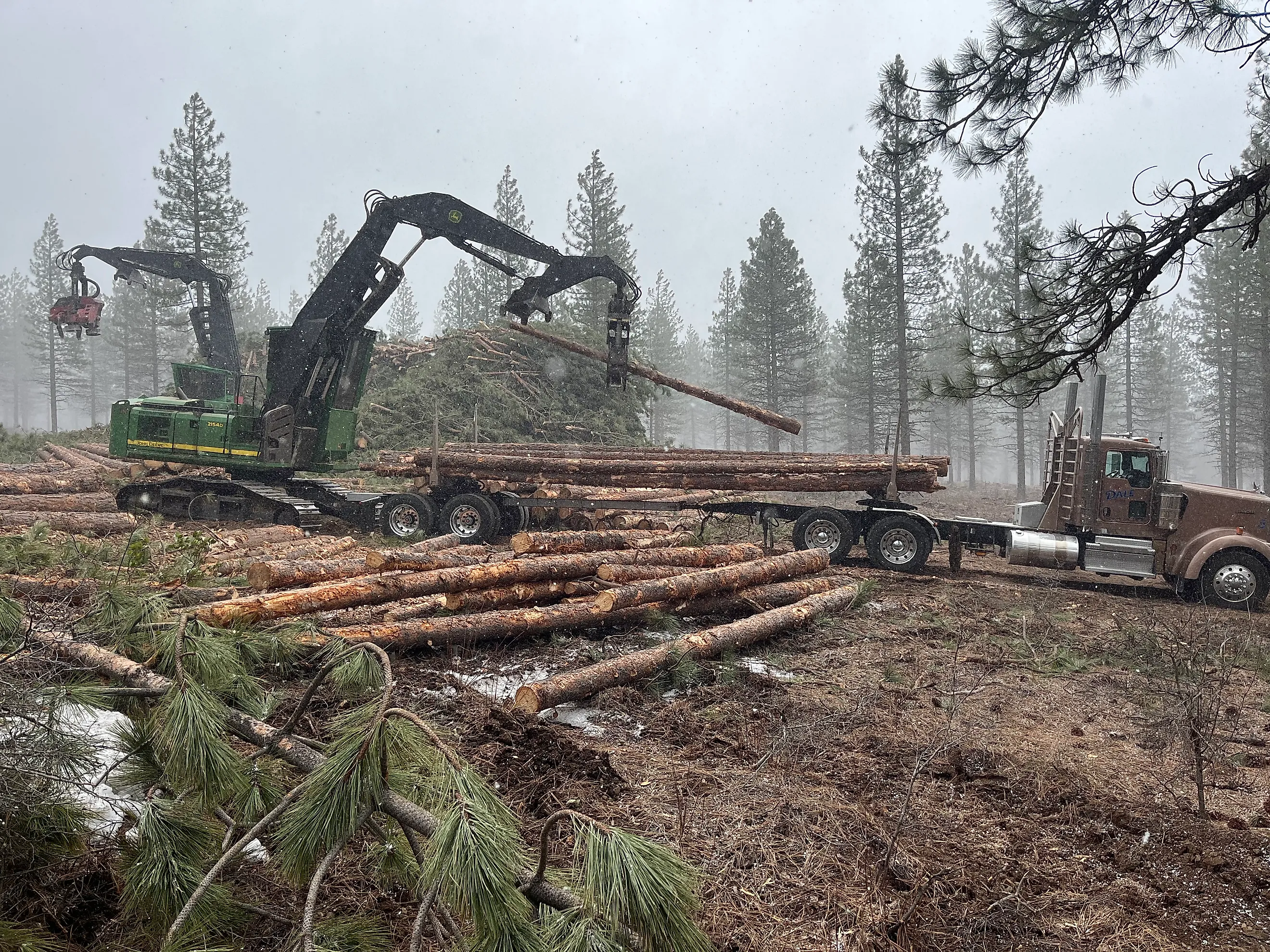
The American Forests That Supply The Most Timber
The South supplies more timber than any other US region, with pine forests like the Piney Woods of East Texas producing wood for house framing and paper. Georgia alone produced about 1.35 billion cubic feet of roundwood in 2024.
Across the country, roughly 88% of harvested timber comes from privately owned forests. Family woodlots and commercial plantations supply much of that wood. Oregon's Douglas-fir forests supply sawmills and plywood plants. Appalachian hardwoods supply wood for flooring and furniture. Roundwood includes sawlogs and smaller wood used to make pulp. A straight pine can become a utility pole; a white oak can become a bourbon barrel. In Maine's North Woods, visitors reaching remote fishing waters share roads built to carry logs.
The Southern Pine Belt - Piney Woods and Ouachita National Forest

A stand of loblolly pine can produce a commercial harvest while the remaining trees are still growing toward sawlog size. On good sites, thinning can begin during the trees' teenage years. Removing some stems gives the others more room to grow, and the smaller harvested trees can go to pulp mills. With suitable management, better sites can produce sawtimber in roughly 30 to 35 years.
These harvests support mills across the South's Coastal Plain and Piedmont. The producing belt extends west into the Piney Woods of East Texas and the pine forests of Arkansas, where the Ouachita National Forest holds public shortleaf pine among the region's private plantations. Georgia's 2024 harvest was about 88% softwood by volume, with loblolly and shortleaf pine forming its leading species group. Across the 13 Southern states, pulp production drew on 38.2 million cords of newly harvested roundwood in 2024, alongside wood residues from mills.
The Pacific Northwest Coast - Tillamook and Clatsop State Forests

Oregon's western counties supplied about 91% of the state's timber harvest in 2022. These forests occupy the Coast Range and western mountain slopes, including Oregon's intensively managed Tillamook and Clatsop State Forests, and extend north into Washington's productive coastal country. The coastal portions of both states contain some of the country's most productive timber-growing land. Plantation forestry is common here, and Douglas-fir supplied nearly three-quarters of Oregon's harvested volume that year. Private land accounted for about 78% of the state's harvest.
Much of this wood goes into construction. Oregon's sawmills and plywood or veneer plants received almost 92% of the timber processed in the state in 2022. Veneer mills peel logs into thin sheets that can be bonded into plywood. The process uses a rotating log to produce the layers that form the finished panel.
Northern California - Plumas and Shasta-Trinity National Forests

Some of California's timber reaches a mill after the tree has already died. In 2021, dead trees accounted for about 38% of the state's harvested volume. Among harvested pines, the share was 59%.
The main producing areas lie in Northern California and the Sierra Nevada. Butte and Plumas counties, home to the Plumas National Forest, each supplied more than 225 million board feet in 2021. Farther north, working forests in Siskiyou and Shasta counties, including the Shasta-Trinity National Forest, contributed large volumes, while Humboldt County supplied timber on the coast. Statewide harvests reached about 1.88 billion board feet in 2024.
California's harvest was less concentrated in Douglas-fir than Oregon's. Pines supplied 28% of California's 2021 volume, Douglas-fir 26%, and true firs 24%. Most of the state's harvested wood went into sawlogs, supplying mills that turn these conifers into lumber.
The Inland Northwest - Nez Perce-Clearwater and Idaho Panhandle National Forests

Idaho's state endowment forests generate timber income for public schools and other beneficiaries. They supplied about 255 million board feet during calendar year 2025, part of a statewide harvest of roughly 888 million. Foresters manage these lands through successive harvests, with planting or natural regeneration establishing the next crop of trees.
The largest concentration of logging lies farther north than Idaho's vast central wilderness areas, in the country around the Nez Perce-Clearwater and Idaho Panhandle National Forests. Seven northern counties supplied almost 84% of the state's harvest in 2019. Clearwater County alone contributed about a quarter. True firs and Douglas-fir were the leading species groups harvested statewide that year, and sawlogs and veneer logs accounted for 91% of the total. More than 94% of Idaho's 2019 timber harvest was processed within the state.
The Appalachian Hardwoods - Monongahela and Allegheny National Forests

White oak growing in Appalachian forests can end up holding bourbon. The reason lies in structures too small to see in a standing tree. Its wood contains tyloses, growths that obstruct water-conducting vessels and help barrels retain liquid.
The surrounding hardwood industry uses a much wider range of trees. West Virginia's forests produced about 141 million cubic feet of roundwood in 2021, with yellow-poplar the leading species group by volume. Select red oaks followed it. About 85% of that state's production came from private land, with public holdings like the Monongahela National Forest making up a smaller share.
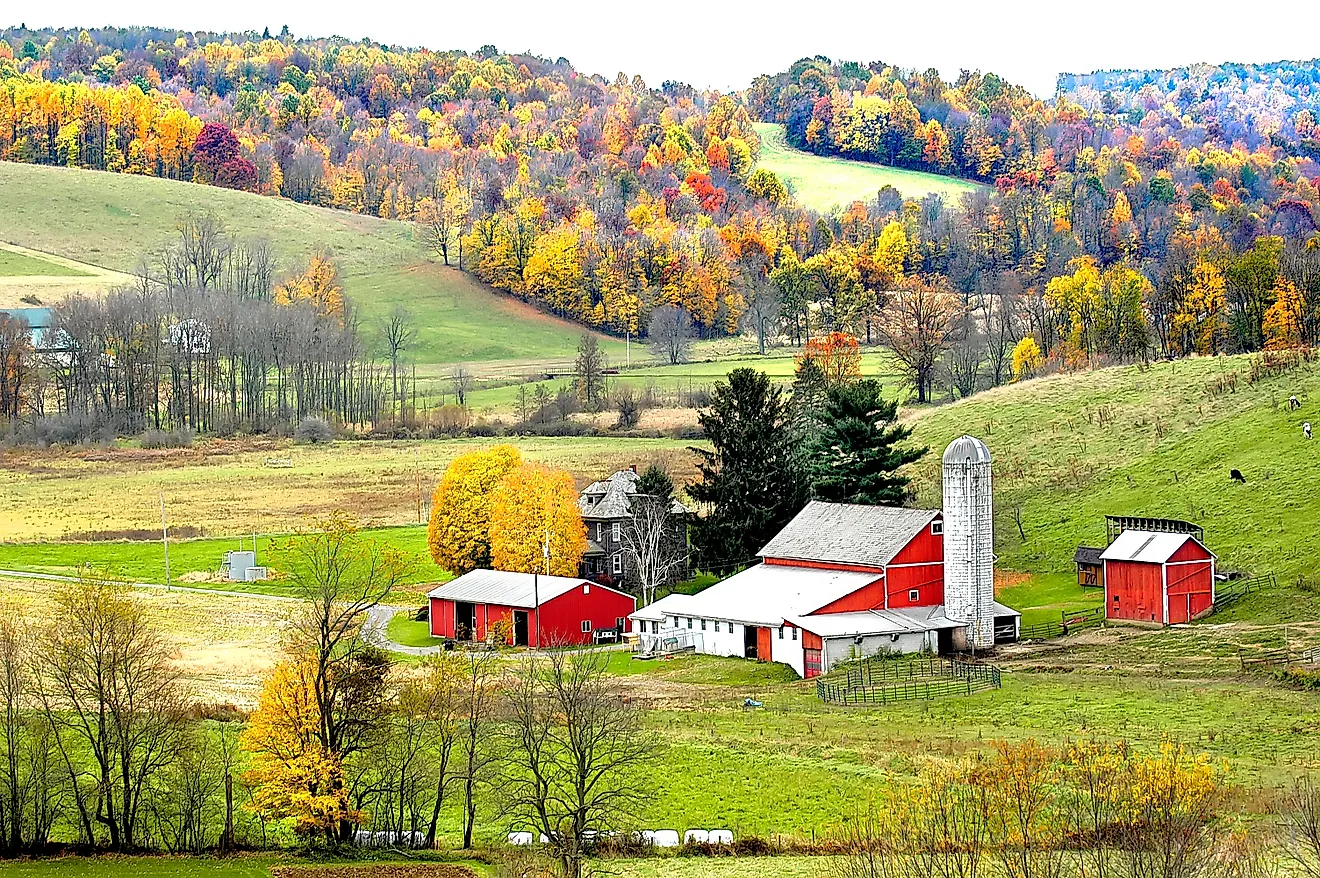
Across the Appalachian hardwood belt, the eventual product depends partly on the individual tree. Pennsylvania's Allegheny National Forest is known for black cherry prized by furniture makers. White oak is also cut into lumber for cabinetmakers and manufacturers of flooring and furniture. Lower-grade wood can become pallets or railroad ties.
The Great Lakes Northwoods - Superior and Chequamegon-Nicolet National Forests

Aspen forests in Minnesota, Wisconsin, and Michigan, including stands on Minnesota's Superior National Forest, can regenerate through shoots growing out of existing roots after harvest. The new stand needs abundant sunlight. Cutting an aspen stand can therefore produce a dense crop of young stems without planting a seedling for every tree removed. Minnesota forestry guidance recommends protecting those parent roots by harvesting when soils are dry or frozen.
This fast-regenerating hardwood supplies paper manufacturers and composite-panel mills. Wisconsin's Chequamegon-Nicolet National Forest carries extensive aspen among its hardwoods. In Wisconsin's 2023 production, aspen accounted for about 82% of the roundwood used for composite panels, including oriented strand board. That is the familiar panel made of compressed wood strands used in roof and wall construction. Red pine was Wisconsin's leading sawlog species in 2023, ahead of red oak and sugar maple.
The North Maine Woods

Logging trucks have the right of way on the private roads through the North Maine Woods. Those roads were built primarily to manage forests and move wood, and visitors use them with the landowners' permission.
Aroostook County supplied about 235 million board feet of sawlogs in 2023, the largest county contribution in Maine. Statewide, the sawlog harvest approached 890 million board feet. Spruce and fir accounted for a little over half, supplying the softwood side of an industry that also uses substantial hardwood volumes. Maine's pulpwood harvest that year totaled about 4.4 million green tons, meaning the wood's weight before drying. Logs also cross the Canadian border, and Maine mills import wood as well as process local harvests. Canadian wood can be closer to northern Maine mills than timber cut in southern Maine.
What The Mills Leave Behind

The usable wood keeps moving after a sawmill has cut its boards. Oregon's primary wood processors generated about 6.1 million bone-dry tons of residue in 2022, nearly all of it put to use. Pulp, paper, and board plants took most of that material; much of the remainder became fuel. Georgia's primary mills generated about 7.5 million dry tons of residues in 2024. These dry weights exclude the moisture in freshly cut wood. These byproducts add useful material to the supply without representing another harvest of standing trees. Across the 13 Southern states, pulp producers used 13.9 million cords of wood residues in 2024, alongside the roundwood arriving directly from forests.